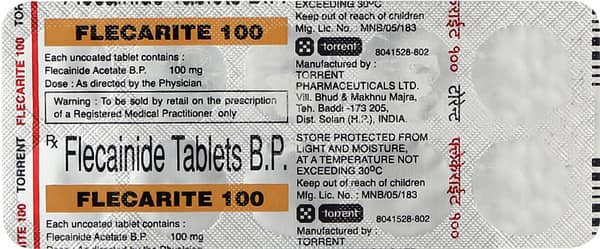
Flecarite 100Mg Strip Of 10 Tablets
10 Tablet(s) in StripMRP ₹488.55
₹361.53
26% OFF

Made by
TORRENT PHARMACEUTICALS LTD
Dosage
TABLET
Expiry
Product Summary
| Uses | Antiarrhythmic |
| Therapy | Anti-arrhythmic |
| Side effects | Diplopia, vision blurred |
| Salt Content | Flecainide(100.0 Mg) |
Assurance
available
Regulated
Medical Description
Flecarite tablet is a medication used to treat certain serious heart rhythm disorders in which the heartbeat becomes too fast, irregular, or life-threatening. It is usually prescribed when other treatments have not worked or are unsuitable. This medication helps control abnormal electrical activity in the heart and is used only after careful evaluation to ensure that the heart's structure and pumping function are adequate.
This medicine works by slowing the electrical signals in the heart that cause abnormal rhythms. Blocking specific sodium channels in heart cells helps stabilize the heartbeat and maintain a normal rhythm. Because it directly affects the heart’s electrical system, treatment is often started under specialist or hospital supervision, especially in high-risk patients.
Flecarite tablet should be taken exactly as prescribed by your doctor, usually with or after food to reduce stomach discomfort. It is important to take it at the same time each day and not exceed the prescribed dose. Regular follow-up visits, ECG monitoring, and sometimes blood tests are needed to ensure the medicine is working safely and effectively.
Some people may experience side effects such as dizziness, blurred vision, tiredness, or shortness of breath. In rare cases, the medicine can worsen heart rhythm problems instead of improving them. Because of this risk, it is important to report any new or worsening symptoms, such as fainting, palpitations, or chest discomfort, to your doctor immediately.
Flecarite tablet may not be suitable for everyone, particularly individuals with certain heart conditions, electrolyte imbalances, or those taking specific medications that affect heart rhythm. It should be used cautiously during pregnancy and breastfeeding only when the benefits clearly outweigh the risks. Always inform your doctor about your full medical history and all other medicines you are taking to ensure safe and effective treatment.
Uses
Contraindications
- If you are allergic to flecainide or any of the ingredients in Flecarite tablet.
- If you have heart failure or have had a heart attack and now have certain abnormal heart rhythms without symptoms.
- If you have long-standing atrial fibrillation and no attempt has been made to restore a normal heart rhythm.
- If you have weak heart pumping, shock due to heart problems, a very slow heartbeat, or very low blood pressure.
- If you are taking other Class I anti-arrhythmic medicines (similar heart rhythm medicines).
- If you have serious heart valve disease that affects blood flow.
- If you have problems with the heart’s natural pacemaker or electrical conduction (such as sinus node disease or heart block), unless a pacemaker is available.
- If you have mild or symptom-free abnormal heart rhythms coming from the lower chambers of the heart.
- If you have significant electrolyte imbalance, such as very low or high potassium levels.
- If you have been diagnosed with Brugada syndrome.
Side effects
- Diplopia
- Vision blurred
- Dyspnoea
- Fatigue
Precautions and Warnings

Pregnancy

Breast Feeding

Driving

Alcohol

Other General Warnings
- You have fast or irregular heartbeats such as AV nodal tachycardia, Wolff-Parkinson-White syndrome, or troublesome episodes of atrial fibrillation, as treatment usually needs specialist or hospital supervision.
- You have had a heart attack in the past, as Flecarite tablet may increase the risk of serious outcomes in some patients.
- Your heart rhythm becomes worse, faster, or more severe after starting the medicine, as Flecarite tablet can sometimes trigger new or more serious arrhythmias.
- You have structural heart disease or impaired cardiac pump function; Flecarite tablet should generally be avoided in these conditions.
- You develop atrial fibrillation after heart surgery, as extra caution is required.
- You suddenly feel your heart racing during treatment, as the ventricular rate may increase if the medication is not working properly.
- You have liver problems; Flecarite tablet may accumulate in the body, and blood-level monitoring may be necessary.
- You have kidney problems, as dose adjustment and monitoring may be required.
- You are elderly; the medication may remain in your body longer, and doses may need adjustment.
- You are below 12 years of age, as flecainide is not recommended for children due to limited safety data.
- You have electrolyte problems, such as low or high potassium levels, which should be corrected before starting treatment.
- You have a very slow heartbeat or very low blood pressure, which must be corrected before Flecarite tablet is used.
- You have a pacemaker, as flecainide can affect pacemaker function and may require close monitoring.
- You have a history of heart failure, enlarged heart, or difficulty with defibrillation.
- You notice ECG changes, fainting, or symptoms suggestive of Brugada syndrome, as treatment may need to be stopped.
Directions for Use
- Flecarite tablet should be taken as directed by your doctor.
- Swallow it whole with a glass of water.
- It should be taken with or after a meal to reduce its side effects.
- It is best to take it at a fixed time for optimal results, and you should not consume it more than prescribed by your doctor.
Storage and disposal
- Store Flecarite tablet in a cool, dry place, protected from direct sunlight, moisture, and heat.
- Keep it out of the reach of children and pets.
Quick Tips
- Inform your doctor if you feel dizziness, blurred vision, or worsening palpitations.
- Do not stop the medicine suddenly without medical advice.
- Keep regular follow-up visits and ECG monitoring as advised.
- Tell your doctor about all other medicines you are taking to avoid interactions.
Dosage
Overdose
Missed a Dose
How does this medicine work?
Interactions
Interactions with other medicines
- Taking flecainide with other antiarrhythmic medications can increase side effects or cause serious arrhythmias, so close electrocardiogram (ECG) monitoring may be needed.
- Flecainide should not be taken with other Class I anti-arrhythmic medicines, as this can seriously affect the heart rhythm.
- Using flecainide with beta-blockers may slow the heart too much or weaken heart pumping.
- Medications such as amiodarone can increase flecainide plasma concentrations, so the flecainide dose may need to be reduced and monitored closely.
- Certain calcium channel blockers (e.g., verapamil) should be used cautiously with flecainide, as they may affect cardiac function.
- Some medicines can increase flecainide levels in the blood, increasing the risk of side effects, including antidepressants (such as fluoxetine or paroxetine), antipsychotics, some antihistamines, antifungal medicines (such as terbinafine), and antiviral medicines (such as ritonavir).
- Other medicines can lower flecainide levels, including some antiseizure medications (phenytoin, carbamazepine), which may reduce its effectiveness.
- Diuretics, steroids, or laxatives may disturb potassium levels, which can increase the risk of heart rhythm problems while taking flecainide.
- Certain older antihistamines, antimalarial medicines, and some antipsychotics may increase the risk of dangerous heart rhythm disturbances and should be avoided.
- Flecainide may slightly increase digoxin levels; therefore, blood levels should be monitored if both medications are used together.
- Flecainide can generally be taken with blood thinners, but regular monitoring may still be needed.
- Activated charcoal (e.g., charcoal tablets) may reduce the extent of flecainide absorption when taken concurrently.
Interactions with food items
- Dairy products, such as milk, infant formula, and possibly yoghurt, may reduce the absorption of Flecarite tablet, particularly in children and infants.
- Sudden changes in milk or dairy intake (for example, stopping milk abruptly) may affect Flecarite tablet levels in the body.
- Avoid excessive caffeine or stimulant-containing foods, as they may worsen heart rhythm symptoms in some people.
- Maintain a balanced diet and stable eating habits to help maintain consistent flecainide levels.
Frequently Asked Questions (FAQs)
References:
- Central Drugs Standard Control Organization (CDSCO). Drugs: Approved Drugs / Vaccines / r‑DNA / Blood Products [Internet]. Government of India; [cited 2026 Jan 6].
- Aurobindo Pharma – Milpharm Ltd. Flecainide Acetate 50 mg tablets: Summary of Product Characteristics [Internet]. UK: Datapharm Ltd.; last updated 21 Dec 2022 [cited 2026 Jan 06].
Articles
View All









Chronic Condition Articles
View All









Did you find this helpful?
Explore More at Pharmeasy
Manufacturer Details
Brand:FLECARITE
Manufacturer Name:TORRENT PHARMACEUTICALS LTD
Address:Torrent Pharmaceuticals Ltd Village Bhud, Makhnu Majra, Teh, Baddi-173205, Dist. Solan(H.P) India
Country of Origin:India
Vendor Details
Fulfillment Information: Flecarite 100 MG Tablet (10) will be delivered by a licensed retail pharmacy nearest to your location. Order acceptance and fulfillment are dependent upon the verification of your doctor's valid prescription (where applicable) and the current stock of this medicine.
In Case of Any Issues Contact Us
Email Id:care@pharmeasy.in
Phone Number:7666100300
Address:D-37/1, Opp. Sandoz, TTC Industrial Area, MIDC Industrial Area, Turbhe, Navi Mumbai, Maharashtra 400703
Disclaimer
The information provided herein is supplied to the best of our abilities to make it accurate and reliable as it is published after a review by a team of professionals. This information is solely intended to provide a general overview on the product and must be used for informational purposes only. You should not use the information provided herein to diagnose, prevent, or cure a health problem. Nothing contained on this page is intended to create a doctor-patient relationship, replace or be a substitute for a registered medical practitioner's medical treatment/advice or consultation. The absence of any information or warning to any medicine shall not be considered and assumed as an implied assurance. We highly recommend that you consult your registered medical practitioner for all queries or doubts related to your medical condition. You hereby agree that you shall not make any health or medical-related decision based in whole or in part on anything contained in the Site. Please click here for detailed T&C.