

15948+ orders placed in your location

100% NABL & ISO Certified Lab • 100% Accurate Reports
CBC Test in Nagpur - Price & Details
CBC With Differential Counts, Haemogram, Complete Blood Picture, Full Blood Count
- SummaryThe Complete Blood Count (CBC) Test is a routine blood test that evaluates key components of the blood, including red blood cells, white blood cells, haemoglobin, haematocrit, and platelets. It helps assess overall health and detect conditions such as infections, anaemia, inflammation, and blood disorders. The test uses a blood sample, does not require fasting, and is suitable for individuals of all ages and genders.Read more
- TestsIncludes 24 tests
- Reports Within10 HrsView Sample Report

 100% NABL & ISO Certified Labs
 - SampleBlood

- AgeAll Age Group
- GenderMale and Female
- FastingNot Required

PharmEasy Promises



Know More About The Test


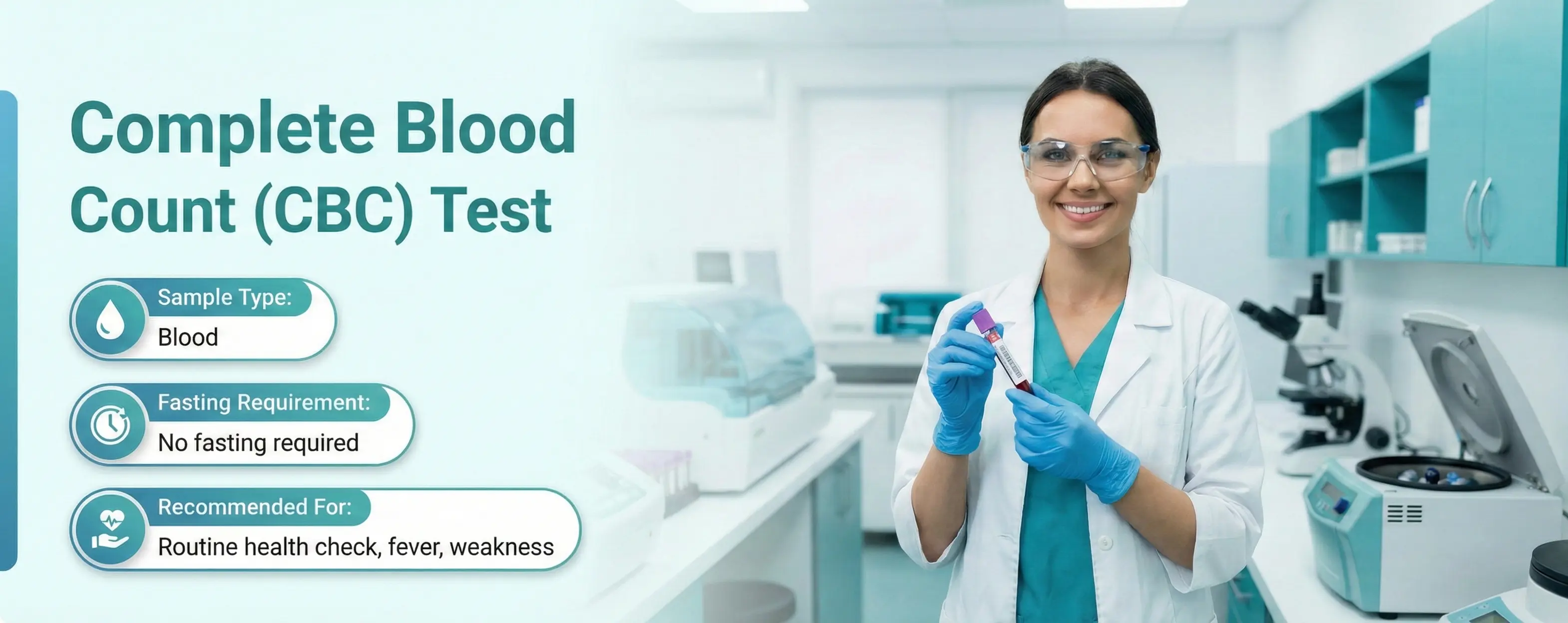
A quick info on CBC Test

Overview
A Complete Blood Count (CBC), also known as a complete blood picture, haemogram, or complete blood profile, is a commonly recommended blood test. It provides a detailed breakdown of your blood components, such as haemoglobin [Hb], haematocrit [Hct], red blood cells [RBCs], white blood cells [WBCs], and platelets. A complete blood profile can provide important information about your health and help detect a wide range of conditions, including anaemia, infections, cancer, and blood disorders. It is often part of routine and diagnostic health assessments.

When and Who Should Get a CBC Test Done?
The CBC test serves as an important health assessment for different age groups and special health needs. Depending on the purpose, the CBC test may be indicated in the following situations:
- Detecting underlying health issues: Symptoms such as fatigue, sudden weight loss, nausea or vomiting, high fever, bleeding, pale skin, headaches, night sweats, or fainting may be associated with infections or anaemia. A CBC test can also help evaluate these symptoms.
- Diagnosing illnesses: A CBC test can help diagnose chronic conditions such as blood cancers, infections, or autoimmune disorders.
- Pre-surgery evaluation: Before surgery or cancer therapy, a CBC test is essential to assess your overall health status.
- Monitoring routine health conditions: CBC testing can be performed regularly to monitor chronic illnesses or to evaluate treatment effectiveness.
- Prenatal testing: The CBC test is commonly done during pregnancy to assess the mother’s overall health.

What Conditions Can a CBC Test Help Detect?
The CBC test provides valuable insights into your health and can help detect various conditions with an expert’s guidance.
- Anaemia: Abnormal levels of certain parameters, such as haemoglobin, can help detect underlying anaemia.
- Infections: Changes in the white blood cell count may sometimes indicate bacterial or viral infections.
- Blood cancer: Significant changes in blood cell counts may help detect certain blood cancers, such as leukaemia or lymphoma.
- Platelet disorders: Abnormally high or low platelet levels may affect normal blood clotting and can lead to bleeding or clotting disorders.
- Bone marrow disorders: Since the bone marrow forms blood cells, changes in the blood cells may indicate bone marrow dysfunction.
- Autoimmune disorders: CBC can support the assessment of autoimmune conditions such as arthritis, lupus, and vasculitis.
Disclaimer: The above information is for educational purposes only. Always consult an expert for guidance to understand your clinical symptoms and test results better.
.png?dim=48x48&q=75)
CBC Test Preparation
What to Expect Before the Test
- No fasting is required before the test unless it is being performed along with other blood tests that require fasting.
- Inform your doctor about any supplements and medicines before the test.
- Consult your healthcare provider for any special instructions to follow before the test.
What to Expect During the Sample Collection
A blood sample is required for the CBC test. Here is what you can expect during sample collection:
- An elastic band is tied around your upper arm for better access to your veins.
- A needle is inserted into a vein in the inner arm to collect the blood sample.
- A bandage is placed over the puncture site to help stop minor bleeding.
What to Expect After the Test
- Blood sample collection is usually safe with minimal to no risk.
- You may experience mild discomfort, slight bruising, or tenderness at the puncture site, which usually resolves on its own within a few days.
- Feeling dizzy for a few seconds is normal and usually improves with a little rest.
Note: If you notice anything unusual at the puncture site, such as persistent bleeding, a rash, or pain, consult your healthcare provider.

What are the Parameters Included in a CBC Test?
The CBC test measures the number of blood cells and various related parameters, such as:
Red Blood Cell (RBC) Parameters
- RBC Count: Number of red blood cells
- Haemoglobin (Hb): A protein that carries oxygen
- Haematocrit (Hct/PCV): Percentage of total blood volume made up of RBCs
- MCV (Mean Corpuscular Volume): Average size of RBCs
- MCH (Mean Corpuscular Haemoglobin): Amount of haemoglobin per RBC
- MCHC (Mean Corpuscular Haemoglobin Concentration): Concentration of haemoglobin in RBCs
- RDW (Red Cell Distribution Width): Variation in RBC size
White Blood Cell (WBC) Parameters
- Total WBC Count (TLC): Total number of white blood cells
- Differential Count (DLC): Types of WBCs:
- Neutrophils
- Lymphocytes
- Monocytes
- Eosinophils
- Basophils
Platelet Parameters
- Platelet Count (PLT): Number of platelets in the blood.
- MPV (Mean Platelet Volume): Average size of platelets
- PDW (Platelet Distribution Width): Variation in platelet size
- Plateletcrit (PCT): Volume occupied by platelets in blood
- Platelet to Large Cell Ratio (PLCR): Percentage of large platelets among total platelets

Normal Range of CBC Test Parameters
Check the tables below to understand the normal reference ranges of different blood parameters:
RBC Parameters
|
Parameter |
Normal reference range |
|---|---|
|
RBC |
|
|
Haemoglobin (Hb) |
|
|
Haematocrit |
|
|
MCV |
83 - 101 fL (in femtolitre, or cubic micrometres (µm3) |
|
MCH |
27 - 32 pg/RBC (in picograms per cell) |
|
MCHC |
31.5 to 34.5 g/dL |
|
RDW-SD |
39 - 46 fL |
|
RDW-CV |
11.6 - 14% |
WBC Parameters
|
Parameter |
Normal reference range |
|---|---|
|
Total leucocyte count (WBC) |
4.0 - 10.0 x 10³/μL |
|
Neutrophils |
40 - 80% |
|
Lymphocyte percentage |
20 - 40% |
|
Monocytes |
2 - 10% |
|
Eosinophils |
1- 6% |
|
Basophils |
0 - 2% |
|
Immature granulocyte percentage (IG%) |
0 - 0.5% |
|
Neutrophils - Absolute count |
2.0 - 7.0 x 10³/μL |
|
Lymphocytes - Absolute count |
1.0 - 3.0 x 10³/μL |
|
Monocytes - Absolute count |
0.2 - 1 x 10³/μL |
|
Basophils - Absolute count |
0.02 - 0.1 x 10³/μL |
|
Eosinophils - Absolute count |
0.02 - 0.5 x 10³/μL |
Platelet Parameters
|
Parameter |
Normal reference range |
|---|---|
|
Platelet count |
150,000 to 410,000/μL or mm3 |
|
MPV |
6.5- 12.0 femtolitres (fL) |
|
PDW |
9.6 - 15.2 fL |
|
Platelet to large cell ratio (PLCR) |
19.7 - 42.4% |
|
Plateletcrit (PCT) |
0.19 - 0.39% |
Note: The normal values and reference ranges may vary from lab to lab. Please refer to the ranges mentioned in your report and consult a doctor to understand your lab reports.
.png?dim=48x48&q=75)
CBC Test Result Interpretation
CBC test results can help interpret potential conditions in correlation with clinical symptoms or other tests. Always consult an expert for a better interpretation of your test results:
The table below shows the parameters, their levels, and potential association with certain conditions:
|
Parameter |
Level |
Potential interpretation |
|---|---|---|
|
Total RBC count |
High |
Dehydration, heavy smoking, sleep apnoea, chronic lung disease, kidney tumours, or living at a high altitude. |
|
Low |
Anaemia, chronic kidney disease, RBC destruction, bone marrow disorders or damage, chronic inflammatory disease, internal bleeding, or nutritional deficiencies. |
|
|
Haemoglobin (Hb) |
High |
Dehydration, chronic hypoxia, smoking, bone marrow disorder, heart failure, or living at high altitudes. |
|
Low |
Iron deficiency, vitamin deficiency, folate deficiency, pregnancy, or heavy menstrual bleeding, internal bleeding, chronic disease and other forms of anaemia. |
|
|
Haematocrit (PCV) |
High |
Severe burns, shock, or extreme dehydration. |
|
Low |
Overhydration, bone marrow failure, or nutritional deficiency, chronic conditions, pregnancy, other forms of anaemia. |
|
|
MCV |
High |
Nutritional deficiency, liver disease, hypothyroidism, or alcoholism. |
|
Low |
Thalassaemia, iron deficiency, or chronic lead poisoning. |
|
|
MCH |
High |
Macrocytic anaemia or overactive thyroid, nutritional deficiency,liver diseases. |
|
Low |
Microcytic anaemia or copper deficiency, genetic blood disorder,chronic diseases. |
|
|
MCHC |
High |
Dehydration, genetic disorder, or autoimmune red cell breakdown. |
|
Low |
Sideroblastic anaemia, chronic disease, chronic blood loss, or iron deficiency. |
|
|
RDW |
High |
Mixed nutritional deficiencies (e.g., iron and B12 together), recent blood loss, chronic diseases or certain tumours. |
|
Low |
Usually normal; cells are of very uniform size. |
|
|
Total WBC count |
High |
Viral or bacterial infections, tissue injury, intense physical stress, autoimmune and inflammatory diseases, certain tumours, allergies, or asthma. |
|
Low |
Viral infections (HIV/AIDS, hepatitis), sepsis, bone marrow disorders, autoimmune conditions, bone marrow tumor, dietary deficiencies, or the use of certain medications. |
|
|
Neutrophils |
High |
Acute bacterial infection, gout, inflammation, rheumatoid arthritis, trauma, heart attack, burns, stress, rigorous exercise, certain leukaemias, cushing syndrome, or usage of steroids. |
|
Low |
B12 deficiency, sepsis, severe infections, especially viral, autoimmune disorders, bone marrow damage (chemotherapy, radiation therapy), or congenital neutropenia, cancers of the bone marrow. |
|
|
Lymphocytes |
High |
Acute viral infections (chickenpox, CMV, EBV, herpes, rubella), whooping cough, TB, toxoplasmosis, ulcerative colitis, autoimmune conditions, or blood or lymphatic disorders (CLL, lymphoma). |
|
Low |
Recent steroid treatment, malnutrition, radiation, autoimmune disorders, HIV, viral hepatitis, typhoid, influenza, COVID-19, or bone marrow suppression. |
|
|
Monocytes |
High |
Tuberculosis, fungal infection, malaria, bacterial endocarditis, collagen vascular diseases (lupus, rheumatoid arthritis), or monocytic leukaemia. |
|
Low |
Autoimmune diseases, cardiovascular diseases, severe bone marrow stress, or damage, bone marrow disorders (aplastic anaemia, hairy cell leukaemia), or chemotherapy. |
|
|
Eosinophils |
High |
Asthma, hay fever, drug reactions, skin allergies, parasitic infections, coeliac disease, inflammatory bowel disease, some cancers, or connective tissue disorders. |
|
Low |
Acute stress or use of corticosteroid medicines, chemotherapy, acute infections and metabolic diseases (cushing syndrome). |
|
|
Basophils |
High |
Chronic inflammation (ulcerative colitis, rheumatoid arthritis), rare blood disorders, rare allergic reactions, certain bone marrow disorders (leukaemias), or uraemia. |
|
Low |
Severe allergic reactions (anaphylaxis) or hyperthyroidism, certain bone marrow disorders. |
|
|
Platelet count |
High |
After surgery, iron deficiency, cancers (lung, gut, breast, ovarian), lymphoma, rheumatoid arthritis, or chronic inflammation. |
|
Low |
Dengue, malaria, liver cirrhosis, vitamin B12 deficiency, sepsis, leukaemia, lymphoma, myelodysplasia, autoimmune condition, measles, hepatitis, or chemotherapy and certain medications, blood clotting disorders. |
|
|
MPV |
High |
Diabetes, heart disease, or early recovery from blood loss. |
|
Low |
Aplastic anaemia or certain cytotoxic drugs,bone marrow disorder, chronic inflammation and autoimmune condition. |
|
|
PDW |
High |
Anaemia (sickle cell disease) or active bleeding, acute or chronic inflammatory condition (rheumatoid arthritis, ibd), certain cardiac conditions, bone marrow disorder. |
|
Low |
Usually of limited clinical significance; may indicate relatively uniform platelet size and is often seen in healthy individuals. |
Disclaimer: This table shows the potential association of blood parameter levels with the above conditions and is for educational purposes only. Always consult an expert for a better interpretation of your test results.

CBC Test Price in Nagpur
A Complete Blood Count (CBC) test can cost differently depending on factors such as location, technology, and equipment. In Nagpur, the average cost of a CBC test on PharmEasy is around INR 349, though prices may vary slightly depending on offers and location. You can also explore the CBC test rates in other Indian cities as well.
|
City |
Offer Price |
|---|---|
|
349 |
|
|
349 |
|
|
349 |
|
|
349 |
|
|
349 |
|
|
349 |
|
|
349 |
|
|
349 |
|
|
349 |
|
|
349 |

Areas We Serve in Nagpur
You can book CBC Test in Nagpur through PharmEasy with convenient home sample collection across several localities, including :
- Dharampeth
- Ramdaspeth
- Civil Lines
- Seminary Hills
- Sitabuldi
- Mahal
- Itwari
- Laxmi Nagar
- Panchsheel Nagar
- Parvati Nagar
- Khamla
- Manish Nagar
- Manewada
- Ganjipeth
- Vayusena Nagar
- Besa
- Sonegaon
- Bagadganj
- Jaripatka
- Mankapur
You can also check service availability during purchase by entering your pincode.

CBC Test Sample Collection: Home vs. Diagnostic Lab
PharmEasy offers several benefits, including a home sample collection service. Check the table below to compare the benefits offered by PharmEasy Labs and other diagnostic labs.
|
Feature |
Home collection (PharmEasy) |
Traditional diagnostic lab |
|---|---|---|
|
Convenience |
High - sample collected from your home or office. |
Low - requires travelling and waiting in queues. |
|
Time saving |
Maximum - no travel time. You choose the time slot. |
Minimum - depends on traffic and lab wait time. |
|
Safety & comfort |
Safe - helps avoid exposure to other sick patients. |
Moderate - exposure to crowded waiting areas. |
|
Process |
A professional phlebotomist visits you. |
You must visit the facility during its hours. |
|
Report access |
Digital - reports are sent directly to your app or email. |
Often requires a second visit for physical copies. |
Was This Test Information Helpful?
Please rate your experience
 Yes Helpful (108)
 Not Helpful
References
Health packages containing 'CBC Test'
 For full-body wellness, go for a comprehensive checkup
People Also Ask
What is the purpose of a CBC test?
Should I get a CBC test done even if I am healthy?
Can I book a CBC test online in Nagpur?
Is the CBC test safe?
Is home sample collection available in Nagpur for the CBC test?
Is fasting required before the CBC test?
Popular Tests in Nagpur
 Explore the most booked tests in your location
 4.6 Stars| 7+ Lakhs Ratings & Reviews

Over 10 million happy users PharmEasy Labs
- Because the digital report is available on WhatsApp, there's no need to go back to the lab. Thanks, PharmEasy!
 Sachin sharma11 Jan ‘26
 - Thanks to the coupon discount, the blood test was done at a lower price.Komal04 Jan ‘26
- The lab technician was a good and knowledgeable professional.Rakesh Pandey06 Jan ‘26
- Due to bad weather, it's difficult to reach the lab. But home collection makes things easier.Arjun08 Jan ‘26
- Thanks to the Swasth AI feature, the report is easy to understand.Priya Mehta02 Jan ‘26
- The report is available on the same day. Wow!Vikas Patel05 Jan ‘26
Have any doubts? Ask us.
Ask us anything about the CBC Test in Nagpur - Price & Details to understand it better

View top questions
( Total 1 Questions asked)Do I need to fast before a CBC test?
No, fasting is usually not required for a CBC test. You can eat and drink normally unless your doctor has advised additional blood tests along with the CBC that require fasting.Harsh Raj23 Dec ‘25
Nearby Labs
Lab tests made easy!
- Quick Collection
- Trusted Accuracy
- Hassle-free Services
PharmEasy Labs (Thyrocare powered) - Nagpur
Kailash Heights, C.T.S No.636, Wing ‘A’, Maharashtra
 grievance-officer@docon.in
 7022000900
Health Buddy Diagnostic Pvt Ltd - Nagpur
Behind Kalpana Building Bhalerao Nursing Home Ramdaspeth Nagpur 440010, Maharashtra
grievance-officer@docon.in7022000900
Health Buddy Diagnostic Pvt Ltd - Nagpur
MEDICAL SQUARE, 1ST FLOOR , VINAYAK TOWER, Untkhana Road ,ABOVE LENSKART SHOP, ,NAGPUR-440009, Maharashtra
grievance-officer@docon.in7022000900Diagnopein - Nagpur
Panchashil Square, Ground Floor-Rajkamal Complex, opp. Tilak Patrakar Bhavan, Dhantoli, Nagpur - 440012, Maharashtra
grievance-officer@docon.in7022000900Diagnopein - Nagpur
Central Avenue, Next to Blue Diamond Hotel, Doasar Square, Queta colony, Mominpura, Nagpur - 440018, Maharashtra
grievance-officer@docon.in7022000900Natural Diagnostic Centre - Nagpur
Bhalerao Hospital, 1st Floor Behind Tuli Hotel, Ramdaspeth,, Maharashtra
grievance-officer@docon.in7022000900HealthRoute - Nagpur
Shivan Nagar, Engineering college road, Near spandan hospital, Maharashtra
grievance-officer@docon.in7022000900HealthRoute - Nagpur
F6 astha bunglow near sola overbridge science city road, Maharashtra
grievance-officer@docon.in7022000900HealthRoute - Nagpur
Address: F6 astha bunglow near sola overbridge science city road, Maharashtra
grievance-officer@docon.in7022000900Inara’s Femiscan - Nagpur
MEDICAL SQUARE, 1ST FLOOR , VINAYAK TOWER, Untkhana Road ,ABOVE LENSKART SHOP, Maharashtra
grievance-officer@docon.in7022000900HealthRoute - Nagpur
Shop No. 12, Krushna Complex, Datta Chowk,, Maharashtra
grievance-officer@docon.in7022000900
We provide trusted, expert-curated health content to support better awareness,prevention, and care.
Backed by experienced doctors, medical experts, and strict editorial standards.