




Generic Medicine List in India: A Guide to Common Generic Medicines
By Dr. Ambika Dashrathrao Mamde +2 more

Medically reviewed by Dr. Ambika Dashrathrao Mamde
Last updated: Sep 11, 2026 Published on: Aug 31, 2026


Get,

to manage your symptom
Get your,

4 Cr+ families
benefitted

OTP sent to 9988776655



You’ve successfully subscribed to receive
doctor-approved tips on
Whatsapp

Get ready to feel your best.


Register to Avail the Offer
Send OTPBy continuing, you agree with our Privacy Policy and Terms and Conditions
Hi There,
Sign up on PharmEasy now!!


Trusted by 4 crore+ families

OTP sent to 9988776655
You have unlocked 25% off on medicines


Code: NU25

By Dr. Ambika Dashrathrao Mamde +2 more
Table of Contents
Generic medicine is a medicine that contains the same active ingredient and is intended to provide the same therapeutic effect as its branded counterpart1.
Many people prefer buying generic medicines as they are affordable. Generic medicines are receiving attention in India due to growing awareness of affordable healthcare options. This blog will cover what generic medicines are, common generic medicines in India, and tips to safely buy generic medicines in India, which helps in making informed choices.
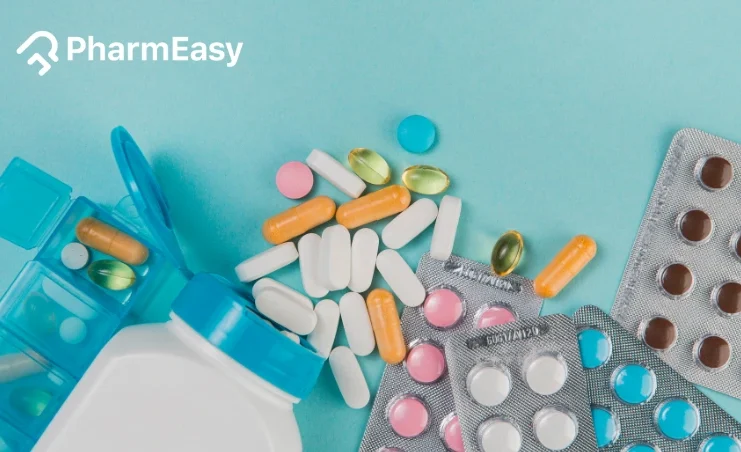
Generic medicines are medicines identified by their active ingredient and are used to treat or manage specific health conditions. In India, many commonly used medicines are included in the National List of Essential Medicines (NLEM), which identifies medicines considered important for meeting the country’s priority healthcare needs1,2.
The appropriate medicine, strength, dose, and duration depend on your individual health condition and should be determined by your consulting doctor. You must discuss with your doctor before starting on any medications or switching from branded medicine to generic medicine. The following generic medicine lists common generic medicines used for some of the common health conditions:
Also Read: Generic Medicines for High Blood Pressure: Safety, Types & Benefits
Also Read: Generic Medicines for Diabetes: Options, Safety and How Much You Can Save
A single medicine can have many brand names because several pharmaceutical companies might make the same generic medicine and give their products different brand names. The generic name refers to the active ingredient, while the brand name is chosen by the company that makes the medicine. For example, several companies may manufacture paracetamol and sell it under different brand names31.
The various available brands could look different, but the active medicine remains the same in case of the generic medicine. Regulatory authorities emphasize that an approved generic must have the same active ingredient, strength, dosage form, and route of administration as the corresponding brand name medicine, and must meet required standards for safety, effectiveness, and quality1.
Another reason many brands exist is competition between manufacturers. Every brand gives its product a unique name to make it easier to recognise and remember. Authorities explain that multiple brands producing the same generic medicine can be approved, and this competition can actually help make medicines more affordable and improve access to treatment32.
Some of the tips to ensure safe generic medicine use in India:
Generic medicines are expected to remain an important part of India’s effort to make treatment more affordable and accessible. The Government’s Pradhan Mantri Bhartiya Janaushadhi Pariyojana (PMBJP) aims to increase access to quality generic medicines and promote their use among the public. Government reports also state that medicines supplied through Jan Aushadhi Kendras are generally priced about 50 to 80% lower than leading branded products, which can help reduce the cost of treatment35,36.
However, wider use of generic medicines still faces challenges such as public acceptance, awareness, maintaining reliable availability and fighting counterfeit products. The Department of Pharmaceuticals specifically identifies the need to dispel the belief that low priced generic medicines are of inferior quality or less effective, while its reports also emphasise maintaining adequate medicine stocks. Continued awareness, efforts and improvements in supply and access will therefore be important for the future growth of generic medicines in India35,37.
Generic medicines can offer an affordable way to access essential treatment opitions while containing the same active ingredients as their corresponding branded medicines. In India, government initiatives such as the Pradhan Mantri Bhartiya Janaushadhi Pariyojana (PMBJP) aim to improve access to quality generic medicines at affordable prices and reduce patients’ out of pocket healthcare costs. As awareness and access continue to grow, choosing medicines based on their active ingredient, strength, quality, and appropriate medical advice can help people make informed decisions about their healthcare choice.
There is no single generic brand that can be called the “best” for everyone; what matters is choosing the correct medicine and getting it from a reliable source after discussing with your doctor. The Government of India’s Department of Pharmaceuticals states that the Jan Aushadhi programme aims to provide quality generic medicines at affordable prices36.
Yes, quality assured generic medicines can be a safe and affordable treatment option when obtained through reliable sources. The Government of India states that the PMBJP aims to make quality generic medicines available at affordable prices through Jan Aushadhi Kendras36.
Yes, generic medicines supplied through India’s Jan Aushadhi programme undergo quality checks before reaching patients. The Government of India states that these medicines are procured from WHO GMP certified suppliers and that each batch is tested at NABL accredited laboratories before being supplied to Jan Aushadhi Kendras35.
Yes, you can ask your doctor whether a generic medicine is suitable for you. In India, government guidance states that physicians should, as far as possible, prescribe medicines using their generic names and ensure their rational use38.
1. Research C for DE and. Generic Drug Facts. FDA. Published online June 2, 2026. Accessed August 17, 2026. https://www.fda.gov/drugs/generic-drugs/generic-drug-facts
2. NLEM, 2022.pdf. Accessed August 17, 2026. https://cdsco.gov.in/opencms/resources/UploadCDSCOWeb/2018/UploadConsumer/nlem2022.pdf
3. Acetaminophen: MedlinePlus Drug Information. Accessed August 17, 2026. https://medlineplus.gov/druginfo/meds/a681004.html
4. Ibuprofen: MedlinePlus Drug Information. Accessed August 17, 2026. https://medlineplus.gov/druginfo/meds/a682159.html
5. Diclofenac: MedlinePlus Drug Information. Accessed August 21, 2026. https://medlineplus.gov/druginfo/meds/a689002.html
6. Amlodipine: MedlinePlus Drug Information. Accessed August 17, 2026. https://medlineplus.gov/druginfo/meds/a692044.html
7. Hydrochlorothiazide: MedlinePlus Drug Information. Accessed August 17, 2026. https://medlineplus.gov/druginfo/meds/a682571.html
8. Telmisartan: MedlinePlus Drug Information. Accessed August 21, 2026. https://medlineplus.gov/druginfo/meds/a601249.html
9. Metformin: MedlinePlus Drug Information. Accessed August 17, 2026. https://medlineplus.gov/druginfo/meds/a696005.html
10. Glimepiride: MedlinePlus Drug Information. Accessed August 17, 2026. https://medlineplus.gov/druginfo/meds/a696016.html
11. Human Insulin Injection: MedlinePlus Drug Information. Accessed August 21, 2026. https://medlineplus.gov/druginfo/meds/a682611.html
12. Atorvastatin: MedlinePlus Drug Information. Accessed August 17, 2026. https://medlineplus.gov/druginfo/meds/a600045.html
13. Omeprazole: MedlinePlus Drug Information. Accessed August 11, 2026. https://medlineplus.gov/druginfo/meds/a693050.html
14. Pantoprazole: MedlinePlus Drug Information. Accessed August 17, 2026. https://medlineplus.gov/druginfo/meds/a601246.html
15. Ranitidine: MedlinePlus Drug Information. Accessed August 21, 2026. https://medlineplus.gov/druginfo/meds/a601106.html
16. Cetirizine: MedlinePlus Drug Information. Accessed August 17, 2026. https://medlineplus.gov/druginfo/meds/a623043.html
17. Chlorpheniramine: MedlinePlus Drug Information. Accessed August 17, 2026. https://medlineplus.gov/druginfo/meds/a682543.html
18. Amoxicillin: MedlinePlus Drug Information. Accessed August 17, 2026. https://medlineplus.gov/druginfo/meds/a685001.html
19. Amoxicillin and Clavulanic Acid: MedlinePlus Drug Information. Accessed August 17, 2026. https://medlineplus.gov/druginfo/meds/a685024.html
20. Azithromycin: MedlinePlus Drug Information. Accessed June 22, 2026. https://medlineplus.gov/druginfo/meds/a697037.html
21. Cefixime: MedlinePlus Drug Information. Accessed August 21, 2026. https://medlineplus.gov/druginfo/meds/a690007.html
22. Ciprofloxacin: MedlinePlus Drug Information. Accessed August 21, 2026. https://medlineplus.gov/druginfo/meds/a688016.html
23. Montelukast: MedlinePlus Drug Information. Accessed August 17, 2026. https://medlineplus.gov/druginfo/meds/a600014.html
24. Budesonide: MedlinePlus Drug Information. Accessed August 17, 2026. https://medlineplus.gov/druginfo/meds/a608007.html
25. Albuterol: MedlinePlus Drug Information. Accessed August 21, 2026. https://medlineplus.gov/druginfo/meds/a607004.html
26. Diazepam: MedlinePlus Drug Information. Accessed August 21, 2026. https://medlineplus.gov/druginfo/meds/a682047.html
27. Carbamazepine: MedlinePlus Drug Information. Accessed August 21, 2026. https://medlineplus.gov/druginfo/meds/a682237.html
28. Clotrimazole Topical: MedlinePlus Drug Information. Accessed August 21, 2026. https://medlineplus.gov/druginfo/meds/a618059.html
29. Fluconazole: MedlinePlus Drug Information. Accessed August 21, 2026. https://medlineplus.gov/druginfo/meds/a690002.html
30. Hydrocortisone: MedlinePlus Drug Information. Accessed August 21, 2026. https://medlineplus.gov/druginfo/meds/a682206.html
31. Brand to Generic Medication Information. Powys Teaching Health Board. Accessed August 17, 2026. https://pthb.nhs.wales/services/pharmacy-and-medicines-management/public/brand-to-generic-medication-information/
32. Research C for DE and. Generic Drugs. FDA. March 13, 2025. Accessed August 17, 2026. https://www.fda.gov/drugs/buying-using-medicine-safely/generic-drugs
33. Supply of Generic Medicines. Accessed August 17, 2026. https://www.pib.gov.in/PressReleasePage.aspx?PRID=2246069®=48&lang=2
34. Medicines at Jan Aushadhi Kendras. Accessed August 17, 2026. https://www.pib.gov.in/PressReleasePage.aspx?PRID=2227622®=48&lang=2
35. Annual Report 2026.cdr. Accessed August 17, 2026. https://pharma-dept.gov.in/sites/default/files/Annual%20Report%202025-26.pdf
36. Janaushadhi Scheme | Department of Pharmaceuticals. Accessed August 17, 2026. https://www.pharma-dept.gov.in/janaushadhi-scheme
37. Pharma -2015-16.pdf. Accessed August 17, 2026. https://www.pharma-dept.gov.in/sites/default/files/Pharma%20-2015-16.pdf
38. GENERIC NAMES OF MEDICINE IN MEDICAL PRESCRIPTIONS. Accessed August 17, 2026. https://www.pib.gov.in/Pressreleaseshare.aspx?PRID=1797698&lang=2®=48
Disclaimer: The information provided here is for educational/awareness purposes only and is not intended to be a substitute for medical treatment by a healthcare professional and should not be relied upon to diagnose or treat any medical condition. The reader should consult a registered medical practitioner to determine the appropriateness of the information and before consuming any medication. PharmEasy does not provide any guarantee or warranty (express or implied) regarding the accuracy, adequacy, completeness, legality, reliability or usefulness of the information; and disclaims any liability arising thereof.
Links and product recommendations in the information provided here are advertisements of third-party products available on the website. PharmEasy does not make any representation on the accuracy or suitability of such products/services. Advertisements do not influence the editorial decisions or content. The information in this blog is subject to change without notice. The authors and administrators reserve the right to modify, add, or remove content without notification. It is your responsibility to review this disclaimer regularly for any changes.


Comments

Leave your comment...
You may also like






















Comments