Exenta T 10Mg Strip Of 20 Combikit Tablets
20 Tablet Combikit(s) in StripMRP ₹336.19
₹262.23
22% OFF
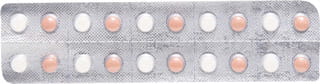
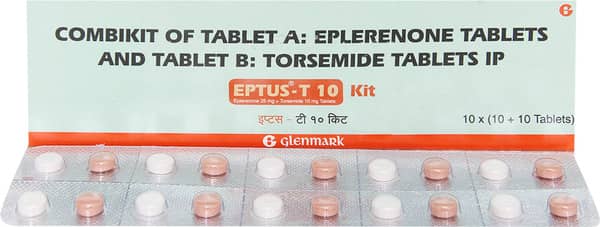
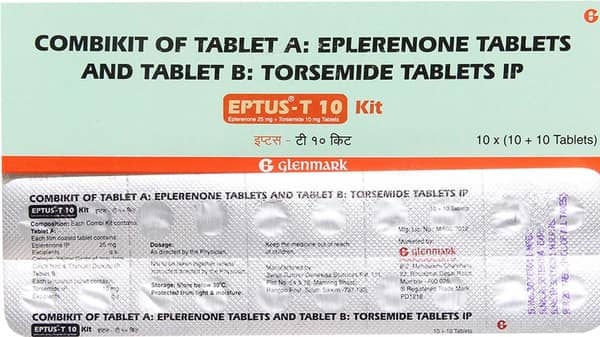
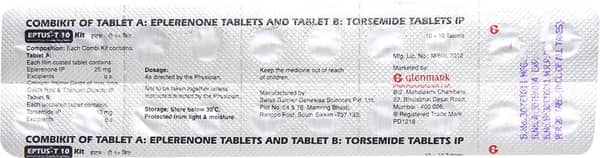
Made by
GLENMARK PHARMACEUTICALS
Dosage
TABLET COMBIKIT
Expiry
Product Summary
| Uses | Oedema, high blood pressure and heart failure |
| Therapy | Anti-hypertensive |
| Side effects | Increased urination, dizziness, headache, low blood pressure, nausea, raised blood potassium |
| Salt Content | Eplerenone(25.0 Mg)+Torasemide / Torsemide(10.0 Mg) |
Assurance
available
Regulated
Medical Description
Uses
- For the treatment of oedema (swelling due to the build-up of excess fluid in the body), including oedema associated with heart failure.
- For the management of high blood pressure.
- As part of treatment, along with other medicines, in people with heart failure, including those who have had a recent heart attack.
Contraindications
- If you are allergic to Exenta T Tablet Combikit or to any of the ingredients of this medicine.
- If you are allergic to sulfonamide medicines, as torsemide belongs to this chemical family.
- If you have anuria, a condition in which the kidneys produce little or no urine.
- If the level of potassium in your blood is above the normal range.
- If you have severe kidney disease.
- If you have severe liver disease, or hepatic coma or pre-coma.
- If you are taking other medicines that raise potassium, such as potassium supplements, potassium-containing salt substitutes or other potassium-sparing water pills.
- If you are taking medicines that strongly increase the level of eplerenone in the blood, such as the antifungals ketoconazole and itraconazole, the antibiotics clarithromycin and telithromycin, or the antiviral medicines ritonavir and nelfinavir.
- If you are severely dehydrated, have very low blood pressure, or have a low blood volume.
- If you are pregnant, planning a pregnancy or are a breastfeeding mother, unless your doctor specifically advises it.
Side effects
- Common
- Passing urine more often than usual
- Dizziness or light-headedness, especially on standing up
- Low blood pressure
- Headache
- Difficulty in sleeping
- Tiredness and generalised weakness
- Nausea and vomiting
- Diarrhoea
- Constipation
- Muscle cramps
- Dehydration and increased thirst
- Raised potassium levels in the blood
- Low levels of sodium, potassium or magnesium in the blood
- Raised uric acid levels, which may trigger gout
- Raised blood urea and creatinine levels
- Raised blood cholesterol
- Cough
- Back pain
- Skin rashes and itching
- Serious - stop and contact your doctor or go to hospital straight away
- An irregular, slow or pounding heartbeat, muscle weakness, or numbness and tingling, which may be signs that potassium in the blood has risen too high
- Fainting, or severe dizziness that does not settle
- Passing very little or no urine, or a sudden reduction in kidney function
- Severe allergic reaction with swelling of the face, lips or throat, difficulty in breathing or swallowing, or a severe blistering skin rash
- Worsening breathlessness, rapid weight gain or increasing swelling despite treatment
- Ringing in the ears or a change in hearing
- Yellowing of the skin or eyes
Precautions and Warnings

Pregnancy

Breast Feeding

Driving

Alcohol

Other General Warnings
- The level of potassium in your blood is above or below the normal range, or you have low sodium or low magnesium.
- You have kidney disease, liver disease, diabetes or gout.
- You are taking other water pills, potassium supplements, potassium-containing salt substitutes, or medicines for blood pressure or heart failure such as ACE inhibitors or angiotensin receptor blockers.
- You are taking lithium for a mood disorder, or immunosuppressive medicines such as tacrolimus or ciclosporin.
- You regularly take painkillers of the NSAID group, such as ibuprofen or diclofenac.
- You experience difficulty in passing urine or have prostate-related problems.
- You have very low blood pressure, or you become dehydrated through severe vomiting, diarrhoea or heavy sweating.
- You are elderly, as the risk of dehydration, low blood pressure and falls is greater.
- You have surgery or any procedure planned, or you are due to have a vaccination.
- You develop muscle weakness, an irregular or pounding heartbeat, numbness or tingling, or you pass much less urine than usual. Contact your doctor straight away if this happens.
Directions for Use
- Take Exenta T Tablet Combikit exactly as prescribed by your doctor.
- Swallow the tablet whole with a glass of water. It can be taken with or without food.
- Take it at a fixed time each day. Your doctor will usually advise taking it earlier in the day, as it increases the passing of urine and may otherwise disturb your sleep.
- Do not change your dose unless your doctor tells you to.
- This medicine is usually taken as a long-term treatment. Do not stop it on your own, even if you feel better.
- Attend the blood tests your doctor arranges, so that your potassium level and kidney function can be checked.
- Drink fluids as advised by your doctor, and tell your doctor if you develop severe vomiting, diarrhoea or heavy sweating, as these can cause dehydration.
Storage and disposal
- Store Exenta T Tablet Combikit below 30°C in its original packaging, protected from light and moisture.
- Keep this medicine out of the sight and reach of children and pets.
- Do not use this medicine after its expiry date, or if the pack is damaged.
- Discard unused or expired medicine properly. Do not flush it down the toilet or throw it into the drain.
Quick Tips
- Take Exenta T Tablet Combikit earlier in the day so that the increased passing of urine does not disturb your sleep.
- If your pack contains two different tablets, take both as directed. Neither one should be taken on its own.
- Do not use potassium-containing salt substitutes or low-sodium salt, and do not take potassium supplements, unless your doctor advises it.
- Get up slowly from lying or sitting, as this medicine can cause dizziness when you stand.
- Attend the blood tests your doctor arranges. Checking your potassium level and kidney function is an important part of this treatment.
- Tell your doctor straight away about muscle weakness, an irregular or pounding heartbeat, or numbness and tingling.
- Weigh yourself as advised by your doctor. A sudden gain or loss in weight can mean your fluid balance has changed.
- Avoid painkillers of the NSAID group, such as ibuprofen and diclofenac, unless your doctor has approved them.
- Limit alcohol, as it adds to dizziness, low blood pressure and dehydration.
- Do not stop this medicine on your own, even if you feel well, as it is usually a long-term treatment.
Dosage
Overdose
- An overdose of this medicine may cause symptoms such as light-headedness, blurred vision, severe weakness, passing a large amount of urine, dehydration, a marked fall in blood pressure, confusion or loss of consciousness.
- It may also cause a rise in blood potassium, which can show as muscle weakness, numbness or tingling, or an irregular heartbeat.
- If you think you have taken too much of this medicine, or you experience any of these symptoms, contact your doctor immediately or go to the nearest hospital. Take the medicine pack with you.
Missed a Dose
- Take the doses at the appropriate time for the desired effect.
- If you miss a dose, take it as soon as you remember. However, if it is almost time for your next dose, skip the missed dose and continue with your regular schedule.
- Do not take a double dose to make up for the one you missed.
- If your pack contains two different tablets and you have taken only one of them, tell your doctor or pharmacist rather than taking extra on your own.
Interactions
Interactions with other medicines
- Certain medicines can interfere with the action of Exenta T Tablet Combikit, or this medicine can affect the action of other medicines taken at the same time. Always tell your doctor about every medicine you take, including prescription and non-prescription medicines, herbal products and dietary supplements.
- Severe - should not normally be taken together
- Potassium supplements, potassium-containing salt substitutes and other potassium-sparing water pills such as spironolactone or amiloride - together with Exenta T Tablet Combikit these can raise potassium in the blood to dangerous levels.
- Strong inhibitors of the liver enzyme CYP3A4, including the antifungals ketoconazole and itraconazole, the antibiotics clarithromycin and telithromycin, the antivirals ritonavir and nelfinavir, and nefazodone - these raise the level of eplerenone in the blood and increase the risk of high potassium.
- Moderate - use only under medical supervision
- Medicines for blood pressure and heart failure that act on the renin-angiotensin system, such as ACE inhibitors and angiotensin receptor blockers - they add to the risk of high potassium, so your doctor will monitor your blood tests closely.
- Trimethoprim, including the combination co-trimoxazole, and heparin - these can also raise blood potassium.
- Painkillers of the NSAID group, such as ibuprofen, diclofenac and naproxen - they can reduce the effect of the water pill, add to the risk of high potassium and place extra strain on the kidneys.
- Lithium, used for mood disorders - water pills can raise lithium levels in the blood and cause toxicity.
- Digoxin, used for heart conditions - loss of potassium caused by the water pill can increase the risk of digoxin side effects.
- Immunosuppressant medicines such as ciclosporin and tacrolimus - they can affect kidney function and raise blood potassium.
- Aminoglycoside antibiotics such as streptomycin, gentamicin and amikacin, and cisplatin - taken with a loop diuretic they increase the risk of hearing damage and kidney damage.
- Probenecid, used for gout - it can reduce the effect of torsemide.
- Other blood pressure lowering medicines, medicines that can cause drowsiness, and medicines for mental health or breathing conditions - they may add to the fall in blood pressure or to dizziness.
- Corticosteroids, and laxatives taken over a long period - they add to the loss of potassium.
- Medicines that strongly speed up the liver enzyme CYP3A4, such as rifampicin, carbamazepine, phenytoin and the herbal product St John's wort - they can reduce the effect of eplerenone.
- Oral anticoagulants such as warfarin, and medicines for diabetes - your doctor may need to monitor you more closely.
Interactions with food items
Other general Interactions
- Kidney disease - the risk of a rise in blood potassium and of a further fall in kidney function is higher. Your doctor will monitor your kidney function and may avoid this medicine in severe kidney disease.
- Liver disease, including cirrhosis - fluid and salt shifts can be poorly tolerated. This medicine should not be used in severe liver disease, hepatic coma or pre-coma.
- Diabetes - the risk of a rise in blood potassium is higher, particularly if the kidneys are affected, and blood sugar levels may need closer monitoring.
- Gout or high uric acid levels - water pills can raise uric acid and may trigger an attack of gout.
- Low blood pressure, dehydration or low blood volume - the medicine can worsen these and cause fainting.
- Existing disturbances of blood salts, such as low sodium, low potassium or low magnesium - these should be corrected before starting.
- Difficulty in passing urine or an enlarged prostate - the increase in urine production may cause retention of urine.
- Older age - the risk of dehydration, low blood pressure, falls and changes in kidney function is greater.
- Planned surgery or any procedure - tell the treating doctor that you are taking this medicine.
Frequently Asked Questions (FAQs)
References:
- Eplerenone 25 mg film-coated tablets - Summary of Product Characteristics (SmPC) - (emc) [Internet]. Medicines.org.uk. [cited 10 September 2026]
- Eplerenone 25 mg film-coated tablets - Patient Information Leaflet (PIL) - (emc) [Internet]. Medicines.org.uk. [cited 10 September 2026]
- DEMADEX (torsemide) Tablets - Prescribing Information [Internet]. Accessdata.fda.gov. [cited 10 September 2026]
- Eplerenone. StatPearls [Internet]. National Library of Medicine, Bethesda (MD). [cited 10 September 2026]
- Torsemide. StatPearls [Internet]. National Library of Medicine, Bethesda (MD). [cited 10 September 2026]
- Torsemide. Drugs and Lactation Database (LactMed) [Internet]. National Library of Medicine, Bethesda (MD). [cited 10 September 2026]
- Eplerenone. LiverTox: Clinical and Research Information on Drug-Induced Liver Injury [Internet]. National Library of Medicine, Bethesda (MD). [cited 10 September 2026]
- CDSCO [Internet]. Cdscoonline.gov.in. [cited 10 September 2026]
Articles
View All









Chronic Condition Articles
View All







Did you find this helpful?
Explore More at Pharmeasy
Manufacturer Details
Brand:EXENTA
Manufacturer Name:GLENMARK PHARMACEUTICALS
Address:Swiss Garnier Genexiaa Sciences,Plot No 54 & 78,Mamring Bhasti,Ramgpo Post,South Sikkim 737 132
Country of Origin:India
Vendor Details
Fulfillment Information: Exenta T 10mg Strip Of 20 Combikit Tablets will be delivered by a licensed retail pharmacy nearest to your location. Order acceptance and fulfillment are dependent upon the verification of your doctor's valid prescription (where applicable) and the current stock of this medicine.
In Case of Any Issues Contact Us
Email Id:care@pharmeasy.in
Phone Number:7666100300
Address:D-37/1, Opp. Sandoz, TTC Industrial Area, MIDC Industrial Area, Turbhe, Navi Mumbai, Maharashtra 400703
Disclaimer
The information provided herein is supplied to the best of our abilities to make it accurate and reliable as it is published after a review by a team of professionals. This information is solely intended to provide a general overview on the product and must be used for informational purposes only. You should not use the information provided herein to diagnose, prevent, or cure a health problem. Nothing contained on this page is intended to create a doctor-patient relationship, replace or be a substitute for a registered medical practitioner's medical treatment/advice or consultation. The absence of any information or warning to any medicine shall not be considered and assumed as an implied assurance. We highly recommend that you consult your registered medical practitioner for all queries or doubts related to your medical condition. You hereby agree that you shall not make any health or medical-related decision based in whole or in part on anything contained in the Site. Please click here for detailed T&C.