

1356+ orders placed in your location

100% NABL & ISO Certified Lab • 100% Accurate Reports
SGPT / ALT (Alanine Transaminase) Test
Serum Glutamic-Pyruvic Test (SGPT), Alanine Aminotransferase Test (ALT), Glutamic-Pyruvic Test (GPT)
- SummaryThe Alanine Transaminase (SGPT / ALT) test is a blood test that helps to detect some liver disorders. It measures the amount of ALT, an enzyme primarily found in liver cells. The SGPT test is done by taking a blood sample from the vein in your arm, fasting is not required for this test. Read more
- Reports Within7 HrsView Sample Report

 100% NABL & ISO Certified Labs
 - SampleBlood

- AgeAll Age Group
- GenderMale and Female
- FastingNot Required

PharmEasy Promises



Know More About The Test


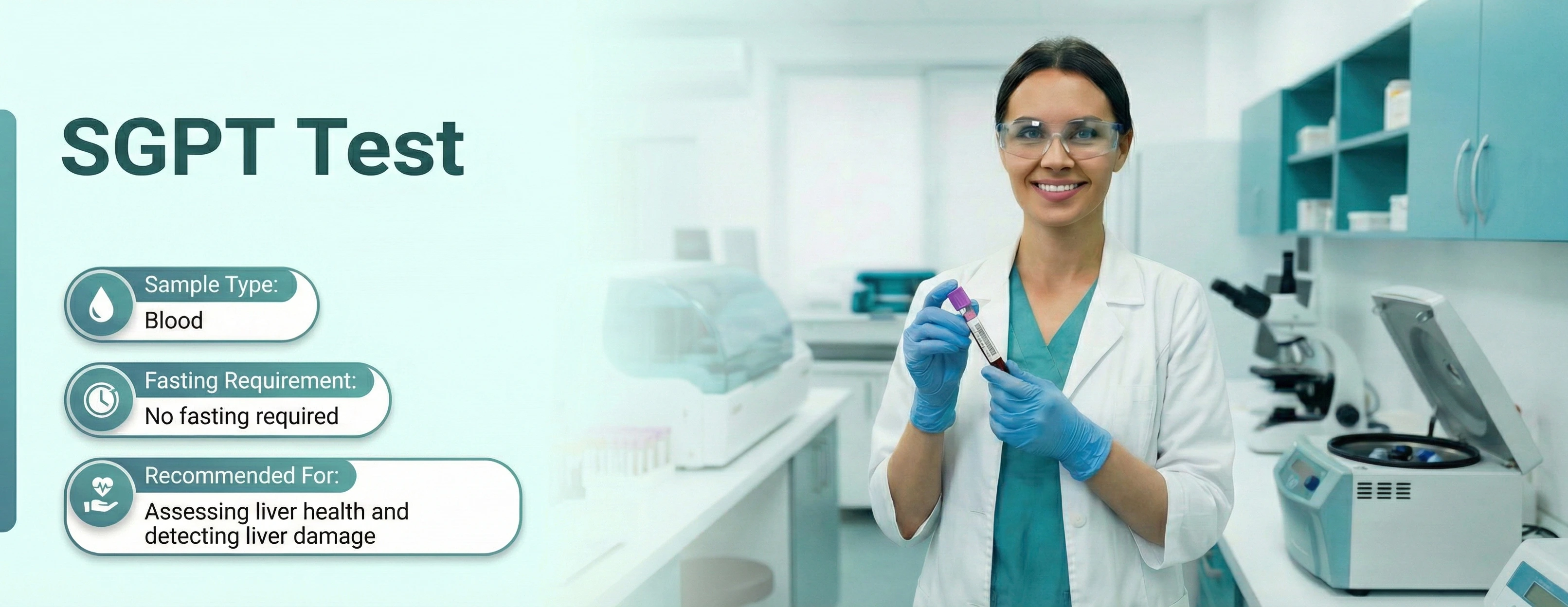
A SGPT / ALT Test Reference Ranges

Overview
The SGPT test, also called the ALT Test (Alanine Aminotransferase Test), measures the level of SGPT, a key liver enzyme, in your blood. SGPT is found almost exclusively inside liver cells. Under normal conditions, only a small amount circulates in the blood. When liver cells are damaged, inflamed, or under stress, they leak SGPT into the bloodstream, making it one of the earliest and most specific markers of liver injury available.
Doctors order the SGPT test because a raised ALT is a highly reliable early signal of liver stress. Unlike SGOT (AST), which is also present in the heart and muscles, SGPT (ALT) is almost exclusively a liver enzyme, making it the first test ordered when liver disease is suspected or when a patient is on medications known to affect the liver.
The SGPT test directly monitors liver cell health. It is routinely used to screen for viral hepatitis, Non-Alcoholic Fatty Liver Disease (NAFLD), alcoholic liver damage, and Drug-Induced Liver Injury (DILI). No fasting is required for this test, and it is suitable for all ages and genders. Results are available within 11 hours.

When and Who Should Get a SGPT Test Done?
An SGPT test is performed when liver involvement is suspected or as routine monitoring for those on medications that can affect the liver. Many liver conditions cause no symptoms in the early stages, making proactive testing important for high-risk groups.
This test is usually recommended for:
- Anyone with jaundice (yellowing of skin or eyes), dark urine, pale stools, or persistent upper right abdominal pain.
- Individuals with persistent fatigue, nausea, loss of appetite, unexplained weight loss, or body itching without a visible rash.
- Regular or heavy alcohol drinkers - alcohol is one of the most common causes of elevated SGPT in India.
- Patients on long-term medications including statins, paracetamol, antitubercular drugs (isoniazid, rifampicin), anticonvulsants, and NSAIDs.
- Individuals with obesity, type 2 diabetes, or metabolic syndrome - all strongly linked to Non-Alcoholic Fatty Liver Disease (NAFLD).
- Patients screened for viral hepatitis (A, B, or C), which can raise SGPT significantly even without obvious symptoms.
- Pre-surgical patients and adults above 35 years - as part of a routine full-body health check-up.
.png?dim=48x48&q=75)
How Frequently Should You Take the SGPT Test?
The frequency of SGPT testing depends on your health condition, exposure to liver-toxic substances, and medications. For healthy individuals with no liver disease or risk factors, SGPT is typically checked once a year as part of a routine preventive health check-up.
|
Health Scenario |
Context |
Recommended Frequency |
|---|---|---|
|
Routine Annual Check |
Healthy adults with no symptoms or liver history. |
Once a year as part of preventive health screening. |
|
On Hepatotoxic Medications |
Patients on statins, antitubercular drugs, anticonvulsants, or long-term NSAIDs. |
Every 1 to 3 months, or as directed by the treating physician. |
|
Active Liver Disease |
Confirmed hepatitis, NAFLD, or alcoholic liver disease under active management. |
Monthly or as directed, based on disease activity and treatment response. |
|
Heavy Alcohol Use |
Individuals consuming alcohol regularly and heavily. |
Every 3 to 6 months to monitor liver enzyme trends. |
|
Post-Treatment Follow-up |
To confirm SGPT has returned to normal after completing treatment. |
Once, 4 to 6 weeks after completing treatment. |
|
Pre-Surgical Assessment |
To confirm liver fitness before elective surgery or invasive procedures. |
Once, within 48 to 72 hours before the scheduled procedure. |

What Conditions Can a SGPT Test Help Detect?
The SGPT test is one of the most useful early-warning tools for liver health. A significantly elevated SGPT reliably signals that the liver needs further assessment. Key conditions the SGPT (ALT) test can help detect are:
- Viral Hepatitis (A, B, and C) - SGPT is dramatically elevated in acute viral hepatitis, often rising 10 to 40 times the normal upper limit before jaundice appears.
- Non-Alcoholic Fatty Liver Disease (NAFLD) - the most common liver condition in India. Fat accumulation in liver cells causes chronic low-to-moderate SGPT elevation, strongly linked to obesity, type 2 diabetes, and high triglycerides.
- Alcoholic Liver Disease - regular heavy alcohol consumption consistently elevates SGPT. An SGOT/SGPT ratio above 2 strongly suggests alcoholic liver disease.
- Drug-Induced Liver Injury (DILI) - paracetamol overdose, statins, antitubercular drugs, antifungal agents, and certain herbal or Ayurvedic products can all damage liver cells and raise SGPT.
- Liver Cirrhosis - advanced liver scarring from any cause is associated with persistently elevated or fluctuating SGPT.
- Autoimmune Hepatitis - the immune system attacks the liver's own cells, causing chronic inflammation and elevated liver enzymes.
- Liver Cancer (Hepatocellular Carcinoma) - elevated SGPT may be an early signal of a developing liver tumour in patients with known chronic liver disease.
- Ischaemic Hepatitis (Shock Liver) - a severe drop in blood pressure or heart failure can cause a dramatic elevation in SGPT due to reduced blood supply to the liver.
Important Note: Mildly elevated SGPT can also occur due to strenuous exercise, certain medications, or herbal supplements. Always report all medications and supplements to your doctor before interpreting results.
.png?dim=48x48&q=75)
SGPT Test Preparation
What to Expect Before the SGPT Test
No fasting is required. You can eat and drink normally. Inform your doctor about:
- Alcohol consumption - avoid for at least 24 to 48 hours before the test
- Strenuous exercise - avoid intense activity for 24 hours before the test, as muscles release SGPT-like enzymes when worked hard
- All current medications, vitamins, herbal products, and Ayurvedic supplements
- If SGPT is done alongside a fasting test, confirm fasting requirements with your doctor.
What to Expect During the Blood Collection
A phlebotomist cleans the skin with an antiseptic, then places an elastic band around your upper arm to make the veins easier to access. A small needle is inserted into the vein - you may feel a brief pinch. Blood is collected into a labelled tube in under a minute. A single blood sample is sufficient for the SGPT test.
What to Expect After the SGPT Test
A small cotton swab and bandage are placed over the puncture site to stop any minor bleeding. You can return to normal activities immediately. Minor bruising at the needle site is common and resolves within a day or two. If dizzy, sit and rest for a few minutes before standing.

What are the Parameters Included in a SGPT Test?
The SGPT test measures a single key parameter:
- SGPT / ALT (Alanine Aminotransferase), reported in Units per Litre (U/L).
ALT is found predominantly in liver cells. When liver cells are damaged, ALT leaks into the bloodstream - the higher the damage, the greater the elevation. Because ALT is found almost exclusively in the liver (unlike AST/SGOT, which is also present in the heart, muscles, and kidneys), an elevated ALT is a highly specific and reliable indicator of liver cell injury.
Many doctors also order SGOT (AST) alongside SGPT, as the SGOT/SGPT ratio provides additional diagnostic information. A ratio above 2:1 strongly suggests alcoholic liver disease, while a ratio below 1 is more typical of viral hepatitis or NAFLD. For a complete liver assessment, your doctor may recommend a full LFT panel, which includes SGPT, SGOT, ALP, GGT, albumin, globulin, and bilirubin.

Normal Range of SGPT Test Parameters
The table below shows the standard reference range for SGPT as listed on PharmEasy. These values apply to adults and are consistent with internationally accepted clinical guidelines.
|
Parameter |
Normal Range |
Unit |
|---|---|---|
|
SGPT / ALT (Alanine Aminotransferase) |
Less than 35 |
U/L (Units per Litre) |
Important Note: SGPT values can be slightly higher in men than women, and in individuals with higher muscle mass. Levels are also marginally higher in children, especially infants. Normal ranges may vary slightly between laboratories. Always refer to the reference range printed on your specific lab report and consult your doctor for a personalised interpretation.
.png?dim=48x48&q=75)
SGPT Test Result Interpretation
SGPT results must always be interpreted in the context of your symptoms, alcohol use, medications, and the degree of elevation. A mildly elevated SGPT has very different implications from a severely elevated one.
|
SGPT Level |
Category |
Potential Interpretation |
|---|---|---|
|
Below 35 U/L |
Normal |
Liver cells are not significantly damaged. No evidence of active liver injury at this time. |
|
35 - 120 U/L |
Mildly Elevated |
May indicate early fatty liver (NAFLD), mild hepatitis, medication side effect, or moderate alcohol use. Requires clinical correlation and monitoring. |
|
120 - 400 U/L |
Moderately Elevated |
Suggests significant liver inflammation or injury. Commonly seen in active viral hepatitis, alcoholic hepatitis, or moderate NAFLD. Further investigation required. |
|
Above 400 U/L |
Severely Elevated |
Indicates serious liver cell damage. Seen in acute viral hepatitis, paracetamol toxicity, ischaemic hepatitis, or severe autoimmune hepatitis. Urgent medical attention required. |
|
Above 1000 U/L |
Very Severely Elevated |
Suggests massive liver cell destruction - acute liver failure, severe drug toxicity, or toxic shock. Medical emergency. Immediate hospitalisation required. |
Disclaimer: This table is for educational purposes and provides a risk assessment only. These findings do not confirm a specific diagnosis. SGPT levels are influenced by medications, exercise, and alcohol. Always consult your doctor to understand how your result relates to your health situation.

SGPT Test Risks and Limitations
Potential Risks and Complications
The SGPT test is a very safe, routine blood test. Complications are extremely rare, and most people feel only a brief pinch. Seek medical advice if:
- The puncture site does not stop bleeding after applying gentle pressure
- You notice unusual redness, swelling, warmth, or lasting pain at the needle site
- You feel persistently lightheaded or faint after the blood draw - sit and rest before leaving.
Understanding SGPT Test Limitations
SGPT alone cannot identify the cause of liver damage - viral hepatitis, fatty liver (NAFLD), alcohol, medications, and autoimmune hepatitis can all raise SGPT to similar levels, making additional tests essential. In advanced cirrhosis, SGPT can appear near-normal because most liver cells are already destroyed - so SGPT does not measure fibrosis severity, which requires FibroScan or biopsy. Temporary factors such as intense exercise, alcohol use, and certain medications can transiently raise SGPT. A normal SGPT also does not completely rule out liver disease when symptoms or risk factors are present.

Related and Follow-up Tests
The SGPT test is most valuable as the starting point of a liver investigation, not the endpoint. Your doctor will recommend additional tests to identify the cause, assess the extent of liver involvement, and guide treatment.
|
SGPT Finding |
Suggested Follow-up Test |
Why It Is Ordered |
|---|---|---|
|
Any Elevated SGPT |
SGOT/SGPT ratio narrows the cause - above 2 suggests alcoholic liver disease; below 1 suggests viral hepatitis or NAFLD. |
|
|
Any Elevated SGPT |
Complete liver panel including ALP, GGT, albumin, globulin, and bilirubin for a comprehensive picture of liver health. |
|
|
Elevated SGPT + Suspected Hepatitis |
Screens for Hepatitis B and C - the two most common causes of chronically elevated liver enzymes in India. |
|
|
Elevated SGPT + Alcohol History |
The most sensitive marker for alcohol-related liver damage. Confirms or supports a diagnosis of alcoholic liver disease. |
|
|
Elevated SGPT + Obesity / Diabetes |
Liver Ultrasound (USG Abdomen) |
Detects fatty liver (NAFLD), liver enlargement, or cirrhosis. Essential for patients with metabolic risk factors. |
|
Persistently Elevated SGPT |
FibroScan (Liver Elastography) |
Non-invasive test measuring liver stiffness - assesses fibrosis or cirrhosis without a biopsy. |
|
Very High SGPT |
Liver Biopsy |
Gold standard for diagnosing the cause and severity of liver disease when non-invasive tests are inconclusive. |
Note: The investigation of elevated liver enzymes is a stepwise process. Your doctor will guide you through appropriate follow-up tests based on your SGPT level, clinical history, and risk factors.

SGPT Test Sample Collection: Home vs. Diagnostic Lab
The SGPT test is most valuable as the starting point of a liver investigation, not the endpoint. Your doctor will recommend additional tests to identify the cause, assess the extent of liver involvement, and guide treatment.
|
SGPT Finding |
Suggested Follow-up Test |
Why It Is Ordered |
|---|---|---|
|
Any Elevated SGPT |
SGOT / AST Test |
SGOT/SGPT ratio narrows the cause - above 2 suggests alcoholic liver disease; below 1 suggests viral hepatitis or NAFLD. |
|
Any Elevated SGPT |
Full Liver Function Test (LFT) |
Complete liver panel including ALP, GGT, albumin, globulin, and bilirubin for a comprehensive picture of liver health. |
|
Elevated SGPT + Suspected Hepatitis |
HBsAg and Anti-HCV Antibody |
Screens for Hepatitis B and C - the two most common causes of chronically elevated liver enzymes in India. |
|
Elevated SGPT + Alcohol History |
GGT (Gamma-Glutamyl Transpeptidase) |
The most sensitive marker for alcohol-related liver damage. Confirms or supports a diagnosis of alcoholic liver disease. |
|
Elevated SGPT + Obesity / Diabetes |
Liver Ultrasound (USG Abdomen) |
Detects fatty liver (NAFLD), liver enlargement, or cirrhosis. Essential for patients with metabolic risk factors. |
|
Persistently Elevated SGPT |
FibroScan (Liver Elastography) |
Non-invasive test measuring liver stiffness - assesses fibrosis or cirrhosis without a biopsy. |
|
Very High SGPT |
Liver Biopsy |
Gold standard for diagnosing the cause and severity of liver disease when non-invasive tests are inconclusive. |
Note: The investigation of elevated liver enzymes is a stepwise process. Your doctor will guide you through appropriate follow-up tests based on your SGPT level, clinical history, and risk factors.

SGPT Test Price/Cost
An SGPT test is generally available at a starting price of around INR 225. However, the final cost may differ based on the city and the laboratory you choose. For a better understanding, comparing SGPT test prices across major cities in India can be helpful.
|
City |
Offer Price |
|---|---|
|
225 |
|
|
225 |
|
|
225 |
|
|
225 |
|
|
225 |
|
|
225 |
|
|
225 |
|
|
225 |
|
|
225 |
|
|
225 |
Was This Test Information Helpful?
Please rate your experience
 Yes Helpful (38)
 Not Helpful
References
Health packages containing 'SGPT / ALT (Alanine Transaminase) Test'
 For full-body wellness, go for a comprehensive checkup
People Also Ask
What does a high SGPT level mean?
Is SGPT the same as ALT?
Can fatty liver (NAFLD) cause high SGPT?
Can exercise raise SGPT levels?
What is the difference between SGPT and SGOT?
My SGPT is slightly elevated, but I feel completely well. Do I need treatment?
Can herbal or Ayurvedic products raise SGPT?
 4.6 Stars| 7+ Lakhs Ratings & Reviews

Over 10 million happy users PharmEasy Labs
- Because the digital report is available on WhatsApp, there's no need to go back to the lab. Thanks, PharmEasy!
 Sachin sharma11 Jan ‘26
 - Thanks to the coupon discount, the blood test was done at a lower price.Komal04 Jan ‘26
- The lab technician was a good and knowledgeable professional.Rakesh Pandey06 Jan ‘26
- Due to bad weather, it's difficult to reach the lab. But home collection makes things easier.Arjun08 Jan ‘26
- Thanks to the Swasth AI feature, the report is easy to understand.Priya Mehta02 Jan ‘26
- The report is available on the same day. Wow!Vikas Patel05 Jan ‘26
Have any doubts? Ask us.
Ask us anything about the SGPT / ALT (Alanine Transaminase) Test to understand it better
Explore More at PharmEasy
Top-Selling Healthcare Products

We provide trusted, expert-curated health content to support better awareness,prevention, and care.
Backed by experienced doctors, medical experts, and strict editorial standards.