




How to Increase Progesterone Levels Naturally
By Dr. Charmi Shah +2 more

Medically reviewed by Dr. Charmi Shah
Last updated: Oct 21, 2026 Published on: Oct 21, 2026


Get,

to manage your symptom
Get your,

4 Cr+ families
benefitted

OTP sent to 9988776655



You’ve successfully subscribed to receive
doctor-approved tips on
Whatsapp

Get ready to feel your best.


Register to Avail the Offer
Send OTPBy continuing, you agree with our Privacy Policy and Terms and Conditions
Hi There,
Sign up on PharmEasy now!!


Trusted by 4 crore+ families

OTP sent to 9988776655
You have unlocked 25% off on medicines


Code: NU25

By Dr. Charmi Shah +2 more
Table of Contents
Many people search for how to increase progesterone, especially when they are concerned about menstrual changes, fertility, or hormonal balance. Low progesterone can happen for different reasons, and healthy lifestyle changes are known to support overall reproductive health1. However, they may not resolve every underlying cause of low progesterone2.
This blog explains practical lifestyle measures that may help support progesterone levels, along with situations when medical evaluation may be needed.

Progesterone is a naturally occurring hormone made mainly by the ovaries and adrenal glands, and it is also produced in smaller amounts by the testes. It helps prepare the lining of the uterus for a possible pregnancy and supports the uterine lining during early pregnancy3.
Progesterone levels naturally change throughout the menstrual cycle. They are usually low before ovulation and rise after ovulation4. A progesterone blood test can measure the amount of progesterone in the blood. Doctors may recommend the progesterone test to assess whether ovulation has occurred or to evaluate certain menstrual or fertility-related concerns4.
The timing of testing is important because progesterone levels change during the cycle4. Therefore, a single low result does not necessarily indicate a progesterone deficiency. The test is usually done about 7 days before the expected next period, rather than on a fixed day for everyone5. The result should be interpreted in relation to the timing of the test, menstrual-cycle pattern, and individual health conditions.
There is no single food or lifestyle change that can reliably raise progesterone in everyone. However, certain healthy habits may support normal ovulation and overall hormonal health, which can help maintain healthy progesterone production.
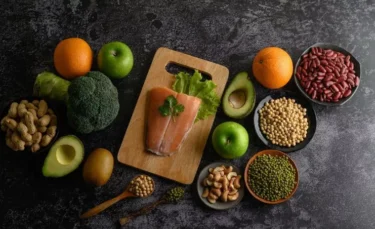
Consume vegetables, fruits, whole grains, pulses, nuts, seeds, and other nutritious foods. A balanced diet provides important nutrients that support overall health and normal reproductive function6.

Being underweight, overweight or obese can interfere with normal ovulation and regular menstruation by disrupting reproductive hormone functioning. Maintaining a healthy diet and regular exercise can promote reproductive health and more regular menstrual cycles2,7.

Ongoing stress can disrupt the hormones that regulate reproductive function, resulting in irregularities in the menstrual cycle and potentially more significantly impacting reproductive function if the stress is prolonged or severe8. Hence, practising relaxation techniques that help manage stress such as deep breathing, yoga, meditation, hobbies or spending time with loved ones9, can have positive effects on reproductive as well as overall health.

Research in humans as well as animals has found that lack of sleep disrupts hormones that are involved in reproduction, therefore leading to infertility among both genders10. Following a consistent sleep schedule and creating a comfortable sleep environment may help promote better sleep and may support reproductive health.

Smoking and consuming alcohol excessively can significantly affect reproductive health. Avoiding tobacco and keeping alcohol intake low may support overall reproductive well-being11.
Note: Eating healthy foods, exercising regularly, managing stress, and getting a good sleep are important for reproductive health, but they are not a guarantee that your progesterone levels will rise. There might be various reasons behind low progesterone, which should be diagnosed and treated by a doctor. If you think that you have abnormal levels of progesterone, consult a doctor for proper advice and testing.
Certain yoga poses are said to be beneficial in regulating cycles and increasing progesterone levels in women with polycystic ovarian syndrome (PCOS). These include the following:
Note: However, there is not enough evidence to confirm that these specific poses directly increase progesterone levels. Yoga may support overall well-being, but it should not be considered a proven treatment for low progesterone.
Also, in women with PCOS, irregular or absent ovulation can affect progesterone production because the ovaries usually produce progesterone after ovulation. Therefore, in such cases, more focus should be on the underlying cause rather than trying to increase the progesterone with other methods.
A healthy lifestyle is important for normal ovulation, which, in turn, is essential for progesterone production4,6. Eating a balanced diet, staying physically active, managing stress and getting enough sleep can contribute to general well-being6,9,10. However, none of these is directly said to increase progesterone levels to enhance the chances of conception.
Foods, yoga, and supplements are sometimes promoted as natural ways to boost progesterone, but they should not be considered a guaranteed treatment for low progesterone or fertility problems. There can be several different reasons for low progesterone, which might need specific treatments4. If you are trying to get pregnant and have been unsuccessful for a while, or if your periods are irregular, consult a doctor to find out the exact reason and the best way to address it.
The best approach depends on the underlying cause of low progesterone levels. Lifestyle changes may support overall hormonal health, while medical treatment may be needed when an underlying condition affects progesterone production. A low progesterone result on one test does not always mean there is a problem or that treatment is needed.
| Pros | Cons |
| May support overall hormonal and reproductive health6. | Cannot guarantee an increase in progesterone levels. |
| Can promote healthy habits such as balanced eating, regular activity, stress management, and good sleep2,6,9,10. | May not correct an underlying hormonal or reproductive problem. |
| Generally simple to incorporate into your everyday schedule. | Benefits can vary from person to person. |
| Pros | Cons |
| Can address medical causes of low progesterone13 | May cause side effects depending on the treatment13 |
| Highly effective13 | Requires medical guidance and monitoring14. |
| Useful even in some high-risk cases, such as preventing preterm birth, when advised by the doctor15 | Might have potential health risks (nervous system disorders, cardiovascular diseases, eye and ear problems, etc.)14 |
Consider speaking with a doctor if you:
Your doctor may recommend tests to evaluate the underlying cause, including a progesterone blood test, depending on your symptoms and menstrual-cycle pattern. Testing at the appropriate time is important because progesterone levels change throughout the cycle.
A healthy diet, regular physical activity, adequate sleep and stress management can support overall hormonal and reproductive health. However, they are not likely to raise progesterone levels on their own or address all potential reasons for its decrease in the body. Rather than focusing only on raising progesterone levels, it is important to identify and treat the underlying cause. A doctor should be consulted in order to obtain an accurate diagnosis and get tested for possible underlying conditions that may require further treatment.
There is no specific food or supplement proven to be the best natural progesterone. A balanced diet and healthy lifestyle can support normal hormone function, but they do not reliably increase progesterone levels2,8,10.
Signs that may be associated with low progesterone include irregular periods, unusual bleeding, difficulty becoming pregnant, or repeated early pregnancy loss3,4. However, these symptoms can have many causes, so testing and medical evaluation are needed to confirm low progesterone.
Eating eggs does not directly increase progesterone levels. However, eggs provide high-quality protein and several essential nutrients that can support overall health and well-being, and are important for hormonal balance16.
Vitamin C may help the placenta produce hormones. According to some studies, vitamin C supplements are said to increase progesterone levels in women with a luteal phase defect (a condition in which the body may not produce enough progesterone after ovulation). However, more research is needed to know whether taking vitamin C supplements can consistently raise progesterone levels17.
The time needed to increase progesterone depends on the underlying cause and the treatment used. Healthy lifestyle changes may support normal hormone function over time, but there is no fixed timeframe for naturally increasing progesterone levels.
There are no specific foods proven to lower progesterone that everyone with low progesterone needs to avoid. However, limiting excessive alcohol and highly processed foods may support overall hormonal and reproductive health2.
1. Hart RJ. Physiological aspects of female fertility: Role of the environment, modern lifestyle, and genetics. Physiological Reviews. 2016;96(3):873-909. doi:10.1152/physrev.00023.2015 https://pubmed.ncbi.nlm.nih.gov/27252278/
2. Sharma R, Biedenharn KR, Fedor JM, Agarwal A. Lifestyle factors and reproductive health: taking control of your fertility. Reprod Biol Endocrinol. 2013;11:66. doi:10.1186/1477-7827-11-66 https://pubmed.ncbi.nlm.nih.gov/23870423/
3. Cable JK, Grider MH. Physiology, progesterone. StatPearls – NCBI Bookshelf. 2023. Accessed October 7, 2026. https://www.ncbi.nlm.nih.gov/sites/books/NBK558960/
4. Serum progesterone. MedlinePlus. 2025. Accessed October 7, 2026. https://medlineplus.gov/ency/article/003714.htm
5. Diagnosis of infertility – Guideline for the prevention, diagnosis and treatment of infertility. NCBI Bookshelf. 2025. Accessed October 13, 2026. https://www.ncbi.nlm.nih.gov/books/NBK620433/
6. Calcaterra V, Verduci E, Stagi S, Zuccotti G. How the intricate relationship between nutrition and hormonal equilibrium significantly influences endocrine and reproductive health in adolescent girls. Front Nutr. 2024;11:1337328. doi:10.3389/fnut.2024.1337328 https://www.frontiersin.org/journals/nutrition/articles/10.3389/fnut.2024.1337328/full
7. Zheng L, Yang L, Guo Z, Yao N, Zhang S, Pu P. Obesity and its impact on female reproductive health: unraveling the connections. Front Endocrinol (Lausanne). 2024;14:1326546. doi:10.3389/fendo.2023.1326546 https://www.frontiersin.org/journals/endocrinology/articles/10.3389/fendo.2023.1326546/full
8. Ranabir S, Reetu K. Stress and hormones. Indian J Endocrinol Metab. 2011;15(1):18-22. doi:10.4103/2230-8210.77573 https://pubmed.ncbi.nlm.nih.gov/21584161/
9. Relaxation techniques for stress. MedlinePlus. 2024. Accessed October 7, 2026. https://medlineplus.gov/ency/patientinstructions/000874.htm
10. Lateef OM, Akintubosun MO. Sleep and reproductive health. J Circadian Rhythms. 2020;18:1. doi:10.5334/jcr.190 https://pubmed.ncbi.nlm.nih.gov/32256630/
11. Reproductive effects. NCBI Bookshelf. Accessed October 7, 2026. https://www.ncbi.nlm.nih.gov/books/NBK44697/
12. Kumaravelu R, R BDV. Yoga as a therapeutic modality for hormonal and metabolic regulation in premenopausal women with polycystic ovary syndrome. International Journal of Reproduction, Contraception, Obstetrics and Gynecology. 2026;15(2):588-595. doi:10.18203/2320-1770.ijrcog20260180 https://www.ijrcog.org/index.php/ijrcog/article/view/16343
13. Regidor PA. Progesterone in peri- and postmenopause: A Review. Geburtshilfe Frauenheilkd. 2014;74(11):995-1002. doi:10.1055/s-0034-1383297 https://pubmed.ncbi.nlm.nih.gov/25484373/
14. Xu R, Wang X, Zhang J, et al. Safety profile of progesterone: Insights from an FDA Adverse Event Reporting System (FAERS)–based pharmacovigilance study. J Int Med Res. 2026;54(2):03000605261417447. doi:10.1177/03000605261417447 https://pmc.ncbi.nlm.nih.gov/articles/PMC12883713/
15. Kolatorova L, Vitku J, Suchopar J, Hill M, Parizek A. Progesterone: A steroid with wide range of effects in physiology as well as human medicine. Int J Mol Sci. 2022;23(14):7989. doi:10.3390/ijms23147989 https://pubmed.ncbi.nlm.nih.gov/35887338/
16. Convit L, Nicola CM, Urwin CS, et al. Eggs as a nutrient-rich food with potential relevance to sleep metabolic health, and well-being during the menopausal transition: A narrative review. Nutrients. 2025;17(24):3837. doi:10.3390/nu17243837 https://www.mdpi.com/2072-6643/17/24/3837
17. Mumford SL, Browne RW, Schliep KC, et al. Serum antioxidants are associated with serum reproductive hormones and ovulation among healthy women. J Nutr. 2016;146(1):98-106. doi:10.3945/jn.115.217620 https://pubmed.ncbi.nlm.nih.gov/26581679/
Disclaimer: The information provided here is for educational/awareness purposes only and is not intended to be a substitute for medical treatment by a healthcare professional and should not be relied upon to diagnose or treat any medical condition. The reader should consult a registered medical practitioner to determine the appropriateness of the information and before consuming any medication. PharmEasy does not provide any guarantee or warranty (express or implied) regarding the accuracy, adequacy, completeness, legality, reliability or usefulness of the information; and disclaims any liability arising thereof.
Links and product recommendations in the information provided here are advertisements of third-party products available on the website. PharmEasy does not make any representation on the accuracy or suitability of such products/services. Advertisements do not influence the editorial decisions or content. The information in this blog is subject to change without notice. The authors and administrators reserve the right to modify, add, or remove content without notification. It is your responsibility to review this disclaimer regularly for any changes.


Comments

Leave your comment...
You may also like
















Comments