
Introduction
When your cat watches you eat, or a stray cat waits near your door, you may wonder what food you can offer. In a study published in 2023 involving 763 residents across 13 Indian cities, 36.7% reported having fed stray cats1. Whether you are feeding a pet or a stray, they need more than a dozen nutrients besides protein and fat, including vitamins and minerals2.
So, the important question that arises is what can cats eat. This blog explores foods suitable for cats, what human foods can cats eat, foods to avoid, homemade meals and when to contact a veterinarian.
Understanding a Cat’s Dietary Needs
While choosing foods for a cat, it helps to understand what your cat needs for complete nutrition. Cats are obligate carnivores, meaning they depend on nutrients naturally found only in animal products2. Their diet needs plenty of protein, moderate amounts of fat, and relatively little carbohydrate2.
Advertisement
A cat’s meals, therefore, need to be planned differently from your own meal3. A cat’s nutritional needs also differ from that of dogs4. Cats need taurine (an amino acid) from their food, while dogs can usually make it from other nutrients4.
Some important dietary needs of cats include:
- Protein and fat: These are major components of a cat’s nutritional requirements2.
- Vitamins and minerals: Cats need these in suitable amounts2. Giving these nutrients more than required may not be advisable2.
With these needs in mind, let’s look at the foods that can form part of your cat’s diet.
What Can Cats Eat? (Safe Foods List)
Some of the safe foods for cats include:
1. Canned Cat Food
Canned cat food has at least 75% moisture, so it is considered a good source of water2. It may be more expensive than other foods in this list but is also considered highly palatable for most cats2. Canned foods usually include meats such as liver, kidney and whole meat byproducts as primary ingredients2.
2. Semi-Moist Cat Food
Semi-moist cat food contains around 35% moisture, and some cats may find it more appealing than dry food2. However, it can dry out or spoil after opening2. The cost of semi-moist cat food may be less than canned2. These foods include meat and meat products as main ingredients. Other food ingredients include soyabean, grain byproducts and cereals2.
Advertisement
3. Dry Cat Food
Dry cat food contains 6-10% water and is available as small bite sized dried pieces2. It usually costs less, but some cats may find it less palatable than canned food and semi-moist food2. These foods include meat, poultry, grains and their byproducts along with fish, milk products, fibre sources, and mineral and vitamin supplements2.
4. Cat Treats
Treats are usually not nutritionally complete and balanced, so they should only be offered occasionally2. Keep treat consumption within 10-15% of your cat’s daily caloric intake2.
5. Other Food Items
These foods include some fruits, vegetables, eggs, and cooked meats, such as cooked chicken breast and salmon.5
6. Fresh Water
Clean and fresh water should be made available to your cat at all times to prevent urinary tract conditions, especially in cats prone to them2,6.
Apart from these foods, cats can also be given homemade foods; however, certain precautions should be taken to ensure that your cat receives complete nutrition.
7. Homemade Food Planned by a Veterinarian
Homemade recipes may not provide the right amount of nutrients for your cat2. So, you should prepare recipes that have been formulated by a veterinarian specialising in animal nutrition2. For example, a homemade diet plan may include 60% chicken breast, 30% zucchini, 3% rolled oats, 5% canola oil, salt (450 mg per 100 g of food) and 2% vitamin and mineral supplements containing 10% calcium7.
Note:
- Ensure that your cat’s main food is labelled “complete and balanced,” meaning it is intended to provide all the nutrients needed for your cat8.
- Check the food label to identify the cat’s life stage it supports, as kittens, adult, and pregnant cats may have different nutritional requirements2. Ensure the food meets all the nutritional requirements of that life stage2. Some foods may be formulated for all life stages2.
- Do not change, add, remove, replace or modify the amount of any ingredient, as it may compromise the nutritional proportions in the prepared recipes9.
What Human Food Can Cats Eat?
Some human foods can be offered as small, occasional treats5; however, too much human food can upset the nutritional balance of a cat’s diet8. Offer plain foods, not spicy, salty, fatty or fried dishes5.
Examples of human foods that can be offered include:
- Fruits: Blueberries, watermelon, strawberries, honeydew, apple without seeds, and bananas5.
- Vegetables: Peas, cucumbers, pumpkin puree, carrots, broccoli, and green beans5.
- Cooked meat: A small, measured portion of cooked ground beef, chicken breast, and fish like tuna and salmon5.
- Indian dishes: Plain cooked rice can be given in very small quantities but should not be included in the main meal10. Ask your veterinarian before offering any other Indian foods.
- Others: Eggs, marshmallow, provolone cheese, plain rice cakes without flavouring or salt, air popped popcorn without salt or butter, and smooth peanut butter5.
Note: Fruits and vegetables should be given only after permission from your veterinarian3.
Knowing what can cats eat is only a part of the picture. Next, let’s look at foods to keep away from your cat.
What Can Cats Not Eat? (Unsafe Foods for Cats)
Some foods can act as poison for cats11, while others may cause infections2 or upset their stomach5. Some examples of what can’t cats eat include:
- Onions, garlic, leeks, and chives: These can damage the red blood cells that carry oxygen in your cat’s body. They remain harmful even after cooking or drying, so avoid sharing dishes and Indian spicy curries containing these ingredients11.
- Chocolate: The theobromine and caffeine content in chocolates act as poison for cats. So, keep chocolate and cocoa products out of reach of your cat11.
- Tea, coffee and other caffeine products: The caffeine in these products may overstimulate your cat’s nervous system, heart, and lungs11.
- Alcoholic beverages and foods: Do not give your cat alcoholic drinks or foods that contain alcohol as it can cause symptoms like depression of the central nervous system (reduced activity of the brain and nervous system), lethargy (unusual lack of energy or drowsiness), sedation (a state of relaxation or sleepiness), ataxia (difficulty controlling muscle movements), metabolic acidosis (excess acid in the body fluids), a drop in body temperature, severe respiratory depression (reduced breathing rate or oxygen levels), and coma11,12,13,14,15,16.
- Bread Dough: Dough containing yeast may be toxic to cats5. Uncooked bread dough may produce alcohol and cause a large amount of gas inside the stomach, causing painful swelling of the abdomen11.
- Raw meat: Raw meat may spread toxoplasmosis and other infections, so it should not be offered as a meal or snack2.
- Milk and dairy products: Many cats cannot digest lactose, the natural sugar in milk, properly and may develop problems related to the digestive tract after consuming dairy products2.
- Foods causing vomiting or diarrhoea: Avoid spicy, salty, fatty or fried foods, such as heavily seasoned curries and fried snacks; citrus fruits; coconut or coconut oil; and nuts such as walnuts, almonds, pecans and cashews, as these may cause vomiting or diarrhoea5.
- Other foods: Apple seeds, avocado, cherries, grapes, macadamia nuts, raisins, currants, sultanas, and peach or plum pits are also toxic to cats5.
Note:
- Xylitol, a sugar substitute, which is present in many food items, is extremely poisonous for cats5. So, always check food labels and avoid foods containing xylitol5. Also check for xylitol’s alternate names, which include birch sugar extract, birch sugar, wood sugar, sugar alcohol, and xylite5.
- Remove chicken and fish bones before feeding your cat. Bones can get stuck in the food pipe and cause difficulty swallowing or breathing17.
Knowing what can’t cats eat also helps you choose ingredients safely when considering homemade meals.
Can Cats Eat Homemade Food?
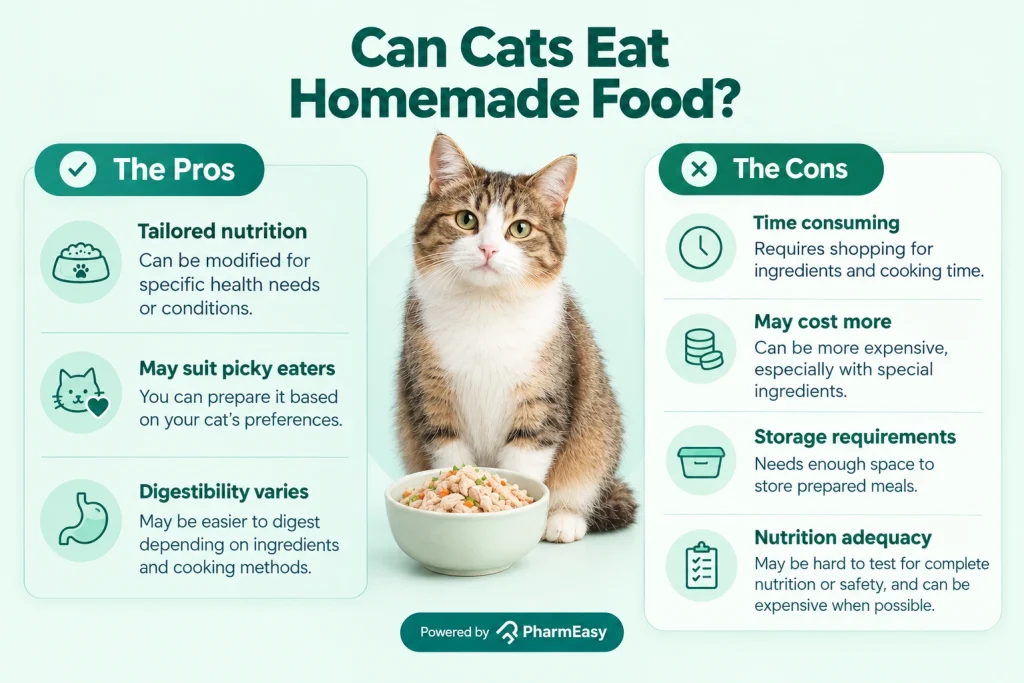
Yes, cats can eat homemade food if it is safe and provides all the nutrients they need9. However, homemade food may have the following pros and cons2:
Pros
- Tailored nutrition: Homemade cat food can be modified if your cat has certain nutritional needs or has certain health conditions, especially if no available commercial food meets these needs. For example, cats with multiple health conditions may need a specialised diet that standard commercial cat food cannot adequately provide. Homemade food may be able to provide these nutritional requirements for your cat9.
- Palatability: Homemade foods may be useful if your cat is a picky eater, as you can prepare it according to your cat’s likes and dislikes9.
- Digestibility: Some homemade diets may be easier to digest, but this depends on the ingredients and preparation methods9.
Cons
- Time consuming: To make homemade recipes, you need to buy different ingredients, which may be time consuming. You will also need to invest time in cooking9.
- Cost: The cost of preparing a homemade recipe may be more than commercial foods, especially if your cat has a health condition or adverse reactions to any foods and you need to source ingredients that may be expensive or hard to find9.
- Storage: Preparing meals at home requires enough space to store them9.
- Limited testing: It may not be possible to test homemade cat food for nutritional adequacy or safety, and when possible, such testing can be prohibitively expensive9.
Alongside planning meals, it is important to know what signs to watch out for if your cat eats something unsafe.
Signs Your Cat Ate Something Unsafe
Some possible signs of poisoning after a cat eats something unsafe include:
- Diarrhoea
- Vomiting
- Lethargy
- Blood in the urine or stools
- Loss of appetite
- Difficulty in breathing
- Irregular heartbeat
- Seizures (caused by abnormal electrical activity in the cat’s brain)
- Bruising or nosebleeds
- Being unable to pass urine19,20
What to Do If Your Cat Eats Something Unsafe?
If you suspect your cat has eaten something harmful, contact a veterinarian immediately19. If your veterinarian is unavailable, contact an emergency veterinary clinic or hospital19.
Some important points to remember
- Keep a sample or the label: Take a sample of the suspected food or its packaging label to help the veterinarian identify what your cat swallowed17.
- Do not make your cat vomit: Only try this if a veterinarian specifically instructs you, as some poisons can cause further damage when vomited17.
Note: How quickly a cat becomes ill depends on the substance involved, so prompt veterinary advice is essential17.
Feeding Tips and Preventive Measures
To guide your cat’s everyday feeding routine, consider practical changes such as:
- Choose a quiet feeding spot: Noise, busy areas, the presence of other animals, and the proximity of a litter tray can discourage your cat from eating2.
- Keep food bowls clean: Dirty food containers may put your cat off its meals2.
- Store dry food properly: Keep dry food in an airtight container in a cool, dry place and check the expiry date before feeding2.
- Refrigerate opened canned food: Store unused portions in the fridge to stop spoilage and maintain its quality2.
- Check portion sizes: Obesity can increase your cat’s risk of arthritis and diabetes2. So, ask your veterinarian about your cat’s ideal weight and follow their advice on adjusting its diet2.
- Keep unsafe foods out of reach: Foods that can poison cats should be stored such that your cat cannot access them9.
- Water: Always keep fresh, cool water available for the cat2.
Also Read: Cat Fleas: Causes, Symptoms, Treatment & Home Remedies
Conclusion
Feeding your cat well involves more than knowing which foods are safe. Choose complete and balanced cat food suited to your cat’s life stage and offer suitable human foods only as occasional treats. If you prefer homemade meals, consult a veterinary nutrition specialist to ensure your cat gets all the nutrients it needs. Always provide fresh water, store food properly and keep harmful foods out of reach. If you suspect your cat has eaten something toxic, contact a veterinarian immediately.
Frequently Asked Questions (FAQs)
Is it safe for cats to eat rice?Rice may be recommended for some cats recovering from a digestive illness21. However, for a healthy cat, choose complete and balanced cat food as the main diet to meet its nutritional needs8.
Which food is poisonous for cats?There are many foods that are poisonous for cats, such as chocolate, garlic, onions and chives. Alcohol and products containing caffeine are also toxic to cats11.
What fruits can cats eat safely?Cats can eat watermelon, blueberries, bananas, strawberries, honeydew melon and apples without seeds, but only in measured amounts and should be offered only as treats5 However, before offering any fruit to your cat, ask your veterinarian for recommendations3.
Can cats eat dog food?No, cats cannot eat dog food because it does not meet their nutritional needs. A condition known as feline central retinal degeneration (FCRD) was seen in cats when they were fed dog food21.
Can kittens eat the same foods as adult cats?Kittens need food that meets their growth requirements2. Choose complete and balanced food labelled for kittens or all life stages, rather than food intended only for adult cats2.
Can cats eat eggs?Yes, cats can have eggs but only in small, measured amounts as a treat5.
Can cats eat shrimp or other seafood?Cooked fish such as salmon and tuna can be offered in small amounts as a treat5. For shrimp, specifically, ask your veterinarian before offering it.
How often should I feed my cat?Most adult cats can be fed once or twice a day. Kittens under six months usually need three meals a day, while those aged six months to one year generally need two meals. Senior cats (10 years or older) also need one or two meals per day unless recommended by a veterinarian.
Can I offer my cat different types of cat food?Yes, offering two or three different cat foods provides variety and may help prevent your cat from building a preference for only one food2.
References
- Changrani-Rastogi A and Thakur N (2023) Attitudes towards urban stray cats and managing their population in India: a pilot study. Front. Vet. Sci. 10:1274243. doi: 10.3389/fvets.2023.1274243 https://www.frontiersin.org/journals/veterinary-science/articles/10.3389/fvets.2023.1274243/full
- Feeding your cat [Internet]. Cornell University College of Veterinary Medicine – Cornell Feline Health Center. 2026 Apr 30 [cited 2026 Oct 1]. Available from: https://www.vet.cornell.edu/departments-centers-and-institutes/cornell-feline-health-center/health-information/feline-health-topics/feeding-your-cat
- Cats are carnivores, so they should eat like one [Internet]. Texas A&M University College of Veterinary Medicine & Biomedical Sciences. 2018 Mar 22 [cited 2026 Oct 1]. Available from: https://vetmed.tamu.edu/news/pet-talk/cats-are-carnivores-so-they-should-eat-like-one/
- Heart disease – nutrition [Internet]. Tufts University – Henry and Lois Foster Hospital for Small Animals. [cited 2026 Oct 1]. Available from: https://vet.tufts.edu/foster-hospital-small-animals/specialty-services/cardiology/heartsmart/heart-disease-nutrition
- Healthy human food treats for pets [Internet]. NC State Veterinary Hospital. [cited 2026 Oct 1]. Available from: https://hospital.cvm.ncsu.edu/services/small-animals/nutrition/healthy-human-food-treats-for-pets/
- How often should you feed your cat? [Internet]. Cornell Feline Health Center. 2024. [cited 2026 Oct 5]. Available from: https://www.vet.cornell.edu/departments-centers-and-institutes/cornell-feline-health-center/health-information/feline-health-topics/how-often-should-you-feed-your-cat
- Blanchard G, Amato C, André A, et al. Beneficial effects of a prescription home-prepared diet and of zucchini on urine calcium oxalate supersaturation and urinary parameters in adult cats. Journal of Feline Medicine and Surgery. 2022;24(12):1203-1211. doi:10.1177/1098612X211067931 https://pubmed.ncbi.nlm.nih.gov/35142590/
- “Complete and balanced” pet food [Internet]. US Food and Drug Administration (FDA). 2020 Feb 28 [cited 2026 Oct 1]. Available from: https://www.fda.gov/animal-veterinary/animal-health-literacy/complete-and-balanced-pet-food
- Villaverde C, Chandler M. Commercial vs Homemade Cat Diets: What you need to know. Journal of Feline Medicine and Surgery. 2022;24(5):415-428. doi:10.1177/1098612X221090389 https://pubmed.ncbi.nlm.nih.gov/35311418/
- Can Cats Eat Rice? Yes —Plain Only, No Nutritional Value [Internet]. Can My Pet Eat. 2026 Oct. [cited 2026 Oct 5]. https://canmypeteat.org/articles/can-my-cat-eat-rice/
- Cortinovis C and Caloni F (2016) Household Food Items Toxic to Dogs and Cats. Front. Vet. Sci. 3:26. doi: 10.3389/fvets.2016.00026 https://pubmed.ncbi.nlm.nih.gov/27047944/
- Lethargy [Internet]. NIH – National Cancer Institute. [cited 2026 Oct 2]. Available from: https://www.cancer.gov/publications/dictionaries/cancer-terms/def/lethargy
- Sedation [Internet]. NIH – National Cancer Institute. [cited 2026 Oct 2]. Available from: https://www.cancer.gov/publications/dictionaries/cancer-terms/def/sedation
- Ataxia [Internet]. NIH – National Cancer Institute. [cited 2026 Oct 2]. Available from: https://www.cancer.gov/search/results?swKeyword=ataxia
- Metabolic acidosis [Internet]. MedlinePlus. 2025 Oct 1 [cited 2026 Oct 14]. Available from: https://medlineplus.gov/ency/article/000335.htm
- Norris E, Marzouk O, Nunn A, McIntyre J, Choonara I. Respiratory depression in children receiving diazepam for acute seizures: a prospective study. Dev Med Child Neurol. 1999 May;41(5):340-3. Available from: https://pubmed.ncbi.nlm.nih.gov/10378761/
- Abd Elkader NA, Emam IA, Farghali HA, M. DS, Salem NY (2020) Oesophageal foreign bodies in cats: Clinical and anatomic findings. PLoS ONE 15(6): e0233983. https://doi.org/10.1371/journal.pone.0233983 https://journals.plos.org/plosone/article?id=10.1371%2Fjournal.pone.0233983
- Common cat hazards [Internet]. Cornell Feline Health Center. [cited 2026 Oct 2]. Available from: https://www.vet.cornell.edu/departments-centers-and-institutes/cornell-feline-health-center/health-information/feline-health-topics/common-cat-hazards-0
- Hazenfratz M, Taylor SM. Recurrent seizures in cats: Diagnostic approach – when is it idiopathic epilepsy? Journal of Feline Medicine and Surgery. 2018;20(9):811-823. doi:10.1177/1098612X18791873 https://pubmed.ncbi.nlm.nih.gov/30139320/
- Nutritional Management of Gastrointestinal Disease [Internet]. UC Davis Veterinary Medicine. 2019 Apr 12 [2026 Oct 2]. Available from: https://healthtopics.vetmed.ucdavis.edu/health-topics/canine/nutritional-management-gastrointestinal-disease
- Beckwith-Cohen B and Petersen-Jones SM (2024) Manifestations of systemic disease in the retina and fundus of cats and dogs. Front. Vet. Sci. 11:1337062. doi: 10.3389/fvets.2024.1337062 https://www.frontiersin.org/journals/veterinary-science/articles/10.3389/fvets.2024.1337062/full
Disclaimer: The information provided here is for educational/awareness purposes only and is not intended to be a substitute for medical treatment by a healthcare professional and should not be relied upon to diagnose or treat any medical condition. The reader should consult a registered medical practitioner to determine the appropriateness of the information and before consuming any medication. PharmEasy does not provide any guarantee or warranty (express or implied) regarding the accuracy, adequacy, completeness, legality, reliability or usefulness of the information; and disclaims any liability arising thereof.
Links and product recommendations in the information provided here are advertisements of third-party products available on the website. PharmEasy does not make any representation on the accuracy or suitability of such products/services. Advertisements do not influence the editorial decisions or content. The information in this blog is subject to change without notice. The authors and administrators reserve the right to modify, add, or remove content without notification. It is your responsibility to review this disclaimer regularly for any changes.






























Comments