Get,

Free Doctor Tips

to manage your symptom

Get your,

FREE Doctor Tips Now!!

4 Cr+ families

benefitted

Enter your Phone Number

+91

|

Enter a valid mobile number

Send OTP

Verify your mobile number

OTP sent to 9988776655

CONGRATULATIONS!!!

You’ve successfully subscribed to receive

doctor-approved tips on Whatsapp


Get ready to feel your best.

Hi There,

Download the PharmEasy App now!!

AND AVAIL

AD FREE reading experience
Get 25% OFF on medicines
Banner Image

Register to Avail the Offer

Send OTP

By continuing, you agree with our Privacy Policy and Terms and Conditions

Success Banner Image
Verify your mobile number

OTP sent to 9988776655

Comments

Subscribe
Notify of
guest
0 Comments
Inline Feedbacks
View all comments

Leave your comment here

Your email address will not be published. Required fields are marked *

25% OFF on medicines

Collect your coupon before the offer ends!!!

COLLECT

Parvovirus in Dogs: Symptoms, Causes, Treatment & Prevention

By Dr. Ramani Jairam +2 more

Join Health Talk by PharmEasy on WhatsApp

Introduction

Canine parvovirus emerged in the late 1970s and quickly spread to many parts of the world, causing serious illness in dogs1. In India, the virus continues to pose a big concern, particularly among young puppies and dogs that are not fully vaccinated2. When a dog suddenly starts vomiting, having diarrhoea, or seeming unusually tired, it can be worrying for any pet owner. The virus can cause severe digestive problems leading to dehydration, making early veterinary care important3. It is important to rule out whether these are parvovirus symptoms in dogs.

This article explains the symptoms, causes, treatment options, and ways to help prevent parvovirus in dogs.
parvovirus in dogs

What Is Parvovirus?

Parvoviruses are a group of very small (‘Parvo’ means small in Latin) viruses that can infect different types of animals. Some parvoviruses mainly multiply in cells that are actively growing and dividing, while others may need help from another virus4. There are two types of parvovirus that infect dogs; canine parvovirus type 1 (CPV-1) (also known as minute virus of canine (MVC)) and canine parvovirus type 2 (CPV-2). CPV-2 is the type which causes severe intestinal infections, and heart problems (usually in puppies)1. CPV-2 has different strains such as CPV-2a, CPV-2b, and CPV-2c.5 Infections with any of these strains of parvovirus causes similar symptoms3.

Advertisement

What Does Parvovirus Do to Dogs?

Parvovirus (CPV-2) causes a severe infection after entering a dog’s body. It mainly attacks cells that typically grow and divide quickly. These include cells lining the intestines, bone marrow, lymph nodes, and the thymus gland. Damage to the intestinal lining can reduce the intestine’s ability to absorb nutrients and fluids properly. It also weakens the body’s natural protective barrier, allowing harmful bacteria from the intestine to enter the bloodstream.

As the infection progresses, dogs may develop repeated vomiting and severe diarrhoea, which can cause major fluid loss and dehydration. The virus can also reduce the number of certain white blood cells (WBCs), making it harder for the body to fight infections. In severe cases, the combination of fluid loss, bacterial infection, inflammation, and changes in blood clotting can affect several organs and may become life-threatening.

These viruses can also cause heart inflammation. however, it’s rare. It is more likely to be seen when puppies are infected before birth or are born to mothers that have not been vaccinated6.

Causes of Parvovirus in Dogs

Parvovirus infection occurs when a dog is exposed to the CPV-2 type. Common ways the virus can infect a dog include:

  • Contact with an Infected Dog: The virus can spread when pet dogs come into contact with stray dogs or wild animals from the dog family that carry the virus, especially through faeces (even a trace amount can cause infection).
  • Contaminated Surfaces: Food bowls, bedding, floors, toys, leashes, and other objects can carry the virus and transmit it to another dog.
  • Contaminated Hands, Clothing, or Footwear: People may accidentally carry virus particles after contact with infected dogs or contaminated areas.
  • Contaminated Outdoor Areas: Parks, kennels, and other places visited by infected dogs may remain contaminated and expose other dogs3.

Parvovirus Symptoms in Dogs

Signs of parvovirus can initially look like other digestive illnesses. The following describes the symptoms of parvovirus in three different phases.

  • Early Symptoms: Loss of appetite, high fever, depression/mood changes, vomiting, and diarrhoea.
  • As the Illness Progresses: Frequent vomiting and severe diarrhoea can develop. The stool may be watery or yellowish and may contain blood in severe cases.
  • During Severe Illness: Repeated vomiting and diarrhoea can cause rapid loss of fluids, leading to severe dehydration and weakness. Dogs may also develop a low body temperature as the illness becomes more severe. Puppies can develop severe shock, which can be life-threatening1.

Heart-Related Complications

Advertisement

In rare cases, canine parvovirus can affect the heart muscle of very young puppies, particularly those younger than 3 months. This form is called myocarditis, which means inflammation of the heart muscle. It can become severe very quickly if left untreated. Possible signs include:

  • Sudden weak pulse
  • Pale gums
  • Shortness of breath or fast breathing (especially after any physical activity)
  • Severe seizures
  • Swollen abdomen (due to fluid build-up)
  • Fast or irregular heartbeat

Unlike the intestinal form, puppies with parvovirus-related heart disease may not have diarrhoea because the infection primarily affects the developing heart muscle1.
Risk Factors of Parvovirus

risk factor of parvovirus dogs

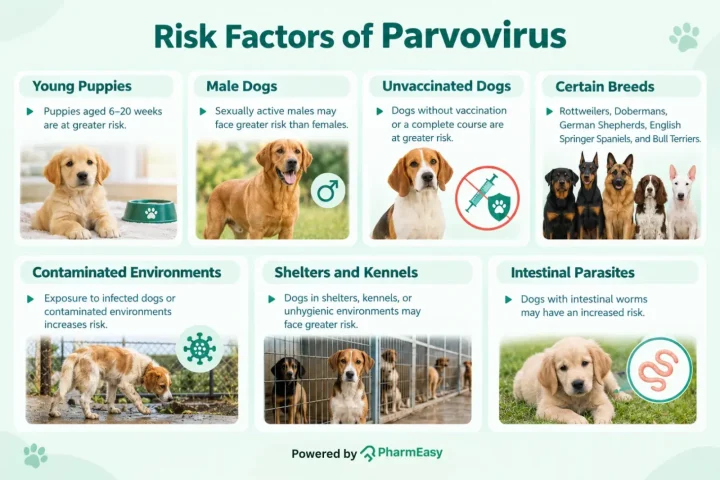
Anything that increases the risk of getting a condition/disease is called a risk factor. The following lists which dogs are at a greater risk of getting infected by parvovirus.

  • Young puppies (between 6-20 weeks of age)3.
  • Male dogs who are sexually active (compared to sexually active females)7.
  • Dogs which are not vaccinated or didn’t complete the vaccination course.
  • Dogs belonging to certain breeds, such as Rottweilers, Doberman Pinschers, German Shepherds, English Springer Spaniels, and Bull Terrier breeds.
  • Dogs exposed to contaminated environments or infected dogs3.
  • Dogs living in shelters, kennels or other unhygienic environments.
  • Dogs that have intestinal parasites (worms)7.

Diagnosis of Parvovirus Symptoms

Veterinarians (vets) diagnose parvovirus by combining the dog’s symptoms, medical history, physical examination, and laboratory tests. The diagnosis may involve:

  • Physical Examination: The vet checks for signs such as vomiting, diarrhoea, weakness, dehydration, fever, and abdominal discomfort3. For puppies, they may also look for pale gums, a swollen abdomen or changes in heartbeat1.
  • Blood Tests: A complete blood count (CBC) may be performed to check for changes in white blood cells (WBCs) and other blood cells. Low WBCs (leucopenia) can occur with parvovirus infection. Low red blood cells (RBCs) can indicate anaemia (due to heavy diarrhoea)8.
  • Haemagglutination (HA) Test: This is a quick and simple test that checks a dog’s stool sample for signs of canine parvovirus. It works by checking whether virus particles in the sample can cause WBCs to clump together, but the test may be less sensitive compared to other methods.
  • ELISA Test: This test is used to look for parvovirus in a dog’s stool sample. It works by using specific antibodies that recognise the virus. ELISA is commonly used to help diagnose parvovirus in puppies.
  • PCR Testing: A stool sample can be tested using polymerase chain reaction (PCR), which looks for the genetic material of the virus. PCR is a sensitive method and can detect even smaller amounts of the virus than tests such as HA and ELISA1.
  • Additional Tests: Blood chemistry tests and other investigations may be recommended to assess dehydration, electrolyte changes, or problems affecting other organs, especially when the dog is seriously ill6.

Treatment of Parvovirus in Dogs

There is no specific treatment that directly eliminates parvovirus symptoms. Treatment mainly focuses on supporting the dog while its body fights the infection. Vets may usually suggest the following treatment methods:

  • Fluid Therapy: Fluids may usually be given through a vein, which helps rapidly replace water and important salts that are lost through vomiting and diarrhoea. This also helps prevent severe dehydration and shock.
  • Antiemetic Medicines: These medicines may be prescribed to reduce vomiting, helping the dog retain fluids and making it easier to provide nutrition.
  • Antibiotics: Dogs with parvovirus may be at increased risk of bacterial infections because damage to the intestinal lining can allow bacteria to enter the bloodstream. Vets may therefore use broad-spectrum antibiotics to help prevent or treat these secondary infections.
  • Nutritional Support: Providing suitable nutrition early in recovery may be suggested to help maintain energy and support healing.
  • Pain-Relieving Medicines: Pain-relieving medicines may be prescribed to some dogs to reduce abdominal pain or discomfort from repeated vomiting or other intestinal issues.
  • Treatment for Intestinal Parasites: Deworming shall be recommended to kill the parasites living in the intestines of dogs/puppies.
  • Monitoring and Additional Support: Seriously ill dogs may need close monitoring of hydration, blood glucose, electrolytes, blood pressure, nutrition, and other body functions. Hence, they may be admitted to a vet clinic/hospital. Additional treatment may be needed if complications develop9.

Recovery and Management

Recovery depends on the severity of the infection and how quickly treatment begins. Parvovirus symptoms in dogs usually appear around 3-5 days after infection and may continue for about 5-7 days, although the course can vary between dogs. According to some studies, dogs that survive the first 4 days are likely to recover faster and develop immunity against the virus1.

During recovery, the following are the things to note:

  • Follow the vet’s feeding and medication instructions.
  • Keep the infected dog away from other dogs for the period recommended by the vet.
  • Give food in the form and amount recommended by the vet.
  • Make sure the dog receives adequate fluids as advised by the vet.
  • Do not allow unvaccinated or incompletely vaccinated dogs into potentially contaminated areas.

Dogs can continue to shed the virus around the time of illness, so their isolation period should be determined by a vet.

Prevention of Parvovirus Symptoms in Dogs

Prevention of parvovirus in dogs is especially important because parvovirus spreads easily and can survive in the environment for extended periods. The following measures can reduce the risk:

  • Vaccination is one of the main ways to protect dogs from parvovirus. Puppies require a series of vaccinations because antibodies received from their mother won’t be enough to protect them against the infection (however, the mother’s antibodies can sometimes make a vaccine less effective in young puppies).
  • Keep incompletely vaccinated puppies away from potentially contaminated places and unknown and sick dogs (even those at your own home).
  • Routinely remove and dipose properly the faeces of dogs and apply an appropriate disinfectant.
  • Keep dogs away from known dogs with diseases and faeces of other dogs.
  • Wash your hands and change clothes after handling other dogs, their faeces, or potentially contaminated objects.
  • Choose daycares or grooming centres for dogs that check vaccinations, keep things clean, and separate sick dogs from healthy ones3.

When to See a Vet Immediately?

Parvovirus can worsen quickly, especially in puppies. Seek immediate veterinary care if a dog has parvovirus symptoms, such as repeated vomiting, severe or bloody diarrhoea, extreme weakness, refuses food or water, shows signs of dehydration or severe abdominal pain, has trouble standing or collapses, develops pale gums, or has an unusually low body temperature1,3. Vomiting and diarrhoea in a puppy should not be treated as a simple stomach upset without veterinary assessment. Early medical attention can help identify and manage parvovirus.

Also Read: Dog Deworming: What Is It, Types, Symptoms & Prevention Tips

Conclusion

Parvovirus is a highly contagious infection that can rapidly worsen if not treated in time. It can be particularly severe in young or incompletely vaccinated puppies. Because the virus can spread through faeces and contaminated surroundings, good hygiene, isolation of infected dogs and appropriate vaccination are important preventive measures.

If a dog develops repeated vomiting, severe diarrhoea, unexplained weakness or signs of dehydration, prompt veterinary attention is important. With early and appropriate supportive care, most affected dogs can recover.

Also Read: How to Trim Dog Nails Safely at Home

Frequently Asked Questions (FAQs)

What is stage one of parvo?

Stage 1 of parvovirus usually refers to the early phase, when a dog may first develop tiredness, reduced appetite, fever, or vomiting before more severe diarrhoea and dehydration occur. The intensity of signs can vary between dogs1.

Can vaccinated dogs still get parvo?

Yes, vaccinated dogs can still get parvovirus. Vaccination provides strong protection against canine parvovirus, but it does not protect every dog completely. Some vaccinated dogs may still develop an infection if they do not develop enough protective antibodies. In puppies, antibodies received from the mother can also interfere with the vaccine, which is why completing the recommended vaccination series is important9.

What is the last stage of parvo in dogs?

The last stage of parvovirus is usually marked by severe weakness, dehydration, repeated vomiting, or severe diarrhoea, and sometimes collapse or shock. Without prompt veterinary treatment, severe infection can become life-threatening1.

Can humans get the parvovirus from dogs?

No, the canine parvovirus that infects dogs does not normally infect humans. However, people can carry the virus from the infected dog on their hands, shoes or clothing and accidentally spread it to other dogs1.

References

  1. Nandi S, Kumar M. Canine parvovirus: Current perspective. Indian J Virol. 2010;21(1):31-44. doi:10.1007/s13337-010-0007-y. Available from: https://pubmed.ncbi.nlm.nih.gov/23637476/
  2. Jyothi VP, Bhaskaran MS, Gundi VAKB. Epidemiology, molecular prevalence and prevention on canine parvovirus in India: A review. Bioinformation. 2024;20(5):536-546. doi:10.6026/973206300200536. https://pmc.ncbi.nlm.nih.gov/articles/PMC11309098/
  3. Canine parvovirus. American Veterinary Medical Association. Accessed September 30, 2026. https://www.avma.org/resources-tools/pet-owners/petcare/canine-parvovirus
  4. Pattison JR, Patou G. Parvoviruses. In: Baron S, ed. Medical Microbiology. 4th ed. University of Texas Medical Branch at Galveston; 1996. Accessed September 30, 2026. http://www.ncbi.nlm.nih.gov/books/NBK7715/
  5. Decaro N, Buonavoglia C. Canine parvovirus—A review of epidemiological and diagnostic aspects, with emphasis on type 2c. Vet Microbiol. 2012;155(1):1-12. doi:10.1016/j.vetmic.2011.09.007. https://pubmed.ncbi.nlm.nih.gov/21962408/
  6. Mylonakis ME, Kalli I, Rallis TS. Canine parvoviral enteritis: an update on the clinical diagnosis, treatment, and prevention. Vet Med (Auckl). 2016;7:91-100. doi:10.2147/VMRR.S80971. https://pubmed.ncbi.nlm.nih.gov/30050842/
  7. Miranda C, Carvalheira J, Parrish CR, Thompson G. Factors affecting the occurrence of canine parvovirus in dogs. Veterinary Microbiology. 2015;180(1):59-64. doi:10.1016/j.vetmic.2015.08.002. https://pubmed.ncbi.nlm.nih.gov/26294318/
  8. C N. Canine parvovirosis: Diagnosis and recommendations regarding its treatment. BJSTR. 2024;59(4). doi:10.26717/BJSTR.2024.59.009344. https://biomedres.us/fulltexts/BJSTR.MS.ID.009344.php
  9. Mazzaferro EM. Update on canine parvoviral enteritis. Vet Clin North Am Small Anim Pract. 2020;50(6):1307-1325. doi:10.1016/j.cvsm.2020.07.008. https://pubmed.ncbi.nlm.nih.gov/32891439/

Disclaimer: The information provided here is for educational/awareness purposes only and is not intended to be a substitute for medical treatment by a healthcare professional and should not be relied upon to diagnose or treat any medical condition. The reader should consult a registered medical practitioner to determine the appropriateness of the information and before consuming any medication. PharmEasy does not provide any guarantee or warranty (express or implied) regarding the accuracy, adequacy, completeness, legality, reliability or usefulness of the information; and disclaims any liability arising thereof.

Links and product recommendations in the information provided here are advertisements of third-party products available on the website. PharmEasy does not make any representation on the accuracy or suitability of such products/services. Advertisements do not influence the editorial decisions or content. The information in this blog is subject to change without notice. The authors and administrators reserve the right to modify, add, or remove content without notification. It is your responsibility to review this disclaimer regularly for any changes.

Advertisement

Comments

Leave your comment...