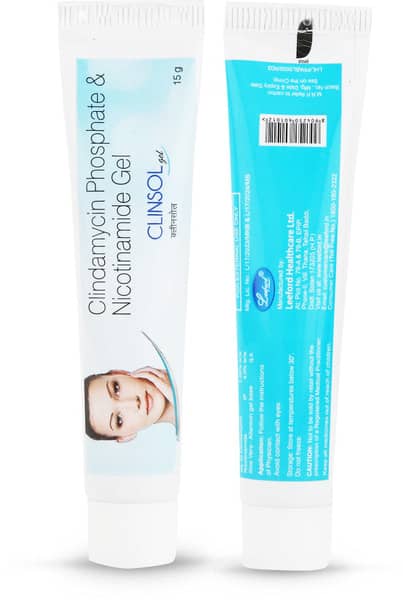
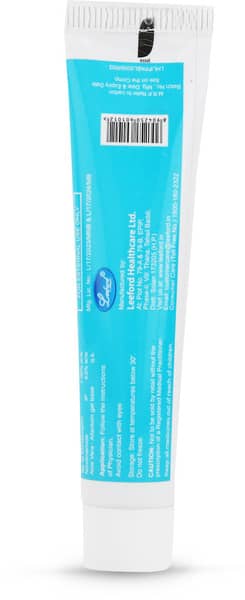
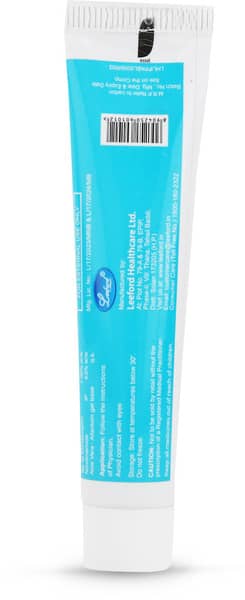
CLINSOL GEL
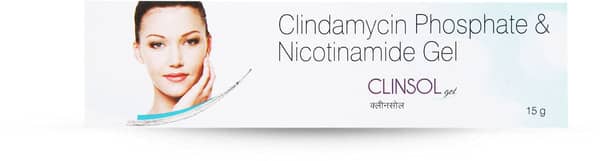
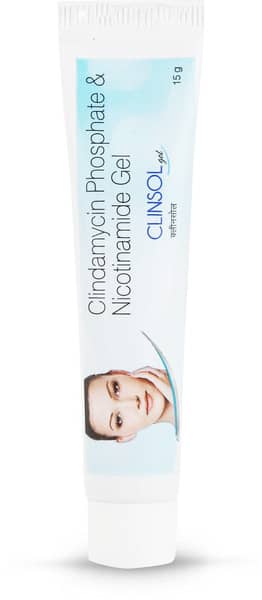
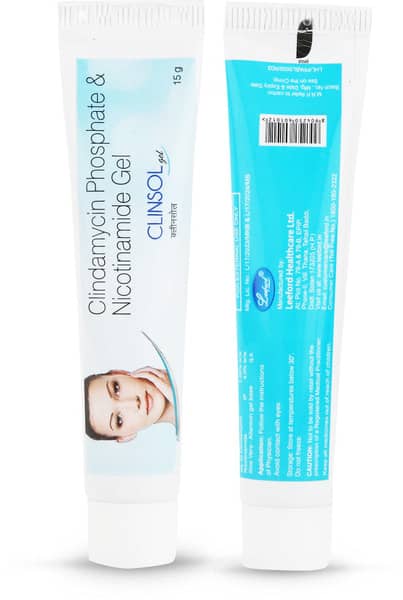
15g Gel in Tube


Product Summary
Clinsol 1% Gel, from Leeford Healthcare, combines clindamycin 1% w/w and niacinamide 4% w/w and is used to treat acne. This topical antibiotic and vitamin B3 derivative combination reduces acne-causing bacteria. It also reduces skin inflammation linked to the irritated bumps and redness of acne.
Medically Reviewed by Dr. Avinav Gupta
Last updated on: 14 October 2026 | 3:53 PM (IST)
 Save 12% with Trusted Branded Substitutes ➜
Made by
LEEFORD HEALTHCARE LTD
Dose Form
GEL
Expiry
General Information
| Therapy | Anti-acne |
| Composition | Clindamycin(1.0 %W/W)+Niacinamide / Nicotinamide(4.0 %W/W) Clindamycin 1.0 %W/W+Niacinamide / Nicotinamide 4.0 %W/W |
Clindamycin 1.0 %W/W+Niacinamide / Nicotinamide 4.0 %W/W
 ℞


 100% Genuine
Medicines
Safe & SecurePayments
Cash on DeliveryAvailable
15 days easy return policy
*Offer applicable on orders above ₹1000About Clinsol
Clinsol Gel is used to treat acne by reducing the growth of acne-causing bacteria and helping to fade acne marks. It contains two active ingredients: clindamycin, an antibiotic, and nicotinamide, a form of vitamin B3 that helps reduce inflammation and redness.
Clindamycin works by stopping the growth of bacteria that cause acne, while nicotinamide soothes irritated skin and promotes healing. Together, they help reduce active pimples and improve the overall appearance of your skin.
Apply a thin layer of Clinsol Gel to the affected areas as directed by your doctor. Avoid contact with the eyes, nostrils, and mouth. If accidental contact occurs, rinse immediately with water. Always wash your hands before and after applying the gel.
Your skin may become more sensitive to sunlight while using this gel. Use sunscreen during the day and limit direct sun exposure to prevent irritation and sunburn. Common side effects include mild redness, dryness, or peeling, which usually improve with continued use.
Other gels with similar ingredients include Faceclin gel, Glocin gel, Nioclean gel, Acnestar gel and Femcinol A gel. Consult your doctor if your acne does not improve or if you experience any persistent or severe skin irritation.
Uses
Contraindications
- If you are allergic to clindamycin, nicotinamide or any other ingredient of Clinsol gel.
- If you have a history of inflammatory bowel disease or antibiotic-associated colitis.
- If you are allergic to lincomycin, which is closely related to clindamycin.
Side effects
- Skin irritation
- Itching
- Dry skin
- Burning
- Redness
Precautions and Warnings

Alcohol
There are no direct drug interactions between topical Clinsol Gel and alcohol.

Pregnancy
Consult with your doctor before using Clinsol gel during pregnancy. Although absorption through the skin is typically minimal, your doctor should assess whether its use is appropriate during pregnancy.

Breastfeeding
Consult with your doctor before using Clinsol gel during breastfeeding.

Driving
Clinsol gel is a topical medicine and is unlikely to affect your ability to drive.

Other General Warnings
- You are allergic to any components of this gel or have a history of allergic skin reactions.
- You experience excessive dryness, irritation, or skin peeling.
- You develop diarrhoea during treatment or in the weeks after, especially if it is severe, watery, bloody, or comes with cramps or fever. Do not take an anti-diarrhoeal medicine for it without medical advice.
- If your acne does not improve after several weeks, is severe, or leaves scars, consult your dermatologist rather than extending treatment yourself.
- You have been using the gel continuously for longer than your doctor intended.
- For external use only. This is an antibiotic treatment, not a daily skincare product for long-term use.
Directions for use
- Use Clinsol gel as prescribed by your doctor.
- Clean your skin with a mild water-based cleanser before applying this gel.
- Apply gently to the affected area by placing a small amount on your fingertips.
- Avoid touching the container tip directly to the infected area.
- If this gel gets in your eyes, rinse them with clean water immediately.
- Apply a thin, even layer to the acne-prone area as your doctor directs, rather than only to individual pimples.
- Pat the skin dry before applying, and let the gel absorb before applying anything else.
- Use it for the course your dermatologist prescribed, and stop when they say to. Continuing a topical antibiotic long-term drives antibiotic resistance.
- Other acne treatments, including salicylic acid, topical retinoids or scrubs, may increase irritation. Use them only as part of a treatment plan your doctor recommends.
- Use a light, non-comedogenic moisturiser if the skin becomes dry, and sunscreen during the day.
- Acne may take several weeks to improve. Follow your doctor's instructions and seek advice if your acne worsens or does not improve as expected.
Storage and disposal
- Store this medicine at room temperature in a cool and dry place.
- Keep out of the reach and sight of children and pets.
- Keep the cap closed and store it away from direct sunlight and heat. Do not use it after the expiry date.
- Do not share the tube. Dispose of unused or expired medicine safely.Do not keep a part-used tube to restart treatment later without your doctor's advice.
Quick tips
- Clinsol gel is an anti-acne medication. It is a topical preparation used to manage acne.
- Talk to your doctor if you are allergic to any components of this gel or have a history of allergic skin reactions.
- Do not use more than the recommended amount.
- Avoid contact with eyes, mouth, nose, or mucous membranes.
- Use it in children only if a doctor prescribes it.
- Apply it over the entire acne-prone area, not just individual spots.
- Stop treatment when your dermatologist advises you to. Long-term use of topical antibiotics can lead to bacterial resistance and make future treatment more difficult.
- Use sunscreen during the day, especially if your skin becomes irritated.
- Stop and tell your doctor if you develop diarrhoea, especially if it is severe, watery or bloody, during or after the course.
- Do not pick or squeeze spots.as this can worsen inflammation and increase the risk of scarring and marks.
Dosage
Overdose
Missed a dose
How Clinsol works
Interactions
Drug interactions of Clinsol with other medicine salt
Food interactions
Frequently asked questions
Please rate your experience
2 people found this helpful
Substitutes for Clinsol
References
- Dalacin T Topical Lotion or Clindamycin Phosphate Topical Lotion - Summary of Product Characteristics (SmPC) - (emc) [Internet]. Medicines.org.uk. 2025 [cited 18th Nov 2025]
- Freederm Gel - Summary of Product Characteristics (SmPC) - (emc) [Internet]. Medicines.org.uk. 2025 [cited 18th Nov 2025]
- Murphy PB, Bistas KG, Patel P, et al. Clindamycin. [Updated 2024 Feb 28]. In: StatPearls [Internet]. Treasure Island (FL): StatPearls Publishing; 2024 Jan-. 2025 [cited 18th Nov 2025]
- National Center for Biotechnology Information (2024). PubChem Compound Summary for CID 938, Nicotinic acid. 2025 [cited 18th Nov 2025]
Need Expert Advice on Clinsol Tube Of 15Gm Gel?
Book a Consultation Now
Frequently bought together
 Everherb | Neem | Immunity Booster | Hair & Skin Detoxifier | Bottle 60 Capsules (by Pharmeasy)
60 Capsule(s) in Bottle
MRP ₹562.00
₹202.32 (64%)
 Fixderma Nigrifix | Cream | Tube 50 Gm
50g Cream in Tube
MRP ₹450.00
₹360 (20%)
 Biluma Skin Brightening Cream 15 Gm
15g Cream in Tube
MRP ₹819.00
₹622.44 (24%)
 Clinsol Anti Acne | Soap |75 Gm
75g Soap in Box
MRP ₹80.00
₹64 (20%)
 Acnestar | Face Wash | 50 Gm
50g Face Wash in Tube
MRP ₹150.00
₹115.5 (23%)
 Hyalugel Hyaluronic Acid Gel | 30 Gm
30g Gel in Tube
MRP ₹270.00
₹205.2 (24%)
 Linical Lotion 100 Ml
100ml Lotion in Bottle
MRP ₹249.99
₹209.99 (16%)
 New Clenia Skin Rejuvenating Face Wash Exfoliates Cleanses Rejuvenates For Normal & Oily Skin 100ml
100ml Face Wash in Tube
MRP ₹584.00
₹461.36 (21%)
 Ahaglow Advanced Tube Of 200gm Face Wash Gel
200g Face Wash in Tube
MRP ₹798.00
₹590.52 (26%)
 Onetouch Select Plus Simple Glucometer | Free 10 Test Strips + 10 Sterile Lancets + 1 Lancing Device
1 Glucometer Kit(s) in Device
MRP ₹1075.00
₹849.25 (21%)
Ask us anything about the product to understand it better
Talk to a qualified doctor about your health
Consult Dermatologist
Explore More at Pharmeasy
We provide you with reliable, authentic &
completely relevant information