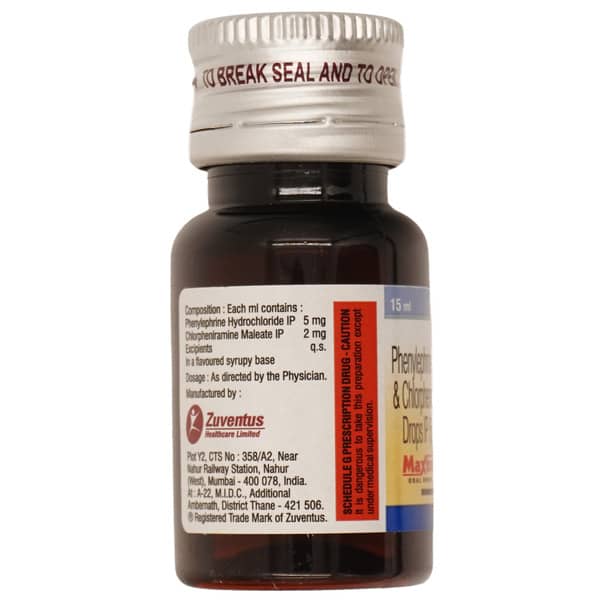
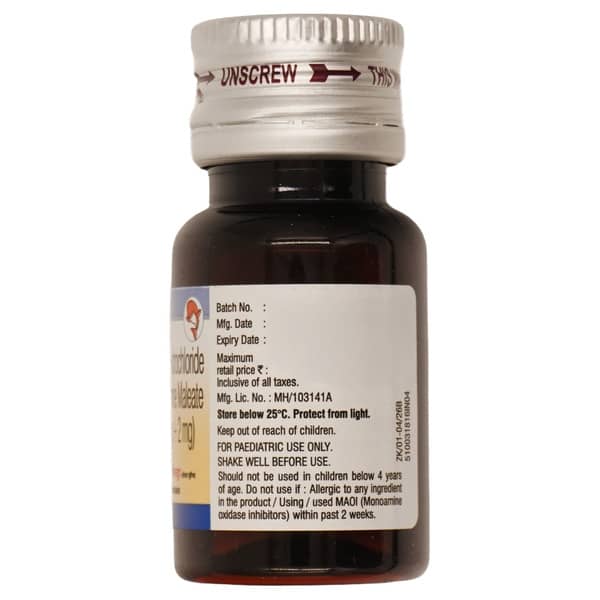
Maxtra Bottle Of 15Ml Oral Drops
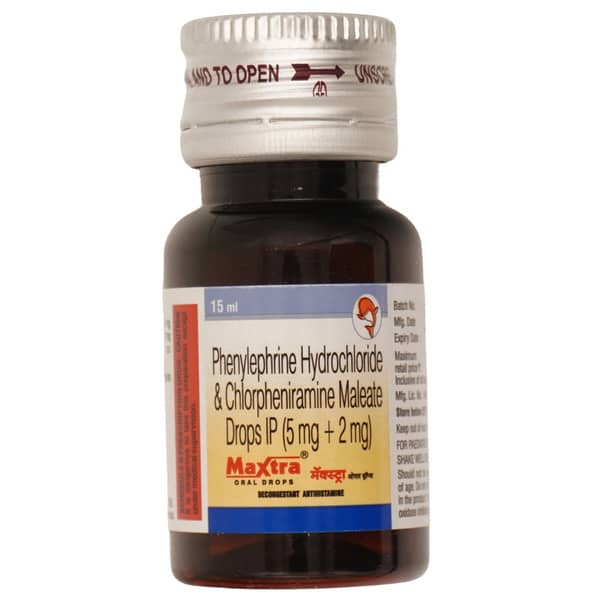
15ml Oral Drop in Bottle
Product Summary
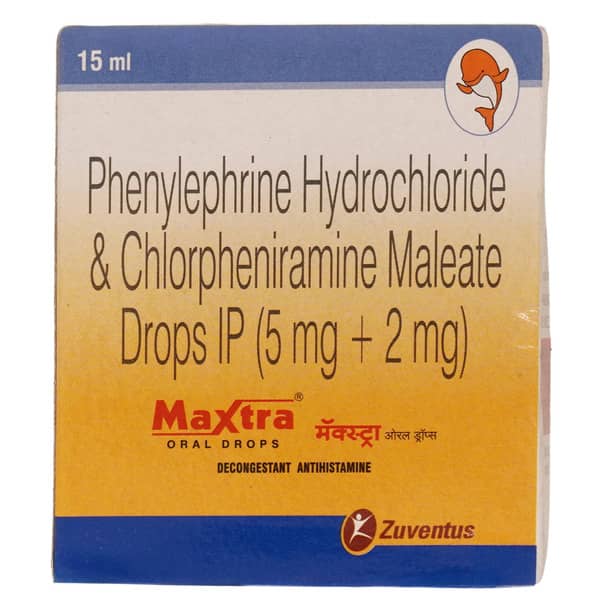
Maxtra Oral Drops combine phenylephrine 5 mg/ml and chlorpheniramine 2 mg/ml for the common cold and allergic rhinitis, the sneezing and runny or blocked nose caused by allergies. Zuventus Health Care manufactures this antihistamine and nasal decongestant combination, which blocks allergy signals and narrows nasal blood vessels.
Medically Reviewed by Dr. Shatrugan Ganpatrao
Last updated on: 13 October 2026 | 7:25 PM (IST)
 Save % with Trusted Branded Substitutes ➜
Made by
ZUVENTUS HEALTH CARE LTD
Dose Form
ORAL DROP
Expiry
General Information
| Therapy | Cough cold preparation |
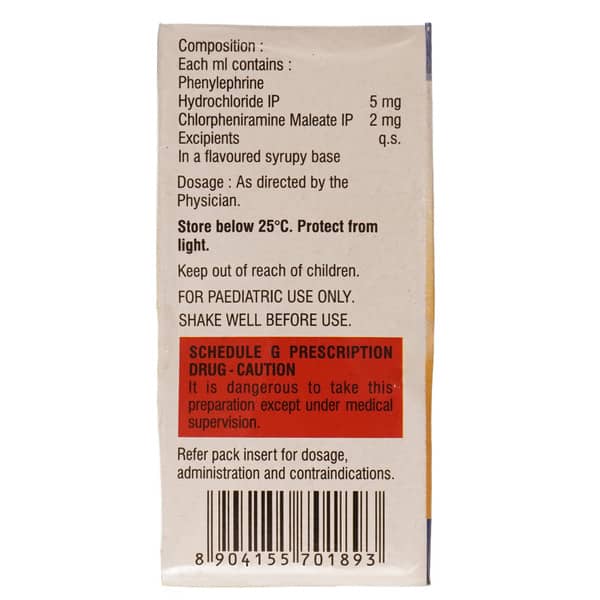
| Composition | Phenylephrine(5.0 Mg/Ml)+Chlorpheniramine / Chlorphenamine(2.0 Mg/Ml) Phenylephrine 5.0 Mg/Ml+Chlorpheniramine / Chlorphenamine 2.0 Mg/Ml |
Phenylephrine 5.0 Mg/Ml+Chlorpheniramine / Chlorphenamine 2.0 Mg/Ml
 ℞


 100% Genuine
Medicines
Safe & SecurePayments
Cash on DeliveryAvailable
30 days easy return policy
*Offer applicable on orders above ₹1000About Maxtra
Maxtra Oral Drop is used for temporary relief from the common cold and allergic rhinitis. It helps to alleviate symptoms such as a runny and stuffy nose, sneezing, and throat irritation. Maxtra Oral Drop contains a combination of chlorpheniramine and phenylephrine as active ingredients. Chlorpheniramine acts as an antiallergic, while phenylephrine serves as a decongestant.
You should administer this Oral Drop as prescribed by your doctor for maximum benefits and avoid using it for an extended duration unless necessary. This Oral Drop is intended for use in children only.
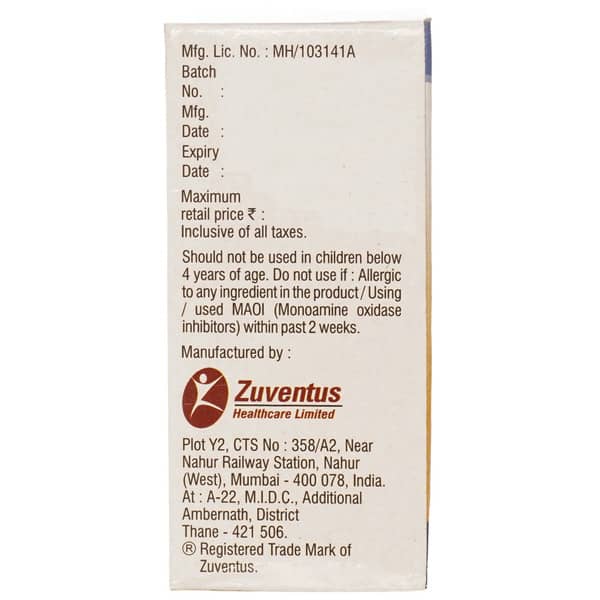
According to the Ministry of Health and Family Welfare, Maxtra Oral Drops should not be used in children under 4 years of age.
Uses
Contraindications
- If your child is allergic to chlorpheniramine or phenylephrine or any of the ingredients of Maxtra Oral Drop.
- If your child has taken medicines for brain disorders such as rasagiline in the last 14 days.
- If your child is suffering from high blood pressure or heart disease.
- If your child has diabetes, increased pressure inside the eyes (glaucoma).
- If your child is suffering from an overactive thyroid gland and breathing problems like bronchitis.
- If your child experiences difficulty in urination due to an enlarged prostate gland.
Side effects
- Drowsiness
- Headache
- Vomiting
- Weakness
- Incoordination
- Dizziness
- Excitation
- Confusion
- Increased blood pressure
Precautions and Warnings

Other General Warnings
- Your child is already taking medicines for a psychiatric illness, as it can enhance drowsiness
- Your child is experiencing drowsiness and nervousness.
- Your child doesn't feel any improvement in their symptoms within a week.
- Your child has asthma or any airway obstruction problems.
- Your child has a kidney or liver disease.
- Your child has a history of fits or seizures.
- Your child has a history of a tumour in the adrenal gland.
- Your child has a blockage in the stomach and intestines.
Directions for use
- Give Maxtra Oral Drop as prescribed by your doctor.
- Do not give this medicine directly from the bottle.
- Read any special instruction on the package.
Storage and disposal
- Store below 30°C in a cool and dry place
- Keep the medication away from moisture and direct sunlight
- Keep away from children and pets
- Do not flush or discard thee unused medication in household waste
- Talk to your pharmacist about a safe way of discarding the unused or expired medications
Dosage
Overdose
Missed a dose
How Maxtra works
- Maxtra Oral Drops work through the combined action of its two components, chlorpheniramine and phenylephrine. Chlorpheniramine functions by blocking the action of histamine, a natural substance produced by the body during an allergic reaction, thereby alleviating symptoms such as sneezing, watery eyes, and throat irritation. Etc.
- Phenylephrine acts as a vasoconstrictor, narrowing the blood vessels in the nasal passages and reducing congestion.
Interactions
Interactions with other medicines
- Medicines used to treat brain disorders or psychiatric illness should not be used with Maxtra as it can lead to a risk of heart-related side effects or increased blood pressure.
- Maxtra can reduce the effectiveness of high blood pressure medicines and can increase blood pressure abruptly.
- Maxtra should not be taken along with medicines used to treat heart failures such as digoxin as it can increase the risk of irregular heartbeat or heart attack.
- Phenytoin and ergot containing medicines should not be consumed along with Maxtra as it can lead to toxicity.
- Other medicines like medicines to induce sleep or anti-anxiety medicines and ceratin painkillers should be used as they can induce sedation.
- Discuss it with your doctor about any other medicine, herbal preparation and supplements you are taking currently to avoid any possible drug interactions.
Other general Interactions
Food interactions
References
Need Expert Advice on Maxtra Bottle Of 15Ml Oral Drops?
Book a Consultation Now
Frequently bought together
 Pharmeasy Digital Thermometer
1 Thermometer(s) in Box
MRP ₹245.00
₹88.2 (64%)
 Crocin Pain Relief Strip Of 15 Tablets
15 Tablet(s) in Strip
MRP ₹82.01
₹63.15 (23%)
 Softovac Sf Bowel Regulator For Constipation Powder 450 Gm
450g Oral Powder in Jar
MRP ₹723.00
₹498.87 (31%)
 Everherb | Pain Relief Oil | Blend Of 8 Powerful Herbal Ingredients | Bottle 100 Ml (by Pharmeasy)
100ml Oil in Bottle
MRP ₹374.00
₹145.86 (61%)
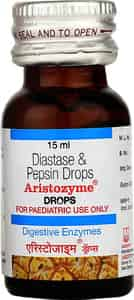 Aristozyme Drops 15ml
15ml Oral Drop in Bottle
MRP ₹81.75
₹67.85 (17%)
 Otrivin Baby Saline Bottle Of 20ml Nasal Spray
20ml Nasal Spray in Bottle
MRP ₹66.36
₹55.74 (16%)
 Philips Avent Natural 2.0 Bottle 125ml Pack Of 2 India Scf030/20
250ml Feeding Bottle in Bottle
MRP ₹865.00
₹865
 Cipladine 5% Tube Of 10gm Ointment
10g Ointment in Tube
MRP ₹36.22
₹30.06 (17%)
 Vicks Babyrub For Babies | Moisturizes | Soothes & Relaxes | 10ml
10ml Balm in Bottle
MRP ₹59.00
₹49.56 (16%)
 Nozcalm Nasal Spray 20 Ml
20ml Nasal Spray in Bottle
MRP ₹46.00
₹32.66 (29%)
Ask us anything about the product to understand it better
Talk to a qualified doctor about your health
Consult General Physician
Explore More at Pharmeasy
Please rate your experience
0 people found this helpful
We provide you with reliable, authentic &
completely relevant information