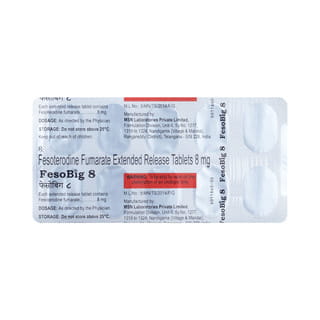
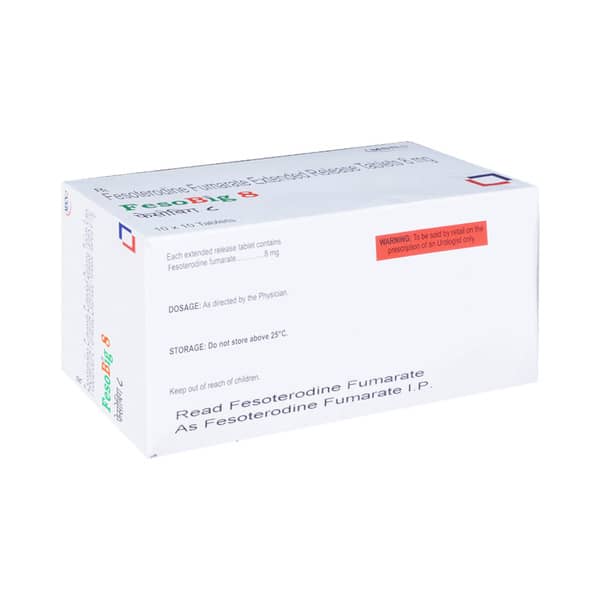
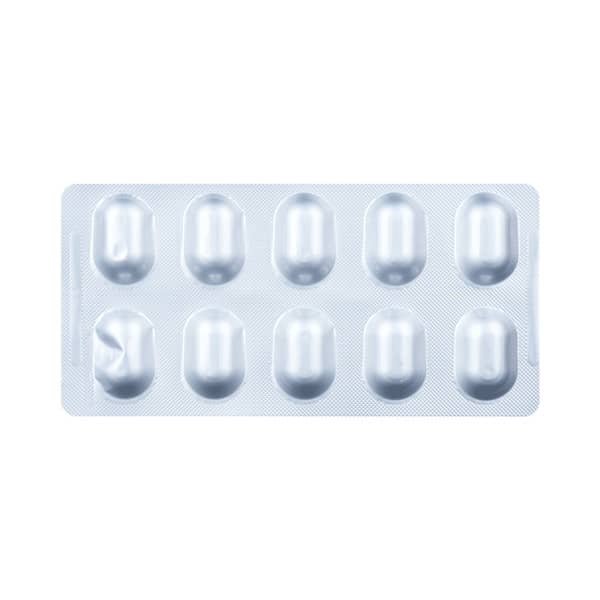
Fesobig 8Mg Strip Of 10 Tablets
10 Tablet(s) in StripMRP ₹306.10
₹251.00
18% OFF
Made by
MSN LABORATORIES
Dosage
TABLET
Expiry
Product Summary
| Uses | Overactive bladder |
| Therapy | Drugs for urinary retention |
| Side effects | Dry mouth, Insomnia |
| Salt Content | Fesoterodine(8.0 Mg) |
Assurance
available
Regulated
Medical Description
Fesobig tablet is a medicine used in adults to manage symptoms of an overactive bladder, including frequent urination, sudden urges to urinate, and accidental urine leakage. By helping the bladder hold more urine and reducing involuntary contractions, it improves bladder control and quality of life.
It works by blocking specific receptors in the bladder called muscarinic (M3) receptors. This relaxation of the bladder muscles reduces involuntary contractions, increases bladder capacity, and helps control sudden urges and leakage, making daily activities more comfortable.
Fesobig tablet should be taken exactly as prescribed by your doctor. Swallow the tablet whole with water, preferably with or after a meal to reduce stomach upset. Taking it at the same time every day ensures optimal symptom control and minimizes side effects.
Some people may experience mild side effects such as dry mouth, constipation, dizziness, blurred vision, drowsiness, headache, or stomach discomfort. Most side effects are manageable, but you should contact your doctor if they persist or become troublesome.
This medication may interact with other drugs, particularly those that affect liver enzymes or have anticholinergic effects, such as certain antidepressants, antibiotics, antifungals, or Parkinson’s medications. Always inform your doctor about all medications, supplements, or herbal products you are taking to ensure safe and effective treatment.
Uses
Contraindications
- If you are allergic to fesoterodine, peanuts, or any of the other ingredients of Fesobig tablet.
- If you are unable to pass urine normally or have urinary retention.
- If you have a condition in which the stomach empties very slowly or food remains in the stomach for too long (gastric retention).
- If you have uncontrolled narrow-angle glaucoma (high intraocular pressure).
- If you have myasthenia gravis, a condition that causes muscle weakness.
- If you have severe liver disease.
- If you have moderate to severe liver or kidney problems and are taking strong medicines that affect liver enzymes (such as certain antifungal or antibiotic medicines).
- If you have severe ulcerative colitis (severe inflammation of the bowel).
- If you have toxic megacolon, a serious condition that causes extreme widening of the large intestine.
Side effects
- Dry mouth
- Insomnia
- Dizziness
- Headache
- Abdominal pain
Precautions and Warnings

Pregnancy

Breast Feeding

Driving

Alcohol

Other General Warnings
- You have difficulty passing urine or conditions like prostate enlargement, as this medicine may increase the risk of urinary retention.
- You have any blockage or narrowing in the stomach or intestines, such as pyloric stenosis.
- You have acid reflux, heartburn, or are taking medicines that can irritate the food pipe, as symptoms may worsen.
- You have slow bowel movements or reduced gut movement.
- You have nerve-related conditions affecting body functions, such as autonomic neuropathy.
- You have controlled narrow-angle glaucoma, as careful monitoring is needed.
- You have liver problems, as dose adjustment or extra monitoring may be required.
- You have kidney problems, so the medication may remain in your body longer.
- You are taking medicines that strongly affect liver enzymes (such as certain antifungals, antibiotics, or antidepressants), as they may increase side effects.
- You plan to increase the dose, especially if you experience dry mouth, constipation, blurred vision, or dizziness.
- Frequent urination is due to other conditions like heart failure or kidney disease, as these should be treated first.
- You have symptoms of a urinary tract infection, such as burning while urinating, fever, or cloudy urine.
- You develop sudden swelling of the face, lips, tongue, or throat; this may indicate a serious allergic reaction.
- You are taking medications such as carbamazepine, rifampicin, or phenytoin, or herbal products such as St John’s Wort, as they may reduce the effect of this medicine.
- You have heart problems, low potassium levels, a slow heartbeat, or are taking medicines that affect heart rhythm.
- You have lactose intolerance or problems digesting certain sugars, as this medicine contains lactose.
- You experience headache, stomach upset, or diarrhea after taking this medicine.
Directions for Use
- Fesobig tablet should be taken as directed by your doctor.
- Swallow it whole with a glass of water.
- It should be taken with or after a meal to reduce its side effects.
- It is best to take it at a fixed time for optimal results, and you should not consume it more than prescribed by your doctor.
Storage and disposal
- Store Fesobig tablet in a cool, dry place, protected from direct sunlight, moisture, and heat.
- Keep it out of the reach of children and pets.
Quick Tips
- Drink adequate fluids, but limit caffeine and alcohol as they may worsen symptoms.
- Dry mouth and constipation may occur; sip water and increase dietary fiber.
- Avoid driving or operating machines if you feel dizzy, sleepy, or have blurred vision.
- Inform your doctor about all other medicines you are taking.
- Do not stop or change the dose on your own.
Dosage
Overdose
Missed a Dose
How does this medicine work?
Interactions
Interactions with other medicines
- Taking fesoterodine with other medicines that have similar anticholinergic effects (such as some antidepressants, medicines for Parkinson’s disease, or certain antipsychotics) may increase side effects like dry mouth, constipation, sleepiness, blurred vision, or difficulty passing urine.
- Fesoterodine may reduce the effect of medications that promote gastrointestinal motility, such as metoclopramide.
- Strong medicines that block liver enzymes (CYP3A4 inhibitors), such as ketoconazole, itraconazole, clarithromycin, and ritonavir, as well as similar antiviral or antifungal drugs, can increase the level of fesoterodine in the body, thereby increasing the risk of side effects. In such cases, the dose of fesoterodine is usually kept low.
- Medicines that moderately affect liver enzymes, such as erythromycin, fluconazole, diltiazem, verapamil, or grapefruit juice, may slightly increase fesoterodine levels, but dose changes are usually not required.
- Medicines that strongly increase liver enzyme activity (CYP3A4 inducers) such as rifampicin, carbamazepine, phenytoin, phenobarbital, or St John’s Wort can reduce the effect of fesoterodine, making it less effective. These combinations are generally not recommended.
- Some medicines that block another liver enzyme (CYP2D6 inhibitors) may increase fesoterodine levels in the body, potentially leading to more side effects. A lower dose may be needed in such cases.
- Fesoterodine does not reduce the effectiveness of oral contraceptive pills and does not interfere with birth control hormones.
- Fesoterodine does not significantly affect the action or blood-thinning effect of warfarin.
- Interaction studies with fesoterodine have been conducted only in adults; data in children are limited.
Interactions with food items
- Avoid excessive intake of grapefruit or grapefruit juice while taking Fesobig tablet, as it may increase medicine levels in the body and raise the risk of side effects.
- Maintain adequate fluid intake, but avoid drinking large amounts of fluids at one time, as this may worsen overactive bladder symptoms.
Frequently Asked Questions (FAQs)
References:
- Central Drugs Standard Control Organization (CDSCO). Drugs: Approved Drugs / Vaccines / r‑DNA / Blood Products [Internet]. Government of India; [cited 2026 Jan 7].
- Dr. Reddy's Laboratories (UK) Ltd. Fesoterodine fumarate 4 mg prolonged‑release tablets: Summary of Product Characteristics [Internet]. UK: Datapharm Ltd.; last updated 26 Sep 2025 [cited 2026 Jan 07].


Articles
View All









Chronic Condition Articles
View All







Did you find this helpful?
Explore More at Pharmeasy
Manufacturer Details
Brand:FESOBIG
Manufacturer Name:MSN LABORATORIES
Address:MSN LABORATORIES PRIVATE LIMITED., formulation division, unit II, sy no 1277, 1319 to 1324, nandigama (village & mandal), rangareddy, telangana 509228
Country of Origin:India
Vendor Details
Fulfillment Information: Fesobig 8 MG Tablet (10) will be delivered by a licensed retail pharmacy nearest to your location. Order acceptance and fulfillment are dependent upon the verification of your doctor's valid prescription (where applicable) and the current stock of this medicine.
In Case of Any Issues Contact Us
Email Id:care@pharmeasy.in
Phone Number:7666100300
Address:D-37/1, Opp. Sandoz, TTC Industrial Area, MIDC Industrial Area, Turbhe, Navi Mumbai, Maharashtra 400703
Disclaimer
The information provided herein is supplied to the best of our abilities to make it accurate and reliable as it is published after a review by a team of professionals. This information is solely intended to provide a general overview on the product and must be used for informational purposes only. You should not use the information provided herein to diagnose, prevent, or cure a health problem. Nothing contained on this page is intended to create a doctor-patient relationship, replace or be a substitute for a registered medical practitioner's medical treatment/advice or consultation. The absence of any information or warning to any medicine shall not be considered and assumed as an implied assurance. We highly recommend that you consult your registered medical practitioner for all queries or doubts related to your medical condition. You hereby agree that you shall not make any health or medical-related decision based in whole or in part on anything contained in the Site. Please click here for detailed T&C.