

1411+ orders placed in your location

100% NABL & ISO Certified Lab • 100% Accurate Reports
SGPT / ALT Test (Alanine Transaminase) in Lucknow - Price and details
Serum Glutamic-Pyruvic Test (SGPT), Alanine Aminotransferase Test (ALT), Glutamic-Pyruvic Test (GPT)
- SummaryThe SGPT (Alanine Aminotransferase) Test is a blood test used to assess liver health by measuring SGPT enzyme levels. Elevated levels may indicate liver inflammation or damage. Doctors may recommend this test if symptoms like fatigue, jaundice, abdominal pain, or loss of appetite are present, or to monitor liver conditions. No fasting is usually required unless advised by a doctor, and the test is suitable for all ages and genders.Read more
- Reports Within7 HrsView Sample Report

 100% NABL & ISO Certified Labs
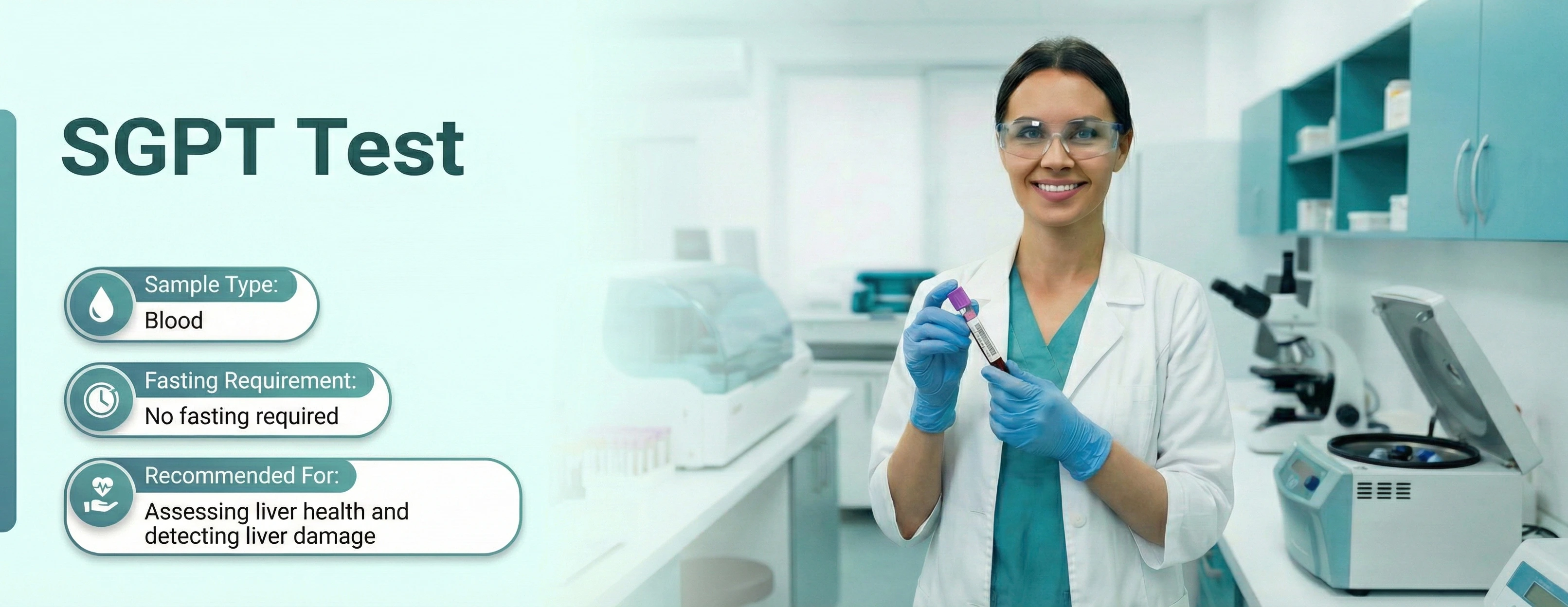
 - SampleBlood

- AgeAll Age Group
- GenderMale and Female
- FastingNot Required

PharmEasy Promises



Know More About The Test


A SGPT / ALT Test Reference Ranges

Overview
The SGPT/ALT test, also known as the alanine aminotransferase or alanine transaminase test, measures the level of the ALT enzyme in the blood. ALT is the current name of SGPT. SGPT/ALT is often used as a marker of liver health. In a healthy liver, ALT is present almost entirely inside the liver cells. However, when there is inflammation, stress, or damage to the liver cells such as during hepatitis, cirrhosis, fatty liver, or reduced blood flow to the liver, the enzyme leaks into the bloodstream from the liver cells. This increases its level in the blood. Thus, by measuring its levels in the blood, health of the liver can be determined. By identifying liver injury early, this test helps support the timely diagnosis of underlying liver conditions. It is important to note that factors such as strenuous physical activity, heavy alcohol intake, or consuming fatty heavy meals shortly before the test may lead to a temporary increase in SGPT/ALT levels and should be taken into consideration when interpretation of the results. PharmEasy Labs usually provides SGPT/ALT test results in about 10 hours to within the day, depending on your location in Lucknow.

When and Who Should Get a SGPT/ALT Test Done?
Your doctor may advise the SGPT/ALT test in the following situations:
- As part of a routine health check-up or preventive screening to evaluate overall health and monitor liver function.
- To screen for liver conditions if you have risk factors such as regular alcohol consumption, a family history of liver disease, diabetes, obesity, or prolonged use of medications that may affect the liver.
- If you are experiencing symptoms related to liver problems, such as nausea, vomiting, abdominal pain, unexplained tiredness, reduced appetite, itchy skin, jaundice (yellowing of the skin or eyes), dark urine, or pale stools.
- If you have risk factors for viral hepatitis, such as exposure to infected blood.
- To monitor an existing liver condition and track whether liver health is improving, stable, or changing over time during or after treatment.
.png?dim=32x32&q=75?dim=32x32&q=75?dim=32x32&q=75?dim=32x32&q=75?dim=48x48&q=75)
How Frequently Should You Take the SGPT/ALT Test?
The recommended frequency for an SGPT/ALT test can vary depending on your health condition, medical history, and your doctor’s advice.
- Healthy adults: once a year as part of routine preventive health check-up to monitor overall health and liver function.
- Individuals taking medications: those taking medications that may affect the liver, such as cholesterol-lowering medicines, anti-tubercular drugs, long-term painkillers, or anti-seizure medications, may require testing every 1 to 3 months or as advised by their doctor.
- People with active liver conditions: once a month or according to doctor’s recommendations.
- Those with heavy alcohol consumption: every 3 to 6 months to track liver enzyme changes and monitor liver health over time.
- After completing treatment for a liver-related condition: follow-up test within 4 to 6 weeks to assess recovery and treatment response.
- Before a surgical procedure: an SGPT/ALT test may be performed, usually within 48 to 72 hours before surgery.

What Conditions Can a SGPT/ALT Test Help Detect?
Along with other tests, the SGPT/ALT test may help with diagnosing:
- Alcohol-induced liver injury
- Inflammation or swelling of the liver
- Scarring of the liver (cirrhosis)
- Hepatitis A, B, or C
- Infectious mononucleosis
- Metabolic dysfunction-associated steatotic liver disease (MASLD), formerly called nonalcoholic fatty liver disease (NAFLD)
- Metabolic dysfunction-associated steatohepatitis (MASH), formerly called nonalcoholic steatohepatitis (NASH)
- As part of a complete work-up if liver cancer is suspected
- Liver ischaemia (not enough blood flow to your liver, which may lead to death of liver tissue)
- Haemochromatosis (iron overload in the body)
Disclaimer: The above list is for educational purposes only and does not confirm diagnosis or the presence of any condition. Always consult your doctor for your test results and diagnosis.
.png?dim=32x32&q=75?dim=32x32&q=75?dim=32x32&q=75?dim=32x32&q=75?dim=48x48&q=75)
SGPT/ALT Test Preparation
What to Expect Before the Test?
- Fasting is not required before the SGPT/ALT test, unless it is being done with other tests that require fasting.
- Tell your doctor about health conditions, current medication and supplement use, and pregnancy status.
- Before this test, drink your usual amount of water. Avoid giving the sample when you are dehydrated or over-hydrated.
- Avoid alcohol for at least 24 hours before the test.
- Avoid vigorous exercise for 24 hours before the test.
- Avoid heavy fatty meals and sugary and caffeinated beverages before the test.
- Wear comfortable, loose clothing that allows easy access to the inner arm to make the blood draw easier.
- Inform your phlebotomist if you are on blood thinners or have bleeding disorders.
What to Expect During the Sample Collection?
- The phlebotomist will first clean the area where the blood sample will be taken, usually the inside of your elbow, using an antiseptic swab. A tourniquet will then be placed around your upper arm to make the vein more visible. You may be asked to gently clench your fist and keep your arm still during the procedure.
- A sterile needle will be inserted into the vein to collect the blood sample. You may experience a brief pinprick or mild stinging sensation as the needle is inserted. The blood will be collected into a sample tube, after which you can relax your hand.
- After the required amount of blood has been collected, the needle will be removed. Gentle pressure will be applied to the puncture site to minimise bleeding, and a small adhesive bandage will be placed over the area.
What to Expect After the Test?
- You can usually return to your normal daily activities immediately after the blood sample is collected.
- Mild pain, tenderness, or slight bruising at the blood draw site may occur but typically resolves within a day or two.
Note: If you notice anything unusual at the puncture site, such as persistent bleeding, a rash, or pain, consult your healthcare provider.

What are the Parameters Included in a SGPT/ALT Test?
The SGPT/ALT test measures SGPT/ALT (alanine aminotransferase) enzyme levels in your blood, reported in units per litre (U/L).

Normal Range of SGPT/ALT Test Parameters
The table below shows standard reference ranges of SGPT/ALT levels.
|
Parameter |
Normal range |
|---|---|
|
SGPT/ALT (alanine aminotransferase) |
Less than 45 U/L (units per litre) |
Important note: SGPT values can be slightly higher in men than women, and in individuals with higher muscle mass. Levels are also marginally higher in children, especially infants. Normal ranges may vary slightly between laboratories. Always refer to the reference range printed on your specific lab report and consult your doctor for interpretation.
.png?dim=32x32&q=75?dim=32x32&q=75?dim=32x32&q=75?dim=32x32&q=75?dim=48x48&q=75)
SGPT/ALT Test Result Interpretation
SGPT results must always be interpreted in the context of your gender, symptoms, alcohol use, medications, and the degree of elevation.
|
SGPT level |
Category |
Potential interpretation |
|---|---|---|
|
Below 45 U/L |
Normal |
Liver cells are not significantly damaged. No evidence of active liver injury at this time. |
|
45 - 120 U/L |
Mildly elevated |
May indicate early fatty liver, mild hepatitis, medication side effects, or moderate alcohol use. |
|
120 - 400 U/L |
Moderately elevated |
Suggests significant liver inflammation or injury. Commonly seen in active viral hepatitis, alcoholic hepatitis, or moderate fatty liver. |
|
Above 400 U/L |
Severely elevated |
Indicates serious liver cell damage. Seen in acute viral hepatitis, paracetamol toxicity, ischaemic hepatitis, or severe autoimmune hepatitis. |
|
Above 1000 U/L |
Very severely elevated |
Suggests massive liver cell destruction, such as acute liver failure, severe drug toxicity, or toxic shock. This is a medical emergency. |
Disclaimer: This table is for educational purposes only. SGPT/ALT interpretation requires a healthcare professional's expertise.

SGPT/ALT Test Risks and Limitations
Potential Risks and Complications
- The SGPT/ALT blood test is generally considered safe and carries very little risk.
- You may experience a brief pinprick, mild pain, tenderness, or slight bruising at the blood draw site, which usually settles within a few days.
- Some people may feel light-headed or faint during or shortly after the blood draw. Although uncommon, there is also a small risk of infection at the puncture site.
- Rarely, excessive bleeding may occur, particularly in people taking blood-thinning medications or those with bleeding disorders.
- In some cases, a haematoma (a small collection of blood beneath the skin) may develop, causing a raised bruise at the needle insertion site.
- These side effects are usually mild, temporary, and resolve without specific treatment.
Understanding SGPT/ALT Test Limitations
- Elevated SGPT/ALT levels only detect liver cell injury. It does not indicate how well the liver is functioning.
- SGPT/ALT is also present in small quantities in organs other than the liver, such as skeletal muscle. Hence vigorous exercise and muscle injuries can also raise SGPT/ALT levels.
- In advanced liver scarring (cirrhosis) or non-alcoholic fatty liver disease (MASLD), ALT levels are sometimes normal, leading to a missed diagnosis.
- This test cannot detect the reason for liver damage, such as, viral hepatitis, alcohol effects, or medication side effects.
- Normal ranges of SGPT/ALT can vary by laboratory, age, sex, and the patient's body mass index.


Areas We Serve in Lucknow
You can book SGPT/ALT Test in Lucknow through PharmEasy with convenient home sample collection across several localities, including :
- Gomti Nagar
- Indira Nagar
- Aliganj
- Mahanagar
- Hazratganj
- Aminabad
- Chowk
- Jankipuram
- Vikas Nagar
- Rajajipuram
- Alambagh
- Ashiyana
- SGPGI
- Chinhat
- Kalyanpur
- Sushant Golf City
- Vrindavan Yojna
- Krishna Nagar
- Nirala Nagar
- Charbagh
You can also check service availability during purchase by entering your pincode.

SGPT/ALT Test Sample Collection: Home vs. Diagnostic Lab
The SGPT/ALT test at PharmEasy offers convenient features as compared with traditional labs:
|
Feature |
PharmEasy home collection |
Traditional labs |
|---|---|---|
|
At-home sample collection by phlebotomist |
✅ |
❌ |
|
No travel required |
✅ |
❌ |
|
Saves time |
✅ |
❌ |
|
Flexible appointment slots |
✅ |
❌ |
|
Comfortable testing experience |
✅ |
❌ |
|
Reduced exposure to crowds |
✅ |
❌ |
|
Easy digital report access |
✅ |
❌ |
|
Waiting in queues |
❌ |
✅ |
To get the advantage of home sample collection for the test in Lucknow, visit the PharmEasy website or app. Search for the SGPT/ALT test, enter your location, and confirm the booking.
Was This Test Information Helpful?
Please rate your experience
 Yes Helpful (38)
 Not Helpful
References
Health packages containing 'SGPT / ALT (Alanine Transaminase) Test'
 For full-body wellness, go for a comprehensive checkup
People Also Ask
Where is my SGPT/ALT test sample processed after home collection in Lucknow?
How will I receive my SGPT/ALT test report in Lucknow through PharmEasy?
Can I choose a convenient time for sample collection for an SGPT/ALT test in Lucknow?
How soon can I expect ALT levels to reduce?
What lifestyle changes can help lower ALT?
In what frequency should I get my ALT levels checked?
Is low ALT a concern?
 4.6 Stars| 7+ Lakhs Ratings & Reviews

Over 10 million happy users PharmEasy Labs
- Because the digital report is available on WhatsApp, there's no need to go back to the lab. Thanks, PharmEasy!
 Sachin sharma11 Jan ‘26
 - Thanks to the coupon discount, the blood test was done at a lower price.Komal04 Jan ‘26
- The lab technician was a good and knowledgeable professional.Rakesh Pandey06 Jan ‘26
- Due to bad weather, it's difficult to reach the lab. But home collection makes things easier.Arjun08 Jan ‘26
- Thanks to the Swasth AI feature, the report is easy to understand.Priya Mehta02 Jan ‘26
- The report is available on the same day. Wow!Vikas Patel05 Jan ‘26
Have any doubts? Ask us.
Ask us anything about the SGPT / ALT Test (Alanine Transaminase) in Lucknow - Price and details to understand it better
Nearby Labs
Lab tests made easy!
- Quick Collection
- Trusted Accuracy
- Hassle-free Services
PharmEasy Labs (Thyrocare powered) - Lucknow
Kailash Heights, C.T.S No.636, Wing ‘A’, Uttar Pradesh
 grievance-officer@docon.in
 7022000900
PharmEasy Labs (Covid RTPCR) - Lucknow
D-37/1, MIDC, Turbhe, Opp. Sandoz,, Uttar Pradesh
grievance-officer@docon.in7022000900
Charakdhar Diagnostics - Lucknow
292, 05, Tulsidas Marg, Chowk, Lucknow,, Uttar Pradesh
grievance-officer@docon.in7022000900
Reliance MedLab - Lucknow
UGF, 538/3, Sitapur Rd, in front of RELIEF HOSPITAL TRAUMA & CRITICAL CARE, above RELIANCE SMART POINT, Ahibaranpur, Sector CS, Triveni Nagar, Uttar Pradesh
grievance-officer@docon.in7022000900Care Diagnostic Centre - Lucknow - Lucknow
81'14/881,NEAR RLB SCHOOL ,INDRA NAGAR, Uttar Pradesh
grievance-officer@docon.in7022000900Plasma Medicare Diagnostics - Lucknow
A1/62, Sewak Park, Dwarka Mor, Near NDNC Diagnostics, Dwarka, Uttar Pradesh
grievance-officer@docon.in7022000900
We provide trusted, expert-curated health content to support better awareness,prevention, and care.
Backed by experienced doctors, medical experts, and strict editorial standards.