

4753+ orders placed in your location

100% NABL & ISO Certified Lab • 100% Accurate Reports
Lipid Profile Test in Coimbatore - Price & Details
Lipid Test Panel, Complete Cholesterol Test
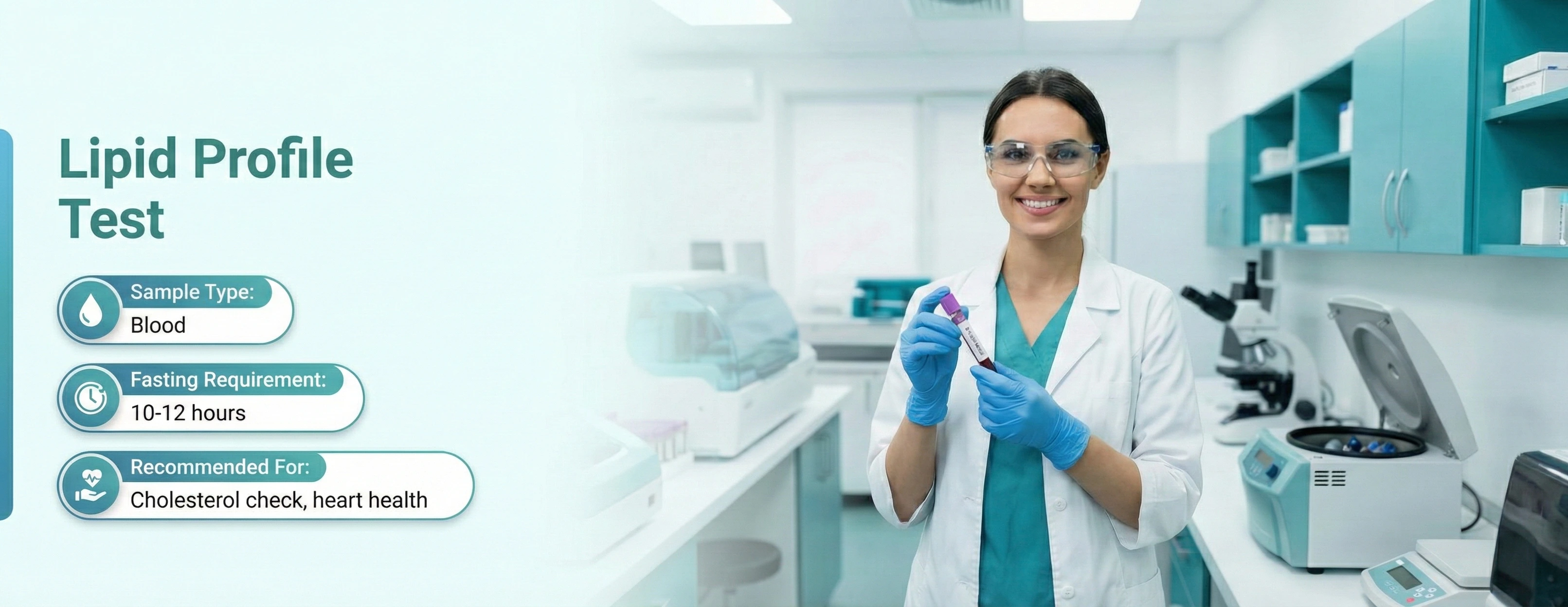
- SummaryThe Lipid Profile Test is a blood test that measures various fats in the blood, such as total cholesterol, LDL (bad cholesterol), HDL (good cholesterol), and triglycerides. It helps evaluate the risk of heart disease and monitor disorders related to lipid levels. The test uses a blood sample, usually taken after 10–12 hours of fasting, and is suitable for adults of all genders as advised by a doctor.Read more
- TestsIncludes 10 tests
- Reports Within16 HrsView Sample Report

- SampleBlood

- AgeAll Age Group
- GenderMale and Female
- Fasting10-12 Hrs

PharmEasy Promises



Know More About The Test


A quick info on Lipid Profile test

Overview
High amounts of bad cholesterol or triglycerides in your body can deposit in your blood vessels and heart, increasing the risk of cardiovascular events such as heart attack or stroke. A lipid profile test can help your doctor monitor levels of different subtypes of lipids in your body, including cholesterol and triglycerides. Borderline lipid levels can often be managed early on with a healthy diet and lifestyle. Always consult your doctor to decide whether you need medication to get your lipid levels in check. Take the first step toward heart health with a lipid profile test, available at an affordable price with home sample collection service. Enter your PIN code, choose a time slot, and confirm your booking to benefit from PharmEasy testing services in Coimbatore.
When and Who Should Get a Lipid Profile Test Done?
Lipid profile monitoring is recommended for the following individuals:
- Healthy adults (20 years or older).
- Children or adolescents with a family history or risk factors.
- Adults with a family history of heart disease.
- Alcoholic individuals or chronic smokers.
- Obese individuals.
- Individuals with an unhealthy diet or a sedentary lifestyle.
- Those on cholesterol-lowering medications like statins.
- Those on cholesterol-raising medications such as beta-blockers, diuretics, or corticosteroids.
- Pre-existing conditions such as diabetes, kidney disease, PMOS (polyendocrine metabolic syndrome), or heart disease.

How Frequently Should You Take the Lipid Profile Test?
The frequency of the lipid profile test depends on your age, risk factors, or as advised by your doctor. The recommended frequency of the lipid profile test by the American Heart Association is given in the table below:
|
Health scenario |
Context |
Frequency |
|---|---|---|
|
Healthy adults (20 years or older) |
Healthy individuals with no risk factors and normal lipid levels. |
Every 4-6 years. Once a year, aged 40 or above. |
|
Higher-risk individuals |
Higher-risk groups include:
|
Once annually or as recommended by the doctor. |
|
On cholesterol-lowering medications |
Regular monitoring is needed to check the treatment response. |
Once every 4-12 weeks initially. Every 3-6 months, once results are stable. Or as advised by your doctor. |
|
Children between the ages of 9 and 11 |
For children aged 9-11, universal screening is needed according to paediatric guidelines. |
Screening once between the ages of 9 and 11. More often, and as advised by the doctor, if at higher risk. |
|
Adolescents between 17 and 19 years |
Individuals who fall under the age group of 17-19 years. |
Screening once between the ages of 17 and 19. More often, and as advised by the doctor, if at higher risk. |

What Conditions Can a Lipid Profile Test Help Detect?
The lipid profile test does not detect a condition on its own and provides risk assessment only for the following conditions:
- Cardiovascular diseases - serious risks such as heart attack or stroke may increase with dyslipidaemia.
- Coronary artery disease - narrowing or blockage of arteries (blood vessels) that supply the heart.
- Peripheral vascular disease - narrowing of arteries that supply blood to arms and legs.
- Fatty liver disease - excessive fat accumulation in liver cells due to high cholesterol or triglycerides.
- Pancreatitis - inflammation of the pancreas caused by high triglycerides.
- Metabolic syndrome - a group of metabolic disorders, such as diabetes (insulin resistance), PMOS, and obesity, is associated with high lipid levels and increased heart disease risk.
- Hypothyroidism - lower thyroid hormone levels may cause lipid imbalances.
- Familial hypercholesterolaemia - a genetic disorder characterised by very high LDL cholesterol levels since birth, increasing the early risk of heart disease.

Lipid Profile Test Preparation
What to Expect Before the Test
- Overnight fasting of 9-12 hours is required before the test. Do not consume any food or beverages except water during this fasting period.
- Refrain from intense exercise, alcohol, or smoking before the test.
- Inform your healthcare provider of any current medications or supplements beforehand, as some may alter lipid levels and interfere with test results.
- Consult your healthcare provider for any special instructions before the test.
What to Expect During the Sample Collection
The steps for the blood sample collection procedure are explained below:
- An elastic band is tied around your upper arm for better access to veins.
- The puncture site is cleaned with an antiseptic, and a needle is inserted into a vein in the inner arm.
- The needle is withdrawn once the sample is collected, and a bandage is placed over the puncture site to stop minor bleeding.
What to Expect After the Test
- The test procedure is usually safe, with minimal to no risk.
- You can resume your daily activities after the test.
- If you feel dizzy, sit and relax for a few minutes to recover.
Note: If you notice anything unusual at the puncture site, such as persistent bleeding, a rash, or pain, consult your healthcare provider.

What are the Parameters Included in a Lipid Profile Test?
The lipid profile measures different subtypes of lipids that are mentioned below:
- Total cholesterol - measures the total amount of cholesterol in the blood.
- HDL - it is good cholesterol that reduces excess cholesterol and protects the heart.
- VLDL cholesterol - it builds up in blood vessels, forms plaque, and increases the risk of heart attack or stroke.
- Triglycerides - fats consumed from the diet; high levels increase the risk of heart disease and pancreatitis.
- LDL/HDL - ratio of bad to good cholesterol; a higher ratio indicates a greater risk of heart disease.
- TC/HDL cholesterol - ratio of total cholesterol to HDL; a higher ratio is linked with the risk of heart attack or stroke.
- Non-HDL cholesterol - total harmful cholesterol excluding HDL; higher levels cause artery blockage and increase the risk of atherosclerosis.
- HDL/LDL cholesterol - ratio of good to bad cholesterol; a higher ratio suggests good heart health.
- Trig/HDL ratio - ratio of triglycerides to HDL; a high ratio indicates insulin resistance or heart disease risk.
- LDL cholesterol direct - measures levels of LDL, which is bad cholesterol and promotes plaque build-up, and increases heart disease risk.

Normal Range of Lipid Profile Test Parameters
The lipid profile test parameter levels are classified as normal, borderline, and high, depending on the risk. Refer to the table below for reference ranges:
|
Parameter |
Desirable/normal range |
Borderline |
High risk/abnormal |
|---|---|---|---|
|
Total cholesterol |
Less than 200 mg/dL |
200 - 239 mg/dL |
240 mg/dL or above |
|
LDL cholesterol (bad) |
< 100 mg/dL |
100-129 (near optimal) 130-159 (borderline high) |
160-189 (high) >190 (very high) |
|
HDL cholesterol (good) |
40-60 mg/dL |
- |
> 60 mg/dL (high risk) |
|
Triglycerides |
Less than 150 mg/dL |
151 - 199 mg/dL (borderline high) |
200 - 499 mg/dL (high) >500 (very high) |
|
VLDL cholesterol |
5 -40 mg/dL |
- |
More than 40 mg/dL |
|
Non-HDL cholesterol |
< 160 mg/dL |
- |
160 mg/dL or above |
|
TC/HDL cholesterol ratio |
3-5 mg/dL (ideal) |
Above 5.0 (high risk) |
|
|
LDL/HDL ratio |
1.5 - 3.5 mg/dL (ideal) |
- |
Above 3.5 (high risk) |
|
HDl/LDL ratio |
>0.40 mg/dL |
- |
- |
|
Trig/HDL ratio |
|
- |
- |
Important note: Target LDL levels may vary based on your individual cardiovascular risk profile. For very high-risk patients, such as those who have already had a heart attack, doctors may set a lower LDL target of less than 70 mg/dL. Always refer to the ranges on your report and consult your doctor for personalised interpretation.

Lipid Profile Test Result Interpretation
The lipid profile test does not diagnose a condition on its own, but it is valuable in the risk assessment of various conditions. Refer to the table below to understand the possible associations between test parameters and medical conditions:
|
Parameter |
Level |
Potential interpretation (may be associated with) |
|---|---|---|
|
Total cholesterol |
High |
Dyslipidaemia, familial hypercholesterolaemia, hypothyroidism, chronic kidney disease, poor diet high in saturated fats, or sedentary lifestyle. |
|
LDL cholesterol |
High |
Increased saturated and trans fat intake, familial hypercholesterolaemia, hypothyroidism, nephrotic syndrome, or certain medications (steroids, beta-blockers). Primary driver of arterial plaque. |
|
HDL cholesterol |
Low |
Sedentary lifestyle, smoking, abdominal obesity, type 2 diabetes, high triglycerides, metabolic syndrome, or anabolic steroids. Low HDL is an independent risk factor for heart disease. |
|
Triglycerides |
High |
Diet high in sugar, refined carbohydrates, or alcohol; uncontrolled diabetes; obesity; hypothyroidism; or certain medications. Very high levels (above 500 mg/dL) can trigger acute pancreatitis. |
|
VLDL cholesterol |
High |
Insulin resistance, type 2 diabetes, metabolic syndrome, obesity, or high carbohydrate and alcohol intake. VLDL contributes to arterial plaque formation. |
|
TC/HDL ratio |
High |
Unfavourable balance between total lipid burden and protective HDL. A ratio above 5.0 significantly increases cardiac event risk. |
|
Non-HDL cholesterol |
High |
Reflects the combined burden of all artery-clogging lipoproteins. Stronger predictor of cardiovascular risk than LDL alone, especially with high triglycerides or diabetes. |
Disclaimer: This table is for educational purposes only and provides a risk assessment. These findings do not confirm a diagnosis. Lipid levels are influenced by age, gender, diet, medications, and underlying health conditions. Always consult your doctor.

Lipid Profile Test Price in Coimbatore

Areas We Serve in Coimbatore
You can book lipid profile test in Coimbatore through PharmEasy with convenient home sample collection across several localities, including :
- RS Puram
- Gandhipuram
- Saibaba Colony
- Peelamedu
- Race Course
- Ramanathapuram
- Singanallur
- Ganapathy
- Saravanampatti
- Vadavalli
- Thudiyalur
- Kalapatti
- Kuniyamuthur
- Kovaipudur
- Sundarapuram
- Ukkadam
- Town Hall
- Lawley Road
- Coimbatore Civil Aerodrome
- Ondipudur
You can also check service availability during purchase by entering your pincode.

Lipid Profile Test Sample Collection: Home vs. Diagnostic Lab
PharmEasy offers a free home sample collection service included in the test price citywide in Coimbatore. Check the table below to learn more about the benefits of the home sample collection service offered by PharmEasy over other diagnostic labs:
|
Feature |
Home collection (PharmEasy) |
Traditional diagnostic lab |
|---|---|---|
|
Convenience |
High - sample collected from your home or office. |
Low - requires travelling and waiting in queues. |
|
Time saving |
Maximum - no travel time. You choose the time slot. |
Minimum - depends on traffic and lab wait time. |
|
Safety and comfort |
Safe - helps avoid exposure to other sick patients. |
Moderate - exposure to crowded waiting areas. |
|
Process |
A professional phlebotomist visits you. |
You must visit the facility during its working hours. |
|
Report access |
Digital - reports are sent directly to your app or email. |
Often requires a second visit for physical copies. |
Pro Tip: To benefit from the home sample collection service, book a lipid profile test on PharmEasy. Enjoy professional service and accurate results without stepping out of your home.
Was This Test Information Helpful?
Please rate your experience
 Yes Helpful (80)
 Not Helpful
References
Health packages containing 'Lipid Profile Test'
 For full-body wellness, go for a comprehensive checkup
People Also Ask
What time of day should I get a lipid profile test done?
Do I need medications if my lipid levels are high?
Is lipid profile testing safe?
Is home sample collection available near me in Coimbatore?
How long does it take to get lipid profile test results in Coimbatore?
 4.6 Stars| 7+ Lakhs Ratings & Reviews


Over 10 million happy users PharmEasy Labs
- Because the digital report is available on WhatsApp, there's no need to go back to the lab. Thanks, PharmEasy!
 Sachin sharma11 Jan ‘26
- Thanks to the coupon discount, the blood test was done at a lower price.Komal04 Jan ‘26
- The lab technician was a good and knowledgeable professional.Rakesh Pandey06 Jan ‘26
- Due to bad weather, it's difficult to reach the lab. But home collection makes things easier.Arjun08 Jan ‘26
- Thanks to the Swasth AI feature, the report is easy to understand.Priya Mehta02 Jan ‘26
- The report is available on the same day. Wow!Vikas Patel05 Jan ‘26
Have any doubts? Ask us.
Ask us anything about the Lipid Profile Test in Coimbatore - Price & Details to understand it better
Nearby Labs
Lab tests made easy!
- Quick Collection
- Trusted Accuracy
- Hassle-free Services
Agilus Diagnostics Limited - Coimbatore
Agilus Diagnostics, # 14/2, Sri Skandha Towers, Cowley Brown Road, Rs Puram,, Tamilnadu
 grievance-officer@docon.in
 7022000900

Commvault - AI Screening - Coimbatore
Com1136, Jayyseeli Plazaa, Subbana Gounder Layout, Tamilnadu
grievance-officer@docon.in7022000900KG Speciality Centre ( Hospital ) - Coimbatore
5Th Phase, 080, Beml Main Rd, Gm Palya, C V Raman Nagar,, Tamilnadu
grievance-officer@docon.in7022000900
We provide trusted, expert-curated health content to support better awareness,prevention, and care.
Backed by experienced doctors, medical experts, and strict editorial standards.