

15206+ orders placed in your location

100% NABL & ISO Certified Lab • 100% Accurate Reports
CBC test in Surat - Price & Details
CBC With Differential Counts, Haemogram, Complete Blood Picture, Full Blood Count
- SummaryA CBC Test measures the levels of different blood cells in your body, testing white blood cells, red blood cells, platelets, and haemoglobin and more related parameters. This test gives key insights about various infections, blood disorders and even some cancers. CBC test is done by taking a blood sample from the vein in your arm, fasting is not required for this test. Read more
- TestsIncludes 24 tests
- Reports Within36 HrsView Sample Report

 100% NABL & ISO Certified Labs
 - SampleBlood

- AgeAll Age Group
- GenderMale and Female
- FastingNot Required

PharmEasy Promises



Know More About The Test


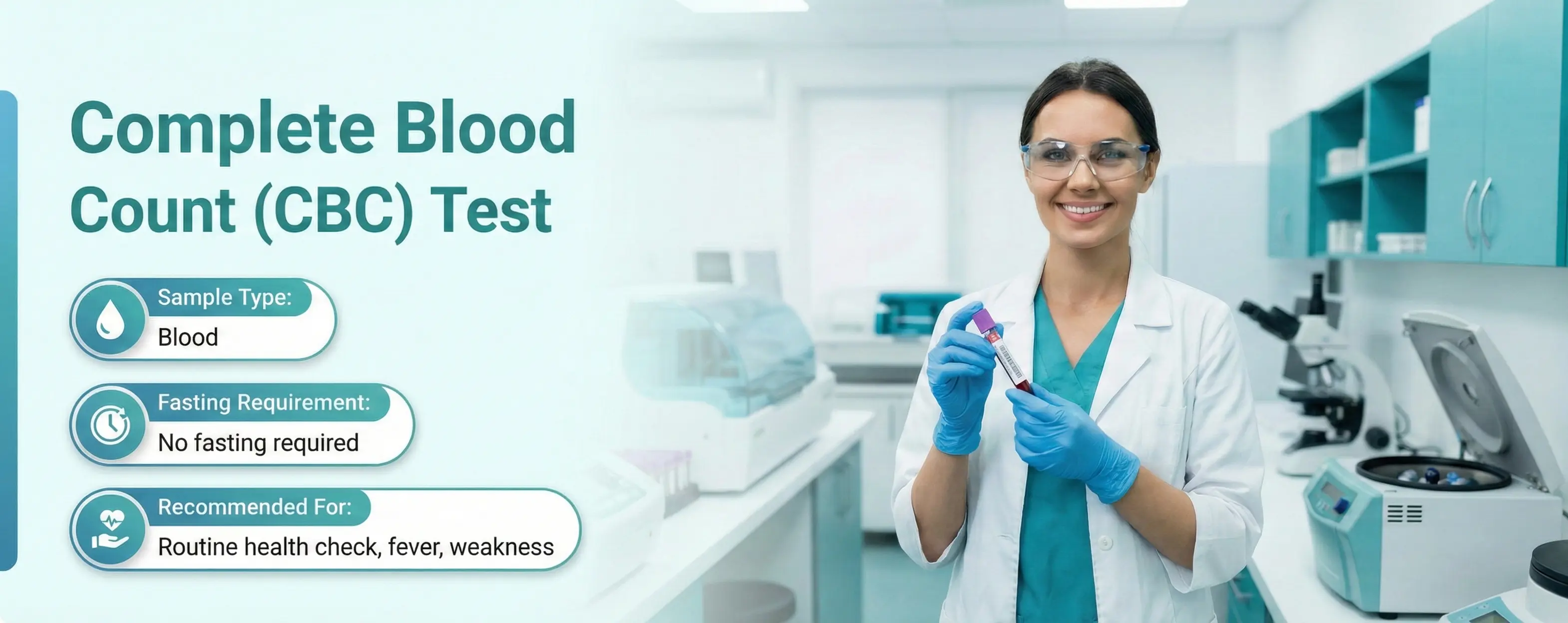
A quick info on CBC Test

Overview
The complete blood count (CBC) test is a commonly performed blood test that provides an overall picture of your blood health. It measures the number and characteristics of red blood cells, white blood cells, and platelets, along with related parameters that provide additional information about these cells. Red blood cells contain haemoglobin, which carries oxygen from the lungs to the body’s tissues. White blood cells are an important part of the immune system and help the body fight infections and respond to inflammation. Platelets help form blood clots and prevent excessive bleeding. A CBC is often one of the first blood tests recommended by doctors when investigating a wide range of symptoms because changes in blood cell counts can provide clues about several health conditions. It may be advised during routine health check-ups or when symptoms such as persistent tiredness, weakness, fever, frequent infections, unexplained bruising, or bleeding are present. It is also used to help support diagnosis and monitoring of conditions such as anaemia, infections, inflammatory disorders, and certain blood-related conditions, as well as to monitor the effects of some treatments. An abnormal CBC result does not necessarily mean you have a disease and is interpreted along with your symptoms, medical history, and other test results.

When and Who Should Get a CBC Test Done?
A CBC test may be recommended in the following situations:
- Routine health check-ups - To provide an overall picture of blood health and identify abnormalities, even when you have no symptoms.
- Evaluation of symptoms - Persistent tiredness, weakness, dizziness, pale skin, fever, frequent infections, headaches, fainting, unexplained weight loss, easy bruising or bleeding.
- Suspected health conditions - It can help evaluate conditions such as anaemia, infections, inflammatory or autoimmune disorders, and certain blood or bone marrow disorders.
- Before surgery or cancer treatment - To assess blood counts and identify abnormalities that may affect treatment or procedures.
- Monitoring existing conditions - Regular CBC testing may be advised for certain blood, bone marrow, kidney, or autoimmune conditions.
- Monitoring treatment - It can help monitor the effects of treatments or medicines that may affect blood cell counts, such as chemotherapy or immunosuppressive medicines.
- During pregnancy - CBC is commonly included in prenatal care, particularly to check for anaemia and other blood count abnormalities in the pregnant woman.

What Conditions Can a CBC Test Help Detect?
A CBC can identify abnormalities in blood cell counts and characteristics that may provide clues to a range of health conditions, including:
- Anaemia - Low haemoglobin or red blood cell levels may indicate anaemia, which can have causes such as iron or vitamin deficiencies, blood loss, or chronic diseases.
- Infections - Changes in white blood cell counts, particularly the differential count, may provide clues to bacterial or viral infections.
- Inflammatory and autoimmune conditions - Abnormal white blood cell patterns can occur with conditions such as rheumatoid arthritis and other immune-related disorders.
- Blood and bone marrow disorders - Abnormal RBC, WBC, or platelet counts may occur in disorders affecting blood-cell production.
- Blood cancers - Changes in blood cell counts can raise suspicion of conditions such as leukaemia and other blood cancers, although further tests are needed for diagnosis.
- Bleeding and clotting problems - Abnormal platelet counts may point to conditions affecting normal blood clotting.
- Certain chronic conditions - CBC abnormalities can also occur with conditions such as chronic kidney disease and may help doctors monitor their effects on blood cells.
Important: An abnormal CBC result does not necessarily mean you have one of these conditions. Many different factors can affect blood counts, so doctors interpret the results along with your symptoms, medical history, and other investigations.
.png?dim=32x32&q=75?dim=32x32&q=75?dim=48x48&q=75)
CBC Test Preparation
What to Expect Before the Test?
A CBC test usually requires no special preparation, and you can generally eat, drink, and take your regular medicines unless your doctor has given different instructions. If your CBC is being done along with other blood tests, you may be asked to fast depending on those tests. This test can be scheduled at any time of day.
Before the test, tell your doctor about:
- All medicines and supplements you take, including prescription and over-the-counter medicines.
- Any recent illness, fever, or infection, as these can temporarily affect blood cell counts.
- Any history of bleeding, easy bruising, or blood disorders.
- Any ongoing medical conditions, particularly kidney, liver, autoimmune, or bone marrow disorders.
- Pregnancy status.
- Recent blood transfusion, surgery, or significant blood loss.
- Any ongoing treatment, especially chemotherapy, immunosuppressive medicines or other treatments that may affect blood cell counts.
What to Expect During the Sample Collection?
- The phlebotomist will clean the inside of your elbow with an antiseptic and place a tourniquet around your upper arm to make the vein easier to find. You may be asked to make a gentle fist, but avoid repeatedly pumping your hand, and keep your arm still.
- A sterile needle will be inserted into the vein to collect the blood sample. You may feel a brief pinprick or mild stinging sensation.
- Once enough blood has been collected, the needle will be removed. Gentle pressure will be applied to the site, followed by a small bandage to help stop the bleeding.
What to Expect After the Test?
- After the blood sample is collected, you can return to your usual daily activities immediately. There are no dietary or activity restrictions after the test.
- You may notice mild pain, tenderness, or a small bruise at the blood draw site. These symptoms are common and usually settle on their own within a day or two.
- Your CBC test report is generally available in a few hours to within a day. If the result is abnormal, your doctor may advise further tests before confirming a diagnosis and recommending treatment.
Note: If you notice anything unusual at the puncture site, such as persistent bleeding, a rash, or pain, consult your healthcare provider.

What are the Parameters Included in a CBC Test?
The CBC test covers a wide range of parameters, including various blood components and related values. Refer to the list below to understand the parameters:
Red Blood Cell (RBC) Parameters
- RBC count - Number of red blood cells.
- Haemoglobin (Hb) - A protein that carries oxygen.
- Haematocrit (Hct/PCV) - Percentage of blood made up of RBCs.
- MCV (mean corpuscular volume) - Average size of RBCs.
- MCH (mean corpuscular haemoglobin ) - Amount of haemoglobin per RBC.
- MCHC (mean corpuscular haemoglobin concentration) - Concentration of haemoglobin in RBCs.
- RDW (red cell distribution width) - Variation in RBC size.
White Blood Cell (WBC) Parameters
- Total WBC count (TLC) - Total number of white blood cells.
- Differential count (DLC) -
Types of WBCs:
- Neutrophils
- Lymphocytes
- Monocytes
- Eosinophils
- Basophils
Platelet Parameters
- Platelet count (PLT) - Number of platelets.
- MPV (mean platelet volume) - Average size of platelets.
- PDW (platelet distribution width) - Variation in platelet size.
- Plateletcrit (PCT) - Volume occupied by platelets in blood.
- Platelet to large cell ratio (PLCR) - Percentage of large platelets among total platelets.

Normal Range of CBC Test Parameters
Check the tables below to understand the normal reference ranges of different blood parameters:
RBC Parameters
|
Parameter |
Normal reference range |
|---|---|
|
RBC |
4.5 - 5.5 x 10⁶/μL |
|
Haemoglobin [Hb] |
|
|
Haematocrit |
40% - 50% |
|
MCV |
83 - 101 fL (in femtolitres or cubic micrometres (µm3) |
|
MCH |
27 - 32 pg/RBC (in picograms per cell) |
|
MCHC |
31.5 to 34.5 g/dL |
|
RDW-SD |
39 - 46 fL |
|
RDW-CV |
11.6 - 14% |
WBC Parameters
|
Parameter |
Normal reference range |
|---|---|
|
Total leucocytes count (WBC) |
4.0 - 10.0 x 10³/μL |
|
Neutrophils |
40 - 80% |
|
Lymphocyte percentage |
20 - 40% |
|
Monocytes |
2 - 10% |
|
Eosinophils |
1- 6% |
|
Immature granulocyte percentage (IG%) |
0 - 0.5% |
|
Neutrophils - Absolute count |
2.0 - 7.0 x 10³/μL |
|
Lymphocytes - Absolute count |
1.0 - 3.0 x 10³/μL |
|
Monocytes - Absolute count |
0.2 - 1 x 10³/μL |
|
Basophils - Absolute count |
0.02 - 0.1 x 10³/μL |
|
Eosinophils - Absolute count |
0.02 - 0.5 x 10³/μL |
Platelet Parameters
|
Parameter |
Normal reference range |
|---|---|
|
Platelet count |
150,000 to 400,000/μL or mm3 |
|
MPV |
6.5 - 12.0 femtolitres (fL) |
|
PDW |
9.6 - 15.2 fL |
|
Platelet to large cell ratio (PLCR) |
19.7 - 42.4% |
|
Plateletcrit (PCT) |
0.19 - 0.39% |
Note: The normal values and reference ranges may vary from lab to lab. Please refer to the ranges mentioned in your report and consult a doctor to understand your lab reports.
.png?dim=32x32&q=75?dim=32x32&q=75?dim=48x48&q=75)
CBC Test Result Interpretation
Abnormal levels of CBC parameters may be associated with various conditions and help support diagnosis alongside symptoms and medical history under an expert’s guidance.
Refer to the table below, which shows the parameters, their levels, and potential associations with certain conditions:
|
Parameter |
Level |
Potential interpretation |
|---|---|---|
|
Total RBC count |
High |
Dehydration, heavy smoking, sleep apnoea, chronic lung disease, renal tumours, or living at a high altitude. |
|
Low |
Anaemia, chronic kidney disease, RBC destruction, bone marrow disorders, or damage, chronic inflammatory disease, internal bleeding, or nutritional deficiencies. |
|
|
Haemoglobin (Hb) |
High |
Polycythaemia vera, heart failure, or living at high altitudes. |
|
Low |
Iron deficiency, pregnancy, or heavy menstrual bleeding. |
|
|
Haematocrit (PCV) |
High |
Severe burns, shock, or extreme dehydration. |
|
Low |
Overhydration, bone marrow failure, or nutritional deficiency. |
|
|
MCV |
High |
Vitamin B12 deficiency, folate deficiency, liver disease, hypothyroidism, or alcoholism. |
|
Low |
Thalassaemia, iron deficiency, or chronic lead poisoning. |
|
|
MCH |
High |
Macrocytic anaemia or overactive thyroid. |
|
Low |
Microcytic anaemia or copper deficiency. |
|
|
MCHC |
High |
Hereditary spherocytosis or autoimmune red cell breakdown. |
|
Low |
Sideroblastic anaemia, chronic inflammation, or iron deficiency anaemia. |
|
|
RDW |
High |
Mixed nutritional deficiencies (e.g., Iron and vitamin B12 together). |
|
Low |
Usually normal; cells are of very uniform size. |
|
|
Total WBC count |
High |
Viral or bacterial infections, tissue injury, intense physical stress, inflammation, leukaemia, myeloproliferative neoplasm, allergies, or asthma. |
|
Low |
Viral infections (HIV/AIDS, hepatitis), sepsis, bone marrow disorders, autoimmune conditions, lymphoma, dietary deficiencies, or the use of certain medications. |
|
|
Neutrophils |
High |
Acute bacterial infection, gout, inflammation, rheumatoid arthritis, trauma, heart attack, burns, stress, rigorous exercise, certain leukaemias, Cushing syndrome, or use of steroids. |
|
Low |
Vitamin B12 deficiency, sepsis, severe infections, especially viral infections, autoimmune disorders, bone marrow damage (chemotherapy, radiation therapy), or congenital neutropenia. |
|
|
Lymphocytes |
High |
Acute viral infections (chickenpox, CMV, EBV, herpes, rubella), whooping cough, TB, toxoplasmosis, ulcerative colitis, or lymphoproliferative disorders (CLL, lymphoma). |
|
Low |
Recent steroid treatment, malnutrition, radiation, autoimmune disorders, HIV, viral hepatitis, typhoid, influenza, COVID-19, or bone marrow suppression. |
|
|
Monocytes |
High |
Tuberculosis, fungal infection, malaria, bacterial endocarditis, collagen vascular diseases (lupus, rheumatoid arthritis), or monocytic leukaemia. |
|
Low |
Hairy cell leukaemia, severe bone marrow stress or damage, aplastic anaemia, or chemotherapy. |
|
|
Eosinophils |
High |
Asthma, hay fever, drug reactions, skin allergies, parasitic infections, coeliac disease, inflammatory bowel disease, some cancers, or connective tissue disorders. |
|
Low |
Acute stress or use of corticosteroid medicines. |
|
|
Basophils |
High |
Chronic inflammation (ulcerative colitis, rheumatoid arthritis), rare blood disorders, rare allergic reactions, certain leukaemias, or uraemia. |
|
Low |
Severe allergic reactions (anaphylaxis) or hyperthyroidism. |
|
|
Platelet Count |
High |
After surgery, iron deficiency, cancers (lung, gut, breast, ovarian), lymphoma, rheumatoid arthritis, or chronic inflammation. |
|
Low |
Dengue, malaria, liver cirrhosis, vitamin B12 deficiency, sepsis, leukaemia, lymphoma, myelodysplasia, ITP, measles, hepatitis, or chemotherapy. |
|
|
MPV |
High |
Diabetes, heart disease, or early recovery from blood loss. |
|
Low |
Aplastic anaemia or certain cytotoxic drugs. |
|
|
PDW |
High |
Sickle cell disease or active platelet destruction. |
|
Low |
Normal indicates platelets are very similar in size. |
Disclaimer: This table shows a potential association between blood parameter levels and the above conditions and is for educational purposes only. Always consult an expert for a better interpretation of your test results.

CBC Test Price in Surat

Areas We Serve in Surat
You can book the CBC Test in Surat through PharmEasy with convenient home sample collection across several localities, including :
- Adajan
- Vesu
- Pal
- Rander
- Dumas
- City Light
- Piplod
- Althan
- Amroli
- Limbayat
- Punagam
- Godadara
- Nanpura
- Sachin
- Varachha
- Katargam
- Sarthana
- Udhna
- Pandesara
- Utran
You can also check service availability during purchase by entering your pin code.

CBC Test Sample Collection: Home vs. Diagnostic Lab
PharmEasy offers a convenient home sample collection service in Surat. Check the table below to compare the benefits offered by PharmEasy Labs and other diagnostic labs.
|
Feature |
Home Collection (PharmEasy) |
Traditional Diagnostic Lab |
|---|---|---|
|
Convenience |
High - sample collected from your home or office. |
Low - requires travelling and waiting in queues. |
|
Time saving |
Maximum - no travel time. You choose the time slot. |
Minimum - depends on traffic and lab wait time. |
|
Safety and comfort |
Safe - helps avoid exposure to other sick patients. |
Moderate - exposure to crowded waiting areas. |
|
Process |
A professional phlebotomist visits you. |
You must visit the facility during its working hours. |
|
Report access |
Digital - reports are sent directly to your app or email. |
Often requires a second visit for physical copies. |
Was This Test Information Helpful?
Please rate your experience
 Yes Helpful (109)
 Not Helpful
References
Health packages containing 'CBC Test'
 For full-body wellness, go for a comprehensive checkup
People Also Ask
Do I need to visit a PharmEasy collection centre for the CBC test in Surat?
Where is my CBC test sample processed after home collection in Surat?
How will I receive my CBC test report in Surat through PharmEasy?
Does a CBC test require fasting?
Can I take my regular medicines before a CBC?
Can a CBC detect cancer?
Can a CBC tell if I have an infection?
 4.6 Stars| 7+ Lakhs Ratings & Reviews

Over 10 million happy users PharmEasy Labs
- Because the digital report is available on WhatsApp, there's no need to go back to the lab. Thanks, PharmEasy!
 Sachin sharma11 Jan ‘26
 - Thanks to the coupon discount, the blood test was done at a lower price.Komal04 Jan ‘26
- The lab technician was a good and knowledgeable professional.Rakesh Pandey06 Jan ‘26
- Due to bad weather, it's difficult to reach the lab. But home collection makes things easier.Arjun08 Jan ‘26
- Thanks to the Swasth AI feature, the report is easy to understand.Priya Mehta02 Jan ‘26
- The report is available on the same day. Wow!Vikas Patel05 Jan ‘26
Have any doubts? Ask us.
Ask us anything about the CBC test in Surat - Price & Details to understand it better

View top questions
( Total 1 Questions asked)Do I need to fast before a CBC test?
No, fasting is usually not required for a CBC test. You can eat and drink normally unless your doctor has advised additional blood tests along with the CBC that require fasting.Harsh Raj23 Dec ‘25
Nearby Labs
Lab tests made easy!
- Quick Collection
- Trusted Accuracy
- Hassle-free Services
PharmEasy Labs (Thyrocare powered) - Surat
Kailash Heights, C.T.S No.636, Wing ‘A’, Gujarat
 grievance-officer@docon.in
 7022000900
Universal Pathology Laboratory - Surat
CITY CENTRE, Mai Mandir Rd, opp. MAI MANDIR, Napad,, Gujarat
grievance-officer@docon.in7022000900
Health Buddy Diagnostic Pvt Ltd - Surat
H No 7, 5/H, Dabouli, Near Bharat Chauraha, Kanpur Up-208022, Gujarat
grievance-officer@docon.in7022000900HealthRoute - Surat
5-Ground Floor, Gyandev Complex, Laxmi Market, Gujarat
grievance-officer@docon.in7022000900
We provide trusted, expert-curated health content to support better awareness,prevention, and care.
Backed by experienced doctors, medical experts, and strict editorial standards.