

4861+ orders placed in your location

100% NABL & ISO Certified Lab • 100% Accurate Reports
Urine Routine Test in Gurgaon - Price & Details
Urine Analysis, UA, Urine routine and microscopy, RUA
- SummaryA Urine Test analyzes a urine sample to detect various health conditions such as infections, kidney issues, diabetes, or dehydration. It may include tests for proteins, glucose, ketones, or bacteria. This test is done by taking a urine sample, and fasting is not required for this test. Read more
- TestsIncludes 24 tests
- Reports Within7 HrsView Sample Report

 100% NABL & ISO Certified Labs
 - SampleUrine

- AgeAll Age Group
- GenderMale and Female
- FastingNot Required

PharmEasy Promises



Know More About The Test


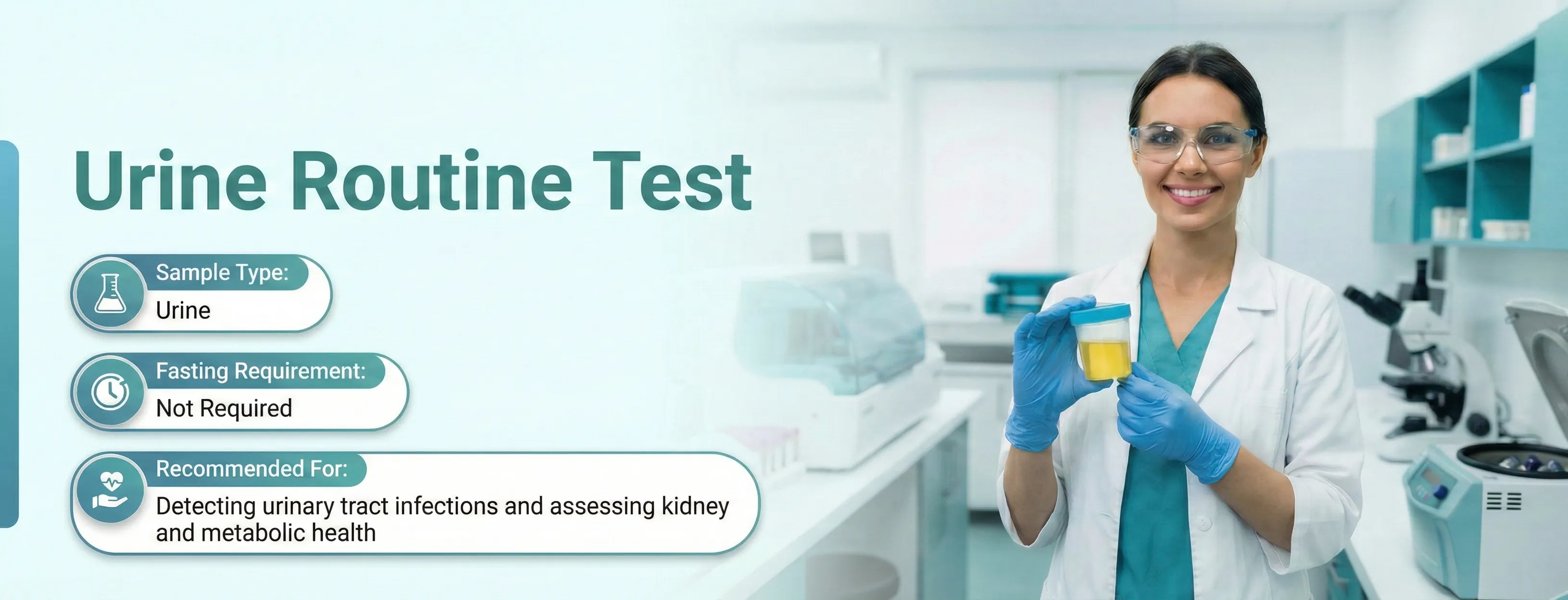
A quick info on Urine Routine Test

Overview
A urine routine test, commonly called urinalysis or complete urine examination (CUE), is one of the most frequently ordered lab tests for detecting urinary tract infections (UTIs), kidney disease, diabetes, liver dysfunction, dehydration, and several other health concerns. It is often recommended during routine health check-ups, pregnancy visits, or pre-surgical assessments, and whenever symptoms such as a burning sensation while urinating, increased urinary frequency, blood in urine, or lower abdominal discomfort occur. Urine is formed when the kidneys filter waste, excess fluid, and salts out of the bloodstream. Examining it offers useful insights into kidney function, urinary tract health, and the general health of the body. To perform the test, a clean-catch midstream sample is collected, with a first-morning urine sample typically preferred for better results from an undiluted sample. In the lab, technicians assess the sample’s physical appearance, run a chemical dipstick analysis, and examine it under a microscope for cells, crystals, or other markers. Urinalysis remains one of medicine’s oldest diagnostic methods, dating back nearly six millennia. Even today, it continues to serve as a fast, painless, and reliable way to screen for and monitor a broad range of health conditions.

When and Who Should Get a Urine Routine Test?
- Routine testing: a part of preventive health screening in adults and monitoring of patients with chronic health conditions.
- Symptoms suggesting urinary tract infection (UTI): burning, pain, or urgency during urination, increased frequency of urination, or foul‑smelling/cloudy urine.
- Routine tests before surgery/hospital admission: as a standard screening test.
- Pregnant women: to detect UTIs, protein and sugar in urine, pre-eclampsia.
- Diabetes or high blood pressure: to check if the kidneys have been affected.
- Suspected diabetes: symptoms such as increased frequency of urination, increased thirst, and weight loss; to detect sugar and ketones in urine.
- Patients with kidney disease: to monitor levels of protein or blood in urine and to check for infections.
- Suspected kidney stone or infection: lower abdominal, back or side aches
- To check for UTI in infants and children: in cases of unexplained fever.
- Suspected nephrotic or nephritic syndrome: swelling of the face or feet, or unexplained weight gain.
- Monitoring UTI: if UTI has already been diagnosed, urine test is used to monitor disease progression and to check recovery after starting treatment.

What Conditions Can a Urine Routine Test Help Detect?
Urinalysis is often used along with symptoms, medical history, and other diagnostic tests to support diagnosis and monitor various health conditions, including:
- Urinary tract infections (UTIs)
- Kidney diseases
- Kidney stones
- Diabetes
- Liver disorders
- Dehydration
- Proteinuria (protein in urine)
- Haematuria (blood in urine)
- Pregnancy-related complications (such as pre-eclampsia)
- Bladder or urinary system disorders
- Metabolic and systemic disorders

Urine Routine Test Preparation
What to Expect Before the Urine Routine Test
- Drink your usual amount of water before the test. Avoid drinking too much or too little water, as it can affect the concentration of your urine and influence the test results.
- Your doctor may ask for a specific type of urine sample, such as the first urine of the morning, a sample collected 2 hours after a meal, a random sample, or a 24-hour urine collection. Follow the instructions provided by your doctor.
- Tell your doctor about all the medicines, vitamins, and supplements you are taking, including vitamin C, antibiotics, and diuretics, as some may affect the test results.
- Avoid giving a urine sample during your menstrual period if possible, as menstrual blood may affect certain test results. If the test cannot be postponed, inform the laboratory and your doctor.
- Avoid strenuous exercise a couple of days before the test, as intense physical activity can temporarily increase protein levels in the urine.
What to Expect During the Sample Collection
- You will receive a clean, sterile container for collecting your urine sample.
- Before collecting the sample, wash your hands and clean the genital area to reduce the risk of contamination.
- Start urinating into the toilet first. After a few seconds, place the container under the urine stream and collect the middle portion (midstream) of the urine. This provides a cleaner sample for testing.
- Collect about 20 to 30 mL of urine (approximately half the container), or as instructed by your healthcare provider.
- Once you have collected enough urine, remove the container and finish urinating into the toilet.
- Tightly close the container immediately after collection.
- Take care not to touch the inside of the container or its lid while collecting the sample.
- Give the sealed urine sample to the PharmEasy sample collection executive for transport to the laboratory.
What to Expect After the Urine Routine Test
- The urine sample is sent to the laboratory for analysis, and results are usually made available within a few hours and can be downloaded from the PharmEasy platform. Depending on the findings, additional investigations may be recommended by your doctor for further evaluation.

What are the Parameters and Normal Ranges of Urine Routine Test?
|
Test name |
Normal ranges |
Units |
|---|---|---|
|
Physical examination |
||
|
Volume |
mL |
|
|
Colour |
Pale yellow |
– |
|
Appearance |
Clear |
– |
|
Specific gravity |
1.003–1.030 |
– |
|
pH |
5–8 |
– |
|
Chemical examination (urine dipstick) |
||
|
Urinary protein |
Absent |
mg/dL |
|
Urinary glucose |
Absent |
mg/dL |
|
Urine ketone |
Absent |
mg/dL |
|
Urinary bilirubin |
Absent |
mg/dL |
|
Urobilinogen |
≤0.2 |
mg/dL |
|
Bile salt |
Absent |
– |
|
Bile pigment |
Absent |
– |
|
Urine blood |
Absent |
– |
|
Nitrite |
Absent |
– |
|
Leucocyte esterase |
Absent |
– |
|
Microscopic examination |
||
|
Mucus |
Absent |
– |
|
Red blood cells |
0–2 |
cells/HPF |
|
Urinary leucocytes (pus cells) |
0–5 |
cells/HPF |
|
Epithelial cells |
0–5 |
cells/HPF |
|
Casts |
Absent |
– |
|
Crystals |
Absent |
– |
|
Bacteria |
Absent |
– |
|
Yeast |
Absent |
– |
|
Parasite |
Absent |
– |

Urine Routine Test Result Interpretation
|
Test name |
Interpretation |
|---|---|
|
Volume |
Low or high urine volume may be influenced by hydration status, kidney function, fluid intake, or certain medical conditions. |
|
Colour |
Dark, red, cloudy, or unusual colors may indicate dehydration, medications, food effects, blood, or disease. |
|
Appearance |
Cloudy or turbid urine may suggest infection, crystals, mucus, or excess cells. |
|
Specific gravity |
High values may indicate dehydration, while low values can occur with excess fluid intake or impaired kidney concentrating ability. |
|
pH |
Measures urine acidity or alkalinity. Changes may occur with diet, urinary infections, kidney conditions, or metabolic disorders. |
|
Urinary protein |
Protein is usually absent or present in very small amounts. Presence of protein may indicate kidney disease, infection, or other health conditions. |
|
Urinary glucose |
Presence may suggest diabetes or elevated blood glucose levels. |
|
Urine ketone |
Presence may occur in uncontrolled diabetes, fasting, prolonged vomiting, or low-carbohydrate diets. |
|
Urinary bilirubin |
Presence may indicate liver or bile duct disorders. |
|
Urobilinogen |
Small amounts are normal. Elevated levels may suggest liver disease or increased breakdown of red blood cells. |
|
Bile salt |
Presence may indicate liver dysfunction or bile flow obstruction. |
|
Bile pigment |
Presence may suggest liver or biliary disorders. |
|
Urine blood |
Presence may indicate infection, kidney stones, injury, kidney disease, or other conditions. |
|
Nitrite |
Positive nitrites may indicate bacterial urinary tract infection. |
|
Leucocyte esterase |
Presence suggests white blood cells in urine, often associated with urinary tract infection or inflammation. |
|
Mucus |
Small amounts may occasionally be seen, but increased amounts may indicate irritation or inflammation. |
|
Red blood cells |
Small numbers may be normal. Increased levels can suggest infection, kidney stones, trauma, or urinary tract disorders. |
|
Urinary leucocytes (pus cells) |
Increased white blood cells may indicate infection or inflammation of the urinary tract. |
|
Epithelial cells |
Small numbers can be normal. Increased levels may suggest contamination, infection, or kidney-related conditions. |
|
Casts |
Presence may indicate kidney inflammation or kidney disease. |
|
Crystals |
Small amounts may occur normally, but certain crystals can be associated with kidney stones or metabolic disorders. |
|
Bacteria |
Presence may indicate contamination or urinary tract infection. |
|
Yeast |
Presence may suggest fungal infection. |
|
Parasite |
Presence may indicate parasitic infection affecting the urinary tract. |
Note: The above table provides general interpretations for educational purposes only. Urine test results should always be interpreted by a healthcare professional. Factors such as hydration, diet, medications, and sample collection can affect results, and abnormal findings do not always indicate a medical condition

Urine Routine Test Risks and Limitations
Potential Risks and Complications
- The urine routine test is a safe and non-invasive test with no known risks.
- If you feel uncomfortable providing a urine sample at a healthcare facility, PharmEasy’s home sample collection service allows you to collect the sample in the privacy and comfort of your home.
Understanding Urine Routine Test Limitations
- A urine routine test is only a screening tool. Additional tests may be needed to identify the exact cause of an abnormal result. Results should be interpreted in the context of your symptoms, medical history, physical examination, and other laboratory findings to arrive at an accurate diagnosis.
- Normal urine test results do not completely rule out disease, and abnormal results do not always indicate a serious medical condition.
- The quality of the urine sample is important. An improperly collected or contaminated sample can affect the accuracy of the results.
- Certain factors, such as medications, hydration, recent exercise, menstruation, and dietary habits, can influence urine test findings.
- A routine urinalysis evaluates common abnormalities but cannot detect every kidney, urinary tract, or systemic disorder. Your doctor may recommend more specific investigations if required.

Urine Routine Test Price in Gurgaon
The urine routine test is priced at around INR 399 in Gurgaon, though the exact cost can vary based on offer prices. To better understand the pricing differences, you can compare urine routine test costs across major cities in India.
|
City |
Offer price |
|---|---|
|
399 |
|
|
399 |
|
|
399 |
|
|
399 |
|
|
399 |
|
|
399 |
|
|
399 |
|
|
399 |
|
|
399 |
|
|
399 |

Areas we serve in Gurgaon
You can book the Urine Routine Test in Gurgaon through PharmEasy with convenient home sample collection across several localities, including :
- DLF Phase 1
- DLF Phase 2
- DLF Phase 3
- DLF Phase 4
- DLF Phase 5
- Udyog Vihar
- Sector 23
- Sector 44
- Sector 67
- Sector 70
- Sushant Lok
- Sector 5
- Palam Vihar
- Nirvana Country
- Sector 14
- Sector 31
- Sector 46
- Sector 49
- Sector 56
- Sector 57
You can also check service availability during purchase by entering your PIN code.

Urine Routine Test Sample Collection: Home vs. Diagnostic Lab
|
Feature |
Home collection (PharmEasy) |
Traditional diagnostic lab |
|---|---|---|
|
Convenience |
High - sample taken from your home or office, privately and discreetly. |
Low - requires traveling and waiting in queues. |
|
Privacy |
Maximum - sample collected at home with full discretion. |
Less private - you may meet people you know at a clinic. |
|
Safety and comfort |
Safe - helps avoid exposure to other patients. |
Moderate - avoids exposure to crowded waiting areas. |
|
Process |
A trained PharmEasy executive visits you with sterile, sealed equipment. |
You must visit the facility during its working hours. |
|
Report access |
Digital - reports are sent directly to your app or email. |
Often requires a second visit for physical copies. |
Was This Test Information Helpful?
Please rate your experience
 Yes Helpful (3)
 Not Helpful
References
Health packages containing 'Urine Routine Test'
 For full-body wellness, go for a comprehensive checkup
People Also Ask
How often should I have a urine routine test?
Can medications or diet affect urinalysis results?
Is a urine routine test enough to diagnose UTI?
What is the difference between the urine routine tests and a urine culture?
How long does it take to get urine routine test results in Gurgaon?
Does PharmEasy offer home sample collection for urine tests in Gurgaon?
What is the price of a urine routine test on PharmEasy in Gurgaon?
 4.6 Stars| 7+ Lakhs Ratings & Reviews

Over 10 million happy users PharmEasy Labs
- Because the digital report is available on WhatsApp, there's no need to go back to the lab. Thanks, PharmEasy!
 Sachin sharma11 Jan ‘26
 - Thanks to the coupon discount, the blood test was done at a lower price.Komal04 Jan ‘26
- The lab technician was a good and knowledgeable professional.Rakesh Pandey06 Jan ‘26
- Due to bad weather, it's difficult to reach the lab. But home collection makes things easier.Arjun08 Jan ‘26
- Thanks to the Swasth AI feature, the report is easy to understand.Priya Mehta02 Jan ‘26
- The report is available on the same day. Wow!Vikas Patel05 Jan ‘26
Have any doubts? Ask us.
Ask us anything about the Urine Routine Test in Gurgaon - Price & Details to understand it better
Nearby Labs
Lab tests made easy!
- Quick Collection
- Trusted Accuracy
- Hassle-free Services
PharmEasy Labs (Covid RTPCR) - Gurgaon
D-37/1, MIDC, Turbhe, Opp. Sandoz,, Maharashtra
 grievance-officer@docon.in
 7022000900
Agilus Diagnostics Limited - Gurgaon
Agilus Diagnostics, Unit No-Cg: 014, First Floor, The Palm Springs Plaza, Golf Course Road, Sector - 53-54, Near Rapid Metro,, Haryana
grievance-officer@docon.in7022000900
Aarthi Scans and Labs - Gurgaon
Plot 141, near Huda Market, Sector 15 Part 2, Sector 15,, Haryana
grievance-officer@docon.in7022000900Pixel Diagnostics - Gurgaon
House no 24, near Gate no 5, DLF Colony, Sector 14,, Haryana
grievance-officer@docon.in7022000900Plasma Medicare Diagnostics - Gurgaon
2546/16, Basement, Opp. Haldiram, Sector-16, HUDA Market, Faridabad, Haryana
grievance-officer@docon.in7022000900Plasma Medicare Diagnostics - Gurgaon
SCO-210, Block-B, Veer Complex, JMD Market, Green Field, Sector-42, Faridabad, Haryana
grievance-officer@docon.in7022000900HealthRoute - Gurgaon
2546/16, BASEMENT, OPPO. HALDIRAM, SECTOR-16, HUDA MARKET, Haryana
grievance-officer@docon.in7022000900HealthRoute - Gurgaon
SCO-210, BLOCK-B, VEER COMPLEX, JMD MARKET, GREEN FIELD, SECTOR-42, Haryana
grievance-officer@docon.in7022000900Health Buddy Diagnostic Pvt Ltd - Gurgaon
Ed - 17A, Outer Ring Rd, Opp. Rohini Court Complex, Nr. Madhuban Chowk, Block Ed, Dakshini Pitampura, Pitampura, New Delhi, Delhi, 110034, Haryana
grievance-officer@docon.in7022000900
We provide trusted, expert-curated health content to support better awareness,prevention, and care.
Backed by experienced doctors, medical experts, and strict editorial standards.