

826+ orders placed in your location

100% NABL & ISO Certified Lab • 100% Accurate Reports
SGOT Test in Gurgaon - Price & Details
Serum Glutamic-Oxaloacetic Transaminase Test, Aspartate Transaminase Test, SGOT Test, AST Test, Aspartate Aminotransferase Test
- SummaryThe Aspartate Aminotransferase (AST / SGOT) Test measures the level of AST enzyme in the blood to help assess liver health. Elevated AST levels may indicate liver damage or muscle injury. This test is commonly used as part of liver function testing to diagnose or monitor liver-related conditions. It requires a blood sample, does not need fasting, and is suitable for all age groups and genders as advised by a doctor.Read more
- Reports Within6 HrsView Sample Report

 100% NABL & ISO Certified Labs
 - SampleBlood

- AgeAll Age Group
- GenderMale and Female
- FastingNot Required

PharmEasy Promises



Know More About The Test


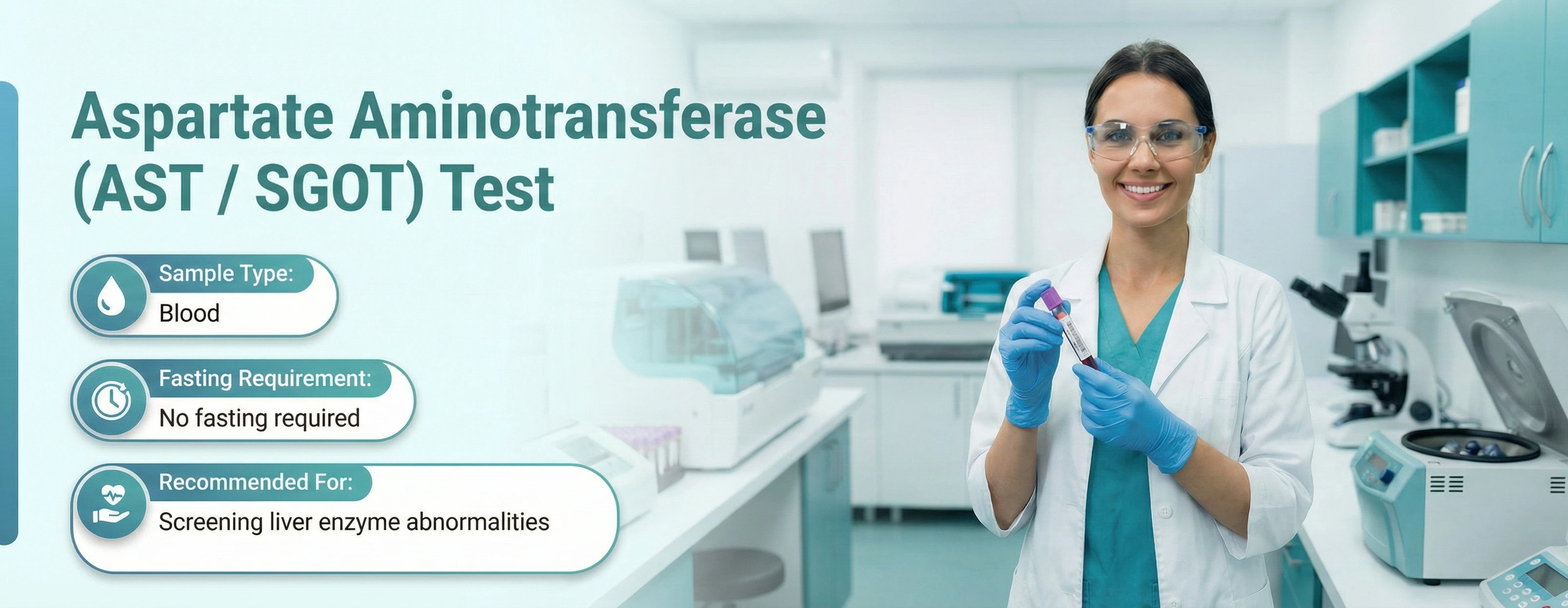
A quick info on SGOT test

Overview
The SGOT test measures the blood level of serum glutamic-oxaloacetic transaminase, an enzyme more commonly referred to as aspartate aminotransferase (AST). This enzyme is present across several tissues, most notably the liver, but also the heart, skeletal muscles, kidneys, and brain, where it assists cells in processing nutrients and generating energy. When cells in these areas sustain damage, AST is released into the bloodstream, causing its levels to increase. The SGOT test is often recommended when there is a concern about liver injury, to assess overall liver health, investigate symptoms related to liver disease, or track how an existing liver condition and its treatment are progressing. However, because AST is not exclusive to the liver, elevated readings can also stem from other causes such as muscle damage, vigorous physical activity, cardiac injury, or other medical conditions. For this reason, an abnormal result alone does not confirm liver disease, it is typically evaluated together with other test findings, symptoms, and medical history. In India, liver disease represents a significant and rising public health challenge. Fatty liver disease and alcohol-related liver damage are emerging as growing concerns alongside viral hepatitis, while hepatitis B continues to be a leading contributor to chronic liver disease and liver cancer. Identifying liver injury early through timely testing allows the underlying cause to be investigated and addressed before substantial damage occurs.

When and Who Should Get a SGOT Test Done?
Your doctor may recommend an SGOT test in the following situations:
- Routine health check-up: As part of a routine health check-up or to assess overall liver health.
- Monitoring: To monitor an existing liver condition or response to treatment.
- Symptoms: If you have symptoms that may suggest liver or other tissue injury, such as nausea, loss of appetite, fatigue, weakness, yellowing of the skin or eyes, abdominal pain or swelling, dark urine, pale stools, or persistent itching.
- Risk factors: If you have a higher risk of liver disease, such as a family history of liver disease, regular or excessive alcohol use, obesity, diabetes, or hepatitis.
- Medications: If you take medicines that may affect the liver, your doctor may recommend periodic liver enzyme testing.
- Hepatitis-related check-ups: If you have a history of hepatitis or possible exposure to hepatitis, testing may be advised as part of your evaluation.
Note: SGOT is not specific to the liver, so your doctor may recommend it along with other liver tests depending on your symptoms and medical history.

What Causes Abnormal SGOT (AST) Levels?
High levels of SGOT in the blood may be due to:
- Liver conditions: Fatty liver disease, viral hepatitis, alcohol-related liver disease, cirrhosis, and other conditions that cause liver inflammation or damage.
- Heart-related problems: Heart attack or other conditions causing heart muscle injury.
- Muscle injury: Severe muscle damage, strenuous exercise, or conditions such as rhabdomyolysis.
- Pancreatitis: Inflammation of the pancreas.
- Haemochromatosis: A condition in which excess iron builds up in the body and can damage the liver.
- Mononucleosis: A viral infection that can temporarily raise liver enzymes.
- Severe burns or seizures: These can cause tissue or muscle injury, leading to increased SGOT.
- Medicines or substances: Certain medicines and substances that can injure the liver, including excessive alcohol use.
- Surgery: SGOT may temporarily increase after certain surgical procedures due to tissue injury.
Low levels of SGOT in the blood are usually considered normal. Very rarely, it may be associated with:
- Vitamin B6 deficiency
- Certain kidney-related conditions and renal dialysis
- Pregnancy
Note: If your results are not in the normal range, it does not always mean that you have a medical condition that needs treatment. Many things can affect your results, such as pregnancy, exercise, certain medicines, and your age or sex. Talk with your doctor to learn what your results mean. The above list is for educational purposes only and does not confirm diagnosis or the presence of any condition.
.png?dim=32x32&q=75?dim=32x32&q=75?dim=32x32&q=75?dim=32x32&q=75?dim=32x32&q=75?dim=32x32&q=75?dim=32x32&q=75?dim=48x48&q=75)
SGOT Test Preparation
What to Expect Before the Test?
- The SGOT test does not require fasting. However, if it is being done along with other investigations your doctor may ask you to avoid food and beverages for a specified period before the test. The test can be scheduled for any time of day.
- Inform your doctor of any prescription drugs, over-the-counter medicines, or nutritional supplements you are currently using. Do not stop or modify any medication without first seeking medical advice. Also, inform them regarding medical conditions, recent illnesses, hospitalisation, or muscle injuries, and pregnancy status, if applicable.
- Even moderate alcohol intake can temporarily push SGOT/AST levels higher, which may affect how your results are interpreted. It is best to refrain from consuming alcohol the day before your test.
- It is best to avoid high-intensity exercise and demanding workout sessions for 48 hours before the test, as muscle injury can cause a temporary spike in SGOT/AST levels. Sharing details of your fitness routine with your doctor will help ensure your results are evaluated in the right context.
What to Expect During the Sample Collection?
- A trained phlebotomist will arrive at your home at the scheduled time.
- A small blood sample will be collected from a vein in your arm using a sterile needle after the skin is cleaned with antiseptic. You may feel a slight pricking sensation.
- The procedure usually takes only a few minutes.
What to Expect After the Test?
- Mild throbbing may be felt at the blood draw site for a few minutes after the blood is drawn. Occasionally, you may feel dizzy, in which case you may lie down for a while until the feeling passes.
- The blood sample is taken to the laboratory for analysis, and results are usually made available within a few hours, and they can be downloaded from the PharmEasy platform.
- Depending on the findings, repeat testing or additional investigations may sometimes be recommended for further evaluation.
Note: If you notice anything unusual at the puncture site, such as persistent bleeding, a rash, or pain, consult your healthcare provider.

What Are the Parameters Included in the SGOT Test?
The SGOT test measures a single key parameter:
- SGOT (aspartate aminotransferase), reported in units per litre (U/L).

Normal Range of SGOT Test Parameters
The table below shows standard reference ranges of SGOT levels.
|
Parameter |
Normal range |
|---|---|
|
SGOT (aspartate aminotransferase) |
Less than 35 U/L (units per litre) |
Important note: SGOT (AST) levels may vary with age, sex, and muscle mass, as SGOT is also present in skeletal and cardiac muscle. Levels can also be higher in newborns and young children than in adults. Normal ranges may differ slightly between laboratories. Always refer to the reference range provided on your specific lab report and consult your doctor for a personalised interpretation.
.png?dim=32x32&q=75?dim=32x32&q=75?dim=32x32&q=75?dim=32x32&q=75?dim=32x32&q=75?dim=32x32&q=75?dim=32x32&q=75?dim=48x48&q=75)
SGOT Test Result Interpretation
SGOT results must always be interpreted in the context of your gender, symptoms, alcohol use, medications, and the degree of elevation.
|
SGOT (AST) result |
What it may mean |
|---|---|
|
Very low |
Usually not a cause for concern and may simply represent normal variation. Rarely, very low levels may be associated with vitamin B6 deficiency or certain kidney-related conditions. |
|
Normal (<35 U/L) |
Generally considered within the reference range. However, SGOT should be interpreted along with other liver tests and clinical findings. |
|
Mildly elevated |
May occur with mild liver injury, alcohol use, certain medicines, strenuous exercise, or muscle injury. A small increase does not necessarily indicate significant liver disease. |
|
Moderately elevated |
May be associated with liver inflammation or injury, such as hepatitis or fatty liver disease. Muscle or heart-related injury can also increase SGOT. |
|
Markedly elevated |
Can occur with significant liver or other tissue injury, including severe hepatitis, reduced blood flow to the liver, major muscle injury, or certain heart-related conditions. Further evaluation is needed to determine the cause. |
Important: SGOT (AST) is found not only in the liver but also in the heart, skeletal muscles, kidneys, brain, and blood cells. Therefore, an elevated SGOT does not always indicate liver disease. Doctors may interpret it alongside SGPT (ALT), bilirubin, ALP, and other tests, as well as your symptoms and medical history.The above table is for educational purposes only. SGOT interpretation requires the expertise of a healthcare professional.

SGOT Test Risks and Limitations
Potential Risks and Complications
- The SGOT test is a routine blood test and is considered safe with minimal risk. Some individuals may experience mild discomfort, minor bruising, or slight bleeding at the site where blood is drawn. Occasional dizziness or light-headedness may also occur in some cases.
- In rare instances, there may be difficulty locating a suitable vein, or a very small possibility of infection at the puncture site.
Understanding SGOT Test Limitations
- SGOT/AST is also found in the heart, muscles, kidneys, and brain, so damage to these tissues can raise levels even when the liver itself is unaffected.
- An elevated result signals that cell or tissue injury has occurred, but it cannot distinguish between causes such as hepatitis, alcohol use, certain medicines, or muscle damage.
- Since SGOT/AST may fluctuate, a single test result might not reflect the full extent or pattern of ongoing injury. SGOT/AST levels on their own do not show the degree of liver injury present.
- Intense exercise, physical trauma, intramuscular injections, and certain medications can elevate SGOT/AST without any liver disease being present.
- SGOT/AST is generally assessed together with ALT, ALP, bilirubin, and clinical context rather than relied on as a standalone test.
- Some people with mild or chronic liver conditions may still show SGOT/AST within the typical range.

SGOT Test Price in Gurgaon
An SGOT test in Gurgaon is typically priced around INR 182. The cost may vary depending on the city and the laboratory selected. To get a clearer understanding, you can compare SGOT test prices across major cities in India.
|
City |
Price |
|---|---|
|
182 |
|
|
182 |
|
|
182 |
|
|
182 |
|
|
182 |
|
|
182 |
|
|
182 |
|
|
182 |
|
|
182 |
|
|
182 |

Areas We Serve in Gurgaon
You can book SGOT test in Gurgaon through PharmEasy with convenient home sample collection across several localities, including:
- DLF Phase 1
- DLF Phase 2
- DLF Phase 3
- DLF Phase 4
- DLF Phase 5
- Udyog Vihar
- Sector 23
- Sector 44
- Sector 67
- Sector 70
- Sushant Lok
- Sector 5
- Palam Vihar
- Nirvana Country
- Sector 14
- Sector 31
- Sector 46
- Sector 49
- Sector 56
- Sector 57
You can also check service availability during purchase by entering your PIN code.

SGOT Test Sample Collection: Home vs. Diagnostic Lab
The SGOT test at PharmEasy offers convenient features as compared with traditional labs:
|
Feature |
PharmEasy home collection |
Traditional labs |
|---|---|---|
|
At-home sample collection by phlebotomist |
✅ |
❌ |
|
No travel required |
✅ |
❌ |
|
Saves time |
✅ |
❌ |
|
Flexible appointment slots |
✅ |
❌ |
|
Comfortable testing experience |
✅ |
❌ |
|
Reduced exposure to crowds |
✅ |
❌ |
|
Easy digital report access |
✅ |
❌ |
|
Waiting in queues |
❌ |
✅ |
To get the advantage of home sample collection for the test in Gurgaon, visit the PharmEasy website or app. Search for the SGOT test, enter your location, and confirm the booking.
Was This Test Information Helpful?
Please rate your experience
 Yes Helpful
  Not Helpful
References
Health packages containing 'Aspartate Aminotransferase (AST / SGOT) Test'
 For full-body wellness, go for a comprehensive checkup
People Also Ask
Can I book the SGOT test with home sample collection in Gurgaon?
How is the sample collected for the SGOT test at my home in Gurgaon?
Are PharmEasy Labs in Gurgaon NABL-accredited?
Does SGOT testing require fasting?
Why might my doctor repeat the SGOT test?
Can SGOT/AST be high because of a workout?
Can SGOT/AST be high even if I have no liver symptoms?
 4.6 Stars| 7+ Lakhs Ratings & Reviews

Over 10 million happy users PharmEasy Labs
- Because the digital report is available on WhatsApp, there's no need to go back to the lab. Thanks, PharmEasy!
 Sachin sharma11 Jan ‘26
 - Thanks to the coupon discount, the blood test was done at a lower price.Komal04 Jan ‘26
- The lab technician was a good and knowledgeable professional.Rakesh Pandey06 Jan ‘26
- Due to bad weather, it's difficult to reach the lab. But home collection makes things easier.Arjun08 Jan ‘26
- Thanks to the Swasth AI feature, the report is easy to understand.Priya Mehta02 Jan ‘26
- The report is available on the same day. Wow!Vikas Patel05 Jan ‘26
Have any doubts? Ask us.
Ask us anything about the SGOT Test in Gurgaon - Price & Details to understand it better
Nearby Labs
Lab tests made easy!
- Quick Collection
- Trusted Accuracy
- Hassle-free Services
PharmEasy Labs (Covid RTPCR) - Gurgaon
D-37/1, MIDC, Turbhe, Opp. Sandoz,, Maharashtra
 grievance-officer@docon.in
 7022000900
Agilus Diagnostics Limited - Gurgaon
Agilus Diagnostics, Unit No-Cg: 014, First Floor, The Palm Springs Plaza, Golf Course Road, Sector - 53-54, Near Rapid Metro,, Haryana
grievance-officer@docon.in7022000900
Aarthi Scans and Labs - Gurgaon
Plot 141, near Huda Market, Sector 15 Part 2, Sector 15,, Haryana
grievance-officer@docon.in7022000900Pixel Diagnostics - Gurgaon
House no 24, near Gate no 5, DLF Colony, Sector 14,, Haryana
grievance-officer@docon.in7022000900Plasma Medicare Diagnostics - Gurgaon
2546/16, Basement, Opp. Haldiram, Sector-16, HUDA Market, Faridabad, Haryana
grievance-officer@docon.in7022000900Plasma Medicare Diagnostics - Gurgaon
SCO-210, Block-B, Veer Complex, JMD Market, Green Field, Sector-42, Faridabad, Haryana
grievance-officer@docon.in7022000900HealthRoute - Gurgaon
2546/16, BASEMENT, OPPO. HALDIRAM, SECTOR-16, HUDA MARKET, Haryana
grievance-officer@docon.in7022000900HealthRoute - Gurgaon
SCO-210, BLOCK-B, VEER COMPLEX, JMD MARKET, GREEN FIELD, SECTOR-42, Haryana
grievance-officer@docon.in7022000900Health Buddy Diagnostic Pvt Ltd - Gurgaon
Ed - 17A, Outer Ring Rd, Opp. Rohini Court Complex, Nr. Madhuban Chowk, Block Ed, Dakshini Pitampura, Pitampura, New Delhi, Delhi, 110034, Haryana
grievance-officer@docon.in7022000900
We provide trusted, expert-curated health content to support better awareness,prevention, and care.
Backed by experienced doctors, medical experts, and strict editorial standards.