


267+ orders placed in your location


100% NABL & ISO Certified Lab • 100% Accurate Reports
Dengue NS 1 Antigen Test
Dengue ELISA, Rapid Dengue Test
- SummaryThe Dengue NS1 Antigen test detects the non-structural protein 1 (NS1) of the dengue virus in the blood, indicating an early-stage dengue infection, typically within the first 5 days of symptoms. It helps in rapid and accurate diagnosis before antibodies are detectable. The test is done using a blood sample, and fasting is not required.Read more
- Reports Within12 HrsView Sample Report100% NABL & ISO Certified Labs
- SampleBlood
- AgeAll Age Group
- GenderMale and Female
- FastingNot Required



PharmEasy Promises




Know More About The Test



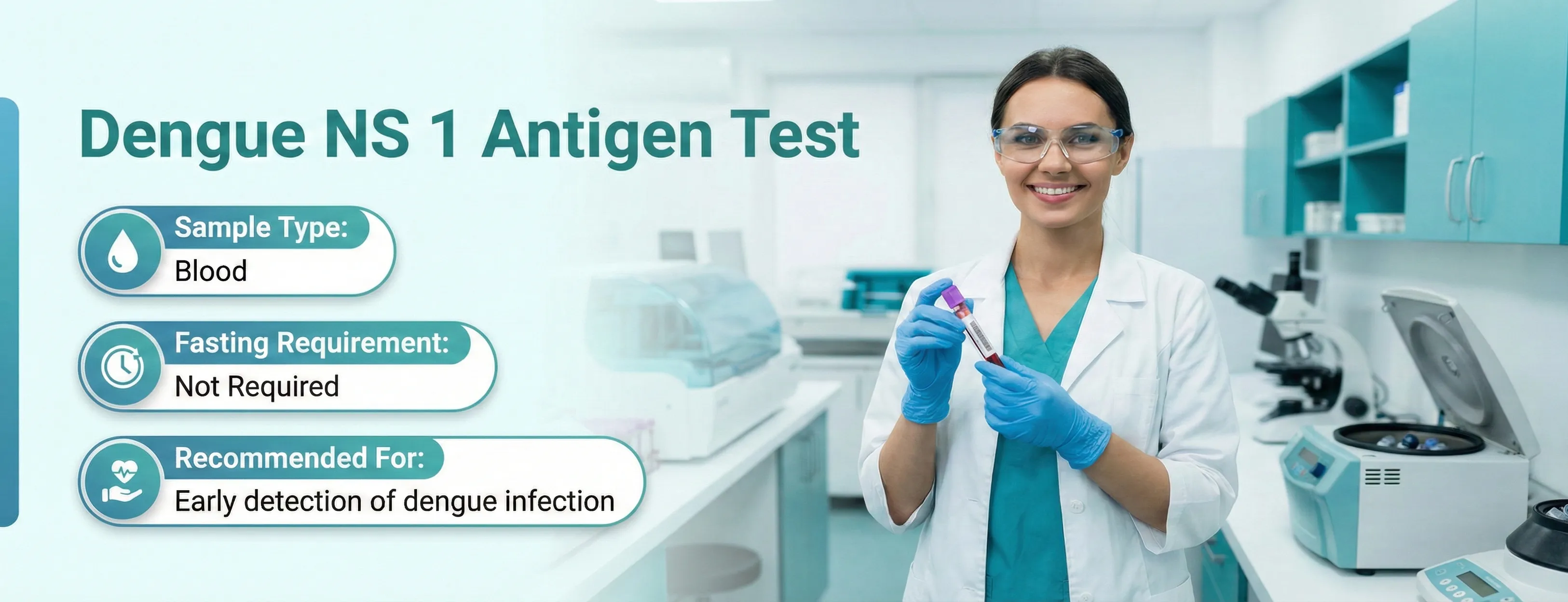
A quick info on Dengue NS 1 Antigen Test


Overview
Dengue fever, a viral infection by nature, is transmitted to individuals through mosquito bites. In most cases, these mosquitoes belong to tropical or subtropical regions responsible for carrying the virus. That is why it is exceedingly rampant in the regions of Africa, the Caribbean Western Pacific, America and the Eastern Mediterranean.
The dengue NS1 antigen test diagnoses dengue infection in the first few days itself. It is responsible for measuring the antibodies that are produced in response to dengue. This test allows for rapid detection, making it an extremely viable alternative to other dengue tests.
The dengue NS1 antigen test can be prescribed to individuals showing symptoms and signs of dengue fever. Some of the symptoms include - Fever, Retro-orbital pain, Transient macular rash, Severe headache.
Many individuals affected by the virus develop only mild symptoms. In some cases, affected individuals don’t show any symptoms.
All the signs of the dengue virus only start showing after 4-7 days of being affected by an Aedes aegypti and albopictus mosquito. A dengue NS1 antigen test can also be prescribed if an individual is vomiting continuously or has swollen glands.
When it comes to India, dengue is endemic in almost all regions. The DV-2 serotype is the most common dengue serotype in the country. Frequent dengue outbreaks in the country severely drain the country’s economy and put stress on healthcare professionals.
South states like Karnataka, Kerala and Tamil are some of the country's worst dengue-affected states. Apart from these, Rajasthan and Gujarat also witness high dengue spread every year.

Risk Assessment
Dengue virus, High Fever, Flaviviruses

What does this Test Detect?
The results of the dengue NS1 antigen test detects the level of nonstructural protein NS1 in an individual’s body. During the dengue infection, this is the protein that gets secreted in the blood. The test gets prescribed to patients suspected of acute dengue fever. Here are some of the symptoms of the dengue virus:
- High fever (104 F or more)
- Flu-like symptoms
- Headache
- Eye-pain
- Blood in vomiting
- Continuous vomiting
- Nausea
- Belly pain
- Muscle and joint pain
- Swollen glands
- Skin rash

Indications for Dengue NS 1 Antigen Test
Dengue hemorrhagic fever (DHF) causes more severe symptoms and can be life-threatening. As followings:
- Severe Abdominal pain
- Vomiting that doesn't go away
- Bleeding gums
- Nose bleeds
- Bleeding under the skin, which may look like bruises
- Blood in urine and/or stools
- Difficulty in breathing
- Cold, clammy skin
- Restlessness
Doctors recommend the dengue NS1 antigen test within the first five days of the onset of dengue virus symptoms. After the results, the doctor can prescribe another dengue NS1 antigen test after 15 days.
The dengue NS1 antigen test applies to women and men of all ages.
.png?dim=48x48&q=75)
How Frequently should you take this Test?
A random dengue NS1 antigen test helps diagnose dengue virus, flavivirus and high fever. If the result of your dengue NS1 antigen test comes positive, then your doctor may put you on medication or ask for more tests. Getting a negative report doesn’t completely rule out the possibility of the dengue virus. You’ll have to wait for 15 days to get another dengue NS1 antigen test done.
.png?dim=48x48&q=75)
Test Preparation
Before the Test
Usually you don't need specific preparation for a dengue NS1 antigen test. However, if your doctor has recommended other tests that require specific preparation, your doctor may advise you to fast for a few hours. It's best to consult your doctor before any test for guidance specific to your needs.
During the Test
During the dengue NS1 antigen, a small amount of blood will be taken from a vein in your arm. Here's what you can expect:
- An antiseptic solution will be used to thoroughly cleanse the puncture site.
- A tourniquet will be placed around your arm tightly to make the veins more visible.
- A needle will be gently inserted into the vein selected for the test for drawing blood. It may cause a pinching sensation for a few seconds.
- The collected blood will be placed into a vial or small tube, labeled with your information.
After the Test
Consequent to the blood draw, expect the following:
- A bandage will be applied to the puncture site to prevent further bleeding.
- Slight bruising is common, but feeling dizzy is not. In that case, sit down for a few minutes.
- In case of bleeding, pain, or a rash at the needle site, please contact your doctor promptly.

Parameters
The marker of dengue infection/fever is NS1 antigen. A dengue NS1 antigen test is evaluated for its presence or absence of antigen in the blood. The NS1 antigen is a toxin and protein produced by the dengue virus. This toxin is present in the blood of an infected person. That is why it helps in the early detection of dengue infection.

Ranges
|
Result |
Range |
|---|---|
|
Negative |
< 0.9 |
|
Equivocal |
0.9 - 1.1 |
|
Positive |
> 1.1 |
An individual must do the dengue NS1 antigen test in the first five days of fever. The tests recommended post 7-10 days of severe fever are dengue fever antibodies IgM & IgG.
The normal values and reference ranges of the test may vary from lab to lab. Please refer to the ranges mentioned in the report and consult a doctor to understand the interpretation of lab reports.
.png?dim=48x48&q=75)
Test Result Interpretation
The main component of the dengue NS1 antigen test is the NS1 antigen. The test determines the level of NS1 antigen in the individual’s body. So, a higher NS1 antigen indicated acute dengue fever. The range above 1.1 NS1 antigens is considered high.
However, this doesn’t confirm dengue infection. To corroborate the dengue virus, an individual must take dengue IgG and IgM tests after 6-7 days on the onset of a fever.
If the results show a range of 0.9-1.1, then the result is an equivocal one. The person will need to repeat the test after a week. On the other hand, if the results showcase a range below 0.9, then there is no detectable dengue NS1 antigen.
However, it doesn’t exactly rule out the dengue virus or infection. Another sample should be tested for IgM & IgG serology in 8-14 days.

Risk and Limitations
The Dengue NS 1 Antigen test is a conventional blood test that is unlikely to trigger complications. But contact your physician immediately if you experience the following problems:
- Continuous bleeding from the needle insertion site.
- Pain or swelling at the site of blood collection.
Limitations of the test
- Intervention in the outcomes of tests by errors from the equipment or humans.
- Wrong understanding of the markers.
Was This Test Information Helpful?
Please rate your experience


References
People Also Ask
What is the difference between NS1 and IgM?
How do you treat an NS1 antigen test?
How accurate is the dengue test?
What happens if the dengue test is positive?
How soon can dengue be detected?
Have any doubts? Ask us.
Ask us anything about the Dengue NS 1 Antigen Test to understand it better


We provide trusted, expert-curated health content to support better awareness,prevention, and care.
Backed by experienced doctors, medical experts, and strict editorial standards.