

238+ orders placed in your location

100% NABL & ISO Certified Lab • 100% Accurate Reports
C Peptide Test
Insulin C-peptide test, Connecting peptide Insulin, Proinsulin C- Peptide
- SummaryThe C-Peptide test measures the level of C-peptide in the blood, which reflects how much insulin your body is producing. It helps differentiate between type 1 and type 2 diabetes, assess insulin resistance, and evaluate pancreatic function. The test is done using a blood sample, and fasting for 8–10 hours is usually recommended for accurate results.Read more
- Reports Within8 HrsView Sample Report

 100% NABL & ISO Certified Labs
 - SampleBlood

- AgeAll Age Group
- GenderMale and Female
- Fasting10-12 Hrs

PharmEasy Promises



Know More About The Test


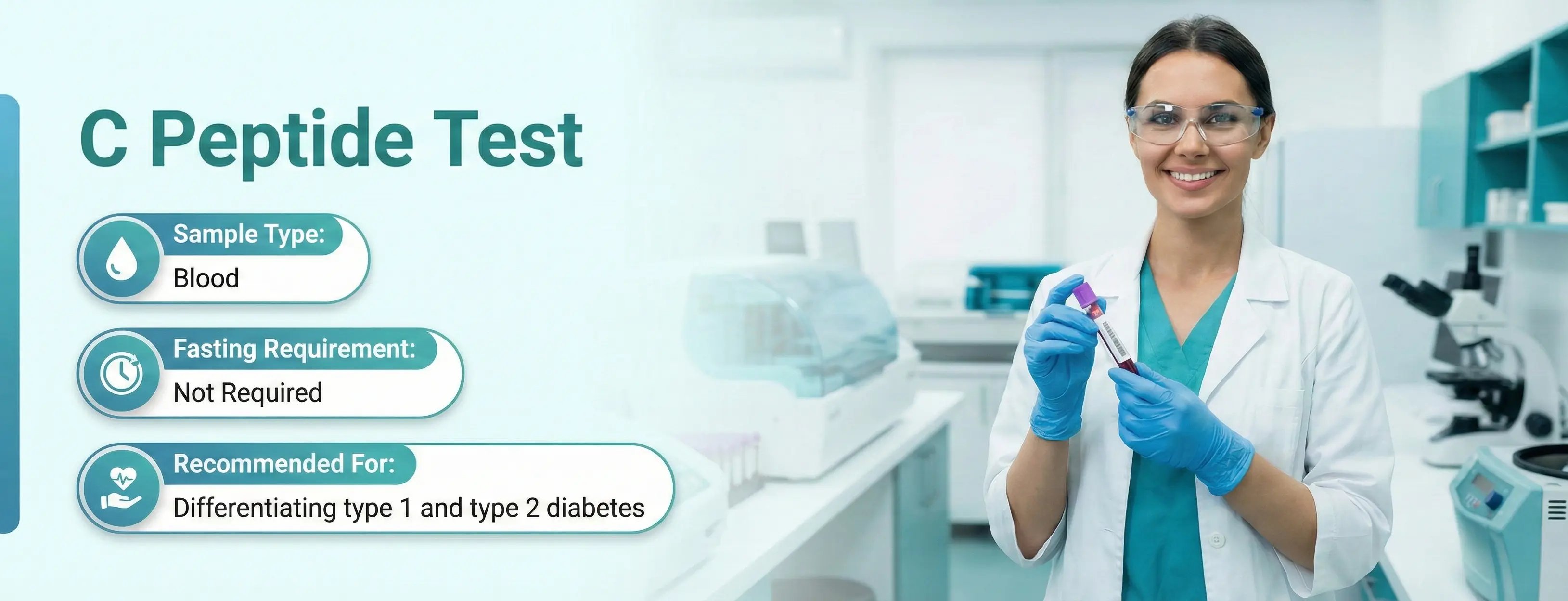
A quick info on C Peptide Test

Overview
The C-peptide test measures the amount of C-peptide in a sample of blood. The test is also called the insulin C-peptide test, the connecting peptide insulin test, and the proinsulin C-peptide test.
C-peptide is a short chain of amino acids (the substances that make up proteins) produced by the pancreas when it produces the insulin responsible for maintaining blood sugar levels in the body. Both insulin and C-peptide are released into the blood at the same time. Insulin is metabolised at a variable rate by the liver, while C-peptide is metabolised at a steady rate by the kidneys. Hence, C-peptide is considered a more reliable measure of insulin levels than insulin itself. C-peptide may also have pro-inflammatory or anti-inflammatory effects on the body. Doctors use this test to find the underlying cause of hypoglycaemia (low blood sugar), manage diabetes treatment, and help distinguish between different types of diabetes when the diagnosis is uncertain.

When and Who Should Get the C-Peptide Test?
The C-peptide test is advised if you are experiencing the following symptoms of hypoglycaemia:
- Tiredness
- Headache
- Excess hunger and thirst
- Nausea
- Blurry vision
- Excessive sweating
- A fast or irregular heartbeat
- Shakiness
- Coma and seizures in more severe cases
It is also highly advised for the following categories of people:
- Individuals with hypoglycaemia: C-peptide levels can be measured to check whether the low blood sugar is due to high insulin levels.
- Individuals with diabetes: C-peptide levels can be measured to see how much insulin the body is producing, which helps doctors to decide on the best treatment.
- Individuals with insulinoma (pancreatic tumour): The C-peptide test can help identify this tumour, which produces too much insulin and causes low blood sugar levels.
.png?dim=48x48&q=75)
How Frequently Should You Take the C-Peptide Test?
|
Health scenario |
Context |
Recommended frequency |
|---|---|---|
|
Symptomatic individuals |
To help find the cause of symptoms, such as low blood sugar or abnormal blood glucose levels. |
As soon as symptoms are noticed, as advised by the doctor. |
|
Individuals with diabetes |
To monitor insulin levels and help guide treatment decisions. |
As recommended by the doctor after diagnosis. |
|
Individuals with insulinoma |
To monitor treatment effectiveness and measure insulin levels. |
After treatment and during follow-ups, as advised by the doctor. |

What Conditions Can the C-Peptide Test Help Detect?
The C-peptide test cannot be used to diagnose any conditions on its own, but it can be used to monitor and make treatment decisions for a few conditions:
- Hypoglycaemia: This refers to low blood glucose, often caused by your body not making enough insulin.
- Type 1 diabetes: Your pancreas does not make enough insulin, which is reflected in the C-peptide levels, causing high levels of glucose in the blood.
- Type 2 diabetes: Your cells do not normally respond to insulin, leading to excess glucose in the blood.
- Insulinoma: This refers to a pancreatic tumour that produces too much insulin.

C-Peptide Test Preparation
What to Expect Before the C-Peptide Test
You must fast for 10 to 12 hours before the test. During the fasting period, drink plain water freely. Avoid all food, milk, tea, coffee, juices, and beverages other than water. Avoid smoking and alcohol for at least 24 hours, as both can falsely elevate triglyceride levels. Avoid strenuous exercise in the 24 hours before the test. Continue your regular medications unless your doctor advises otherwise. Morning appointments are strongly recommended.
What to Expect During the Blood Collection
A phlebotomist cleans the skin with an antiseptic, then places an elastic band around your upper arm to make the veins easier to access. A small needle is inserted into the vein; you may feel a brief pinch. Blood is collected into a labelled tube in under a minute.
What to Expect After the C-Peptide Test
A small cotton swab and bandage are placed over the site to stop any minor bleeding. You can eat and drink immediately after the test - have a light meal as soon as possible after the fast. If dizzy, sit and relax for a few minutes.

What Are the Parameters Included in the C-Peptide Test?
In the C-peptide test, the primary parameter being measured is:
- The amount of C-peptide in a sample of blood.

Normal Range of the C-Peptide Test Parameters
The C-peptide normal range is indicated in the table below.
|
Test parameter |
Normal range |
|---|---|
|
C-peptide |
1.10–4.40 ng/mL |
Note: The normal range may vary slightly depending on the laboratory and individual health conditions.

C-Peptide Test Result Interpretation
The table below provides a general interpretation of the C-peptide test results based on whether the levels are low or high.
|
C-peptide |
What it may indicate |
|---|---|
|
Less than 1.10 ng/mL |
Low C-peptide level: This indicates that your body is not producing enough insulin. It can be seen in conditions such as type 1 diabetes, sometimes type 2 diabetes, severe infection, Addison disease (where the adrenal gland does not produce enough hormones), and liver disease. |
|
More than 4.40 ng/mL |
High C-peptide level: This indicates that your body is making too much insulin. It can be seen in conditions such as type 2 diabetes, Cushing syndrome (too much cortisol hormone in the body), insulinoma, and kidney failure. |
Note:
If you have been treated for an insulin-producing tumour in the pancreas, a drop in C-peptide levels may indicate that the treatment has been successful. On the other hand, rising C-peptide levels after treatment can suggest that the tumour has returned.
- The C-peptide test must be interpreted along with clinical symptoms, medical conditions, and other blood test results.

C-Peptide Test Risks and Limitations
Like any other medical test, this test also has certain risks and limitations.
Risks:
- The C-peptide test is generally safe and involves minimal risk. You may experience slight pain when the needle is inserted or mild bruising afterwards, which usually resolves spontaneously.
Limitations:
- A C-peptide testalonecannot diagnose diabetes; other tests, such as blood glucose or urine glucose tests, are required.
- You may need to fast for around 8–12 hours before the test. You may also need to check your C-peptide levels after you eat or drink something. Ask your doctor for more specific instructions on this.

Related and Follow-up Tests
Depending on your symptoms and results, your doctor might recommend certain additional tests to better understand your condition:

C Peptide Test Sample Collection: Home vs. Diagnostic Lab
|
Feature |
Home Collection (PharmEasy) |
Traditional Diagnostic Lab |
|---|---|---|
|
Convenience |
High - sample taken from your home or office. |
Low - requires travelling and waiting in queues. |
|
Time Saving |
Maximum - no travel time. You pick the time slot. |
Minimum - depends on traffic and lab rush. |
|
Safety & Comfort |
Safe - avoids exposure to other sick patients. |
Moderate - exposure to crowded waiting areas. |
|
Process |
A professional phlebotomist visits you. |
You must visit the facility during its hours. |
|
Report Access |
Digital - sent directly to your app or email. |
Often requires a second visit for physical copies. |
Pro Tip: For the most stress-free experience, book a C-Peptide test on PharmEasy. Enjoy professional service and accurate results without stepping out of your house.
Was This Test Information Helpful?
Please rate your experience
 Yes Helpful (1)
 Not Helpful
References
People Also Ask
What is the difference between C-peptide and insulin levels?
Are C-peptide and HbA1c the same?
Is C-peptide high in type 1 diabetes?
Is it possible to have normal C-peptide levels in type 1 diabetes?
Can metformin lower C-peptides?
How to treat high C-peptide levels?
Does high C-peptide mean diabetes?
Does vitamin D increase C-peptides?
How to prepare for the test?
 4.6 Stars| 7+ Lakhs Ratings & Reviews

Over 10 million happy users PharmEasy Labs
- Because the digital report is available on WhatsApp, there's no need to go back to the lab. Thanks, PharmEasy!
 Sachin sharma11 Jan ‘26
 - Thanks to the coupon discount, the blood test was done at a lower price.Komal04 Jan ‘26
- The lab technician was a good and knowledgeable professional.Rakesh Pandey06 Jan ‘26
- Due to bad weather, it's difficult to reach the lab. But home collection makes things easier.Arjun08 Jan ‘26
- Thanks to the Swasth AI feature, the report is easy to understand.Priya Mehta02 Jan ‘26
- The report is available on the same day. Wow!Vikas Patel05 Jan ‘26
Have any doubts? Ask us.
Ask us anything about the C Peptide Test to understand it better

We provide trusted, expert-curated health content to support better awareness,prevention, and care.
Backed by experienced doctors, medical experts, and strict editorial standards.