

1249+ orders placed in your location

100% NABL & ISO Certified Lab • 100% Accurate Reports
Insulin Fasting Test
Fasting Insulin, Serum Insulin, Insulin F
- SummaryThe Insulin Fasting test measures the level of insulin in the blood after an overnight fast and helps assess the health of pancreas, insulin resistance, hypoglycemia, or diabetes risk. It is done using a blood sample, and fasting for 8–10 hours is required before the test.Read more
- Reports Within8 HrsView Sample Report

 100% NABL & ISO Certified Labs
 - SampleBlood

- AgeAll Age Group
- GenderMale and Female
- Fasting10-12 Hrs

PharmEasy Promises



Know More About The Test


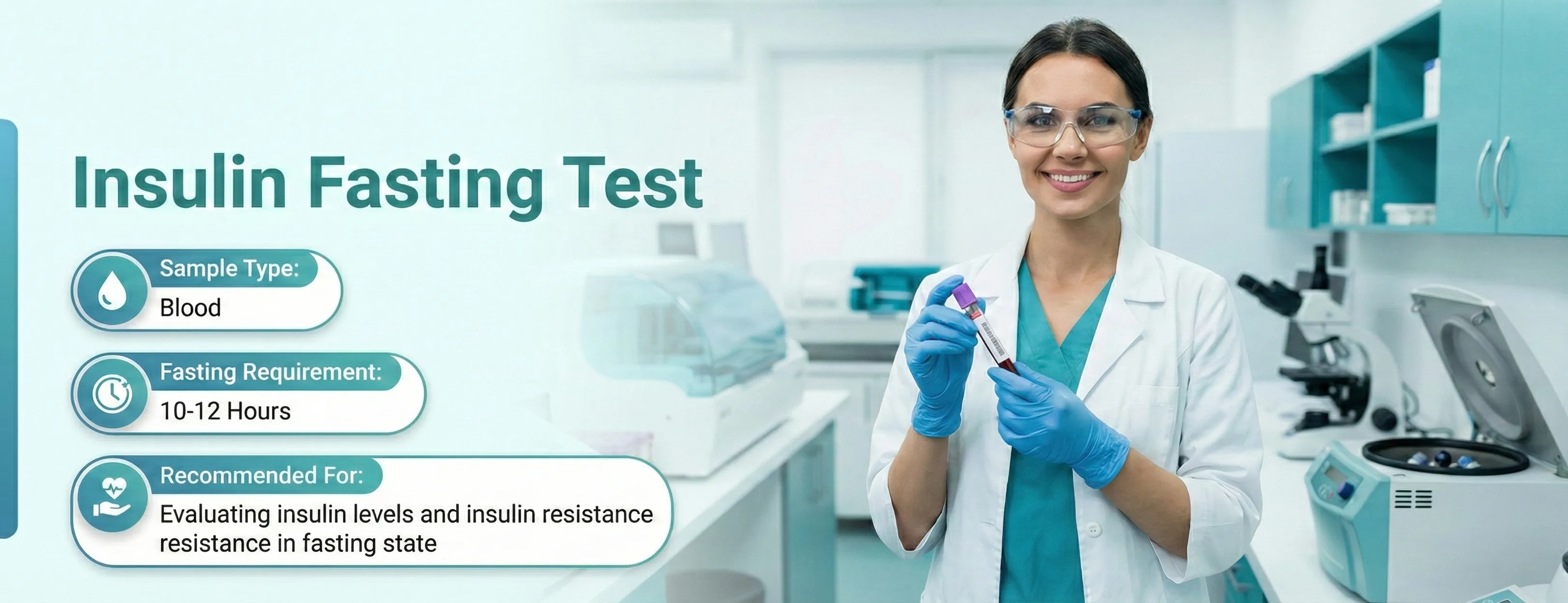
A quick info on insulin Fasting

Overview
The insulin fasting test measures the level of insulin in your blood after you have fasted for several hours, usually overnight. Insulin is a key hormone produced by the pancreas that helps your body regulate blood sugar by converting food into energy. Testing it in a fasting state gives a clearer picture of your baseline metabolic function, without the temporary spikes that occur after meals.
This test is especially useful for understanding how sensitive your body is to insulin. Elevated fasting insulin levels may indicate that your body is working harder than normal to regulate blood sugar, which may be an early sign of insulin resistance. Identifying such changes early can help guide lifestyle interventions and reduce metabolic risk.
The results also help your doctor guide you toward personalised lifestyle choices. Whether you are being evaluated for conditions such as PCOS or prediabetes, or simply aiming to monitor your overall health, this test offers meaningful insights. With the right interpretation, it can support informed decisions around diet, exercise, and long-term metabolic wellness.

When and Who Should Get a Insulin Fasting Test Done?
Your doctor may recommend taking this test if you experience:
- Unexplained weight gain or difficulty losing weight.
- Frequent episodes of low blood sugar (dizziness, sweating, or confusion).
- Persistent fatigue even after resting.
- Increased thirst or frequent urination.
- Darkened patches of skin, especially around the neck or armpits (acanthosis nigricans).
This test is usually recommended for:
- Individuals with prediabetes: To monitor the progression toward or away from type 2 diabetes.
- PCOS patients: Women managing polycystic ovary syndrome, which is often linked to insulin issues.
- Metabolic syndrome suspects: Those with high blood pressure or high cholesterol.
- Post-treatment monitoring: Individuals tracking the effectiveness of lifestyle changes or medications.
- Selected pregnancy cases: Under doctor’s guidance for assessing insulin resistance risk.
.png?dim=48x48&q=75)
How Frequently Should You Take the Insulin Fasting Test?
To ensure your metabolic health stays on track, the following table outlines how often this test is typically recommended based on your specific health goals and medical history:
|
Health scenario |
Context |
Recommended frequency |
|---|---|---|
|
Routine wellness |
No symptoms; general health check. |
Once a year, as advised by your doctor. |
|
High risk |
Family history of diabetes or PCOS. |
Every 6 months, or as advised by your doctor. |
|
Monitoring treatment |
Adjusting diet, exercise, or medication. |
Every 3 months, or as advised by your doctor. |

What Conditions Can a Insulin Fasting Test Help Detect?
- Insulin resistance: A condition where the body’s cells do not respond effectively to insulin, causing the pancreas to produce more insulin.
- Hyperinsulinemia: The presence of excess levels of insulin in the blood, often linked to metabolic disorders.
- Hypoglycaemia: Helps identify whether excessive insulin production is causing dangerously low blood sugar levels.
- Insulinoma: Helps support the evaluation of rare, usually non-cancerous tumours of the pancreas.
- Gestational diabetes: Supports assessment of insulin resistance during pregnancy when correlated with glucose-based tests, such as the oral glucose tolerance test (OGTT).
- Metabolic syndrome: Helps assess the risk of metabolic conditions.
Important note: Always share your results with a doctor for a proper diagnosis. A standalone insulin fasting test does not confirm any of the above conditions on its own. Clinical correlation and additional investigations may be required.
.png?dim=48x48&q=75)
Insulin Fasting Test Preparation
What to Expect Before an Insulin Fasting Test
- Fasting: You must not eat or drink anything, except plain water, for 8 to 12 hours before the test.
- Medication: Inform your doctor about any supplements, such as biotin, or medications you are taking, as some may interfere with the results.
- Avoid vigorous exercise, smoking, and alcohol consumption prior to testing.
What to Expect During an Insulin Fasting Test
- Collection: A small blood sample is drawn from a vein in your arm using a standard venipuncture technique. The procedure is quick and usually takes less than five minutes.
What to Expect After an Insulin Fasting Test
- Post-test care: You can resume your normal diet and activities immediately. If you feel slightly lightheaded from fasting, it is helpful to have a small snack or a glass of fruit juice ready.

What are the Parameters Included in a Insulin Fasting Test?
The primary parameter measured in an insulin fasting test is fasting insulin, also known as serum insulin or fasting insulin. It primarily measures the concentration of insulin in your blood at rest. Results should be interpreted in conjunction with fasting blood glucose, HbA1c, lipid profile, and clinical findings.
|
Parameter |
Reference range |
|---|---|
|
Insulin- fasting (serum) |
1.9 - 23 μU/mL |
Important note: Reference ranges can vary across laboratories due to differences in testing methods and equipment. Always refer to the reference range provided on your official lab report and consult your doctor for a proper clinical assessment.
.png?dim=48x48&q=75)
Insulin Fasting Test Result Interpretation
The table below explains what different insulin levels may indicate about your body's hormone production. However, always consult your doctor to interpret these findings in the context of your full medical history:
|
Parameter |
Status |
Interpretation |
|---|---|---|
|
Fasting insulin |
Normal |
Fasting insulin levels are within the reference range. Clinical correlation is recommended. |
|
Fasting insulin |
High |
May indicate insulin resistance, compensatory hyperinsulinemia, or altered glucose metabolism. Correlation with other parameters is recommended. |
|
Fasting insulin |
Low |
May indicate reduced insulin secretion. Clinical correlation and further evaluation may be required. |
Disclaimer: This table is for educational purposes and provides a risk assessment only. These findings do not confirm a diagnosis. Do not self-diagnose; always consult your doctor.

Insulin Fasting Test Risks and Limitations
- Minor discomfort: You may experience slight bruising or soreness at the injection site.
- Interferences: Certain steroids, birth control pills, or high doses of biotin may affect the test results.
- Snapshot view: The insulin fasting test provides a view of your insulin status at a single point in time; it does not reflect how your body reacts after a meal, which may require a glucose tolerance test.

Related and Follow-up Tests
If your results are outside the normal range, your doctor may recommend the following follow-up tests:
- HbA1c test: To check your average blood sugar levels over the last three months.
- Fasting blood sugar (FBS): To correlate fasting blood sugar levels directly with your fasting insulin levels.
- HOMA-IR calculation: A mathematical model used to determine the degree of insulin resistance using fasting glucose and fasting insulin levels.
- Lipid profile: To assess associated metabolic risk factors.

Insulin Fasting Test Sample Collection: Home vs. Diagnostic Lab
|
Feature |
Home Collection (PharmEasy) |
Traditional Diagnostic Lab |
|---|---|---|
|
Convenience |
High - sample taken from your home or office. |
Low - requires travelling and waiting in queues. |
|
Time Saving |
Maximum - no travel time. You pick the time slot. |
Minimum - depends on traffic and lab rush. |
|
Safety & Comfort |
Safe - avoids exposure to other sick patients. |
Moderate - exposure to crowded waiting areas. |
|
Process |
A professional phlebotomist visits you. |
You must visit the facility during its hours. |
|
Report Access |
Digital - sent directly to your app or email. |
Often requires a second visit for physical copies. |
Pro Tip: For the most stress-free experience, book an Insulin Fasting test on PharmEasy. Enjoy professional service and accurate results without stepping out of your house.
Was This Test Information Helpful?
Please rate your experience
 Yes Helpful
  Not Helpful
References
Health packages containing 'Insulin Fasting Test'
 For full-body wellness, go for a comprehensive checkup
People Also Ask
Why do I need to fast for this test?
Is this test the same as a blood sugar test?
Can I drink coffee during my fast?
How long does it take to get results?
Can exercise affect my results?
Does a high insulin level mean I have diabetes?
Is the test painful?
Can I take my blood pressure medication before the test?
 4.6 Stars| 7+ Lakhs Ratings & Reviews

Over 10 million happy users PharmEasy Labs
- Because the digital report is available on WhatsApp, there's no need to go back to the lab. Thanks, PharmEasy!
 Sachin sharma11 Jan ‘26
 - Thanks to the coupon discount, the blood test was done at a lower price.Komal04 Jan ‘26
- The lab technician was a good and knowledgeable professional.Rakesh Pandey06 Jan ‘26
- Due to bad weather, it's difficult to reach the lab. But home collection makes things easier.Arjun08 Jan ‘26
- Thanks to the Swasth AI feature, the report is easy to understand.Priya Mehta02 Jan ‘26
- The report is available on the same day. Wow!Vikas Patel05 Jan ‘26
Have any doubts? Ask us.
Ask us anything about the Insulin Fasting Test to understand it better
Explore More at PharmEasy
Top-Selling Healthcare Products

We provide trusted, expert-curated health content to support better awareness,prevention, and care.
Backed by experienced doctors, medical experts, and strict editorial standards.