

16+ orders placed in your location

100% NABL & ISO Certified Lab • 100% Accurate Reports
GLP-1 Health Checkup
- SummaryGLP-1 receptor agonist medicines should always be started under medical supervision, and regular health checks are vital to ensure safe and effective treatment for diabetes or weight management.Read more
- TestsIncludes 72 tests
- Reports Within14 HrsView Sample Report

 100% NABL & ISO Certified Labs
 - SampleBlood

- Fasting8-10 Hrs

PharmEasy Promises



Know More About The Package


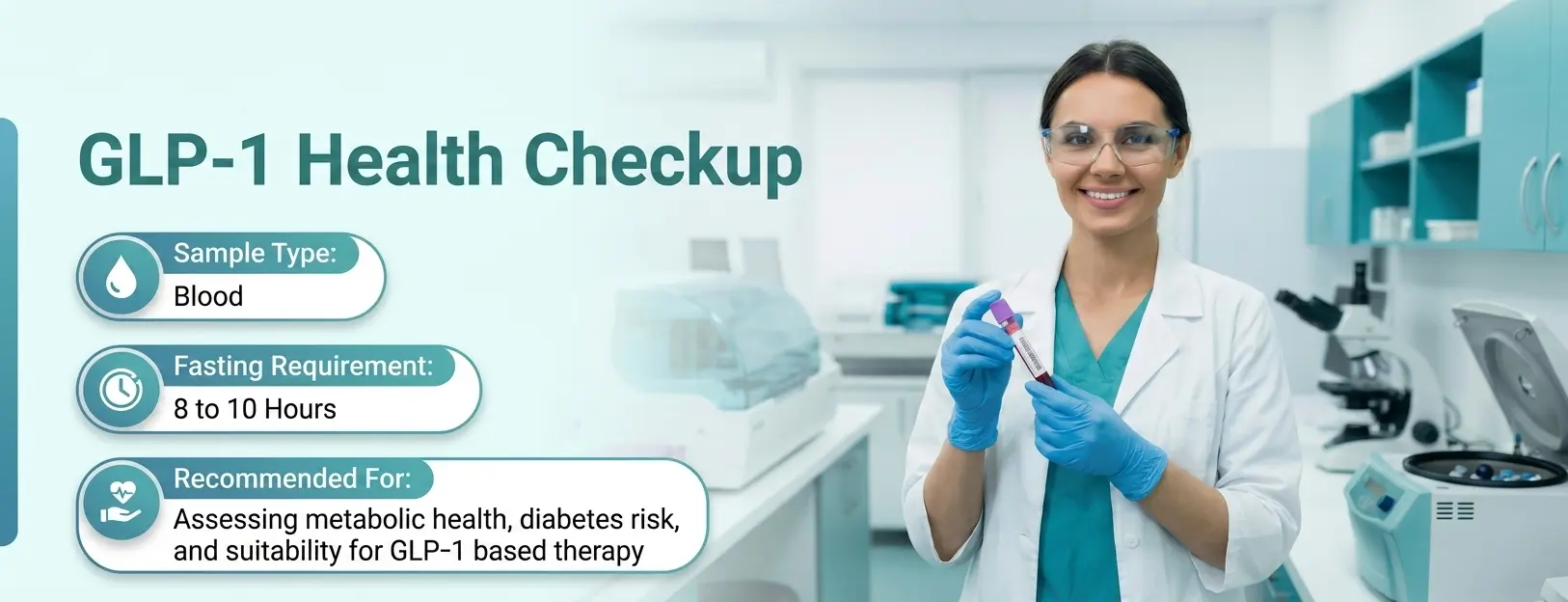
A quick info on GLP-1 Health Checkup

Overview
The GLP-1 Health Checkup evaluates multiple parameters such as blood sugar control, lipid levels, liver and kidney function, and thyroid health. It helps your doctor understand metabolic and hormonal health factors that can affect your weight and nutritional status.
GLP-1 (glucagon-like peptide 1) is a natural hormone in the body that helps control blood sugar levels, slows down digestion, and helps control appetite. Because of these effects, GLP-1 agonists (medicines that work like natural GLP-1) are commonly used in the treatment of type 2 diabetes and are also used for managing weight in people with obesity.
The GLP-1 Health Checkup does not directly measure GLP-1 levels. Instead, it evaluates how your body responds to this hormone by analysing multiple related parameters such as blood sugar levels, lipid profile, and various other tests.

When and Who Should Get a GLP-1 Health Checkup Test Done?
This test is usually recommended to check how well your body manages blood sugar, metabolism, and overall health. It may be advised when evaluating conditions like diabetes or obesity.
Common Symptoms to Watch For:
- Feeling very thirsty or needing to urinate often
- Fatigue
- Unexplained weight changes
- Blurred vision
Who Should Consider This Test
- Individuals exploring medical weight-loss options
- People with changes in blood sugar levels, prediabetes, diabetes, or insulin resistance
- People with high blood pressure
- People with a family history of diabetes
- People with heart failure and chronic kidney disease
- People with obesity
- People over the age of 45 years
Doctors may also suggest this test if you have symptoms related to appetite changes or overall energy.
.png?dim=48x48&q=75)
How Frequently Should You Take the GLP-1 Health Checkup Test?
The frequency of this test depends on your health condition and your doctor’s advice. Some components of this test, such as HbA1c, are used to monitor blood sugar levels over time and are tested at regular intervals in people with diabetes.
The table below gives a general idea of when this test may be recommended:
|
Health Concern |
Context |
Recommended Frequency |
|---|---|---|
|
Diabetes with difficulty controlling blood sugar or recent treatment changes |
HbA1c monitoring to assess blood sugar control |
Every 3 months |
|
Diabetes with stable blood sugar control |
Routine monitoring of HbA1c |
Every 6 months |
|
Routine metabolic and health monitoring |
Includes tests like cholesterol and overall health checks |
Once a year |
|
New symptoms or worsening condition |
To reassess health and adjust treatment |
As advised by the doctor |

What Conditions Can a GLP-1 Health Checkup Test Help Detect?
The GLP-1 Health Checkup helps identify a range of metabolic and organ-related conditions by analysing parameters like blood sugar control, insulin response, organ function, and nutritional status. These include:
- Type 2 Diabetes and Prediabetes: This test checks for parameters like HbA1c, which reflect average blood sugar levels over time. High values may indicate diabetes or a higher risk of developing it.
- Insulin Resistance: The HOMA-IR index parameter in this test helps assess how well your body responds to insulin. Higher values suggest reduced insulin sensitivity, which can lead to type 2 diabetes if not managed.
- Cardiovascular (Heart) Risk: Lipid profile and apolipoproteins help evaluate cholesterol levels and fat transport in the body. Abnormal values can increase the risk of heart disease or stroke.
- Liver Disorders: Liver function tests measure enzymes and proteins that help detect liver injury or inflammation. Changes in these values may indicate conditions such as liver damage or bile flow problems.
- Kidney Dysfunction: Kidney function tests assess how well your kidneys filter waste products like creatinine and urea. Abnormal results may suggest reduced kidney function or early kidney disease.
- Pancreatic Disorders: Enzymes such as amylase and lipase help detect inflammation of the pancreas (such as pancreatitis) or other pancreatic issues.
- Nutritional Deficiencies (Vitamin B12 and Vitamin D): Low levels of vitamin B12 may affect red blood cell formation and nerve function, while vitamin D deficiency can affect bone health and overall body function.
- Thyroid Disorders: Thyroid hormones regulate metabolism. Abnormal TSH levels may indicate an underactive (hypothyroidism) or overactive thyroid (hyperthyroidism).
.png?dim=48x48&q=75)
GLP-1 Health Checkup Test Preparation
What to Expect Before the GLP-1 Health Checkup Test
You must fast for 8 to 10 hours before the test. During the fasting period, drink plain water freely. Avoid all food, milk, tea, coffee, juices, and beverages other than water. Avoid smoking and alcohol for at least 24 hours, as both can falsely elevate triglyceride levels. Avoid strenuous exercise in the 24 hours before the test. Continue your regular medications unless your doctor advises otherwise. Morning appointments are strongly recommended.
What to Expect During the Blood Collection
A phlebotomist cleans the skin with an antiseptic, then places an elastic band around your upper arm to make the veins easier to access. A small needle is inserted into the vein - you may feel a brief pinch. Blood is collected into a labelled tube in under a minute.
What to Expect After the GLP-1 Health Checkup Test
A small cotton swab and bandage are placed over the site to stop any minor bleeding. You can eat and drink immediately after the test - have a light meal as soon as possible after the fast. If dizzy, sit and relax for a few minutes.

What are the Parameters Included in a GLP-1 Health Checkup Test?
This test checks for 72 parameters, as follows:
Thyroid Profile (3 Parameters)
The thyroid profile evaluates how well your thyroid gland is functioning. Thyroid hormones play an important role in controlling metabolism, energy levels, and body weight.
The thyroid profile evaluates how well your thyroid gland is functioning. Thyroid hormones play an important role in controlling metabolism, energy levels, and body weight.
Includes:
- Triiodothyronine (T3)
- Thyroxine (T4)
- Thyroid Stimulating Hormone - Ultrasensitive (TSH-Ultrasensitive)
Liver Function Tests (LFTs) (12 Parameters)
These tests help assess liver health by measuring liver enzymes, proteins, and bilirubin levels. They help detect liver injury, inflammation, or problems in bile flow.
Includes:
- Alanine Aminotransferase (ALT/SGPT)
- Aspartate Aminotransferase (AST/SGOT)
- SGOT/SGPT Ratio
- Alkaline Phosphatase (ALP)
- Gamma-Glutamyl Transferase (GGT)
- Total Bilirubin
- Direct Bilirubin
- Indirect Bilirubin
- Total Protein
- Albumin
- Globulin
- Albumin/Globulin Ratio
Renal/Kidney Function Tests (RFTs/KFTs) (8 Parameters)
These tests evaluate how well your kidneys filter waste products from the body and maintain fluid and electrolyte balance. They are important for detecting early kidney disease.
Includes:
- Uric Acid
- Blood Urea Nitrogen (BUN)
- Calcium
- Creatinine
- Estimated Glomerular Filtration Rate (eGFR)
- Urea/Creatinine Ratio
- BUN/Creatinine Ratio
- Urea (Calculated)
Lipid Profile (Cholesterol Panel) (10 Parameters)
This test measures different types of fats in the blood and helps assess the risk of heart disease and stroke.
Includes:
- Low-Density Lipoprotein (LDL) Direct
- Total Cholesterol (TC)
- High-Density Lipoprotein (HDL) Cholesterol
- Triglycerides
- Very Low-Density Lipoprotein (VLDL) Cholesterol
- LDL/HDL Ratio
- TC/HDL Cholesterol Ratio
- Non-HDL Cholesterol
- HDL/LDL Cholesterol Ratio
- Triglycerides/HDL Ratio
Cardiac Risk Markers (5 Parameters)
These markers provide additional information about heart health and inflammation, helping to assess cardiovascular risk more accurately.
Includes:
- Apolipoprotein A-1 (Apo A1)
- Apolipoprotein B (Apo B)
- High Sensitivity C-Reactive Protein (hs-CRP)
- Lipoprotein (a)
- Apo B/A1 Ratio
Diabetes Profile (2 Parameters)
These tests help evaluate blood sugar control and long-term glucose levels in the blood. They are important for diagnosing and monitoring diabetes.
Includes:
- HbA1c (Glycosylated Haemoglobin)
- Average Blood Glucose
Insulin Resistance Test (HOMA-IR) (1 Parameter)
This test helps assess how effectively your body responds to insulin and can identify early insulin resistance.
Includes:
- HOMA-IR Index
Pancreatic Enzymes (2 Parameters)
These tests help evaluate pancreatic health and can detect inflammation such as pancreatitis.
Includes:
- Amylase
- Lipase
Complete Blood Count (CBC) (24 Parameters)
The CBC test measures different types of blood cells and provides an overview of your general health, immunity, and possible infections.
Includes:
- Absolute Eosinophil Count (AEC)
- Haemoglobin (Hb)
- Platelet Count
- Red Blood Cell Count (RBC)
- Mean Corpuscular Volume (MCV)
- Mean Corpuscular Haemoglobin (MCH)
- Mean Corpuscular Haemoglobin Concentration (MCHC)
- Total Leukocyte Count (TLC/WBC)
- Absolute Lymphocyte Count (ALC)
- Absolute Basophil Count (ABC)
- Packed Cell Volume (PCV)
- Neutrophils
- Lymphocytes
- Monocytes
- Eosinophils
- Basophils
- Absolute Neutrophil Count (ANC)
- Absolute Monocyte Count (AMC)
- Immature Granulocyte Percentage (IG%)
- Red Cell Distribution Width - SD (RDW-SD)
- Nucleated Red Blood Cells Percentage (NRBC%)
- Immature Granulocytes (IG)
- Nucleated Red Blood Cells (NRBC)
- Red Cell Distribution Width - CV (RDW-CV)
Serum Electrolytes (3 Parameters)
These tests measure essential minerals in the body and help assess hydration status, nerve function, and muscle activity.
Includes:
- Sodium
- Potassium
- Chloride
Vitamin Profile (2 Parameters)
These tests help detect key nutritional deficiencies that can affect metabolism, energy, and overall health.
Includes:
- Vitamin B12
- Vitamin D

Normal Range of GLP-1 Health Checkup Test Parameters
The normal range for each parameter indicates the values considered normal for that parameter. These values may vary slightly depending on the laboratory and testing method used. The table below shows commonly accepted reference ranges for key parameters included in the GLP-1 Health Checkup.
Normal Range of Key Parameters in GLP-1 Test
|
Parameter |
Normal Range |
|---|---|
|
TSH |
0.5 – 5 µU/mL |
|
Total Cholesterol |
<200 mg/dL |
|
HDL (Good Cholesterol) |
40 – 60 mg/dL |
|
LDL (Bad Cholesterol) |
<100 mg/dL |
|
Triglycerides |
<150 mg/dL |
|
Apolipoprotein B |
50 – 150 mg/dL |
|
HbA1c |
<5.7% |
|
Vitamin B12 |
160 to 950 pg/mL |
|
Vitamin D |
≥50 nmol/L(sufficient) |
|
WBC (White Blood Cells) |
4,500 – 11,000/mm³ |
|
RBC (Red Blood Cells) |
Male: 4.3 – 5.9 million/mm³ Female: 3.5 – 5.5 million/mm³ |
|
Haemoglobin (Hb) |
Male: 13.5 – 17.5 g/dL; Female: 12–16 g/dL |
|
Platelets |
150,000 – 400,000/mm³ |
|
MCV |
80 – 100 fL |
|
MCH |
25.4 – 34.6 pg/cell |
|
MCHC |
31 – 36% Hb/cell |
|
Sodium |
135 – 145 mEq/L |
|
Potassium |
3.5 – 5 mEq/L |
|
Calcium |
8.5 – 10.3 mg/dL |
|
BUN |
7 – 20 mg/dL |
|
Amylase |
30 – 110 U/L |
.png?dim=48x48&q=75)
GLP-1 Health Checkup Test Result Interpretation
The interpretation of this test depends on multiple parameters rather than a single value. Each result helps your doctor understand how your body systems are functioning.
The table below explains what high or low values of some of the key parameters may indicate. These interpretations are general and should always be reviewed along with your medical history and symptoms.
|
Parameter |
If Values Are High |
If Values Are Low |
|---|---|---|
|
TSH |
May indicate hypothyroidism (an underactive thyroid gland) |
May indicate an overactive thyroid gland which can be due to conditions like Graves disease (an autoimmune disorder in which the body attacks its own tissues) or excess iodine in the body |
|
HDL |
High values are considered to be better for heart health |
Increased cardiovascular risk |
|
Triglycerides |
Higher risk of heart disease and metabolic issues |
Not concerning in most cases |
|
Apolipoprotein B |
May be associated with heart attack or chest pain caused by stress or activity |
Lower cardiovascular risk |
|
HbA1c |
High values may indicate prediabetes (a condition that may progress to diabetes if untreated) or diabetes |
Good glucose control |
|
Liver Enzymes (ALT, AST, ALP) |
May indicate liver injury, inflammation, or bile flow problems |
Not concerning in most cases |
|
Creatinine / BUN/eGFR |
Usually indicate reduced kidney function or kidney disease |
May be associated with low muscle mass or poor nutrition |
|
Amylase / Lipase |
Inflammation of the pancreas (pancreatitis) |
Not concerning in most cases |
|
WBC (White Blood Cells) |
May indicate infection, inflammation, or tissue damage |
May indicate viral infection, severe infection, or weakened immune system |
|
Haemoglobin (Hb) |
May be associated with conditions like chronic lung disease, certain heart defects, dehydration |
May indicate anemia, nutrient deficiencies, or chronic blood loss |
|
Platelets |
Risk of clotting disorders |
Risk of bleeding |
|
Vitamin B12 |
High levels of vitamin B12 are rare as excess vitamin B12 is excreted in urine. |
May indicate insufficient absorption of vitamin B12, lack of intrinsic factor (a protein that helps in the absorption of vitamin B12), pregnancy, or the long-term use of certain medicines |
|
Vitamin D |
May be caused by excess supplementation and is associated with high calcium levels in blood or urine, kidney failure, and heart issues. |
May indicate conditions like rickets (a condition with softened bones) in children, osteomalacia (softening of bones) or osteoporosis (deterioration of bone tissue with fragile bones and high risk of fractures) |

GLP-1 Health Checkup Test Risks and Limitations
Potential Risks and Complications
This health checkup involves a simple blood test, which is generally safe and well tolerated. You may feel a mild prick or slight discomfort when the needle is inserted to collect the blood sample. In some cases, there may be minor bruising, swelling, or slight throbbing at the needle insertion site after the test.
A few people may experience temporary dizziness or light-headedness during or after the procedure, although this is uncommon. There is also a very small risk of infection or bleeding at the puncture site, but such complications are rare and usually resolve quickly without treatment.
Understanding GLP-1 Health Checkup Test Limitations
Test results may vary slightly depending on the laboratory methods and reference ranges used. It is also important to understand that a single abnormal value does not always confirm a specific condition. In some cases, further tests may be required to confirm the diagnosis or identify the underlying cause. Therefore, results should always be interpreted by a doctor in the context of your symptoms and medical history.

GLP-1 Health Checkup Sample Collection: Home vs. Diagnostic Lab
|
Feature |
Home Collection (PharmEasy) |
Traditional Diagnostic Lab |
|---|---|---|
|
Convenience |
High - sample taken from your home or office. |
Low - requires travelling and waiting in queues. |
|
Time Saving |
Maximum - no travel. You pick the time slot. |
Depends on traffic and lab rush. |
|
Safety & Comfort |
Safe - avoids exposure to other sick patients. |
Moderate - crowded waiting areas. |
|
Process |
Professional phlebotomist visits you. |
You must visit the facility during their working hours. |
|
Report Access |
Digital - sent to your app or email. |
Often requires a second visit for physical copies. |
Pro Tip: Book your GLP-1 Health Checkup Test on PharmEasy. Fast overnight, get your sample collected at home in the morning, and receive your digital report the same day - without stepping out.
Was This Test Information Helpful?
Please rate your experience
 Yes Helpful
  Not Helpful
References
People Also Ask
Does GLP-1 reduce dopamine?
How can I improve the results of GLP-1 therapy for weight loss?
Can GLP-1 therapy help with depression?
Are normal ranges different for children and adults?
Do I need to fast before this test?
What happens if my results are abnormal?
 4.6 Stars| 7+ Lakhs Ratings & Reviews

Over 10 million happy users PharmEasy Labs
- Because the digital report is available on WhatsApp, there's no need to go back to the lab. Thanks, PharmEasy!
 Sachin sharma11 Jan ‘26
 - Thanks to the coupon discount, the blood test was done at a lower price.Komal04 Jan ‘26
- The lab technician was a good and knowledgeable professional.Rakesh Pandey06 Jan ‘26
- Due to bad weather, it's difficult to reach the lab. But home collection makes things easier.Arjun08 Jan ‘26
- Thanks to the Swasth AI feature, the report is easy to understand.Priya Mehta02 Jan ‘26
- The report is available on the same day. Wow!Vikas Patel05 Jan ‘26
Have any doubts? Ask us.
Ask us anything about the GLP-1 Health Checkup to understand it better

We provide trusted, expert-curated health content to support better awareness,prevention, and care.
Backed by experienced doctors, medical experts, and strict editorial standards.