

2941+ orders placed in your location

100% NABL & ISO Certified Lab • 100% Accurate Reports
Advanced Full Body Checkup
Advanced full body health checkup
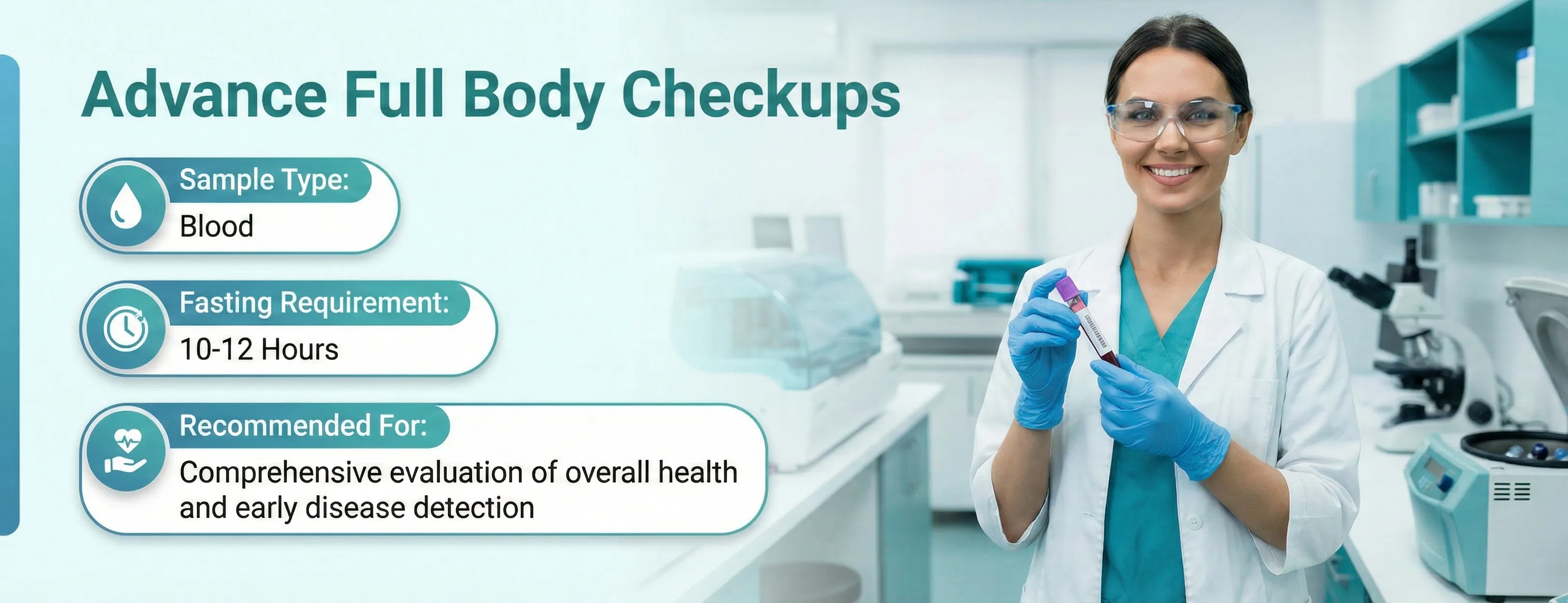
- SummaryThe Advanced Full Body Checkup is a comprehensive health screening that assesses key body functions and detects potential health issues early. It includes tests like Fasting Blood Sugar (FBS), Thyroid and Lipid Profiles, Liver and Kidney Function Tests (LFT & RFT), Complete Blood Count (CBC), and Urine Routine. Suitable for all adults, this package uses blood and urine samples and requires 10–12 hours of fasting.Read more
- TestsIncludes 82 tests
- Reports Within9 HrsView Sample Report

 100% NABL & ISO Certified Labs
 - SampleBlood
 Urine
Urine
- AgeAll Age Group
- GenderMale and Female
- Fasting10-12 Hrs

PharmEasy Promises



Know More About The Package


A quick info on Advanced Full Body Checkup

Overview
The advanced full-body checkup is a comprehensive diagnostic assessment that provides an overall health map of your internal well-being. By analysing over 80 specific biomarkers in your blood and urine, this package gives useful insights into the functioning of key body systems, including your heart, liver, kidneys, and thyroid.
This package includes tests such as an ultrasensitive thyroid screen and a total protein test, which allow the detection of subtle shifts, such as rising cholesterol, early insulin resistance, or nutritional deficiencies, often before any physical symptoms appear.
For the modern, proactive patient, this checkup serves as a foundational tool for preventive healthcare. Since many chronic conditions, such as early-stage kidney dysfunction or metabolic imbalances, often show no outward warning signs, early detection is essential to prevent progression.
The results of this clinical checkup can help you and your doctor make informed decisions about diet, lifestyle, and early medical interventions. It is a vital step for anyone looking to move away from reactive sick care toward proactive health management.
When and Who Should Get a Advanced Full Body Checkup Test Done?
An advanced full-body checkup may be recommended by your doctor if you want a detailed evaluation of your overall health, especially when certain risk factors, symptoms, or age-related concerns are present.
It is especially recommended if you experience:
- Persistent, unexplained fatigue or weakness.
- Sudden weight gain or weight loss.
- Frequent digestive issues or changes in appetite.
- Recurrent headaches or dizziness.
- Noticeable changes in urinary frequency or colour.
People who should consider taking this test include:
- Adults aged 25 and above: recommended as part of a routine annual health checkup.
- Individuals with chronic conditions: those living with conditions such as hypertension or obesity.
- Family history: individuals with a family history of diabetes, cardiovascular diseases, or thyroid disorders.
- Sedentary lifestyle: people with high-stress routines or limited physical activity levels.
.png?dim=48x48&q=75)
How Frequently Should You Take the Advanced Full Body Checkup Test?
|
Health scenario |
Context |
Recommended frequency |
|---|---|---|
|
Healthy adult |
No symptoms or major risk factors. |
Once every 12 months. |
|
High-risk profile |
Family history or sedentary lifestyle. |
Every 6 to 12 months, as advised by the doctor. |
|
Borderline results |
Monitoring pre-conditions (such as prediabetes). |
Every 3 to 6 months, as advised by the doctor. |
|
Senior citizens |
Age 60 and above. |
Every 6 months, as advised by the doctor. |

What Conditions Can a Advanced Full Body Checkup Test Help Detect?
- Metabolic disorders: Identify early signs of type 2 diabetes or prediabetes through fasting glucose levels.
- Cardiovascular risks: assess the balance of good and bad cholesterol to help evaluate heart health.
- Organ dysfunction: detect early markers of liver inflammation or reduced kidney filtering capacity.
- Anaemia and infections: evaluate red and white blood cell counts to assess iron deficiency or active immune response.
.png?dim=48x48&q=75)
Advanced Full Body Checkup Test Preparation
What to Expect Before the Advanced Full Body Checkup
- Fasting: An 8 to 12-hour overnight fast is usually required. You may drink plain water, but avoid tea, coffee, juice, or food during the fasting period.
- Medication: Inform your doctor about your current medications or supplements such as biotin, which can interfere with thyroid results.
- Lifestyle: Avoid alcohol and strenuous exercise for at least 24 hours before the sample collection.
What to Expect During the Blood Collection
- A trained phlebotomist will clean the skin with an antiseptic and place an elastic band around your upper arm to make the veins easier to access. A small needle is inserted into the vein, and you may feel a brief pinch. Blood is collected into labelled tubes, usually within a minute.
- You will also be provided with a sterile container for a midstream urine sample collection. The process is quick and involves minimal effort.
What to Expect After the Advanced Full Body Checkup
- You can resume your normal diet and daily activities immediately. If you feel slightly lightheaded, resting for a few minutes and having a light snack usually helps.

What are the Parameters Included in a Advanced Full Body Checkup Test?
Thyroid Profile (TFT)
- T3 and T4: Thyroid hormones produced by the thyroid that help regulate your body’s metabolic rate, energy levels, and temperature.
- UTSH (ultrasensitive TSH): A sensitive measure of thyroid-stimulating hormone. It is the primary indicator of whether the thyroid is overactive (hyperthyroidism) or underactive (hypothyroidism).
Liver Function Test (LFT)
- ALT (SGPT) and AST (SGOT): enzymes that leak into the blood when liver cells are damaged or inflamed.
- ALP and GGT: markers primarily used to detect bile duct obstruction or bone-related issues. GGT is also highly sensitive to alcohol consumption and liver toxins.
- Bilirubin (total, direct, indirect): a byproduct of red blood cell breakdown. Elevated levels can indicate jaundice, liver disease, or bile duct blockages.
- Total protein and albumin: measures the liver’s ability to synthesize essential proteins, and low levels may also suggest chronic liver or kidney issues.
- Globulin and A/G ratio: globulin supports the immune system. Its ratio helps distinguish between liver disease and other systemic conditions.
- SGOT/SGPT ratio: a calculation used to help identify the specific cause of liver injury (for example, alcoholic vs. viral hepatitis).
Lipid Profile (Heart Health)
- Total cholesterol: the overall measurement of cholesterol in your blood.
- HDL (good) cholesterol: helps remove excess cholesterol from the arteries, reducing the risk of heart disease.
- LDL (bad) cholesterol: the primary contributor to plaque buildup in the arteries (atherosclerosis).
- Triglycerides (TGs) and VLDL: triglycerides are fats in the blood used for energy. VLDL transports TGs to tissues. High levels are linked to insulin resistance and cardiovascular risk.
- Lipid ratios (LDL/HDL, TC/HDL, etc.): calculated values that provide a more precise assessment of cardiovascular risk than individual numbers alone.
Renal/Kidney Function Test (RFT/KFT)
- Creatinine and urea/BUN: waste products filtered by the kidneys. Elevated levels indicate a decline in kidney filtration efficiency.
- eGFR (estimated glomerular filtration rate): used to determine kidney health based on how much blood the kidneys filter per minute.
- Uric acid: a waste product of purine breakdown; high levels can lead to gout or kidney stones.
- Calcium: essential for bone health and nerve function.
- Ratios (BUN/creatinine): used to determine if kidney dysfunction is caused by dehydration or actual organ damage.
Complete Blood Count (CBC)
- Hemoglobin and RBC count: measures the blood's oxygen-carrying capacity and detects anaemia.
- PCV (hematocrit): the percentage of total blood volume made up of red cells.
- MCV, MCH, MCHC: red cell indices that describe the size and hemoglobin content of your red cells, helping to diagnose the type of anaemia.
- RDW (SD/CV): measures the variation in size of red blood cells.
- WBC count (TLC) and differential (neutrophils, lymphocytes, etc.): the body’s primary defense system; counts rise during infection, inflammation, or allergic reactions.
- Absolute counts (AEC, ALC, etc.): the actual number of specific white cell types, providing a more accurate picture than percentages alone.
- Platelet count: essential for stopping bleeding through clot formation.
- Nucleated RBCs and immature granulocytes: early-stage cells that usually stay in the bone marrow; their presence in blood can signal severe physical stress or bone marrow disorders. A slight elevation in IG (immature granulocytes) might be a sign of the bone marrow responding to a standard acute bacterial infection.
Urine Routine Analysis
- Physical properties: such as colour, appearance, and specific characteristics. Gravity and pH are general indicators of hydration, diet, and metabolic waste concentration.
- Chemical markers: such as glucose, protein, leukocyte esterase, nitrite, ketones, and bilirubin, are used to detect silent issues such as diabetes, urinary tract infections (UTI), or liver dysfunction.
- Protein: albuminuria is an early warning sign of kidney stress or damage.
- Microscopic exam: such as casts, crystals, and epithelial cells, detects kidney stones, cellular damage, or contamination.
- Infection markers: such as pus cells, bacteria, yeast, and leukocyte esterase, confirm the presence of a bacterial or fungal infection in the urinary tract.
Blood Sugar
- Fasting blood sugar (FBS): measures blood glucose after an 8 to 12 hour fast and helps screen for prediabetes and diabetes.

Normal Range of Advanced Full Body Checkup Test Parameters
The results of the advanced full-body checkup provide an overall guide for assessing your health. Your doctor uses these numbers to see if your body is functioning normally.
|
Category |
Test parameter |
Clinical normal range (adults) |
|---|---|---|
|
Thyroid profile |
T3, T4, UTSH |
T3: 80–200 ng/dL; T4: 5–12 μg/dL; TSH: 0.45–5 5.5 μIU/mL |
|
Blood sugar |
Fasting blood sugar (FBS) |
70–99 mg/dL; 100-126 mg/dL: IGT |
|
Liver function (LFT) |
ALT (SGPT), AST (SGOT), ALP, GGT |
ALT: 7–55 U/L; AST: 8–48 U/L; ALP: 44–147 U/L; GGT: 5–40 U/L |
|
Bilirubin (total, direct, indirect) |
Total: 0.1–1.2 mg/dL; Direct: |
|
|
Proteins (total, albumin, globulin) |
Protein: 6–8.3 g/dL; Albumin: 3.5–5.0 g/dL |
|
|
Ratios (A/G ratio, SGOT/SGPT) |
A/G: 1.1–2.5; SGOT/SGPT: ~1.0 |
|
|
Lipid profile (heart) |
Cholesterol (total, LDL, HDL, VLDL) |
Total: 40-60; VLDL: 2–30 mg/dL |
|
Triglycerides |
Less than 150 mg/dL |
|
|
Heart risk ratios (LDL/HDL, TC/HDL, etc.) |
LDL/HDL: |
|
|
Kidney function (KFT) |
Creatinine, urea, BUN, uric acid |
Creatinine: 0.6–1.3 mg/dL; BUN: 7–20 mg/dL; Uric acid: 2.6–7.2 mg/dL |
|
eGFR (filtration rate) |
Above 90 mL/min/1.73m² |
|
|
Electrolytes & minerals (calcium) |
Calcium: 8.5–10.2 mg/dL |
|
|
Blood health (CBC) |
Hemoglobin, RBC, PCV (hematocrit) |
Hb: 12–17.5 g/dL; RBC: 4.1–5.9 M/mcL; PCV: 36–50% |
|
Red cell indices (MCV, MCH, MCHC, RDW) |
MCV: 80–100 fL; MCH: 27–33 pg; RDW: 11.8–14.5% |
|
|
White blood cells (TLC & differential) |
WBC: 4,500–11,000/mcL; Neutron: 40-70%; Lymph: 20-40% |
|
|
Platelet count |
150,000–450,000/mcL |
|
|
Specialised (ANC, ALC, NRBC, immature grans) |
ANC: 1,500–8,000; NRBC: 0%; Imm. Grans: |
|
|
Urine analysis |
Physical (pH, Sp. gravity, colour, appearance) |
pH: 4.6–8.0; Sp. Gravity: 1.005–1.030 |
|
Chemical (glucose, protein, nitrite, blood) |
All: ideally negative |
|
|
Microscopic (pus cells, RBC, bacteria, casts) |
Pus/RBC: 0–5/hpf; Bacteria/Casts: Absent/None |
Important note: Normal values and reference ranges of each parameter may vary from lab to lab. Please refer to the ranges mentioned in the report and consult your doctor to understand what these numbers mean for your health.
.png?dim=48x48&q=75)
Advanced Full Body Checkup Test Result Interpretation
|
Parameter |
Level |
Potential interpretation (may be associated with) |
|---|---|---|
|
Fasting blood sugar |
High |
May indicate insulin resistance, impaired glucose tolerance, or diabetes. |
|
LDL cholesterol |
High |
Increased levels may be associated with a higher risk of arterial plaque. |
|
Serum creatinine |
High |
These could suggest a decrease in the kidney’s ability to filter waste, high protein intake, or medications. |
|
Hemoglobin |
Low |
Often, the most common sign of iron deficiency or other forms of anaemia. |
|
SGPT / ALT |
High |
Frequently indicates liver cell irritation or fatty changes. |
|
TSH (ultrasensitive) |
Low High |
May suggest an overactive thyroid (hyperthyroidism). May suggest hypothyroidism |
Disclaimer: This table is for educational purposes and provides a risk assessment only. These findings do not confirm a diagnosis. Factors such as age, gender, and current medications can affect these levels. Always consult your doctor to understand how these results relate to your symptoms and overall health.

Advanced Full Body Checkup Test Risks and Limitations
Potential Risks
- Minor bruising: slight swelling or a small bruise at the puncture site is common and usually fades within 48 hours.
- Dizziness: some individuals may feel faint after fasting. It is recommended to stay hydrated with water.
Limitations
- Window period: tests may not detect very recent infections or conditions in their earliest incubation phase.
- Interferences: recent illness, vigorous exercise, or certain vitamins can temporarily show altered results.
- Not a standalone diagnosis: results provide a snapshot in time and must be interpreted by a doctor in the context of your physical exam.

Related and Follow-up Tests
If your results show abnormalities, your doctor may suggest:
- HbA1c: to check the average blood sugar over the last 3 months if fasting glucose is high.
- Vitamin D and B12: often recommended alongside full-body panels to address fatigue.
- Ultrasound (abdomen): may be advised if liver or kidney markers are significantly out of range.
- ECG / stress test: only recommended if your lipid profile indicates high cardiovascular risk.
These follow-up tests help turn a warning sign from your advanced full-body checkup into a clear diagnosis. Always consult your doctor to decide which additional tests are right for you.

Advanced Full Body Checkup Test Sample Collection: Home vs. Diagnostic Lab
|
Feature |
Home Collection (PharmEasy) |
Traditional Diagnostic Lab |
|---|---|---|
|
Convenience |
High - sample taken from your home or office. |
Low - requires travelling and waiting in queues. |
|
Time Saving |
Maximum - no travel time. You pick the time slot. |
Minimum - depends on traffic and lab rush. |
|
Safety & Comfort |
Safe - avoids exposure to other sick patients. |
Moderate - exposure to crowded waiting areas. |
|
Process |
A professional phlebotomist visits you. |
You must visit the facility during its hours. |
|
Report Access |
Digital - sent directly to your app or email. |
Often requires a second visit for physical copies. |
Pro Tip: For the most stress-free experience, book an Advanced Full Body Checkup test on PharmEasy. Enjoy professional service and accurate results without stepping out of your house.
Was This Test Information Helpful?
Please rate your experience
 Yes Helpful (8)
 Not Helpful
References
People Also Ask
Do I really need to fast for 12 hours?
Can I take my blood pressure medication before the test?
Will one high result mean I have a disease?
Why is the urine routine included in a full body checkup?
Does a normal report guarantee 100% health?
Can I do this test while I have a cold or fever?
How long does it take to get the results?
Is this test suitable for pregnant women?
 4.6 Stars| 7+ Lakhs Ratings & Reviews

Over 10 million happy users PharmEasy Labs
- Because the digital report is available on WhatsApp, there's no need to go back to the lab. Thanks, PharmEasy!
 Sachin sharma11 Jan ‘26
 - Thanks to the coupon discount, the blood test was done at a lower price.Komal04 Jan ‘26
- The lab technician was a good and knowledgeable professional.Rakesh Pandey06 Jan ‘26
- Due to bad weather, it's difficult to reach the lab. But home collection makes things easier.Arjun08 Jan ‘26
- Thanks to the Swasth AI feature, the report is easy to understand.Priya Mehta02 Jan ‘26
- The report is available on the same day. Wow!Vikas Patel05 Jan ‘26
Have any doubts? Ask us.
Ask us anything about the Advanced Full Body Checkup to understand it better
Explore More at PharmEasy
Top-Selling Healthcare Products
Top-Searched Medicines

We provide trusted, expert-curated health content to support better awareness,prevention, and care.
Backed by experienced doctors, medical experts, and strict editorial standards.