


27+ orders placed in your location


100% NABL & ISO Certified Lab • 100% Accurate Reports
Blood Ketones Test
Serum ketone test, ketone bodies test, Diabetes-Ketone test, Acidosis-ketone test
- SummaryThe Blood Ketones Test measures the level of ketones in the blood, which are produced when the body burns fat for energy instead of glucose. It helps monitor and manage conditions like diabetes, especially diabetic ketoacidosis (DKA). A blood sample is required, no fasting is needed, and the test is suitable for individuals of all age groups, as recommended by a healthcare provider.Read more
- Reports Within24 HrsView Sample Report100% NABL & ISO Certified Labs
- SampleBlood
- AgeAll Age Group
- GenderMale and Female
- FastingNot Required



PharmEasy Promises




Know More About The Test




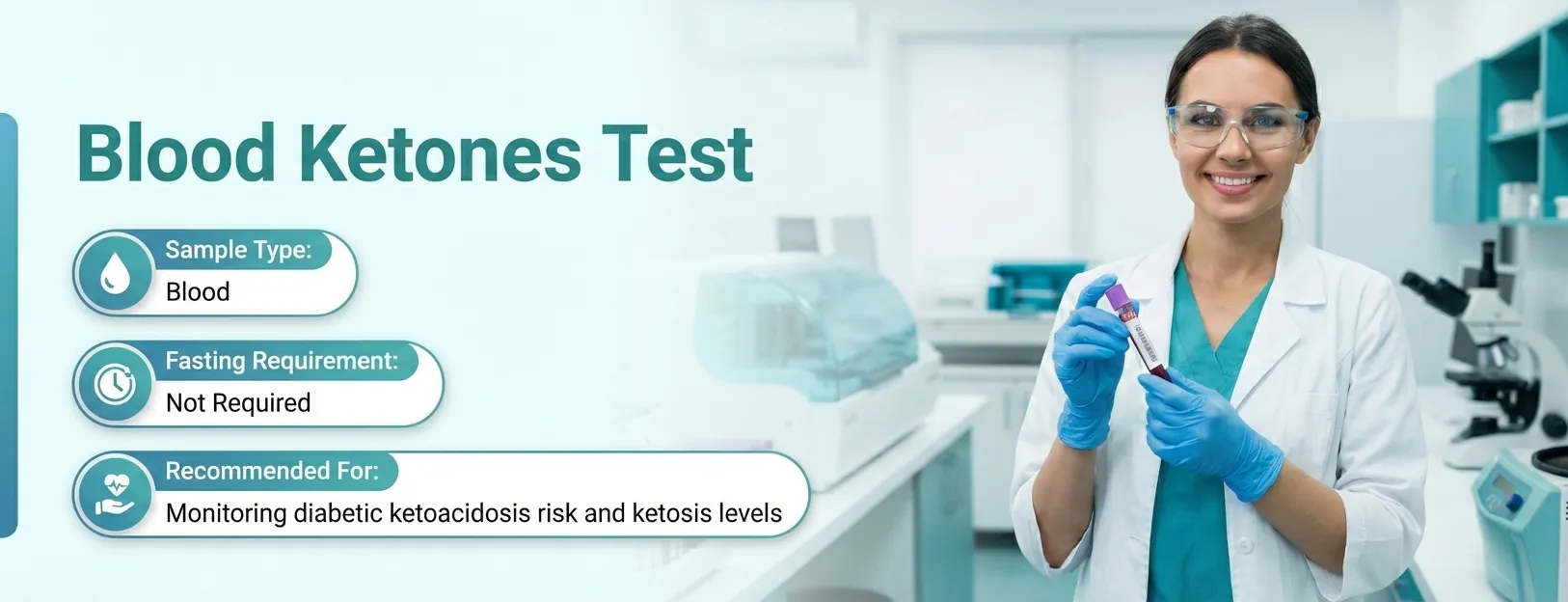
A quick info on Blood Ketones Test


Overview
The blood ketone test measures the level of ketones in the blood, substances the body produces when it burns fat for energy instead of glucose. Glucose is the body's main fuel; when there is not enough of it available, fat is broken down instead, and this process releases ketone bodies into the blood. A small amount of ketones is normal, but high levels can be a warning sign, especially in people with diabetes.
There are three types of ketone bodies: beta-hydroxybutyrate, acetoacetate, and acetone. Beta-hydroxybutyrate makes up about 75% of the total ketones and is the main one of interest in diabetes. When ketones build up faster than the body can clear them, the blood becomes too acidic, leading to a dangerous condition called diabetic ketoacidosis (DKA). DKA is most common in type 1 diabetes but can also occur in type 2.
DKA causes severe insulin deficiency, very high blood glucose, and a disturbance of the body's acid-base balance. Its symptoms include excessive thirst, dehydration, rapid breathing, nausea, vomiting, a fruity smell on the breath, confusion, and, in some severe cases, it can lead to coma. Because DKA can be life-threatening, the blood ketone test is an important tool for detecting and monitoring it. The test can also be done with home meters, allowing people with diabetes to check their ketones frequently when unwell. DKA is common in India and particularly affects infants, children, and people under 24 years of age.
When and Who Should Get a Blood Ketones Test Done?
Your doctor may recommend a blood ketone test if you have diabetes with symptoms suggesting ketoacidosis, or other situations that raise the risk of ketone build-up.
Symptoms of Ketoacidosis That May Prompt the Test
- Excessive thirst along with dehydration and frequent urination.
- Shortness of breath and rapid breathing, or a rapid heart rate.
- Cold hands and feet, fatigue, nausea, and vomiting.
- A fruity smell on the breath, confusion, or, in extreme cases, loss of consciousness (coma).
Other Situations Where the Test Is Advised
- When blood glucose is high - above 240 mg/dL.
- During an infection or illness in a person with diabetes.
- In pregnant women with diabetes who can develop DKA more readily.
- When excessive alcohol is consumed without enough food.
The test is suitable for people of all ages and genders when advised by a doctor, and is especially relevant for those with type 1 diabetes.
.png?dim=48x48&q=75)
How Frequently Should You Take the Blood Ketones Test?
A blood ketone test is not a routine test. It is typically advised by doctors for people with type 1 or type 2 diabetes, and ketone build-up is more common in type 1. It is also recommended for sick or pregnant individuals at risk of DKA, and for those showing symptoms of ketoacidosis.
During illness or when the blood sugar levels are high, your doctor may ask you to check ketones more often - sometimes several times a day, until levels return to normal. Home blood ketone meters make frequent monitoring possible.

What Conditions Can a Blood Ketones Test Help Detect?
The blood ketone test mainly detects and monitors ketone build-up and its complications:
|
Condition |
What it involves |
|---|---|
|
Ketosis |
A milder state of raised ketonesoccurs as the body burns fat for fuel. |
|
Ketoacidosis/DKA |
A dangerous build-up of ketones that makes the blood acidic: a medical emergency, mainly in diabetes. |
|
Diabetes monitoring |
Tracking ketones in type 1 and type 2 diabetes, especially during illness or high blood sugar. |
|
Risk in pregnancy and illness |
Identifying DKA risk in pregnant or sick individuals. |
Higher ketone levels are also seen in people on a low-carbohydrate diet, those with alcohol dependence, eating disorders, or persistent vomiting. Complications of severe ketoacidosis can include coma, kidney damage, and brain swelling.
.png?dim=48x48&q=75)
Blood Ketones Test Preparation
The blood ketone test needs no special preparation, which makes it quick and convenient - important when it is used in an urgent situation.
What to Expect Before the Test?
- No fasting is required. If it is done with another test that needs preparation, follow that specific instruction.
- Tell your doctor about your diabetes, recent blood sugar readings, any illness, and your medicines (including insulin).
- If you use a home ketone meter, your doctor may ask about your recent readings.
- Always speak with your doctor before the test for guidance, especially if you feel unwell.
What to Expect During the Blood Collection?
A phlebotomist cleans the skin with an antiseptic, then places an elastic band around your upper arm to make the veins easier to access. A small needle is inserted into the vein; you may feel a brief pinch. The blood is collected into a labelled tube in under a minute.
What to Expect After the Test?
A small cotton swab and bandage are placed over the site to stop any minor bleeding. There may be slight soreness at the needle site or mild lightheadedness. If you feel dizzy, sit and rest for a few minutes.

What are the Parameters Included in a Blood Ketones Test?
The blood ketone test measures the level of ketone bodies in the blood, reported in mmol/L. The three ketone bodies are:
- Beta-hydroxybutyrate: the main ketone, making up about 75% of the total and the most useful for detecting DKA.
- Acetoacetate: another ketone body produced when fat is broken down.
- Acetone: the ketone responsible for the characteristic fruity breath odour.
Different blood ketone tests may measure different ketone bodies; together they reflect the level of ketone accumulation, which in turn relates to the blood glucose control and diabetes.

Normal Range of Blood Ketones Test Parameters
The table below shows the typical interpretation of serum ketone readings.
|
Serum ketone - mg/dL |
Result |
|---|---|
|
0.21-2.81 mg/dL |
Normal range. |
Important note: Reference ranges may vary slightly between laboratories and meters. Always refer to the range printed on your own report, consult your doctor, and treat a high reading as urgent.

Blood Ketones Test Risks and Limitations
The blood ketone test is a routine blood draw that is generally very safe, with minor procedural risks and some limitations.
Potential Risks and Complications
Most people feel only a brief pinch. Consult your doctor if you notice:
- Persistent bleeding at the puncture site that does not stop with gentle pressure.
- Redness, swelling, or pain at the needle insertion site.
- Light-headedness that continues after the blood is drawn, sit and rest before leaving.
Understanding Blood Ketone Test Limitations
- A single result is a snapshot; ketone can change quickly during illness, so repeat testing may be needed.
- Different tests measure different ketone bodies, which can affect comparability.
- The test shows ketone levels but not the underlying cause, which needs clinical assessment.
- Reference ranges differ between labs and meters, so results may not be directly comparable.

Related and Follow-up Tests
The blood ketone levels are usually assessed alongside other tests, especially when DKA is suspected.
|
Your situation |
Suggested follow-up test |
Why is it ordered |
|---|---|---|
|
High ketones |
DKA involves very high blood sugar alongside high ketones. |
|
|
Suspected DKA |
Arterial blood gas (ABG) and electrolytes |
Assesses blood acidity and salt balance, key to managing DKA. |
|
Diabetes monitoring |
Reflects average blood sugar control over the past 2-3 months. |
|
|
Severe illness |
DKA can affect the kidneys; this checks their function. |

Blood Ketones Test Sample Collection: Home vs. Diagnostic Lab
|
Feature |
Home collection (PharmEasy) |
Traditional diagnostic lab |
|---|---|---|
|
Convenience |
High - sample is taken from your home or office. |
Low - requires travelling and waiting in queues. |
|
Time saving |
Maximum - no travel time. You pick the time slot. |
Minimum - depends on traffic and lab rush. |
|
Safety and comfort |
Safe - avoids exposure to other sick patients. |
Moderate - exposure to crowded waiting areas. |
|
Process |
A professional phlebotomist visits you. |
You must visit the facility during its hours. |
|
Report access |
Digital - sent directly to your app or email. |
Often requires a second visit for physical copies. |
Pro tip: Book your blood ketone test on PharmEasy for safe, at-home sample collection and a quick digital report, which is convenient when a person with diabetes is unwell. For severe symptoms, seek emergency care instead of waiting.
Was This Test Information Helpful?
Please rate your experience


References
Health packages containing 'Blood Ketones Test'

People Also Ask
What is the blood ketone test used for?
Do I need to fast before the test?
What causes high Blood Ketone besides diabetes?
When should a person with diabetes check ketones?
Are high ketones dangerous?


Over 10 million happy users PharmEasy Labs
- Because the digital report is available on WhatsApp, there's no need to go back to the lab. Thanks, PharmEasy!Sachin sharma11 Jan ‘26
- Thanks to the coupon discount, the blood test was done at a lower price.Komal04 Jan ‘26
- The lab technician was a good and knowledgeable professional.Rakesh Pandey06 Jan ‘26
- Due to bad weather, it's difficult to reach the lab. But home collection makes things easier.Arjun08 Jan ‘26
- Thanks to the Swasth AI feature, the report is easy to understand.Priya Mehta02 Jan ‘26
- The report is available on the same day. Wow!Vikas Patel05 Jan ‘26


Have any doubts? Ask us.
Ask us anything about the Blood Ketones Test to understand it better


We provide trusted, expert-curated health content to support better awareness,prevention, and care.
Backed by experienced doctors, medical experts, and strict editorial standards.