




Natural Home Remedies for Ringworm
By Dr Smita Barode +2 more

Medically reviewed by Dr. Avinav Gupta
Last updated: Sep 1, 2026 Published on: May 16, 2022


Get,

to manage your symptom
Get your,

4 Cr+ families
benefitted

OTP sent to 9988776655



You’ve successfully subscribed to receive
doctor-approved tips on
Whatsapp

Get ready to feel your best.


Register to Avail the Offer
Send OTPBy continuing, you agree with our Privacy Policy and Terms and Conditions
Hi There,
Sign up on PharmEasy now!!


Trusted by 4 crore+ families

OTP sent to 9988776655
You have unlocked 25% off on medicines


Code: NU25

By Dr Smita Barode +2 more
Table of Contents
Who doesn’t want rings? Wait. Which kind? The red rings that we sometimes see on our skin? We definitely don’t want those, as they might be sign of a ringworm infection! Ringworm, also known as Tinea corporis, is an infection that occurs in the upper layers of the skin. It can occur in the face, hands, feet, etc1. It is a fungal infection and is seen as a coin-shaped rash, like a ring, thus giving it its name2. There are many infections similar to ringworm, therefore, all circular rashes should not be assumed to be a ringworm. Ringworm is a common condition in tropical regions, although it may be seen in other parts of the world as well. Generally, ringworm spreads through family members, living in the same place as they all share articles and touch common surfaces1.
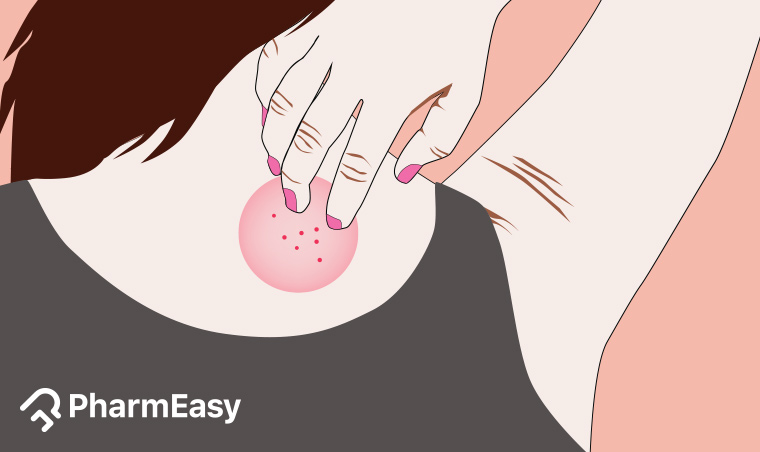
Did you know?
Depending on the region they affect, ringworms are referred to by different names such as
Patients must be encouraged to wear light and loose-fitting clothing. Also, keeping the skin clean and dry will help prevent the development of tinea corporis, as sweating and moist skin are good media for the growth of fungus.
Dr. M.G. Kartheeka, MBBS, MD(Pediatrics)
Also, upon initiation of topical antifungal treatment by your dermatologist, compliance needs to be encouraged; however, the results are typically not immediate.
The symptoms of ringworm are seen 4-14 days after being infected by the fungus. The symptoms vary with the location in which it occur, common symptoms seen in all types of ringworms are2:
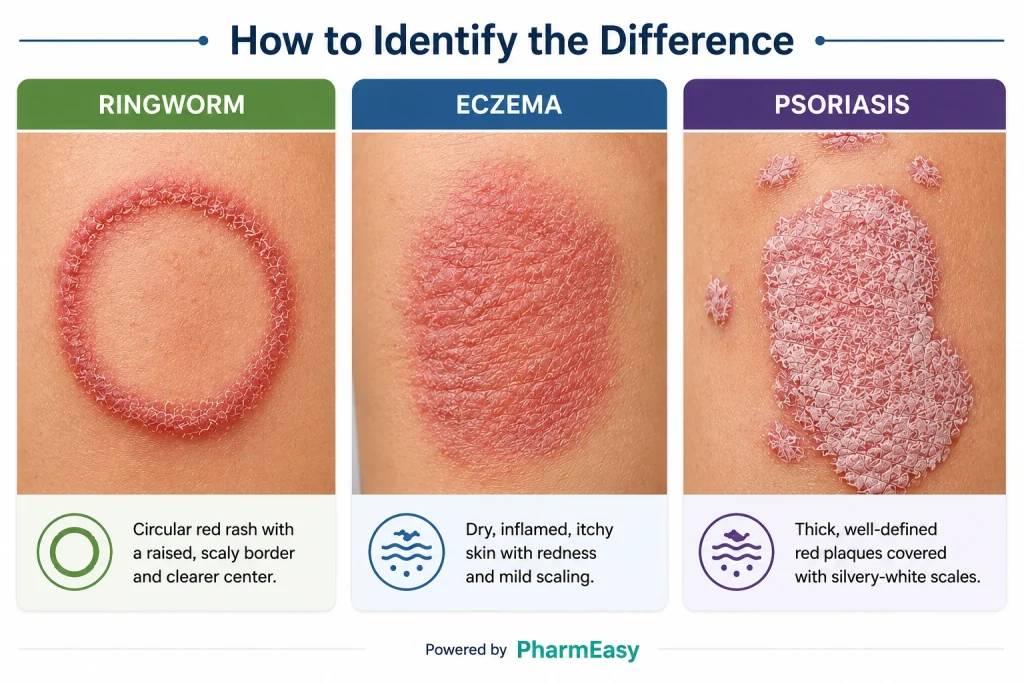
As mentioned earlier, not every circular or itchy rash is ringworm. Several skin conditions can look similar, which is why a rash should not automatically be assumed to be ringworm. Two conditions often confused with ringworm are eczema and psoriasis. Understanding the differences can help you know when to seek proper advice.
| Feature | Ringworm | Eczema | Psoriasis |
| Cause | Fungal infection | Skin sensitivity, often genetic or allergic | Immune-related, long-term condition |
| Appearance | Ring-shaped rash with clearer centre | Red, dry, inflamed patches | Thick, scaly patches with silvery scales |
| Contagiousness | Contagious | Not contagious | Not contagious |
| Common symptoms | Itching, scaling, ring shape | Itching, dryness, oozing | Thick scaling, flaking, itching; some people may also develop joint pain (psoriatic arthritis) | |
| Typical treatment | Antifungal medicines | Moisturisers, anti-inflammatory treatments | Moisturisers, topical treatments, phototherapy, or systemic medicines depending on severity |
Self-diagnosis can be difficult because these conditions can overlap in appearance, and treatment differs significantly. For example, an antifungal cream will not help eczema or psoriasis. Looking at visual comparison photographs may help you recognise some differences, but images alone are not enough for an accurate diagnosis.
If you are unsure what your rash is, or if it does not improve, it is best to have it evaluated by a doctor or dermatologist.
As ringworm is a fungal infection, your doctor will thoroughly examine you and might recommend the use of certain medications that will effectively resolve the infection. Please consult your doctor for proper treatment. In this section, we share a few natural, home remedies for you to try. Here are a few of them:

Maintaining hygiene and keeping the area dry plays a key role in treating ringworm as the fungus spreads faster in the presence of moisture. We need to wash the area and dry it thoroughly before applying any other home remedy. We can use certain antibacterial soaps as well. The use of pine or coal-tar soap is thought to be helpful, but should be used with caution as it can cause irritation to the skin.
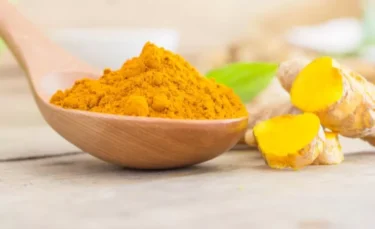
Turmeric has been used since centuries to treat various kinds of skin diseases, ringworm, rash, itching, etc. It has a variety of medicinal properties like providing relief of inflammation (anti-inflammatory), neutralization of free radicals in the body (antioxidant) and reduction of fungal infection (antifungal). You can make use of it as a tea after meals or can also add it to your dishes. Turmeric can effectively treat rashes owing to its anti-inflammatory properties4. You can make a thick paste, by adding water or coconut oil to turmeric and apply it onto the ringworm and some area around it.

This remedy is not backed by scientific research and explanation, yet it is used by people with apparent benefits. You can apply some mashed garlic on the infected area and bandage the area properly with a gauze piece and let it stay for a couple of hours. After that, you should remove the bandage and rinse the area thoroughly. This process is to be repeated daily for a few days or until the ringworm disappears. If you feel pain, itching, irritation or swelling, then remove the garlic and consult a doctor immediately.

Apple cider vinegar is used as a remedy for food poisoning by people, despite the lack of scientific evidence. You can use it by taking some cider on a cotton ball in the undiluted form, and dabbing it over the ringworm. This has to be done each day to see the benefits.
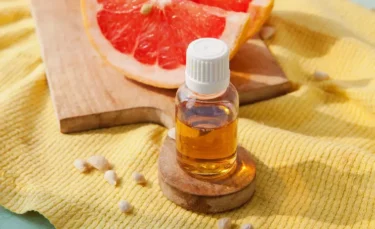
The use of grapefruit seed extract for food poisoning is an age old anecdotal home remedy for ringworm. It can be used by mixing a drop of the extract with a few spoons of water. Apply this to the ringworm directly using a cotton ball. This has to be followed daily. There is need for more research and studies to know the reason for its efficiency.

Aloe vera can be made use of by taking the leaf of it and splitting it open. The gel has to be scooped out of the leaf and applied onto the area where there is ringworm. There is very little to no evidence of the use of aloe vera gel for ringworm, however since aloe vera is known to be extremely beneficial for the skin, it might just help treat ringworm too.
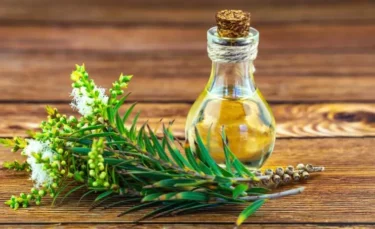
Tea tree oil home remedy for ringworm might be used after diluting it in a base oil like coconut oil (it too doesn’t allow the growth of fungus) and applying it using a cotton ball. This oil must be applied daily to experience its effects.

Essential oils are regarded as natural agents to be used against fungi. They show intense activity against fungal infections5. The use of essential oils can be made by dilution in a carrier oil and then applying over the affected area.
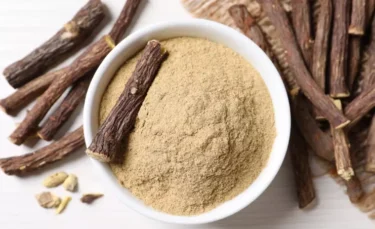
We need to make a thick paste for application over the ringworm. For making the paste we need to mix a few teaspoons of powdered liquorice in water and boil it. Once this boils, lower the heat till a thick paste-like consistency is obtained. This paste is to be cooled down before application over the skin. Keep this paste on the skin for a few minutes before washing it off.

Because ringworm spreads through direct skin-to-skin contact and by touching contaminated objects, it can easily spread among people living in the same household. Taking a few simple precautions at home can help stop the infection from passing from one person to another.
The fungus can survive on objects and surfaces, especially in warm, damp conditions, so cleaning and avoiding the sharing of personal items are key to preventing spread.
Use the following household checklist while someone in the home has ringworm7:
These steps may seem small, but together they significantly reduce the risk of the infection spreading to others in the household. Keeping the skin clean and dry, as discussed earlier, also helps limit the conditions in which the fungus thrives.
Yes. Ringworm can spread from infected animals to humans through direct contact or by touching contaminated fur, bedding, grooming tools, or other objects. This is one of the lesser-known ways people pick up the infection, and it is worth being aware of, especially in households with pets.
A range of animals can carry ringworm, including cats, dogs, kittens, puppies, rabbits, and other mammals. Young animals such as kittens and puppies are particularly likely to carry the infection8.
Common signs of ringworm in pets may include:
It is important to note that some animals can carry the fungus without showing obvious signs, yet still pass it on.
Also Read: 18 Simple Home Remedies For Fungal Infections!
You should consult your doctor if you feel like your rash is not subsidizing even after a few days of using home remedies and it keeps growing. If you notice multiple such rashes and feel like the condition is out of hand, please visit your doctor at the earliest. If there is swelling or fever also, you must consult your health care provider or doctor immediately.
While mild ringworm can sometimes improve with proper care, certain situations call for evaluation by a dermatologist, a doctor who specialises in skin conditions. Seeing a specialist early can lead to a more accurate diagnosis and more effective treatment, particularly when the infection is stubborn or widespread.
Consider seeing a dermatologist if you experience any of the following:
Early specialist evaluation is important because some of these situations, such as scalp, beard, or nail require oral antifungal medicines rather than topical treatment alone. Prompt assessment can help prevent the infection from worsening or spreading and can improve the chances of a full recovery.
Also Read: Natural Home Remedies for Itchy Skin
Giving and receiving rings is all fine when it is not of the infectious kind. Ringworm, a common fungal infection caused by Tinea corporis, is highly infectious and generally occurs in the tropical regions of the world. As we share personal items, and come in contact with each other, it spreads. If you have it, make sure that you don’t partake in spreading it by following a few simple, natural tricks and tips to make it vanish.
Also Read: VDRL Positive: What It Means, Symptoms, Causes & Treatment
Yes, ringworm can be seen on the head. Depending on the location at which the ringworm infection occurs, they are called by different names. Ringworm that occurs on the head is referred to as Tinea capitis (scalp). It may appear as a small, scale- like, circular, bald spot and is commonly seen in children1.
No, there is no evidence of ringworm infection having any negative effect on the brain.
Ringworm infection is caused by a fungus, Tinea corporis. It is commonly referred to as ringworm because of the circular, ring-like rash caused by its infection1.
No. There are no reports of ringworm infection causing cancer.
1. Leung AKC, Lam JM, Leong KF, Hon KL. Tinea corporis: An updated review. Drugs Context [Internet]. 2020;9:1–12. Available from: https://www.ncbi.nlm.nih.gov/pmc/articles/PMC7375854/pdf/dic-2020-5-6.pdf
2. Center for Disease Control and Prevention. Symptoms of Ringworm [Internet]. 2021 [cited 2022 May 10]. Available from: https://www.cdc.gov/fungal/diseases/ringworm/symptoms.html
3. Center for Disease Control and Prevention. How Ringworm Spreads [Internet]. 2021 [cited 2022 May 10]. Available from: https://www.cdc.gov/fungal/diseases/ringworm/sources.html
4. Jankasem M, Wuthi-udomlert M, Gritsanapan W. Antidermatophytic Properties of Ar -Turmerone, Turmeric Oil, and Curcuma longa Preparations. ISRN Dermatol [Internet]. 2013;2013(April 2009):1–3. Available from: https://www.ncbi.nlm.nih.gov/pmc/articles/PMC3770062/pdf/ISRN.DERMATOLOGY2013-250597.pdf
5. Nazzaro F, Fratianni F, Coppola R, De Feo V. Essential oils and antifungal activity. Pharmaceuticals [Internet]. 2017;10(4):1–20. Available from: https://www.ncbi.nlm.nih.gov/pmc/articles/PMC5748643/pdf/pharmaceuticals-10-00086.pdf
6. Nemeth V, Syed HA, Evans J. Eczema. [Updated 2024 Mar 1]. In: StatPearls [Internet]. Treasure Island (FL): StatPearls Publishing; 2026 Jan-. Available from: https://www.ncbi.nlm.nih.gov/books/NBK538209/
7. Nair PA, Badri T. Psoriasis. [Updated 2023 Apr 3]. In: StatPearls [Internet]. Treasure Island (FL): StatPearls Publishing; 2026 Jan-. Available from: https://www.ncbi.nlm.nih.gov/books/NBK448194/
8. Uhrlaß S, Verma SB, Gräser Y, Rezaei-Matehkolaei A, Hatami M, Schaller M, Nenoff P. Trichophyton indotineae-An Emerging Pathogen Causing Recalcitrant Dermatophytoses in India and Worldwide-A Multidimensional Perspective. J Fungi (Basel). 2022 Jul 21;8(7):757. doi: 10.3390/jof8070757. PMID: 35887512; PMCID: PMC9323571. Available from: https://pmc.ncbi.nlm.nih.gov/articles/PMC9323571/
7. Centers for Disease Control and Prevention. Ringworm prevention [Internet]. Atlanta (GA): Centers for Disease Control and Prevention; [cited 2026 Jul 2]. Available from: https://www.cdc.gov/ringworm/aboutemergingringworm/index.html
8. California Department of Public Health. Ringworm and pets [Internet]. Sacramento (CA): California Department of Public Health; [cited 2026 Jul 2]. Available from: https://www.cdph.ca.gov/Programs/CID/DCDC/Pages/Ringworm.aspx
Disclaimer: The information provided here is for educational/awareness purposes only and is not intended to be a substitute for medical treatment by a healthcare professional and should not be relied upon to diagnose or treat any medical condition. The reader should consult a registered medical practitioner to determine the appropriateness of the information and before consuming any medication. PharmEasy does not provide any guarantee or warranty (express or implied) regarding the accuracy, adequacy, completeness, legality, reliability or usefulness of the information; and disclaims any liability arising thereof.
Links and product recommendations in the information provided here are advertisements of third-party products available on the website. PharmEasy does not make any representation on the accuracy or suitability of such products/services. Advertisements do not influence the editorial decisions or content. The information in this blog is subject to change without notice. The authors and administrators reserve the right to modify, add, or remove content without notification. It is your responsibility to review this disclaimer regularly for any changes.
 29
29  3
3Comments

Leave your comment...
You may also like





















Comments