

7944+ orders placed in your location

100% NABL & ISO Certified Lab • 100% Accurate Reports
Post Prandial Blood Sugar (PPBS) Test
Post Prandial Blood Sugar(PPBS), Post Meals Blood Sugar
- SummaryThe Postprandial Blood Sugar Test can help detect prediabetes, type 1 diabetes, type 2 diabetes, gestational diabetes, and other types of diabetes. The test is done using a blood sample, and fasting is not required, but you must eat a complete meal exactly 2 hours before the test as instructed.Read more
- Reports Within7 HrsView Sample Report

 100% NABL & ISO Certified Labs
 - SampleBlood

- AgeAll Age Group
- GenderMale and Female
- FastingNot Required

PharmEasy Promises



Know More About The Test


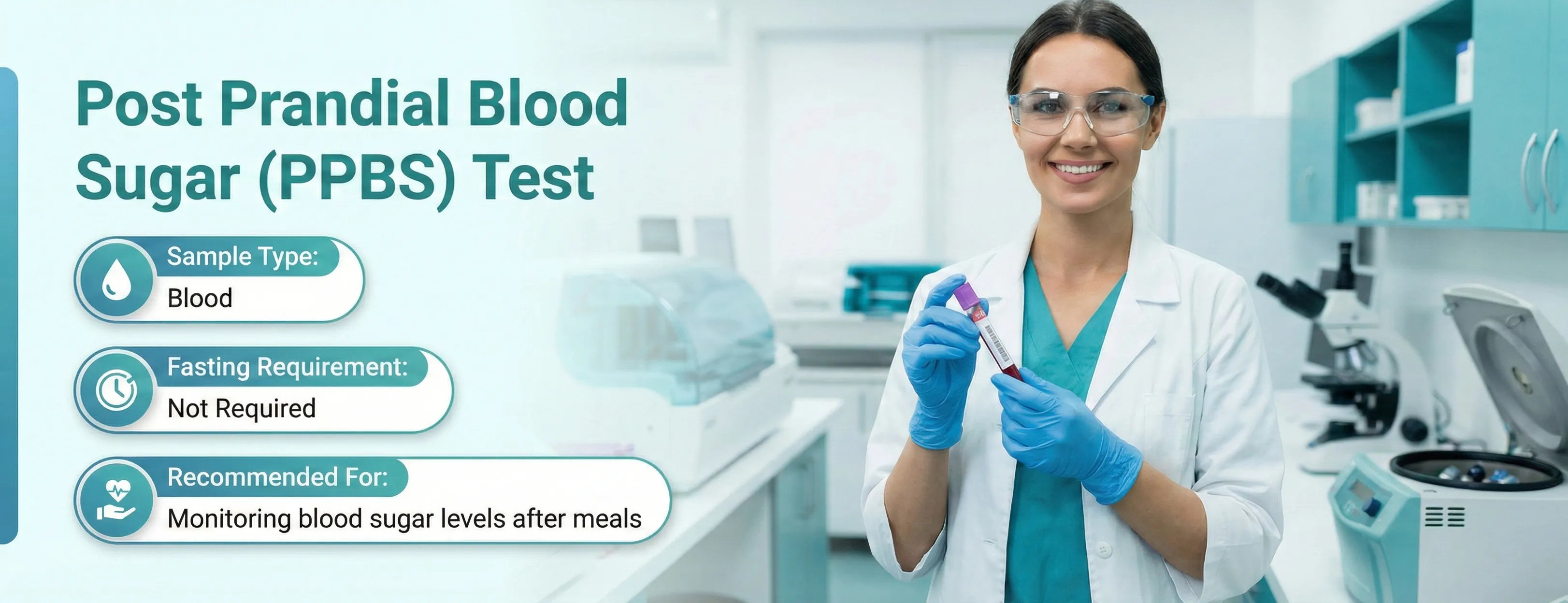
A quick info on Post Prandial Blood Sugar (PPBS) Test

Overview
A Postprandial Blood Sugar (PPBS) test checks how much sugar (glucose) is in your blood after you eat a meal. It is also called a post-meal blood sugar test, post-meal glucose test, or diabetes screening blood sugar test.
The word “postprandial” simply means after eating. This test is usually done 2 hours after you start your meal to see how your blood sugar changes as food is absorbed into your body. In some cases, such as pregnancy, it may also be checked 1 hour after a meal.
In people without diabetes, blood sugar starts to rise about 10 minutes after a meal, when carbohydrates from the food begin to be absorbed. It usually reaches its highest level in about 60 minutes. After that, it returns to normal within 2 to 3 hours. This process depends on how the body absorbs carbohydrates and how hormones like insulin and glucagon control sugar in the liver and other tissues. In individuals with type 1 diabetes, there is poor control of blood sugar as insulin is not produced, while in type 2 diabetes, insulin response is delayed or not enough. Because of this, blood sugar stays higher for a longer time after meals in individuals with diabetes.
The PPBS test helps doctors understand how well your body controls blood sugar and helps guide treatment planning and lifestyle changes.

When and Who Should Get a PPBS Test Done?
Postprandial glucose levels or post meal sugar levels can help detect diabetes early and show changes in blood sugar after meals. You may need this test if you have the following symptoms:
- Fatigue
- Passing urine more often than usual
- Increased thirst
- Numbness or tingling in the hands or feet
- Wounds that heal slowly
- Sudden weight gain or loss
- Blurred vision (not seeing clearly)
- Feeling confused or acting differently
- Fainting (suddenly falling unconscious)
- Seizures (fits) for the first time
- Unconsciousness or coma
This test is recommended for individuals with:
- High blood sugar after meals on previous tests
- Normal fasting sugar, but overall high blood sugar (high measurements on glycated haemoglobin [HbA1c] test).
- Taking treatment for diabetes or medicines like steroids for a long period
- High blood pressure or cholesterol levels
- A history of heart conditions
- A family history of diabetes
- Polycystic ovary disease
- Diabetes during an earlier pregnancy
- Recent changes in diet or exercise
- Sedentary lifestyle
- Suspected low blood sugar after meals (rare cases)
Children who are overweight, 10 years of age and above, and have at least two of the above-mentioned risk factors should also be tested at regular intervals.
.png?dim=48x48&q=75)
How Frequently Should You Take the PPBS Test?
The PPBS test is not done routinely for everyone. The frequency of the test depends on your health condition and your doctor’s advice.
|
Health Scenario |
Context |
Recommended Frequency |
|---|---|---|
|
Suspected high blood sugar after meals |
Normal fasting blood sugar but high HbA1c |
At regular intervals as advised |
|
Gestational diabetes (pregnancy-related diabetes) |
Monitoring during pregnancy |
At regular intervals to monitor treatment response |
|
Diabetes treatment (type 1 or 2) |
Monitoring response to diabetes medicines |
At regular intervals to monitor treatment response |
|
Lifestyle changes (diet or exercise) |
Checking the effect of food or activity on blood sugar levels |
As needed |
|
Risk of low blood sugar after meals (rare) |
After exercise or use of insulin or related medicines |
In specific situations as advised |
|
General diabetes monitoring |
Ongoing diabetes treatment without specific concerns |
As needed based on individual needs |
|
Healthy adults |
No symptoms |
Every 3 years (starting around age 35 years) |
|
Children (age 10+ years) with overweight |
Having at least two risk factors for diabetes |
Every 3 years |

What Conditions Can a PPBS Test Help Detect?
The PPBS test helps detect problems related to high or low blood sugar after meals and other related health risks, such as:
- Postprandial hyperglycaemia (high post-meal sugar level) - This test helps identify when blood sugar rises too much after eating.
- Early signs of diabetes - Blood sugar levels after meals can provide an earlier and more reliable indication of diabetes-related changes compared to fasting blood sugar levels.
- Hidden high blood sugar (poor glucose control) - If fasting sugar appears normal but overall sugar (HbA1c) is high, this test helps detect unnoticed sugar spikes after meals.
- Gestational diabetes (diabetes during pregnancy) - Monitoring after-meal sugar levels helps improve outcomes for both mother and baby.
- Glycaemic variability (blood sugar fluctuations) - The test helps identify large rises and falls in blood sugar levels after meals, which may impact overall health.
- Low blood sugar after meals - In rare cases, blood sugar may drop after meals, especially with certain treatments or physical activity.
- Increased risk of heart and blood vessel problems - Higher post-meal sugar levels are associated with changes like increased artery stiffness, heart function changes, and a higher risk of cardiovascular complications over time.
.png?dim=48x48&q=75)
PPBS Test Preparation
What to Expect Before the PPBS Test
No fasting is required for a standalone PPBS test. You can eat and drink normally. However, if it is part of a broader package that includes fasting tests, your doctor may advise fasting for 8-12 hours. Avoid strenuous exercise for 24 hours before the test, as intense physical activity can temporarily raise PPBS levels and affect interpretation. Always inform your doctor about any ongoing medications.
What to Expect During the Blood Collection
A phlebotomist cleans the skin with an antiseptic, then places an elastic band around your upper arm to make the veins easier to access. A small needle is inserted into the vein; you may feel a brief pinch. Blood is collected into a labelled tube in under a minute.
What to Expect After the PPBS Test
A small cotton swab and bandage are placed over the site to stop any minor bleeding. You can return to normal activities immediately. Minor bruising is normal and disappears quickly. If dizzy, sit and rest for a few minutes.

What are the Parameters Included in a PPBS Test?
This test measures a single key parameter:
- Postprandial blood sugar level - It measures the level of glucose (sugar) in the blood approximately 2 hours after a meal, helping assess how the body processes sugar after eating.

Normal Range of PPBS Test Parameters
The PPBS test normal range is as follows:
|
Parameter |
Value |
|---|---|
|
PPBS |
70 - 140 mg/dL |
.png?dim=48x48&q=75)
PPBS Test Result Interpretation
The table below shows what PPBS test results may indicate (as per ADA guidelines):
|
Level |
What It May Suggest |
|---|---|
|
Low (<70) |
Taking medications that affect blood glucose levels, not eating enough, or liver/kidney issues. |
|
Normal (70 - 140 mg/dL) |
Blood sugar is within the healthy range after meals, showing good sugar control. |
|
Impaired Glucose Tolerance / Prediabetes (140 - 199 mg/dL) |
Blood sugar is higher than normal after meals, which may indicate an increased risk of diabetes. |
|
Diabetes (≥ 200 mg/dL) |
Blood sugar is very high after meals and may indicate diabetes; medical evaluation is needed. |

PPBS Test Risks and Limitations
The PPBS blood test is generally safe, but it also has some minor risks, such as:
- Mild pain when the needle is inserted
- Slight bruising at the needle site
These effects are short-lived and usually go away quickly.
Limitations of the PPBS test include:
- The PPBS test is not a standalone test for diagnosing diabetes. Other tests, like fasting blood glucose and HbA1c, may also be needed for an accurate diagnosis.
- PPBS results are affected by factors such as eating too much or too little food, consuming a carbohydrate-rich meal, excessive exercise, changing the dose of their medicine before the test, and the timing of the test.

Related and Follow-up Tests
The PPBS test is often combined with other tests to understand overall blood sugar control in the body. Related tests include:
- Fasting plasma glucose (FPG) – measures blood sugar before eating.
- HbA1c – shows average blood sugar over the past 2–3 months.
- Oral glucose tolerance test (OGTT) – checks sugar response after glucose intake.
- Continuous glucose monitoring (CGM) – monitors blood glucose throughout the day.
- Random blood sugar test – checks sugar at any time.

PPBS Test Sample Collection: Home vs. Diagnostic Lab
|
Feature |
Home Collection (PharmEasy) |
Traditional Diagnostic Lab |
|---|---|---|
|
Convenience |
High - sample taken from your home or office. |
Low - requires travelling and waiting in queues. |
|
Time Saving |
Maximum - no travel time. You pick the time slot. |
Minimum - depends on traffic and lab rush. |
|
Safety & Comfort |
Safe - avoids exposure to other sick patients. |
Moderate - exposure to crowded waiting areas. |
|
Process |
A professional phlebotomist visits you. |
You must visit the facility during its hours. |
|
Report Access |
Digital - sent directly to your app or email. |
Often requires a second visit for physical copies. |
Pro Tip: For the most stress-free experience, book a PPBS test on PharmEasy. Enjoy professional service and accurate results without stepping out of your house.

PPBS Test Price/Cost
The pricing for a PPBS test can vary based on the city and the laboratory. Typically, the cost of a PPBS test is INR 119. Here is a detailed breakdown of the average charges for a PPBS test in various major cities across India:
|
City |
Offer price |
|---|---|
|
Bengaluru |
119 |
|
Chennai |
119 |
|
Delhi |
119 |
|
Hyderabad |
119 |
|
Kolkata |
119 |
|
Lucknow |
119 |
|
Mumbai |
119 |
|
Nagpur |
119 |
|
Patna |
119 |
|
Pune |
119 |
Was This Test Information Helpful?
Please rate your experience
 Yes Helpful (6)
 Not Helpful
References
People Also Ask
What to eat before a Postprandial Blood Sugar test?
Can I drink water before the PPBS test?
When is the best time to check PPBS?
Can we walk before a PPBS test?
What foods should you avoid the night before a blood test?
What is the 15-minute rule for blood sugar?
Can conditions other than diabetes affect PPBS test results?
Who is at higher risk of diabetes and may need a PPBS test?
 4.6 Stars| 7+ Lakhs Ratings & Reviews

Over 10 million happy users PharmEasy Labs
- Because the digital report is available on WhatsApp, there's no need to go back to the lab. Thanks, PharmEasy!
 Sachin sharma11 Jan ‘26
 - Thanks to the coupon discount, the blood test was done at a lower price.Komal04 Jan ‘26
- The lab technician was a good and knowledgeable professional.Rakesh Pandey06 Jan ‘26
- Due to bad weather, it's difficult to reach the lab. But home collection makes things easier.Arjun08 Jan ‘26
- Thanks to the Swasth AI feature, the report is easy to understand.Priya Mehta02 Jan ‘26
- The report is available on the same day. Wow!Vikas Patel05 Jan ‘26
Have any doubts? Ask us.
Ask us anything about the Post Prandial Blood Sugar (PPBS) Test to understand it better
Explore More at PharmEasy
Top-Selling Healthcare Products
Top-Searched Medicines

We provide trusted, expert-curated health content to support better awareness,prevention, and care.
Backed by experienced doctors, medical experts, and strict editorial standards.