

771+ orders placed in your location

100% NABL & ISO Certified Lab • 100% Accurate Reports
Hepatitis B Surface Antigen (HBsAg) Test
Hepatitis B surface antigen test
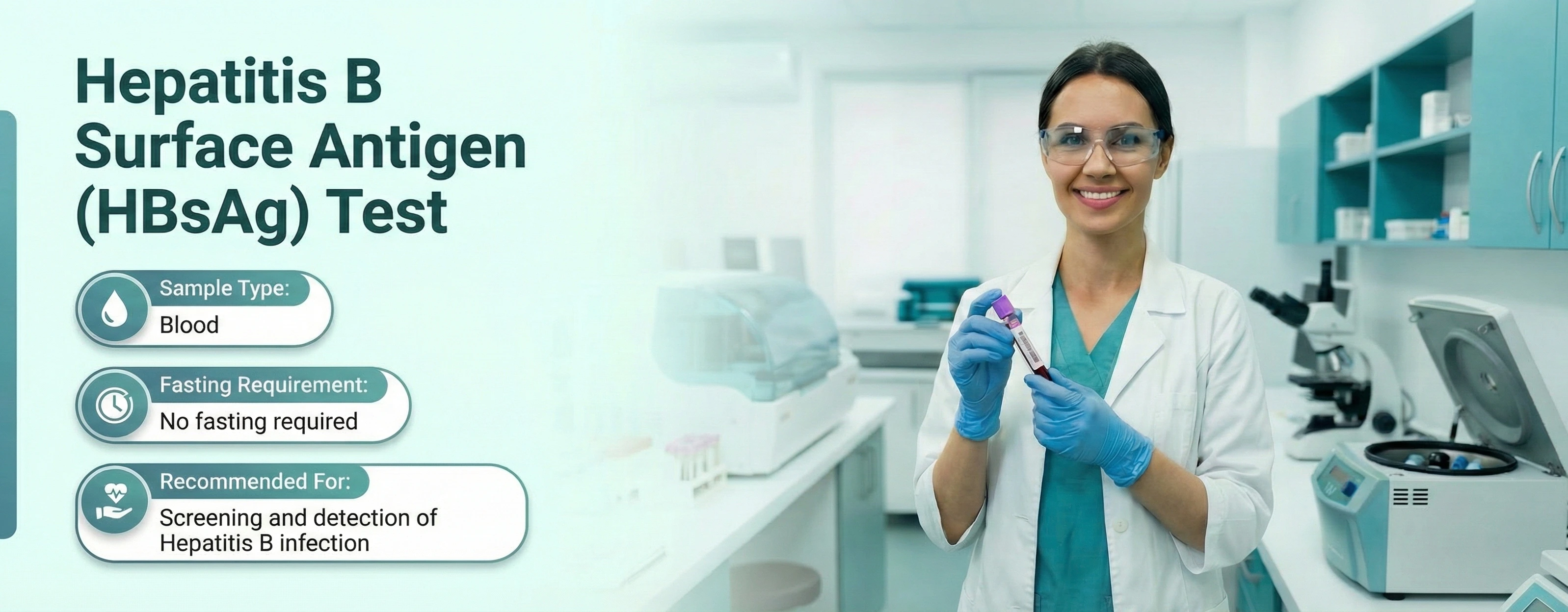
- SummaryThe Hepatitis B Surface Antigen (HBsAg) Test helps detect an active hepatitis B infection or past exposure to the virus. It’s often recommended if you show symptoms like fatigue, loss of appetite or jaundice, or if you’ve travelled to high-risk areas. This test uses a blood sample and does not require fasting, with no age or gender restrictions.Read more
- Reports Within9 HrsView Sample Report

 100% NABL & ISO Certified Labs
 - SampleBlood

- AgeAll Age Group
- GenderMale and Female
- FastingNot Required

PharmEasy Promises



Know More About The Test


A quick info on HBsAg test

Overview
The HBsAg test is a blood test that detects the hepatitis B surface antigen, the earliest and most direct evidence that the hepatitis B virus is currently present in your body. HBsAg typically appears in the blood 1 to 10 weeks after exposure to the virus, making it the cornerstone of hepatitis B diagnosis worldwide.
Hepatitis B virus spreads through contact with infected blood, through sexual contact, or from a mother to her baby during childbirth. For many people, the HBsAg test is the only reliable way to know whether the infection is present, as the virus can be completely asymptomatic for years. If left undetected and untreated, chronic hepatitis B can cause serious, life-threatening liver damage, including cirrhosis (liver scarring) and hepatocellular carcinoma (liver cancer).
The HBsAg test primarily assesses the current hepatitis B infection status and serves as a screening marker for HBV infection. It is used for initial screening, antenatal (pregnancy) screening, blood donor screening, pre-vaccination evaluation, and monitoring patients with known liver disease. No fasting is required, and the test is suitable for all ages and genders.

When and Who Should Get a HBsAg Test Done?
An HBsAg test is performed as a routine screening test or when symptoms suggest liver disease or hepatitis B exposure. Proactive screening is particularly important as the infection is often completely silent.
This test is usually recommended for:
- Pregnant women - the HBsAg test is a mandatory part of antenatal care in India. If positive, the newborn can receive the hepatitis B vaccine and immunoglobulin immediately at birth to prevent transmission.
- Healthcare workers and frontline medical staff - who are at risk of blood-borne exposure through needlestick injuries or contact with infected blood.
- Blood donors and organ transplant donors or recipients - mandatory screening before any donation or transplant procedure.
- Individuals with multiple sexual partners or a history of unprotected sexual contact.
- Family members or close household contacts of a known hepatitis B positive person.
- Intravenous drug users - sharing needles is a major route of HBV transmission.
- Before hepatitis B vaccination - to check whether the person is already infected, as a vaccine will not help someone already positive.
- Anyone with unexplained liver disease, elevated liver enzymes (SGPT/SGOT), or abnormal liver function tests.
.png?dim=48x48&q=75)
How Frequently Should You Take the HBsAg Test?
The HBsAg test is not a routine periodic test for everyone. The frequency of testing depends on your risk profile, exposure history, and whether you have a confirmed hepatitis B diagnosis.
|
Health Scenario |
Context |
Recommended Frequency |
|
Routine Preventive Screening |
Healthy adults with no known risk factors. |
Once, as part of an annual health check-up or pre-vaccination evaluation. |
|
Prenatal Screening |
All pregnant women - mandatory to prevent mother-to-child transmission. |
At the first antenatal visit. Repeat in the third trimester for high-risk pregnancies. |
|
High-Risk Individuals |
Healthcare workers, people with multiple sexual partners, and intravenous drug users. |
Every 6 to 12 months, periodic screening based on exposure risk and institutional policy, or annually if vaccinated and confirmed immune. |
|
Monitoring Chronic Hepatitis B |
Patients confirmed to be HBsAg positive and under medical management. |
Every 6 months - alongside HBV DNA viral load and liver function tests. |
|
After Potential Exposure |
After a needlestick injury, sexual exposure, or other known HBV contact. |
At 6 weeks, 3 months, and 6 months after exposure. |
|
Pre-Vaccination Evaluation |
Before starting the hepatitis B vaccine series. |
Once. If positive, vaccination is not needed, and treatment planning begins instead. |

What Conditions Can a HBsAg Test Help Detect?
The HBsAg test is designed primarily to screen for and diagnose hepatitis B infection. Its clinical value extends across a spectrum of liver conditions:
- Acute Hepatitis B - a new, active infection with the hepatitis B virus. HBsAg becomes positive 1 to 10 weeks after exposure. In most healthy adults, acute hepatitis B resolves on its own within 6 months.
- Chronic Hepatitis B - when HBsAg remains positive for more than 6 months after initial infection. Chronic hepatitis B is often asymptomatic for decades but can silently damage the liver.
- Hepatitis B Carrier State - some people carry and transmit the virus without ever feeling ill themselves. The HBsAg test identifies these carriers, enabling treatment and prevention of further spread.
- Liver Cirrhosis (Hepatitis B Related) - long-term chronic hepatitis B is one of the leading causes of liver cirrhosis in India. Early detection allows treatment before irreversible scarring occurs.
- Hepatocellular Carcinoma (HCC) - hepatitis B is the single most common cause of liver cancer globally. Persistent HBsAg positivity helps identify chronic hepatitis B carriers and allows early cancer surveillance through AFP testing and ultrasound.
- Congenital Hepatitis B (Mother-to-Child Transmission) - without screening and intervention, an HBsAg-positive mother has a 70 to 90% chance of transmitting the virus to her newborn. Antenatal screening and newborn prophylaxis are the most effective preventive measures.
Important Note: The HBsAg test does not confirm any of the above conditions on its own. Always share your results with a medical professional for a proper diagnosis.
.png?dim=48x48&q=75)
HBsAg Test Preparation
What to Expect Before the HBsAg Test
No fasting is required. You can eat, drink, and take your regular medications before the test. There are no special dietary restrictions or activity limitations. Inform your doctor about any recent hepatitis B vaccinations (which do not affect the HBsAg result but are useful clinical context), any known exposure to infected blood or body fluids and the date it occurred, current medications, and any history of liver disease or abnormal liver enzyme results.
What to Expect During the Blood Collection
A phlebotomist cleans the skin with an antiseptic, then places an elastic band around your upper arm to make the veins easier to access. A small needle is inserted into the vein; you may feel a brief pinch. Blood is collected into a labelled tube in under a minute.
What to Expect After the HBsAg Test
A small cotton swab and bandage are placed over the puncture site to stop any minor bleeding. You can return to your normal activities immediately. Minor bruising at the site is common and disappears within a day or two. If dizzy, sit and rest for a few minutes before leaving.
What are the Parameters Included in a HBsAg Test?
The standard HBsAg test measures a single key parameter:
- HBsAg (Hepatitis B Surface Antigen) - The primary result of the test. It detects the presence or absence of the surface antigen protein that sits on the outer envelope of the hepatitis B virus. The result is reported as Reactive (Positive) or Non-Reactive (Negative).
In some settings, a quantitative HBsAg test may also be ordered, particularly for monitoring treatment response in chronic hepatitis B. This measures the actual concentration of HBsAg in IU/mL (International Units per millilitre) and helps in treatment monitoring. The standard qualitative test (Reactive/Non-Reactive) is sufficient for initial screening and diagnosis.

Normal Range of HBsAg Test Parameters
The HBsAg test reports a qualitative result, not a numerical value. The table below shows the reference values and the meanings of each result in clinical practice.
|
Parameter |
Normal (Expected) Result |
Abnormal Result |
|---|---|---|
|
HBsAg (Blood / Serum) |
Non-Reactive (Negative) - No HBsAg detected in the sample. |
Reactive (Positive) - HBsAg detected. Indicate the presence of hepatitis B surface antigen consistent with current hepatitis B infection. Confirmatory evaluation and clinical correlation required. |
.png?dim=48x48&q=75)
HBsAg Test Result Interpretation
The HBsAg test result must always be interpreted in the context of your symptoms, exposure history, vaccination status, and the duration of the infection.
|
Result |
Interpretation |
What Your Doctor Will Do Next |
|---|---|---|
|
Non-Reactive (Negative) |
No HBsAg detected. Hepatitis B infection is unlikely at this time. |
If unvaccinated, discuss getting the hepatitis B vaccine series. If vaccinated, confirm immunity with an Anti-HBs antibody test. |
|
Non-Reactive - Tested in Window Period |
Possible false-negative if tested within 1 to 10 weeks of exposure, before HBsAg levels rise to detectable levels. |
Anti-HBc IgM testing is used if HBV infection is strongly suspected. HBV DNA testing in selected cases for early detection. Repeat the HBsAg test at 6 weeks, 3 months, and 6 months after suspected exposure. |
|
Reactive (Positive) - First Diagnosis |
HBsAg detected. It could be acute or early chronic hepatitis B infection. |
Order confirmatory tests: HBeAg, Anti-HBe, HBV DNA viral load, and LFT. Determine if the infection is acute or chronic. |
|
Reactive (Positive) - Persistent for over 6 Months |
HBsAg present for more than 6 months - confirms chronic hepatitis B. |
Regular 6-monthly monitoring of HBV DNA, LFT, AFP, and liver ultrasound. Antiviral treatment if HBV DNA is high. |
|
Reactive in Pregnancy |
Active hepatitis B in the mother. High risk of vertical transmission to the newborn. |
Give newborn hepatitis B immunoglobulin (HBIG) + first vaccine dose within 12 hours of birth to prevent transmission. |
Disclaimer: This table is for educational purposes only and provides a general overview.

HBsAg Test Risks and Limitations
Potential Risks and Complications
The HBsAg test is a very safe, routine blood test. Complications from the blood draw are extremely rare, and most people feel only a brief pinch. Seek medical advice if:
- The puncture site does not stop bleeding after applying gentle pressure
- You notice unusual pain, redness, swelling, or warmth at the needle site
- You feel persistently lightheaded after the blood draw - sit and rest for a few minutes.
Understanding HBsAg Test Limitations
The HBsAg test may be negative during the window period (1 to 10 weeks after exposure) before antigen levels rise to detectable levels - making repeat testing at 6 weeks, 3 months, and 6 months essential after known exposure. In rare cases of Occult Hepatitis B Infection (OBI), HBV can be present in liver cells without producing detectable HBsAg - a negative HBsAg does not completely rule out Hepatitis B in high-risk patients with unexplained liver disease, and HBV DNA testing may be needed. A positive HBsAg also does not indicate disease severity or viral activity - additional tests (HBV DNA, LFT, liver ultrasound) are essential. A negative HBsAg does not confirm immunity - a separate Anti-HBs antibody test is needed for that.

Related and Follow-up Tests
A positive HBsAg result is the beginning of the hepatitis B diagnostic pathway, not the end. Your doctor will order additional tests to determine the phase of infection, assess liver health, guide treatment decisions, and monitor for complications.
|
HBsAg Finding |
Suggested Follow-up Test |
Why It Is Ordered |
|---|---|---|
|
Reactive HBsAg |
Determines whether the virus is in an active replicating phase (HBeAg positive) or a less active phase (Anti-HBe positive). Guides treatment urgency. |
|
|
Reactive HBsAg |
Measures the exact amount of hepatitis B virus in the blood. Essential for deciding whether antiviral treatment is needed and for monitoring treatment response. |
|
|
Reactive HBsAg |
Assesses whether the liver is already showing signs of damage - elevated SGPT, SGOT, and bilirubin are common in active hepatitis. |
|
|
Reactive HBsAg |
Liver Ultrasound (USG Abdomen) |
Checks the structural health of the liver - detects cirrhosis, fatty liver, bile duct problems, or early liver tumours. |
|
Reactive HBsAg - Chronic Carrier |
A tumour marker used to screen for hepatocellular carcinoma (liver cancer), a known long-term complication of chronic hepatitis B. |
|
|
Reactive HBsAg |
Helps distinguish between acute and chronic infection. IgM Anti-HBc indicates recent acute infection; IgG Anti-HBc indicates past or chronic infection. |
|
|
Non-Reactive - Vaccinated |
Confirms whether a vaccinated person has developed sufficient immunity after completing the hepatitis B vaccine series. |
Note: The hepatitis B treatment landscape has evolved significantly. Effective antiviral medications, such as tenofovir and entecavir, can suppress HBV replication and prevent liver damage in chronic carriers. Early detection through HBsAg testing is key to accessing these life-saving treatments. Always consult a hepatologist or gastroenterologist for management.

HBsAg Test Sample Collection: Home vs. Diagnostic Lab
|
Feature |
Home Collection (PharmEasy) |
Traditional Diagnostic Lab |
|---|---|---|
|
Convenience |
High - sample taken from your home or office, privately and discreetly. |
Low - requires travelling to the lab and waiting in queues. |
|
Privacy |
Maximum - fully discreet home collection is ideal for sensitive tests like HBsAg. |
Less private - you may encounter familiar faces in a clinic setting. |
|
Safety & Comfort |
Safe - avoids exposure to other patients in crowded waiting areas. |
Moderate - shared spaces with potentially infectious patients. |
|
Process |
A certified phlebotomist visits you with a sterile, sealed, single-use collection kit. |
You must visit the facility during its working hours. |
|
Report Access |
Digital - report sent directly to your app or email within 11 hours. |
May require a second visit to collect physical copies of your report. |
Pro Tip: For a sensitive and important test like HBsAg, home collection offers complete privacy and peace of mind. Book on PharmEasy - no fasting required, a certified phlebotomist at your doorstep, and a digital report delivered directly to you the same day.

HBsAg Test Price/Cost
An HBsAg test is usually priced around INR 529. The cost may vary depending on the city and the laboratory you choose. To get a better idea of pricing, you can compare HBsAg test costs across major cities in India.
|
City |
Offer Price |
|---|---|
|
529 |
|
|
529 |
|
|
529 |
|
|
529 |
|
|
529 |
|
|
529 |
|
|
529 |
|
|
529 |
|
|
529 |
|
|
529 |
Was This Test Information Helpful?
Please rate your experience
 Yes Helpful (7)
 Not Helpful
References
People Also Ask
What does a positive (Reactive) HBsAg mean?
Can hepatitis B be completely cured?
Is hepatitis B transmitted through food, water, or casual contact?
Is HBsAg testing mandatory during pregnancy?
I am HBsAg negative. Should I still get vaccinated?
Can a person be HBsAg positive but feel completely healthy?
If my HBsAg is positive, does it mean I have liver cancer?
Popular Tests
 Explore the most booked tests in your location
 4.6 Stars| 7+ Lakhs Ratings & Reviews

Over 10 million happy users PharmEasy Labs
- Because the digital report is available on WhatsApp, there's no need to go back to the lab. Thanks, PharmEasy!
 Sachin sharma11 Jan ‘26
 - Thanks to the coupon discount, the blood test was done at a lower price.Komal04 Jan ‘26
- The lab technician was a good and knowledgeable professional.Rakesh Pandey06 Jan ‘26
- Due to bad weather, it's difficult to reach the lab. But home collection makes things easier.Arjun08 Jan ‘26
- Thanks to the Swasth AI feature, the report is easy to understand.Priya Mehta02 Jan ‘26
- The report is available on the same day. Wow!Vikas Patel05 Jan ‘26
Have any doubts? Ask us.
Ask us anything about the Hepatitis B Surface Antigen (HBsAg) Test to understand it better

We provide trusted, expert-curated health content to support better awareness,prevention, and care.
Backed by experienced doctors, medical experts, and strict editorial standards.