

1178+ orders placed in your location

100% NABL & ISO Certified Lab • 100% Accurate Reports
Cortisol Test
Serum Cortisol, Urinary Cortisol, Salivary Cortisol, Hydrocortisone, Blood cortisol, Plasma cortisol, Free cortisol
- SummaryThe Cortisol (8 AM) test measures the level of cortisol, a hormone produced by the adrenal glands, at its peak time in the morning. It may be advised to people with chronic stress, unexplained weight gain, unexplained mood changes, weakness etc. The test is done using a blood sample, usually collected around 8 AM when cortisol levels are naturally highest. Fasting is generally recommended for accurate results.Read more
- Reports Within8 HrsView Sample Report

 100% NABL & ISO Certified Labs
 - SampleBlood

- AgeAll Age Group
- GenderMale and Female
- FastingNot Required

PharmEasy Promises



Know More About The Test


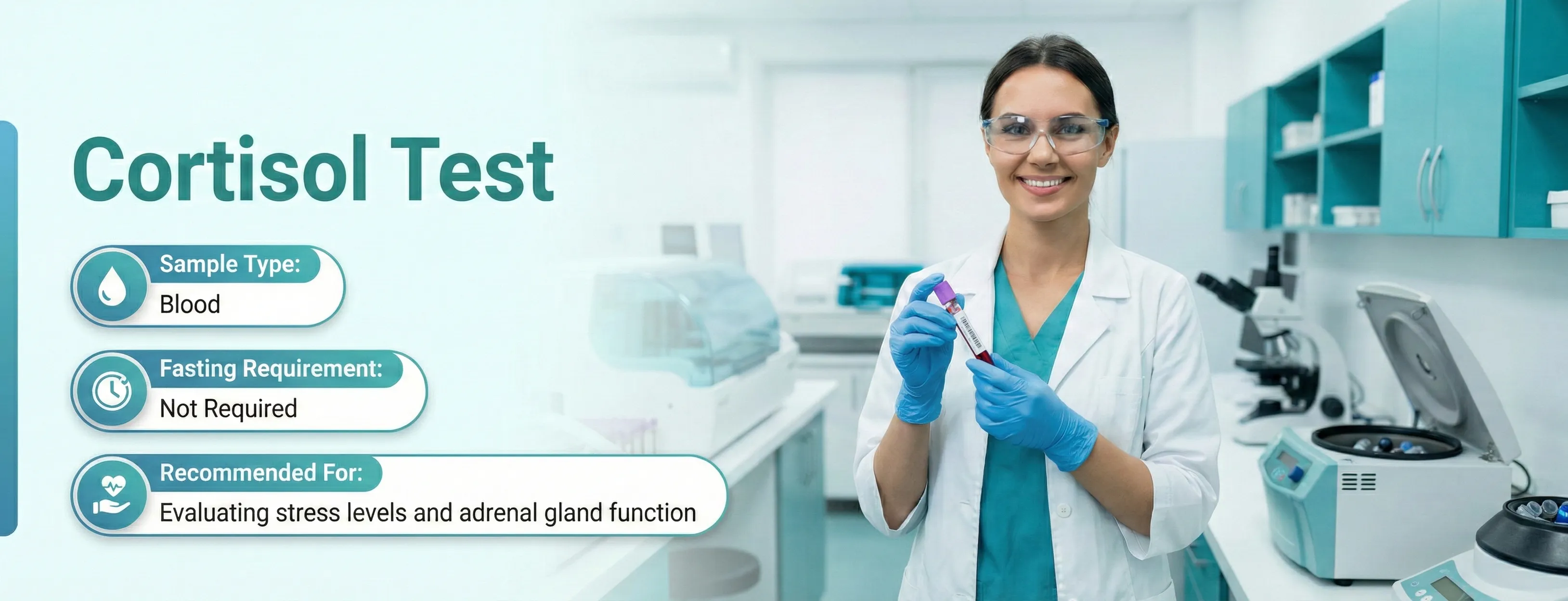
A quick info on Cortisol Test

Overview
A cortisol test, also known as the cortisol hormone test or serum cortisol test, measures cortisol levels in the blood during the early morning hours, when cortisol levels are naturally highest. Cortisol is often called the “stress hormone” because it primarily helps the body respond to physical and emotional stress. Cortisol is essential for regulating metabolism, maintaining blood pressure, controlling inflammation, supporting immune function, and helping the body maintain stable blood sugar levels.
The primary purpose of the cortisol blood test is to help doctors assess adrenal and pituitary gland function. The test may be used to investigate conditions associated with excessively low cortisol levels, such as adrenal insufficiency or Addison's disease, as well as disorders associated with excessive cortisol production, such as Cushing’s syndrome.

When and Who Should Get a Cortisol Test Done?
A doctor may recommend an 8 AM cortisol blood test if a person shows symptoms suggestive of abnormal cortisol production.
Symptoms of low cortisol levels include:
- Persistent fatigue or unusual tiredness
- Muscle weakness
- Dizziness or fainting, especially while standing
- Unexplained weight loss
- Loss of appetite
- Nausea, vomiting, or abdominal pain
- Salt cravings
- Low blood pressure
- Darkening of the skin (hyperpigmentation)
- Recurrent low blood sugar episodes
Symptoms of high cortisol levels include:
- Rapid or unexplained weight gain, especially around the abdomen and face
- Rounded “moon” face appearance
- Excess facial hair growth in women
- Fat accumulation between the shoulders (“buffalo hump”)
- Purple stretch marks on the abdomen or thighs
- Thin skin that bruises easily
- Acne or oily skin
- High blood sugar or diabetes
- Mood changes, anxiety, depression, or irritability
- Muscle weakness
- Irregular menstrual cycles
- Reduced libido
The cortisol test may also be recommended for individuals with:
- Pituitary tumours
- Adrenal gland tumours
- Addison’s disease
- Cushing’s syndrome
- A history of pituitary surgery
- A history of adrenal surgery
- Long-term corticosteroid medicine use
- A history of radiation therapy involving the brain or adrenal glands
.png?dim=48x48&q=75)
How Frequently Should You Take the Cortisol Test?
Cortisol testing is usually recommended in individuals with symptoms suggestive of abnormal cortisol levels, as follows:
|
Health scenario |
Context |
Recommended frequency |
|---|---|---|
|
Symptoms of conditions such as Addison’s or Cushing’s syndrome |
To identify the condition |
Once during the initial evaluation; further testing as advised by an endocrinologist |
|
Long-term steroid medication use |
To check whether long-term steroid use has affected the body’s natural cortisol production |
As recommended by an endocrinologist |
|
Borderline or unclear cortisol test results |
To confirm abnormal cortisol findings and rule out temporary fluctuations |
Repeat testing only as advised by the endocrinologist |

What Conditions Can a Cortisol Test Help Detect?
A cortisol test helps doctors identify conditions linked to abnormal cortisol production and adrenal gland function. These include:
- Adrenal insufficiency: This condition occurs when the body does not produce enough cortisol. It may develop due to problems affecting the adrenal glands or pituitary gland.
- Addison’s disease: Addison’s disease happens when the adrenal glands cannot produce enough cortisol. Symptoms may include fatigue, dizziness, weight loss, and salt cravings.
- Cushing syndrome: Cushing syndrome develops when cortisol levels remain too high for a long period. People may experience weight gain, muscle weakness, facial puffiness, and high blood pressure.
- Pituitary gland disorders: The pituitary gland produces ACTH, a hormone that controls cortisol release. Pituitary disorders can interfere with normal cortisol production and hormone balance.
- Stress-related hormonal dysfunction: Severe illness, surgery, infection, trauma, or physical stress may temporarily affect cortisol levels. Testing may help evaluate the body’s stress response during critical illness.
.png?dim=48x48&q=75)
Cortisol Test Preparation
What to Expect Before the Cortisol Test
No fasting is required for a standalone Cortisol test. You can eat and drink normally. However, if it is part of a broader package that includes fasting tests, your doctor may advise fasting for 8-12 hours. Avoid strenuous exercise for 24 hours before the test, as intense physical activity can temporarily raise Cortisol levels and affect interpretation. Always inform your doctor about any ongoing medications.
What to Expect During the Blood Collection
A phlebotomist cleans the skin with an antiseptic, then places an elastic band around your upper arm to make the veins easier to access. A small needle is inserted into the vein; you may feel a brief pinch. Blood is collected into a labelled tube in under a minute.
What to Expect After the Cortisol Test
A small cotton swab and bandage are placed over the site to stop any minor bleeding. You can return to normal activities immediately. Minor bruising is normal and disappears quickly. If dizzy, sit and rest for a few minutes

What are the Parameters Included in a Cortisol Test?
The main parameter measured in a cortisol test is the cortisol level in the blood.

Normal Range of Cortisol Test Parameters
The normal cortisol range is shown in the table below.
|
Test parameter |
Normal range (µg/dL) |
|---|---|
|
Serum cortisol (08:00 AM) |
5–23 |
Note: The normal range may vary slightly depending on the laboratory, testing method, and the individual’s health.
.png?dim=48x48&q=75)
Cortisol Test Result Interpretation
Note: Cortisol levels can also be temporarily affected by several non-disease factors, including:
- Emotional stress
- Pregnancy
- Intense physical activity
- Certain medications, such as steroid medicines or birth control pills.

Cortisol Test Risks and Limitations
The cortisol blood test is generally considered safe. Most people experience no significant complications during sample collection. Some individuals may experience minor side effects, such as mild pain, slight bruising, or swelling; however, these typically resolve on their own.
Limitations of the Cortisol Test
The cortisol morning test has some limitations as:
- Cortisol levels naturally fluctuate throughout the day: They are typically highest in the early morning and lower at night. Incorrect sample collection timing may affect test results.
- Stress can temporarily affect cortisol levels: Emotional stress, illness, surgery, infections, lack of sleep, or intense physical activity may temporarily increase cortisol levels.
- Certain medications can influence results: Steroid medicines, birth control pills, hormone therapy, and some anti-seizure medications may alter cortisol levels. Therefore, it is important to inform your physician about any ongoing medications.
- The cortisol test alone cannot diagnose a condition: Abnormal results usually require additional investigations to reach a diagnosis.
- Pregnancy may increase cortisol levels: Hormonal changes during pregnancy can naturally raise cortisol concentrations.

Related and Follow-up Tests
Since a single cortisol result may not always confirm the cause, doctors may recommend additional tests for further evaluation, which include:
- ACTH test
- ACTH stimulation test
- 24-hour urinary cortisol test
- Late-night salivary cortisol test
- Dexamethasone suppression test
- CT or MRI scan

Cortisol Test Sample Collection: Home vs. Diagnostic Lab
|
Feature |
Home Collection (PharmEasy) |
Traditional Diagnostic Lab |
|---|---|---|
|
Convenience |
High - sample taken from your home or office. |
Low - requires travelling and waiting in queues. |
|
Time Saving |
Maximum - no travel time. You pick the time slot. |
Minimum - depends on traffic and lab rush. |
|
Safety & Comfort |
Safe - avoids exposure to other sick patients. |
Moderate - exposure to crowded waiting areas. |
|
Process |
A professional phlebotomist visits you. |
You must visit the facility during its hours. |
|
Report Access |
Digital - sent directly to your app or email. |
Often requires a second visit for physical copies. |
Pro Tip: For the most stress-free experience, book a Cortisol test on PharmEasy. Enjoy professional service and accurate results without stepping out of your house.
Was This Test Information Helpful?
Please rate your experience
 Yes Helpful (6)
 Not Helpful
References
People Also Ask
What is a normal cortisol level for a woman?
How should I prepare for the cortisol test?
Is cortisol good or bad?
How can I reduce my cortisol levels quickly?
Are there any other conditions that might lead to an increase in cortisol levels?
 4.6 Stars| 7+ Lakhs Ratings & Reviews

Over 10 million happy users PharmEasy Labs
- Because the digital report is available on WhatsApp, there's no need to go back to the lab. Thanks, PharmEasy!
 Sachin sharma11 Jan ‘26
 - Thanks to the coupon discount, the blood test was done at a lower price.Komal04 Jan ‘26
- The lab technician was a good and knowledgeable professional.Rakesh Pandey06 Jan ‘26
- Due to bad weather, it's difficult to reach the lab. But home collection makes things easier.Arjun08 Jan ‘26
- Thanks to the Swasth AI feature, the report is easy to understand.Priya Mehta02 Jan ‘26
- The report is available on the same day. Wow!Vikas Patel05 Jan ‘26
Have any doubts? Ask us.
Ask us anything about the Cortisol Test to understand it better

We provide trusted, expert-curated health content to support better awareness,prevention, and care.
Backed by experienced doctors, medical experts, and strict editorial standards.