

15+ orders placed in your location

100% NABL & ISO Certified Lab • 100% Accurate Reports
Carbamazepine Test
Total Carbamezepine, Carbatrol, Epitol, Equetro, Tegretol, Tegretol-XR
- SummaryThe Carbamazepine test measures the level of carbamazepine, a medication used to treat seizures, bipolar disorder, and nerve pain, to ensure it remains within the therapeutic range. Monitoring is important to avoid toxicity or underdosing. The test is done as advised by a doctor using a blood sample, and fasting is not required.Read more
- Reports Within10 HrsView Sample Report

 100% NABL & ISO Certified Labs
 - SampleBlood

- AgeAll Age Group
- GenderMale and Female
- FastingNot Required

PharmEasy Promises



Know More About The Test


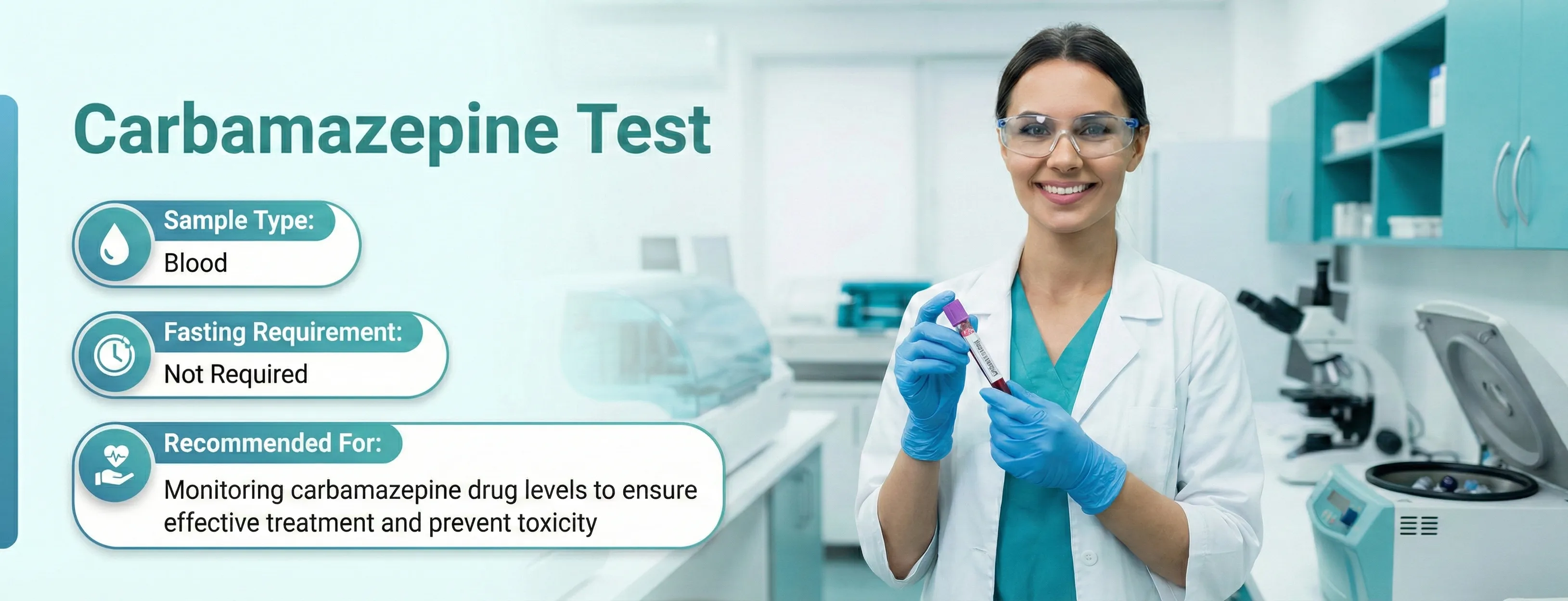
A quick info on Carbamazepine Test

Overview
The carbamazepine test is a blood test that measures the level of carbamazepine, a medicine used to treat epilepsy (certain seizure disorders), bipolar disorder, trigeminal neuralgia, and some types of nerve pain, in the bloodstream. It may also be used in selected patients during alcohol withdrawal and to stabilise mood, particularly mania, in bipolar disorder. This is a form of therapeutic drug monitoring (TDM): rather than detecting a disease, it checks that the medicine is staying within a safe and effective range.
Carbamazepine has what doctors call a narrow therapeutic range, meaning the gap between too little and too much is small. If the level is too low, the medicine may not work, and symptoms, such as seizures, mania, or pain, can return. If the level is too high, it can cause harmful side effects and toxicity. Because of this, carbamazepine levels need careful, regular monitoring.
Keeping the dose in the right range can be challenging for several reasons. Carbamazepine is absorbed at varying rates from the gut, and conditions that change how it binds to blood proteins, such as low blood albumin, kidney failure, or being a newborn or elderly, can affect how much active drug is available. Many other medicines can also interact with it and change its levels. Epilepsy is a long-term condition affecting around 10 million people in India, and bipolar disorder is also common, so reliable monitoring of carbamazepine is an important part of safe treatment.

When and Who Should Get a Carbamazepine Test Done?
Your doctor may recommend a carbamazepine test at the start of treatment, when adjusting the dose, or if there are concerns about effectiveness or side effects.
Common Reasons the Test Is Recommended
- To establish and confirm that the drug level is within the therapeutic range when starting treatment.
- When the dose is changed, or when other medicines are started or stopped.
- When symptoms return, such as seizures, nerve pain, or bipolar mood swings, suggesting the level may be too low or doses are being missed.
- When toxicity or side effects are suspected.
Signs of Possible Carbamazepine Toxicity
These can occur at any dose but are more likely at higher levels, and may prompt testing:
- Dizziness, drowsiness, and uncoordinated movement.
- Blurred or double vision, or involuntary eye movements.
- Nausea, diarrhoea, or constipation.
- Headache, confusion, or a red, itchy rash.
The test applies to males and females, both adults and children, who are taking carbamazepine.
.png?dim=48x48&q=75)
How Frequently Should You Take the Carbamazepine Test?
The test is usually done often at first, to make sure the blood level reaches and stays within the therapeutic range. Once stable, it is repeated from time to time as your doctor advises.
|
Health scenario |
Recommended frequency |
|---|---|
|
Starting treatment/dose changes |
More frequently, until a stable therapeutic level is reached. |
|
Stable on treatment |
As advised by your doctor. |
|
Suspected toxicity or returning symptoms |
Promptly, to check the current level. |

What Conditions Can a Carbamazepine Test Help Detect?
Monitoring helps your doctor keep the medicine working safely. The level guides decisions in several conditions treated with carbamazepine:
|
Condition treated |
Why the level matters |
|---|---|
|
Epilepsy (seizures) |
Too low a level risks breakthrough seizures; too high a level risks toxicity. |
|
Bipolar disorder |
Helps control mania and stabilise mood at the right dose. |
|
Trigeminal neuralgia |
Ensures effective nerve-pain relief without overdosing. |
|
Diabetic nerve pain |
Balances pain control against side effects. |
|
Alcohol withdrawal |
Supports safe symptom control during withdrawal. |
.png?dim=48x48&q=75)
Carbamazepine Test Preparation
Preparation centres on the timing of your sample relative to your dose, which matters more than fasting for an accurate drug level.
What to Expect Before the Test?
- Timing is key: the sample is usually taken as a trough level - just before your next dose - to reflect the lowest level in the dosing cycle. Follow your doctor's instructions on exactly when to test.
- Fasting guidance can differ: Follow the instructions provided by your doctor or lab, as the timing of sample collection in relation to your dose is more important than fasting.
- Tell your doctor about all your medicines, as many interact with carbamazepine and affect its level.
- Do not change or skip your dose before the test unless your doctor tells you to.
What to Expect During the Blood Collection?
A phlebotomist cleans the skin with an antiseptic, then places an elastic band around your upper arm to make the veins easier to access. A small needle is inserted into the vein; you may feel a brief pinch. Blood is collected into a labelled tube in under a minute.
What to Expect After the Test?
A small cotton swab and bandage are placed over the site to stop any minor bleeding. There may be slight soreness at the needle site or mild light-headedness. If you feel dizzy, sit and rest for a few minutes.

What are the Parameters Included in a Carbamazepine Test?
The carbamazepine test measures the concentration of carbamazepine in your blood, reported in mcg/mL. A standard test measures total carbamazepine (both protein-bound and free forms); some laboratories can also report the free and percentage-free fractions.
- Total carbamazepine: the overall drug level, including protein-bound and free drug; the main value used for monitoring.
- Free carbamazepine: the active, unbound portion, sometimes measured when protein binding may be altered.
- Percent free carbamazepine: the proportion of free drug, which can help in dose optimisation in certain situations.
An elevated total level can indicate toxicity, while a low level suggests the dose may be insufficient.

Normal Range of Carbamazepine Test Parameters
The table below shows the typical therapeutic and toxic levels for carbamazepine. The aim of treatment is to stay within the therapeutic range.
|
Level |
Value |
Interpretation |
|---|---|---|
|
Therapeutic range |
4.0 - 12.0 mcg/mL |
The target range for safe, effective treatment. |
|
Toxic level |
12 mcg/mL or above |
Should be reviewed promptly by the treating doctor in conjunction with clinical conditions and symptoms. |
Important note: Reference and therapeutic ranges vary by laboratory and method, and depend on the individual and the condition being treated. Always refer to the range printed on your own report and consult your doctor.
.png?dim=48x48&q=75)
Carbamazepine Test Result Interpretation
Your result is interpreted together with how you feel and any side effects, not in isolation.
|
Result |
Possible interpretation |
|---|---|
|
Within 4.0 - 12.0 mcg/mL |
A therapeutic level; the dose is generally in the effective, safe range. |
|
Below the range |
The level may be too low. Risking returning symptoms such as seizures, pain, or mood swings, or doses may be missed. |
|
Above the range/12mcg/mL+ |
A high level that raises the risk of toxicity and side effects; needs prompt medical review. |
Disclaimer: This information is for educational purposes and provides a risk assessment only. It does not confirm a diagnosis. Always consult your doctor before making any changes to your medication.

Carbamazepine Test Risks and Limitations
The carbamazepine test is a routine blood draw that is generally very safe, with minor procedural risks and some limitations.
Potential Risks and Complications
Most people feel only a brief pinch. Consult your doctor if you notice:
- Persistent bleeding at the puncture site that does not stop with gentle pressure.
- Redness, swelling, or pain at the needle insertion site.
- Light-headedness that continues after the blood draw, sit and rest before leaving.
Understanding Carbamazepine Test Limitations
- The timing of the sample relative to the dose strongly affects the result, so trough timing matters.
- Many medicines interact with carbamazepine and can alter its level.
- Altered protein binding (low albumin, kidney failure, newborns, the elderly) can affect the active drug level.
- Therapeutic ranges and methods differ between labs, so results may not be directly comparable.

Related and Follow-up Tests
Carbamazepine monitoring is often accompanied by other tests, since the medicine can affect several body systems.
|
Your situation |
Suggested follow-up test |
Why is it ordered |
|---|---|---|
|
Long-term carbamazepine use |
Carbamazepine can affect blood cell counts; CBC monitors for this. |
|
|
Long-term use |
The medicine is processed by the liver, which is monitored. |
|
|
Altered protein binding |
Helps interpret the active (free) drug level. |
|
|
Low sodium symptoms |
Carbamazepine can lower sodium levels. |
|
|
Before starting (at-risk groups) |
HLA-B*15:02 genetic testing |
Identifies a higher risk of serious skin reactions in some individuals. |

Carbamazepine Test Sample Collection: Home vs. Diagnostic Lab
|
Feature |
Home collection (PharmEasy) |
Traditional diagnostic lab |
|---|---|---|
|
Convenience |
High - sample is taken from your home or office. |
Low - requires travelling and waiting in queues. |
|
Time saving |
Maximum - no travel time. You pick the time slot. |
Minimum - depends on traffic and lab rush. |
|
Safety and comfort |
Safe - avoids exposure to other sick patients. |
Moderate - exposure to crowded waiting areas. |
|
Process |
A professional phlebotomist visits you. |
You must visit the facility during its hours. |
|
Report access |
Digital - sent directly to your app or email. |
Often requires a second visit for physical copies. |
Pro tip: Book your carbamazepine test on PharmEasy for safe, at-home sample collection and a quick digital report, which is convenient for the routine monitoring that long-term treatment needs. Remember to time the sample as your doctor advises.
Was This Test Information Helpful?
Please rate your experience
 Yes Helpful
  Not Helpful
References
People Also Ask
What is the carbamazepine test used for?
What is the therapeutic range for carbamazepine?
When should the blood sample be taken?
Do I need to fast before the test?
What are the signs of carbamazepine toxicity?
Can I adjust my dose based on the result?
 4.6 Stars| 7+ Lakhs Ratings & Reviews

Over 10 million happy users PharmEasy Labs
- Because the digital report is available on WhatsApp, there's no need to go back to the lab. Thanks, PharmEasy!
 Sachin sharma11 Jan ‘26
 - Thanks to the coupon discount, the blood test was done at a lower price.Komal04 Jan ‘26
- The lab technician was a good and knowledgeable professional.Rakesh Pandey06 Jan ‘26
- Due to bad weather, it's difficult to reach the lab. But home collection makes things easier.Arjun08 Jan ‘26
- Thanks to the Swasth AI feature, the report is easy to understand.Priya Mehta02 Jan ‘26
- The report is available on the same day. Wow!Vikas Patel05 Jan ‘26
Have any doubts? Ask us.
Ask us anything about the Carbamazepine Test to understand it better

We provide trusted, expert-curated health content to support better awareness,prevention, and care.
Backed by experienced doctors, medical experts, and strict editorial standards.