

58+ orders placed in your location

100% NABL & ISO Certified Lab • 100% Accurate Reports
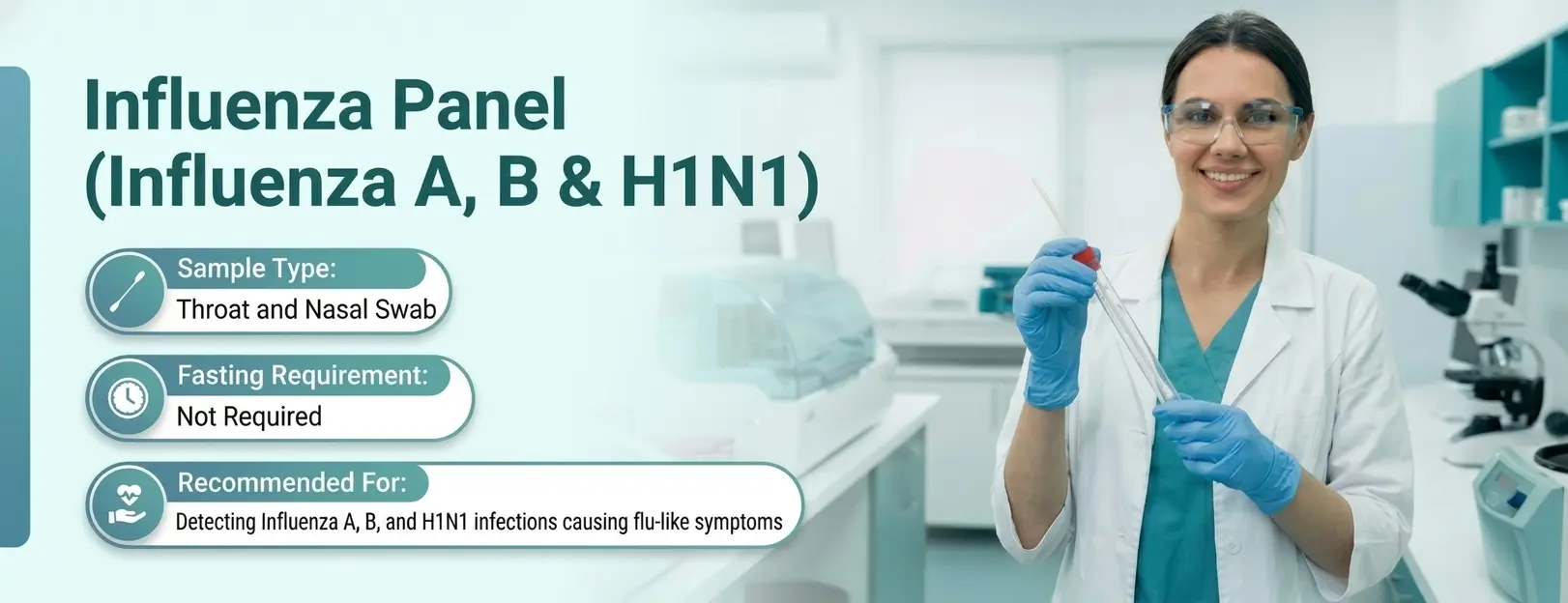
Influenza Panel (Influenza A, B & H1N1)
- TestsIncludes 3 tests
- Reports Within40 HrsView Sample Report

 100% NABL & ISO Certified Labs
 - SampleThroat and Nasal Swab
- FastingNot Required

PharmEasy Promises



Know More About The Test


A quick info on Influenza Panel (Influenza A, B & H1N1)

Overview
An Influenza Panel, also known as a viral-flu panel, is a precise laboratory test that helps in detecting active infection (influenza). It checks for influenza viruses such as influenza A, influenza B, and the H1N1 virus.
This panel is commonly prescribed when you have flu-like symptoms such as fever, cough, sore throat, body aches, or fatigue, especially during flu season or outbreaks. It confirms whether the symptoms are caused by influenza, identifies the specific type of virus, and guides treatment.

When and Who Should Take the Influenza Panel Test?
You may need an influenza test if you have flu-like symptoms or recent exposure to confirmed cases.
Common symptoms to watch out for:
- Fever or chills
- Cough
- Sore throat
- Runny or blocked nose
- Body ache
- Difficulty breathing or shortness of breath
People who should consider taking this test include:
- People experiencing flu-like symptoms
- High-risk individuals (children <5 years and adults >65 years)
- People with severe symptoms like breathing difficulty
- Pregnant women
- People with chronic conditions (such as lung disease, heart disease, diabetes, or immunosuppression (lowered immunity)
- Close contact with persons confirmed to have influenza
.png?dim=48x48&q=75)
How Frequently Should You Take the Influenza Panel Test?
This is a diagnostic test and not a routine test. It is done only when someone has symptoms, and the doctor suspects an influenza infection.
The following table shows when and how frequently you should take this test:
Health Situation | When to Take the Test | Recommended Frequency |
Flu-like symptoms | As soon as symptoms begin* | As advised by your doctor |
High-risk patients | Upon Suspicion of infection | As required based on your symptoms |
*It is ideal to take the test soon after symptoms develop. This is because antiviral medications work best when started within 48 hours of infection.1 Testing helps confirm the diagnosis, guide infection control, and rule out other causes.
Note: Always consult your doctor before testing. Seek immediate care if symptoms worsen or persist.

What Conditions can an Influenza Panel Test Help Detect?
An Influenza Panel, which includes tests for influenza A and B and H1N1, helps determine if flu-like symptoms are due to the presence of influenza viruses in the body. It detects:
- Influenza A Infection:
- A seasonal flu infection that spreads easily.
- May lead to severe flu cases with intense symptoms
- Influenza B Infection:
- A seasonal flu infection that spreads easily (typically milder than influenza A)
- Usually has more local outbreaks (especially among children and young adults)
- H1N1 infection (also known asswine flu infection):
- It is a subtype of influenza A (swine-origin) that can produce severe respiratory symptoms, including viral pneumonia
- Warrants immediate medical care, especially for high-risk individuals (pregnant women, infants, and people with chronic pulmonary disease) or those with severe symptoms
.png?dim=48x48&q=75)
Influenza Panel Test Preparation
What to expect before the Influenza Panel test
- No special preparation is needed for this test.
- You may be asked to rinse your mouth with water before taking a sample.
- It is good to stay well hydrated before the test.
What to expect during the sample collection
- A soft swab is gently inserted inside your nose or throat.
- The sample is taken by rotating the swab for a few seconds.
- You may feel slight discomfort, gagging, or a tickling sensation, but it is temporary.
What to expect after the test
- You can resume your routine activities immediately.
- The sample will be sent to the laboratory for processing.
- Results will show whether influenza viruses are present or absent.

What are the Parameters Included in the Influenza Panel Test?
Influenza Panel checks for the following parameters:
- Influenza A Detection: Helps identify the presence of influenza A viruses, which have several subtypes, and are commonly linked to seasonal flu outbreaks with more widespread infections.
- Influenza B Detection: Helps identify the presence of the influenza B virus, which is often divided into two main groups, B/Yamagata and B/Victoria (seasonal flu).
- H1N1 Detection: Helps identify the specific influenza A strain, H1N1, which can cause severe respiratory illness.

Normal Range of Influenza Panel Test Parameters
The influenza tests (influenza A, B, and H1N1 tests) are interpreted as positive or negative (qualitative), rather than in numbers (quantitative). The table below helps you understand the influenza diagnostic test results and what they could mean:
|
Parameter |
Normal Range |
Clinical Insight |
|---|---|---|
|
Influenza A |
Negative |
Positive: Active influenza A infection |
|
Influenza B |
Negative |
Positive: Active influenza B infection |
|
H1N1 |
Negative |
Positive: Active H1N1 infection |
Note: The test results may vary based on several factors, such as:
- Laboratory Method Used: Different testing techniques may have varying detection capabilities and accuracy.
- Sample Quality: Improper or delayed sample collection can affect results.
- Stage of Infection: Too early or late testing may lead to false negative results if the virus is not present in sufficient quantity.
.png?dim=48x48&q=75)
Influenza Panel Test Result Interpretation
The results in the reports can be interpreted as follows:
- Positive Influenza A: Indicates an active infection caused by the influenza A virus
- Positive Influenza B: Indicates a seasonal infection caused by the influenza B virus
- Positive H1N1: Indicates swine flu infection caused by the H1N1 strain, which comes under influenza A type
- Multiple Positives: May indicate a co-infection, which is a rare case, and might need medical review
- All Negative Results: Indicates no detectable influenza virus at the time of testing. A negative test doesn't completely rule out influenza if tested very early (<24hours), very late (>5-7 days), or if the sample quality is suboptimal.
- All Negative Results with Symptoms: Indicates absence of influenza virus at the time of testing, but if symptoms are present, they can be due to a different virus or bacteria, or the result can be a false negative. Repeat testing or further evaluation may be needed in such cases.
Note: These interpretations are general guidelines and may not be applicable to all cases. Results are always to be considered along with symptoms and medical history. Always consult a doctor for accurate interpretation and appropriate care.

Influenza Panel Test Risk and Limitations
Potential Risks and Complications:
The Influenza Panel is generally safe; however, you may experience minor discomfort like slight irritation in the nose or throat, tickling, or a gagging sensation during swab collection.
Influenza Panel Test Limitations:
False negatives, meaning a negative result when the virus is present, may occur if the virus is present in low amounts. Results may also vary based on the timing of the test (too early or too late) and the use of different laboratory techniques. Improper sample collection or contaminated samples may also show indeterminate results.

Related and Follow-up Tests
If you have flu-like symptoms, sometimes additional tests may be required to confirm the diagnosis and to rule out other infections with similar symptoms.
Related Tests:
- Covid 19 Test: Helps detect coronavirus infection, which causes symptoms like the flu.
- RSV Test (Respiratory Syncytial Virus): Detects another respiratory virus that affects the lungs, especially in children.
Combination tests may be used to detect acute respiratory viral infections, especially during times when these are widespread.
Follow-up Tests:
Repeat testing may be advised if symptoms persist despite an initial negative result. In some cases, testing for H5 bird flu may be done, but only if there has been exposure to infected animals or birds.
Influenza Panel Test Sample Collection: Home vs. Diagnostic Lab
|
Feature |
Home Collection (PharmEasy) |
Traditional Diagnostic Lab |
|---|---|---|
|
Convenience |
High - sample taken from your home or office. |
Low - requires traveling and waiting in queues. |
|
Time Saving |
Maximum - no travel time. You pick the time slot. |
Minimum - depends on traffic and lab rush. |
|
Safety & Comfort |
Safe - avoids exposure to other sick patients. |
Moderate - exposure to crowded waiting areas. |
|
Process |
A professional phlebotomist visits you. |
You must visit the facility during their hours. |
|
Report Access |
Digital - sent directly to your app or email. |
Often requires a second visit for physical copies. |
Pro Tip: For the most stress-free experience, book your test on PharmEasy. Enjoy professional service and accurate results without stepping out of your house.
Was This Test Information Helpful?
Please rate your experience
 Yes Helpful (1)
 Not Helpful
References
People Also Ask
Are influenza A and B the same as H1N1?
Is influenza a serious illness?
How does the influenza virus spread?
Do people with influenza need isolation?
How long does influenza usually last?
Can you recover from influenza quickly?
When should I see a doctor for flu symptoms?
 4.6 Stars| 7+ Lakhs Ratings & Reviews

Over 10 million happy users PharmEasy Labs
- Because the digital report is available on WhatsApp, there's no need to go back to the lab. Thanks, PharmEasy!
 Sachin sharma11 Jan ‘26
 - Thanks to the coupon discount, the blood test was done at a lower price.Komal04 Jan ‘26
- The lab technician was a good and knowledgeable professional.Rakesh Pandey06 Jan ‘26
- Due to bad weather, it's difficult to reach the lab. But home collection makes things easier.Arjun08 Jan ‘26
- Thanks to the Swasth AI feature, the report is easy to understand.Priya Mehta02 Jan ‘26
- The report is available on the same day. Wow!Vikas Patel05 Jan ‘26
Have any doubts? Ask us.
Ask us anything about the Influenza Panel (Influenza A, B & H1N1) to understand it better

We provide trusted, expert-curated health content to support better awareness,prevention, and care.
Backed by experienced doctors, medical experts, and strict editorial standards.