

30+ orders placed in your location

100% NABL & ISO Certified Lab • 100% Accurate Reports
Bone Profile - Advanced
- SummaryBone Profile - Advanced evaluate various aspects of bone health and metabolism through specialised blood tests, including calcium, uric acid, alkaline phosphatase, vitamin D, parathyroid hormone and other parameters. These tests help diagnose and monitor conditions like osteoporosis and metabolic bone diseases.Read more
- TestsIncludes 13 tests
- Reports Within14 HrsView Sample Report

 100% NABL & ISO Certified Labs
 - SampleBlood

- FastingNot Required

PharmEasy Promises



Know More About The Package


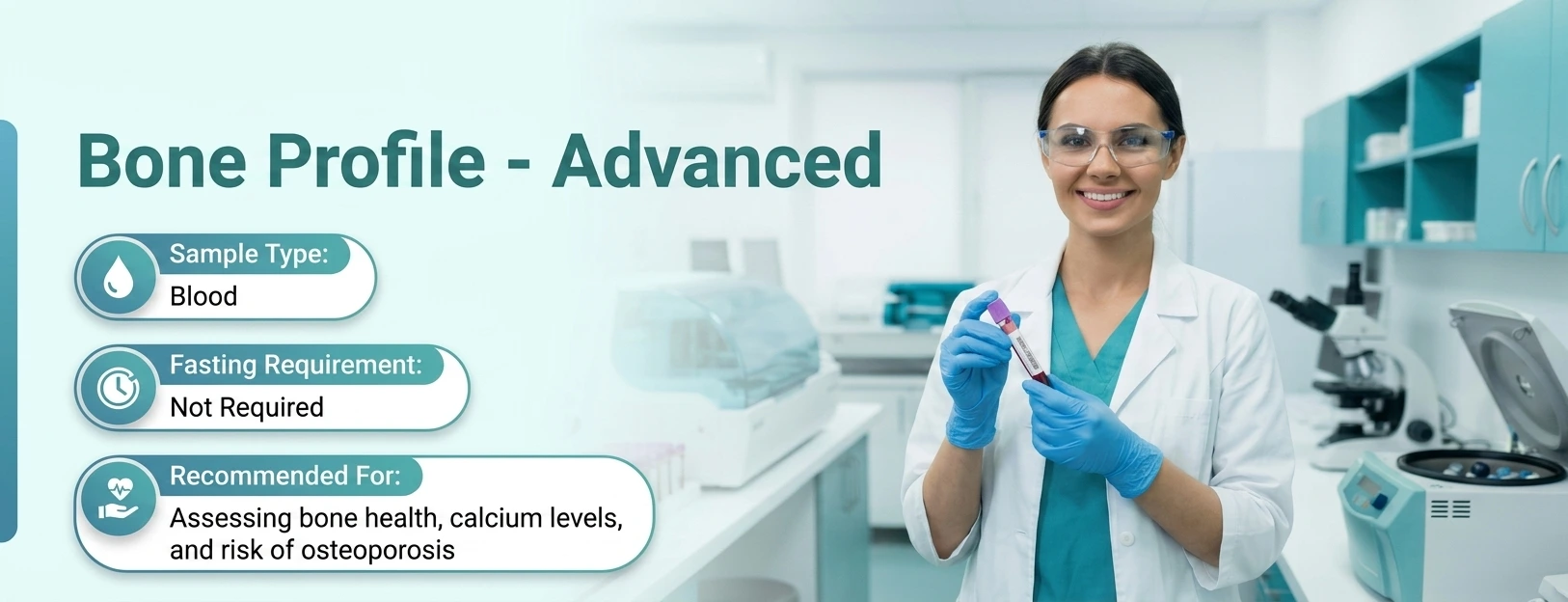
A quick info on Bone Profile - Advanced

Overview
A Bone Profile – Advanced test, also known as a bone health panel or bone mineral profile, is a group of blood tests used to assess bone health by measuring the levels of key minerals and vitamins that are important for maintaining healthy bones. The test helps doctors evaluate bone health and identify possible health conditions that may affect bone strength and metabolism.
Bones play an important role in providing structure to the body, protecting internal organs, and storing important minerals like calcium and phosphorus. These minerals, hormones, and enzymes are continuously regulated in the body to maintain healthy bones.
This test assesses parameters such as calcium, phosphorus, vitamin D, alkaline phosphatase (ALP), and parathyroid hormone (PTH), which play a role in bone formation and maintenance and mineral balance.
When and Who Should Get a Bone Profile Advanced Test?
This test may be recommended for individuals who have symptoms or conditions that may affect bone health or mineral balance.
Common symptoms that indicate the test should be done include:
- Back pain
- Gradual loss of height (stooped posture) or bone deformities
- Frequent fractures even from minor falls or mildly stressful activities like coughing or bending
People who should consider this test include:
- Older people.
- People with chronic alcohol or tobacco use (including smokers).
- Postmenopausal women.
- People taking certain medicines, e.g., for epilepsy, cancer, asthma, or acidity.
- People with certain hormonal or endocrine conditions (disorders that affect hormone-producing glands) or low levels of hormones like oestrogen and testosterone.
- People with nutritional deficiencies or those with a diet low in protein, vitamin D, or calcium.
- People with thyroid or parathyroid gland disorders.
- People with a family history of osteoporosis.
- Slender and thin people.
- Suspected autoimmune disorders like arthritis.
.png?dim=48x48&q=75)
How Frequently Should You Take the Bone Profile Advanced Test?
The frequency of this test depends on your symptoms, health conditions, clinical needs, and the doctor’s advice, which has been summarised in the table below.
|
Health scenario |
Context |
Recommended frequency |
|---|---|---|
|
Regular health check |
Just a routine check when you feel fine |
Depends on the health status |
|
Bone-related symptoms |
Women less than 65 years of age and men less than 75 years of age when they have symptoms like pain in the back, frequent fractures, etc |
When symptoms appear |
|
Age |
Women aged 65 years and above and men aged 75 years and above |
Consider assessment of fracture risk |
|
Other health problems (kidney or hormone issues) |
Conditions that can affect bones |
As advised by the doctor |
|
Abnormal past test results |
Previous test results suggestive of bone health issues |
As advised by the doctor |
|
Monitoring of bone disorder |
Ongoing treatment for bone disorders |
As advised by the doctor |

What Conditions Can Bone Profile Advanced Test Help Detect?
This test helps identify problems related to bone health, mineral balance, and other conditions that may affect bones or joints. These include:
Bone Disorders
A Bone Profile can help detect conditions such as osteoporosis (reduced density of the bones), osteomalacia (softening of the bones), and Paget’s disease (a condition with weak or misshapen bones), which affect bone strength and structure.
Mineral Imbalance
Abnormal levels of minerals such as calcium, phosphate, and magnesium can affect bone strength and may indicate underlying health problems.
Vitamin Deficiency
Low levels of vitamin D can affect bone health, and low vitamin B12 levels affect overall body function, leading to weak bones or other health problems.
Hormonal Disorders
Conditions that affect hormone levels, especially PTH, can disrupt calcium balance and lead to bone-related problems.
Autoimmune Disorders
Autoimmune conditions (in which the immune system attacks body tissues), like systemic lupus erythematosus (an autoimmune condition affecting multiple organs) and rheumatoid arthritis (an autoimmune condition causing joint inflammation), that may affect joint and bone health, can be detected by tests like rheumatoid factor, anti-cyclic citrullinated peptide (anti-CCP) antibody, and antinuclear antibody (ANA).
Kidney and Metabolic Conditions
Abnormal results of parameters such as calcium, phosphate, or uric acid may indicate kidney disease or metabolic conditions (disorders that affect the body’s metabolism) that can impact bone health.
Diagnosis of these conditions can help doctors determine the appropriate treatment for improving bone health and overall well-being.
.png?dim=48x48&q=75)
Bone Profile Advanced Test Preparation
What to Expect Before the Bone Profile Test
- No fasting is required for a standalone Bone Profile Test.
- You can eat and drink normally. If this test is part of a broader panel (e.g., lipid profile), fasting for 8 to 12 hours may be needed.
- Always inform your doctor about any ongoing medications - especially steroids, blood thinners, or chemotherapy.
What to Expect During the Blood Collection
A phlebotomist cleans the skin with an antiseptic, then places an elastic band around your upper arm to make the veins easier to access. A small needle is inserted into the vein - you may feel a brief pinch. Blood is collected into a labelled tube in under a minute.
What to Expect After the Bone Profile Test
A small cotton swab and bandage are placed over the site to stop any minor bleeding. You can return to normal activities immediately. Minor bruising is normal and disappears quickly. If feeling dizzy, sit and rest for a few minutes.

What are the Parameters Included in Bone Profile Advanced Test?
The Bone Profile (Advanced) includes the following parameters:
- Calcium (Ca)
- Magnesium
- Phosphorus (Phosphate)
- Vitamin D (Total) (25-OH)
- Vitamin B12
- Zinc
- Copper (Cu)
- Parathyroid Hormone (PTH)
- Alkaline Phosphatase (ALP)
- Uric Acid
- Rheumatoid Factor (RF) – Quantitative
- Anti-Cyclic Citrullinated Peptide (Anti-CCP) Antibody
- Antinuclear Antibody (ANA)

Normal Range of Bone Profile Advanced Test Parameters
The table below shows the normal values for each parameter in this package:
|
Parameter |
Normal Range |
|---|---|
|
Calcium |
8.5 – 10.5 mEq/L |
|
Magnesium |
1.5 – 2.4 mEq/L |
|
Phosphorus |
2.5 – 4.0 mg/dL |
|
Vitamin D |
≥50 nmol/L |
|
Vitamin B12 |
160 – 950 pg/mL |
|
Alkaline Phosphatase |
40 – 129 IU/L |
|
Parathyroid Hormone |
10 – 65 pg/mL |
|
Uric Acid |
Men: 4.0 – 8.6 mg/dL; Women: 3.0 – 7.1 mg/dL |
|
Rheumatoid Factor |
Negative |
|
Anti-CCP Antibody |
Negative |
|
Antinuclear Antibody |
Negative |
|
Zinc |
80 – 120 mcg/dL |
|
Copper |
63.5 – 158.9 mcg/dL |
Note: Normal ranges may vary according to technology and kits used. Therefore, results should always be interpreted by a doctor.
.png?dim=48x48&q=75)
Bone Profile Advanced Test Result Interpretation
|
Parameter |
If Values Are High |
If Values Are Low |
|---|---|---|
|
Calcium |
May indicate hyperparathyroidism (overactive parathyroid glands), bone disorders like Paget’s disease, or certain cancers |
May suggest hypoparathyroidism (underactive parathyroid glands), vitamin D deficiency, low calcium levels, low protein levels, or kidney disease |
|
Magnesium |
May indicate excessive intake of magnesium, probable kidney failure, dehydration, hypothyroidism (underactive thyroid gland), hyperparathyroidism, or Addison disease (low hormone produced by adrenal glands) |
May indicate low magnesium in diet, Crohn’s disease (chronic inflammation of the digestive tract), kidney issues, diarrhoea or diabetes |
|
Phosphorus |
May indicate kidney failure or late stages of chronic kidney disease, hypoparathyroidism, acidosis (too much acid in the blood), and long-term use of medications like laxatives |
May indicate hyperparathyroidism, vitamin D deficiency, long-term use of medicines like water pills (diuretics), or calcium carbonate |
|
Vitamin D |
May indicate you are taking too much from supplements |
May indicate a lack of sunlight exposure, a diet low in vitamin D, or trouble converting vitamin D into a usable form in the body due to conditions like kidney disease |
|
Vitamin B12 |
May indicate underlying liver disease or bone marrow disorders |
May indicate conditions like Crohn’s disease that cause problems in absorbing vitamin B12 from food, a lack of intrinsic factor (a protein that helps in the absorption of B12 in the intestine), or pregnancy |
|
Alkaline phosphatase |
May indicate bone disease, hyperparathyroidism, hyperthyroidism (overactive thyroid gland), osteomalacia, Paget's disease, or liver disease |
May indicate hypophosphatasia (a condition that causes soft or weak bones), hypothyroidism, malnutrition, pernicious anaemia (anaemia caused by poor absorption of vitamin B12), and protein deficiency |
|
Parathyroid hormone |
May indicate hyperparathyroidism caused by parathyroid gland conditions like enlargement, noncancerous tumour, or cancer, or conditions outside the parathyroid glands, like vitamin D or calcium deficiency, digestive disorders, or kidney failure |
May indicate hypoparathyroidism due to damaged parathyroid tissue due to surgery, radiation, or autoimmune conditions, genetic disorders, excessive intake of vitamin D or calcium, or severe illness |
|
Uric Acid |
May indicate conditions like kidney failure, acidosis, alcohol consumption, obesity, dehydration, and excessive exercise |
May be linked to hereditary metabolic conditions, a diet low in purine (a compound that can form uric acid in the body), HIV infection, or certain medications such as atorvastatin |
|
Rheumatoid Factor |
A positive result may indicate rheumatoid arthritis, cancer, or chronic infection |
Negative results usually means lower likelihood of autoimmune disease |
|
Anti-Cyclic Citrullinated Peptide Antibody |
A positive result strongly suggests rheumatoid arthritis, especially if you have a positive rheumatoid factor test. It may also indicate conditions like active tuberculosis and chronic lung disease |
A negative result makes rheumatoid arthritis less likely |
|
Antinuclear Antibody |
Positive result may indicate a viral infection, autoimmune disorders such as lupus, or cancer |
Negative result reduces the likelihood of autoimmune disease |
|
Zinc |
May suggest excessive intake of zinc, usually with long-term use of zinc-containing medicines |
May indicate zinc deficiency, which may be caused by digestive disorders, vegan or vegetarian diet, pregnancy or breastfeeding, alcohol use disorder, and certain health conditions in children |
|
Copper |
May indicate conditions such as infection, inflammation, injury, heart disease, rheumatoid arthritis, and pregnancy |
May indicate certain genetic conditions, liver or kidney disease, or copper deficiency in the body due to poor nutrition/absorption |

Bone Profile Advanced Test Risks and Limitations
Potential Risks and Complications:
The tests in this health checkup involve blood sample collection, which is generally safe. However, you may experience mild pain or slight bruising. These effects are usually temporary and resolve on their own.
Understanding Test Limitations:
While this test provides useful information about bone health and related conditions, certain limitations should be considered:
- Test results may vary depending on laboratory methods and reference range (normal values) used.
- Some findings may require additional tests for confirmation.
- Certain parameters may be influenced by underlying medical conditions.

Related and Follow-up Tests
If abnormalities are detected on a Bone Profile test, additional investigations may be required to identify the underlying cause and guide further management, which include:
- Bone mineral density (BMD) testing, such as with a DEXA scan, may be recommended to assess bone strength and diagnose conditions like osteoporosis
- Additional specialised tests may be required to identify underlying conditions such as hormonal disorders, kidney disease, or autoimmune conditions based on examination findings by the doctor.

Bone Profile Advanced Sample Collection: Home vs. Diagnostic Lab
|
Feature |
Home Collection (PharmEasy) |
Traditional Diagnostic Lab |
|---|---|---|
|
Convenience |
High - sample taken from your home or office. |
Low - requires traveling and waiting in queues. |
|
Time Saving |
Maximum - no travel time. You pick the time slot. |
Minimum - depends on traffic and lab rush. |
|
Safety & Comfort |
Safe - avoids exposure to other sick patients. |
Moderate - exposure to crowded waiting areas. |
|
Process |
A professional phlebotomist visits you. |
You must visit the facility during their hours. |
|
Report Access |
Digital - sent directly to your app or email. |
Often requires a second visit for physical copies. |
Pro Tip: For the most stress-free experience, book your test on PharmEasy. Enjoy professional service and accurate results without stepping out of your house.
Was This Test Information Helpful?
Please rate your experience
 Yes Helpful (1)
 Not Helpful
References
People Also Ask
Can a 70-year-old woman improve her bone density?
What are 5 exercises that increase bone density?
Is walking good for bone density?
What foods increase bone density?
When is it too late to build bone density?
Popular Tests
 Explore the most booked tests in your location
 4.6 Stars| 7+ Lakhs Ratings & Reviews

Over 10 million happy users PharmEasy Labs
- Because the digital report is available on WhatsApp, there's no need to go back to the lab. Thanks, PharmEasy!
 Sachin sharma11 Jan ‘26
 - Thanks to the coupon discount, the blood test was done at a lower price.Komal04 Jan ‘26
- The lab technician was a good and knowledgeable professional.Rakesh Pandey06 Jan ‘26
- Due to bad weather, it's difficult to reach the lab. But home collection makes things easier.Arjun08 Jan ‘26
- Thanks to the Swasth AI feature, the report is easy to understand.Priya Mehta02 Jan ‘26
- The report is available on the same day. Wow!Vikas Patel05 Jan ‘26
Have any doubts? Ask us.
Ask us anything about the Bone Profile - Advanced to understand it better

We provide trusted, expert-curated health content to support better awareness,prevention, and care.
Backed by experienced doctors, medical experts, and strict editorial standards.