

833+ orders placed in your location

100% NABL & ISO Certified Lab • 100% Accurate Reports
Venereal Disease Research Laboratory (VDRL) Test
Venereal disease research laboratory test, Syphilis- VDRL
- SummaryThe Venereal Disease Research Laboratory (VDRL) Test screens for syphilis, a sexually transmitted infection, by detecting specific antibodies in the blood. It's a useful tool for early diagnosis, especially in individuals with high-risk sexual behavior. A simple blood sample is used for the test, and no fasting is required. There are no age or gender restrictions for taking this test.Read more
- Reports Within7 HrsView Sample Report

 100% NABL & ISO Certified Labs
 - SampleBlood

- AgeAll Age Group
- GenderMale and Female
- FastingNot Required

PharmEasy Promises



Know More About The Test


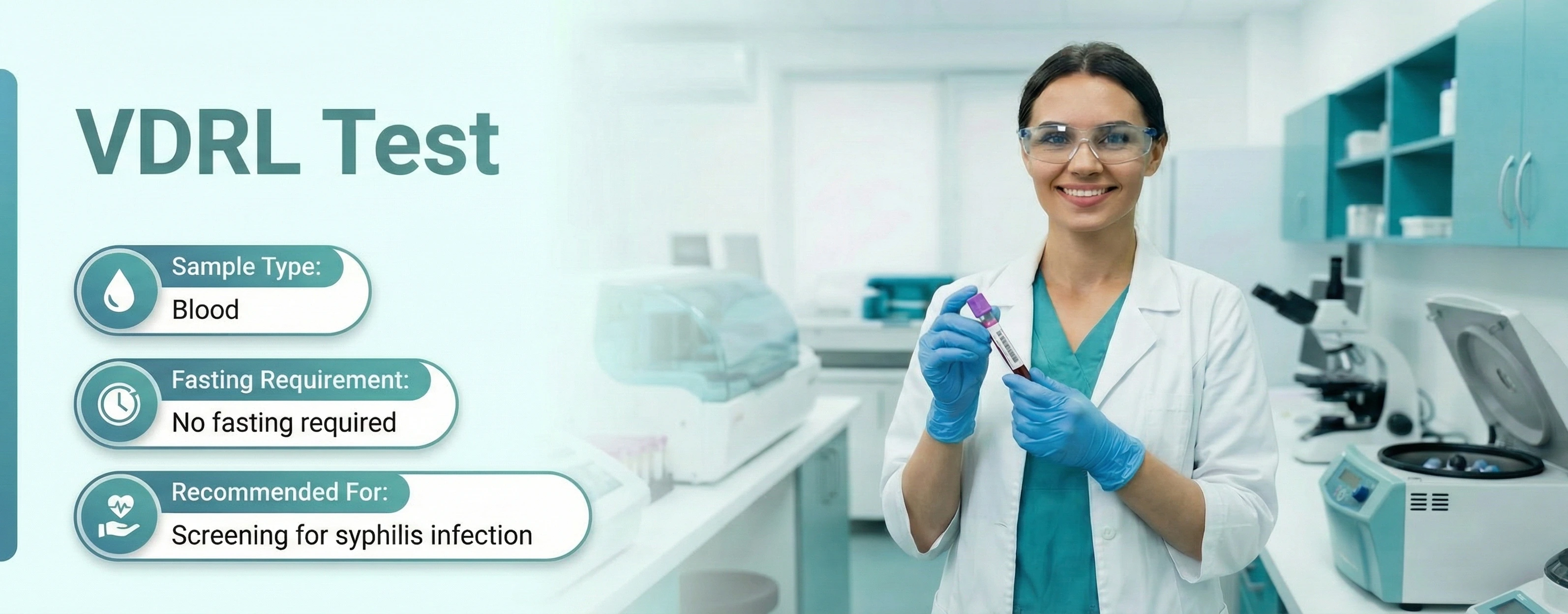
A quick info on VDRL test

Overview
The VDRL test (Venereal Disease Research Laboratory Test) is a simple blood test used to screen for syphilis - a sexually transmitted infection (STI) caused by the bacterium Treponema pallidum. The test works by detecting specific antibodies that your immune system produces in response to this bacterium. It is one of the most widely used and affordable screening tests for syphilis globally.
Doctors order a VDRL test because it is a non-treponemal test: it detects the body's immune response to tissue damage caused by the bacteria, not the bacteria themselves. This makes it a powerful and cost-effective first-line screening tool. If the VDRL result is positive or reactive, your doctor will order a confirmatory treponemal test (such as TPHA or FTA-ABS) to confirm the diagnosis.
The VDRL test monitors your immune system's response to Treponema pallidum and tracks how well syphilis treatment is working, as antibody levels fall after successful treatment. The test is applicable for all ages and genders. No fasting is required.

When and Who Should Get a VDRL Test?
A VDRL test is performed as a screening, diagnostic, or monitoring test for syphilis infection. Since syphilis can be completely asymptomatic in its early stages, regular screening is important for high-risk individuals.
This test is usually recommended for:
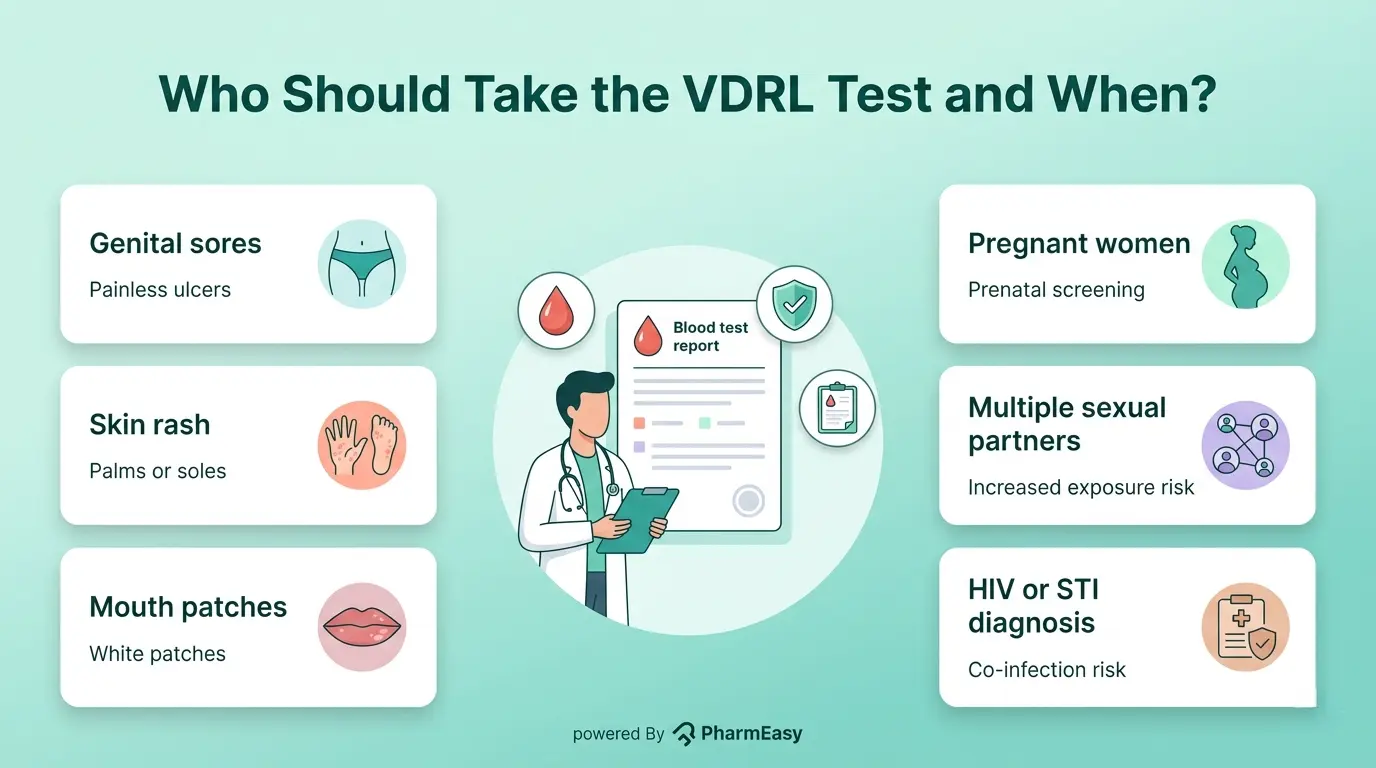
- Anyone with painless sores or ulcers on the genitals, anus, lips, or mouth - the hallmark symptom of primary syphilis.
- Anyone with a skin rash on the palms or soles of the feet, flu-like symptoms, hair loss, or white patches inside the mouth.
- Pregnant women - VDRL is mandatory in India's prenatal screening. Untreated syphilis during pregnancy can cause stillbirth, miscarriage, or congenital syphilis in the newborn.
- Individuals with multiple sexual partners or a history of STIs - syphilis spreads easily through direct contact with a syphilis sore.
- Anyone diagnosed with another STI - co-infection with syphilis is common alongside HIV, gonorrhoea, and chlamydia.
- People living with HIV - syphilis progresses faster and more severely in immunocompromised individuals.
- Individuals previously treated for syphilis - to confirm whether treatment was successful.
.png?dim=48x48&q=75)
How Frequently Should You Take the VDRL Test?
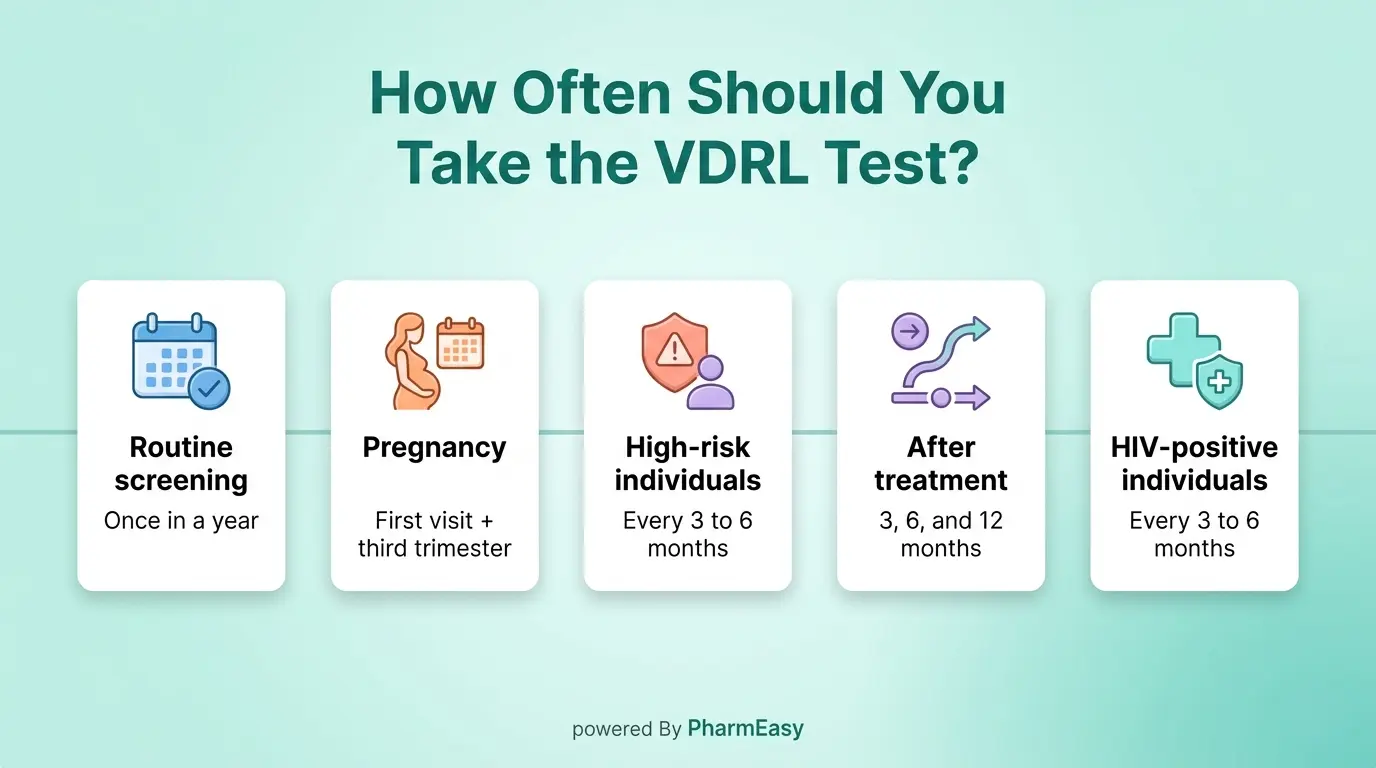
The VDRL test is not a routine annual test for everyone. Its frequency depends on your risk profile, whether you have been diagnosed with syphilis, and whether you are pregnant.
|
Health Scenario |
Context |
Recommended Frequency |
|---|---|---|
|
Routine Preventive Screen |
Healthy adults with no known STI risk factors. |
Once, as part of a pre-marital or annual health check-up. |
|
Prenatal Screening |
All pregnant women - VDRL is mandatory in India's antenatal care protocol. |
At the first antenatal visit. Repeat in the third trimester for high-risk pregnancies. |
|
High-Risk Individuals |
People with multiple sexual partners or a history of STIs. |
Every 3 to 6 months, or as advised by the doctor. |
|
Monitoring Syphilis Treatment |
To confirm that antibiotic treatment is working and antibody levels are declining. |
At 3 months, 6 months, and 12 months after completing treatment. |
|
HIV-Positive Patients |
Syphilis progresses faster in people with HIV and requires closer monitoring. |
Every 3 to 6 months, as part of routine HIV care. |

What Conditions Can a VDRL Test Help Detect?
The VDRL test primarily screens for syphilis - but it can also help identify related complications when used alongside other tests:
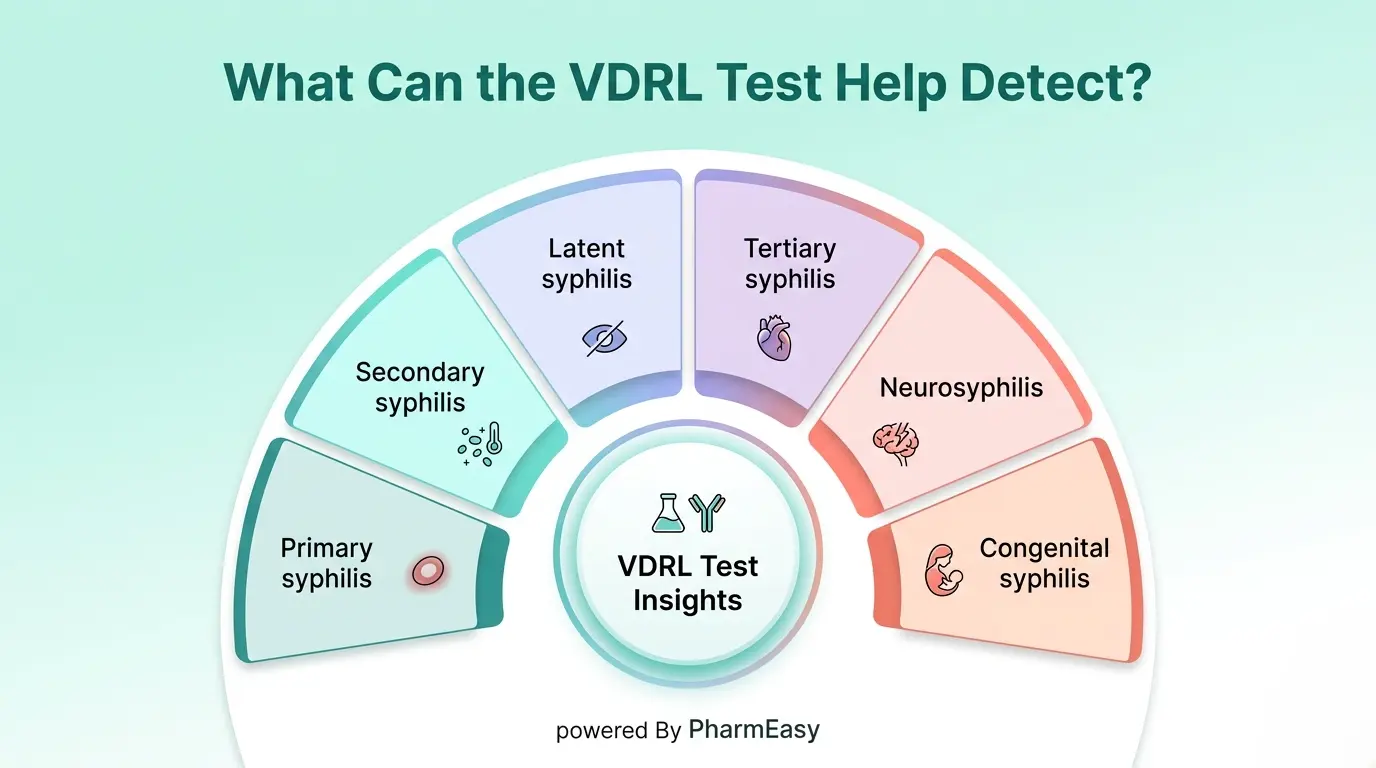
- Primary Syphilis - the first stage, characterised by a painless sore (chancre) at the site of infection. Note: the VDRL may be negative at this very early stage, as antibodies have not yet developed.
- Secondary Syphilis - the second stage, where the infection has spread through the body. The VDRL is most reliable and strongly reactive at this stage. Symptoms include skin rash, fever, and swollen lymph nodes.
- Latent Syphilis - the hidden phase with no symptoms, where the VDRL is reactive but the person feels completely well. This phase can last for years without treatment.
- Tertiary Syphilis - the most serious stage, which can affect the heart, brain, nervous system, and other organs. Blindness, deafness, and neurological complications can result if untreated.
- Neurosyphilis - syphilis that has spread to the nervous system and brain. The VDRL is also used on cerebrospinal fluid (CSF) to diagnose neurosyphilis.
- Congenital Syphilis - syphilis passed from a mother to her baby during pregnancy or childbirth. Early prenatal screening with VDRL is the key to prevention.
Important Note: A positive VDRL result must always be confirmed with a treponemal test (TPHA or FTA-ABS) before a diagnosis of syphilis is made. Always share your results with a medical professional.
.png?dim=48x48&q=75)
VDRL Test Preparation
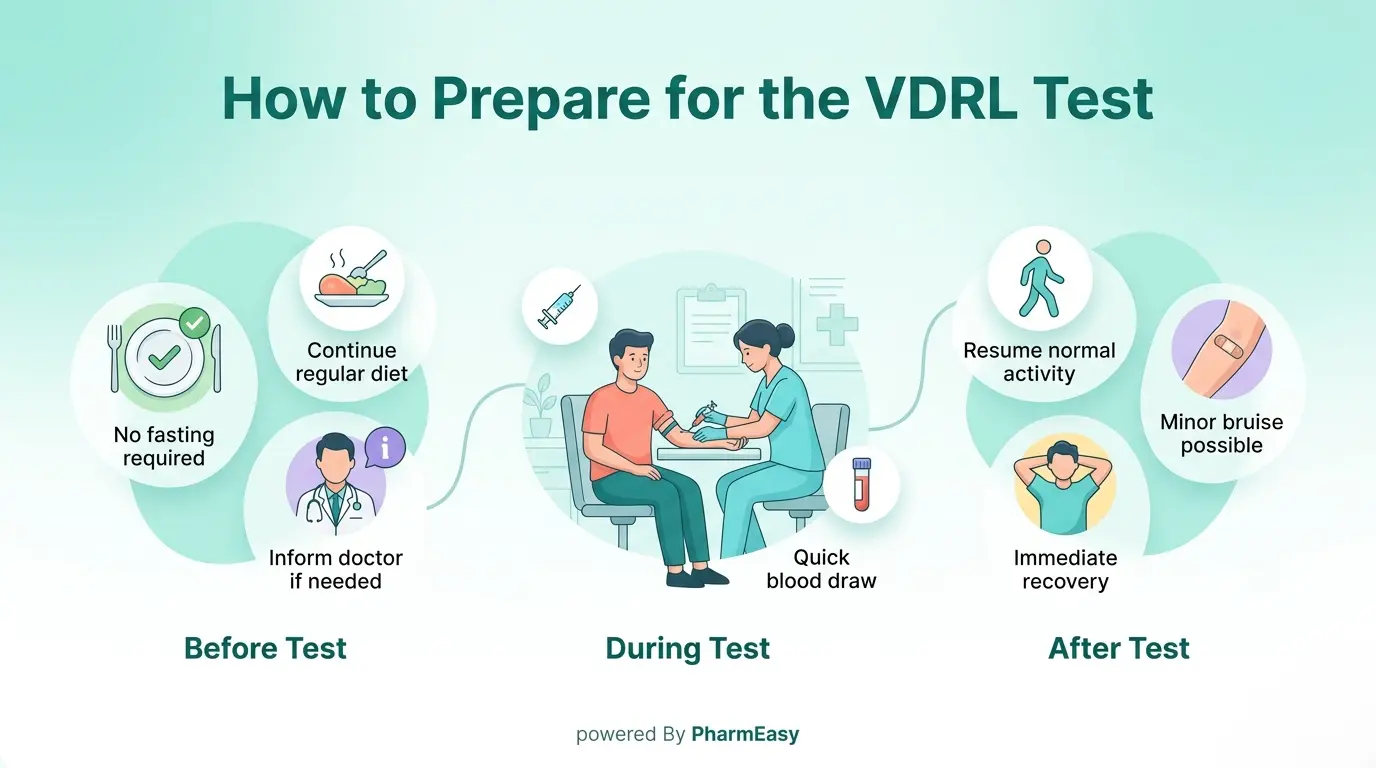
What to Expect Before the VDRL Test
No fasting is required. You can eat, drink, and take your regular medications before the test. Inform your doctor about any current medications or recent vaccinations (which can cause false-positive results), recent infections such as malaria, HIV, or tuberculosis, autoimmune disease history, and whether you are pregnant, as this is important context for interpreting the result.
What to Expect During the Blood Collection
A phlebotomist cleans the skin with an antiseptic, then places an elastic band around your upper arm to make the veins easier to access. A small needle is inserted into the vein - you may feel a brief pinch. Blood is collected into a labelled tube in under a minute.
What to Expect After the VDRL Test
A small cotton swab and bandage are placed over the site to stop any minor bleeding. You can return to normal activities immediately. Minor bruising is normal and disappears quickly. If dizzy, sit and relax for a few minutes before leaving.

What Are the Parameters Included in the VDRL Test?
The VDRL test measures a single key parameter:
- VDRL Antibody Test (Qualitative) - The test checks whether your blood contains antibodies produced in response to the Treponema pallidum bacteria (the cause of syphilis). The result is reported as either Non-Reactive (Negative) or Reactive (Positive). This is a qualitative test - it tells you whether the antibodies are present, not how many.
When a VDRL result is Reactive, many laboratories also perform a semi-quantitative titration to measure the approximate level of antibodies in the blood. This titre (expressed as 1:1, 1:2, 1:4, 1:8, 1:16, 1:32, etc.) helps your doctor assess the severity of infection and monitor how antibody levels change with treatment. A falling titre over time indicates that the treatment is working.

Normal Range of VDRL Test Parameters
The VDRL test reports a qualitative result - not a numerical value. The table below shows the reference values and what each result means.
|
Parameter |
Normal (Expected) Result |
Interpretation |
|---|---|---|
|
VDRL Antibody Test (Blood / Serum) |
Non-Reactive (Negative) |
No syphilis antibodies detected. Syphilis infection is unlikely at this time. |
|
VDRL Antibody Test (Blood / Serum) |
Reactive (Positive) |
Syphilis antibodies detected. Confirmatory treponemal testing (TPHA / FTA-ABS) is required before a diagnosis is made. |
|
VDRL (CSF) - for Neurosyphilis |
Non-Reactive (Negative) |
No evidence of syphilis in the cerebrospinal fluid. Does not completely rule out neurosyphilis in some cases. |
|
VDRL (CSF) - for Neurosyphilis |
Reactive (Positive) |
Strongly suggestive of neurosyphilis when combined with clinical symptoms and other test findings. |
Important Note: The normal values and reference ranges may vary slightly between laboratories. A Reactive VDRL result does not confirm syphilis - it must always be followed up with a confirmatory treponemal test. Always refer to the ranges on your specific report and consult your doctor for interpretation.
.png?dim=48x48&q=75)
VDRL Test Result Interpretation
The VDRL result must always be interpreted in the context of your symptoms, sexual history, and the stage of any possible infection. The table below explains the key result scenarios.
|
Result |
What It Means |
What Your Doctor Will Do Next |
|---|---|---|
|
Non-Reactive (Negative) - No symptoms |
No syphilis antibodies detected. Syphilis is unlikely at this time. |
No further action needed. Continue safe sexual practices and routine screening if high-risk. |
|
Non-Reactive (Negative) - With symptoms |
Possible false-negative. In very early primary syphilis (within 3 to 4 weeks of infection), antibodies may not yet have developed. |
The doctor may order a treponemal test (TPHA or FTA-ABS) or ask you to repeat the VDRL in 2 to 4 weeks. |
|
Reactive (Positive) - First-time result |
Syphilis antibodies are present. Could mean current infection, past treated infection, or a false-positive result. |
A confirmatory treponemal test (TPHA or FTA-ABS) will be ordered. Do not start treatment until confirmed. |
|
Reactive (Positive) - High titre (1:16 or above) |
Suggests active or recently acquired syphilis infection with a significant antibody response. |
Confirmatory testing followed by antibiotic treatment (penicillin) as prescribed by the doctor. |
|
Reactive - Declining titre after treatment |
Antibody levels are falling - the treatment is working as expected. |
Continue monitoring at 3, 6, and 12 months until the titre becomes Non-Reactive. |
|
Reactive (Positive) - Known false-positive causes |
Conditions such as pregnancy, malaria, HIV, tuberculosis, autoimmune diseases, or recent vaccinations can cause a false-positive without actual syphilis infection. |
A confirmatory treponemal test will be negative in a true false-positive. The doctor will investigate the underlying cause. |
Disclaimer: This table is for educational purposes and provides a general overview only. The interpretation of your VDRL result must always be guided by a qualified doctor. Do not self-treat or make decisions based on the VDRL result alone - always wait for confirmatory testing and medical consultation.

Risks and Limitations of the VDRL Test
Potential Risks and Complications
The VDRL test is a safe, routine blood test with an extremely low risk of complications. Most people only feel a brief pinch. Consult a doctor if: the puncture site does not stop bleeding after applying gentle pressure; you notice unusual redness, warmth, or lasting pain at the needle site; or you feel persistently lightheaded after the blood draw - sit and rest for a few minutes.
Understanding VDRL Test Limitations
False-negative results can occur in very early primary syphilis (within the first 3 to 4 weeks), as antibodies have not yet reached detectable levels. The test is also less sensitive in late-stage tertiary syphilis. False-positive results can be triggered by pregnancy, malaria, HIV, tuberculosis, lupus, rheumatoid arthritis, and recent vaccinations - making a confirmatory treponemal test (TPHA or FTA-ABS) mandatory. The VDRL also cannot tell you the stage of infection (primary, secondary, latent, or tertiary) - clinical examination and further testing are needed for staging.

Related and Follow-Up Tests
The VDRL is a screening test - not a confirmatory test. If your VDRL is reactive, or if syphilis is strongly suspected despite a negative result, your doctor will recommend the following:
|
VDRL Finding |
Suggested Follow-up Test |
Why It Is Ordered |
|---|---|---|
|
Reactive (Positive) VDRL |
The gold-standard treponemal confirmatory test for syphilis. A positive TPHA alongside a positive VDRL confirms active or past syphilis infection. |
|
|
Reactive (Positive) VDRL |
FTA-ABS (Fluorescent Treponemal Antibody Absorption Test) |
Another highly specific confirmatory test. Remains positive for life even after successful treatment. |
|
Reactive VDRL + Neurological Symptoms |
VDRL on Cerebrospinal Fluid (CSF) |
To diagnose or rule out neurosyphilis - syphilis that has spread to the brain and nervous system. |
|
Any Reactive VDRL |
Syphilis and HIV frequently co-exist. A positive VDRL should always prompt an HIV test. |
|
|
Reactive VDRL in Pregnancy |
Detailed Foetal Ultrasound |
To check for signs of congenital syphilis in the baby, such as foetal hydrops or bone abnormalities. |
|
Monitoring Treatment Response |
Repeat VDRL Titre (Quantitative) |
A falling titre confirms antibiotics are working. Titre should drop fourfold within 6 to 12 months of treatment. |

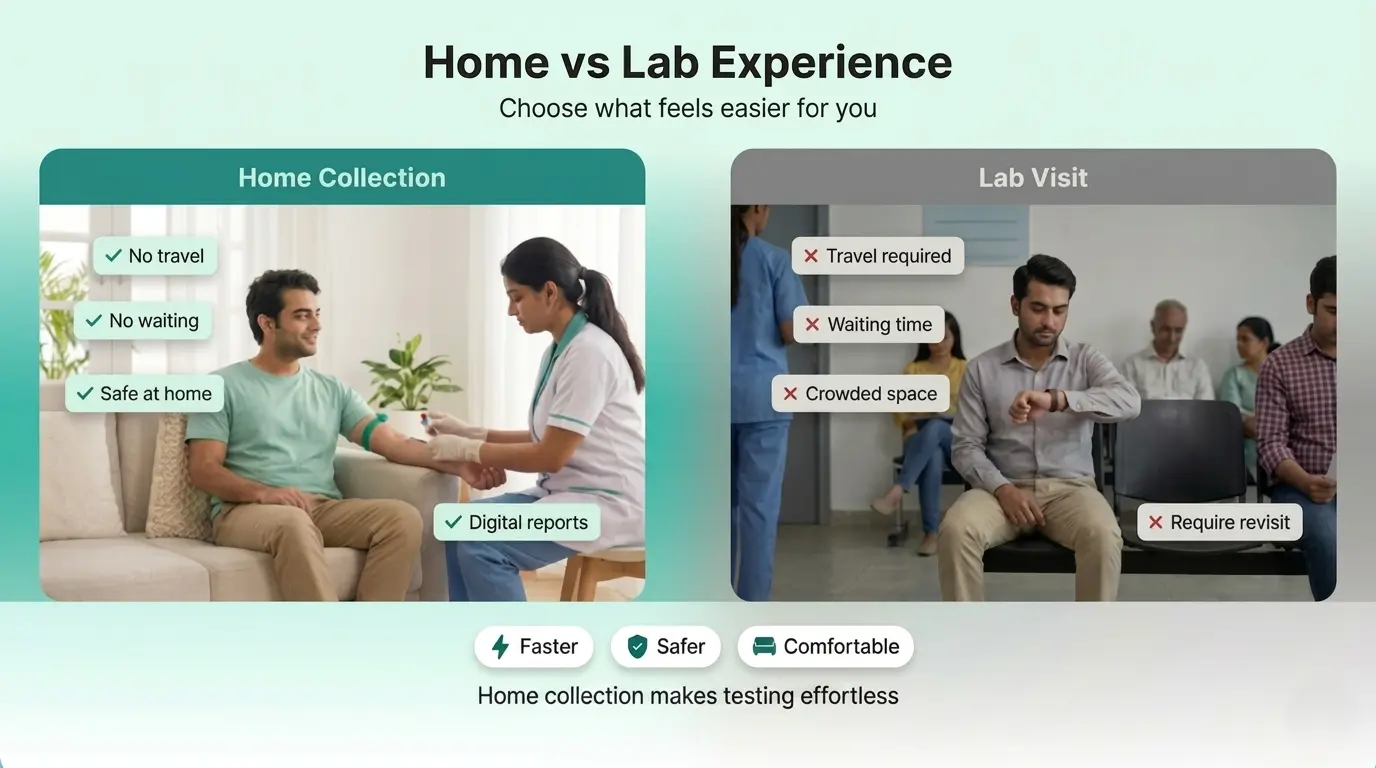
VDRL Test Sample Collection: Home vs. Diagnostic Lab
|
Feature |
Home Collection (PharmEasy) |
Traditional Diagnostic Lab |
|
Convenience |
High - sample taken from your home or office, privately and discreetly. |
Low - requires travelling and waiting in queues. |
|
Privacy |
Maximum - sample collected at home with full discretion. |
Less private - you may meet people you know at a clinic. |
|
Safety & Comfort |
Safe - avoids exposure to other patients. |
Moderate - exposure to crowded waiting areas. |
|
Process |
Certified phlebotomist visits you with sterile, sealed equipment. |
You must visit the facility during its working hours. |
|
Report Access |
Digital - sent directly to your app or email. |
Often requires a second visit for physical copies. |
Pro Tip: For a sensitive test like the VDRL, home collection offers complete privacy and discretion. Book on PharmEasy - no fasting required, certified sample collection at your doorstep, and a digital report delivered directly to you.

VDRL Test Price / Cost
The cost of a VDRL(Venereal Disease Research Laboratory) Test varies depending on the city and the lab. In general, the price of a VDRL test ranges from INR 299. Here is a breakdown of the average cost of a VDRL test in some major cities in India:
|
City |
Offer Price |
|---|---|
|
299 |
|
|
299 |
|
|
299 |
|
|
299 |
|
|
299 |
|
|
299 |
|
|
299 |
|
|
299 |
|
|
299 |
|
|
299 |
Was This Test Information Helpful?
Please rate your experience
 Yes Helpful (8)
 Not Helpful
References
People Also Ask
What does a positive VDRL test mean? Does it confirm syphilis?
What does a negative VDRL test mean? Does it completely rule out syphilis?
Is the VDRL test mandatory during pregnancy?
Do I need to fast before a VDRL test?
What causes a false-positive VDRL result?
I was treated for syphilis before. Will my VDRL still be positive?
What is the difference between VDRL and TPHA?
 4.6 Stars| 7+ Lakhs Ratings & Reviews

Over 10 million happy users PharmEasy Labs
- Because the digital report is available on WhatsApp, there's no need to go back to the lab. Thanks, PharmEasy!
 Sachin sharma11 Jan ‘26
 - Thanks to the coupon discount, the blood test was done at a lower price.Komal04 Jan ‘26
- The lab technician was a good and knowledgeable professional.Rakesh Pandey06 Jan ‘26
- Due to bad weather, it's difficult to reach the lab. But home collection makes things easier.Arjun08 Jan ‘26
- Thanks to the Swasth AI feature, the report is easy to understand.Priya Mehta02 Jan ‘26
- The report is available on the same day. Wow!Vikas Patel05 Jan ‘26
Have any doubts? Ask us.
Ask us anything about the Venereal Disease Research Laboratory (VDRL) Test to understand it better

We provide trusted, expert-curated health content to support better awareness,prevention, and care.
Backed by experienced doctors, medical experts, and strict editorial standards.