




How High Heels Affect the Body?
By Dr. Parth Mehta +2 more

Medically reviewed by Dr. Parth Mehta
Last updated: Oct 16, 2026 Published on: Mar 13, 2018


Get,

to manage your symptom
Get your,

4 Cr+ families
benefitted

OTP sent to 9988776655



You’ve successfully subscribed to receive
doctor-approved tips on
Whatsapp

Get ready to feel your best.


Register to Avail the Offer
Send OTPBy continuing, you agree with our Privacy Policy and Terms and Conditions
Hi There,
Sign up on PharmEasy now!!


Trusted by 4 crore+ families

OTP sent to 9988776655
You have unlocked 25% off on medicines


Code: NU25

By Dr. Parth Mehta +2 more
Table of Contents
High heels are often associated with style, confidence, and elegance, and many women choose heels to complete their look. While wearing heels occasionally may not cause significant harm, frequent or prolonged use can gradually affect different parts of the body, starting from the feet and moving upward.
Over time, the altered posture and uneven weight distribution caused by high heels can place extra strain on joints, muscles, and tendons. Understanding how heels influence the body can help you make more informed footwear choices.
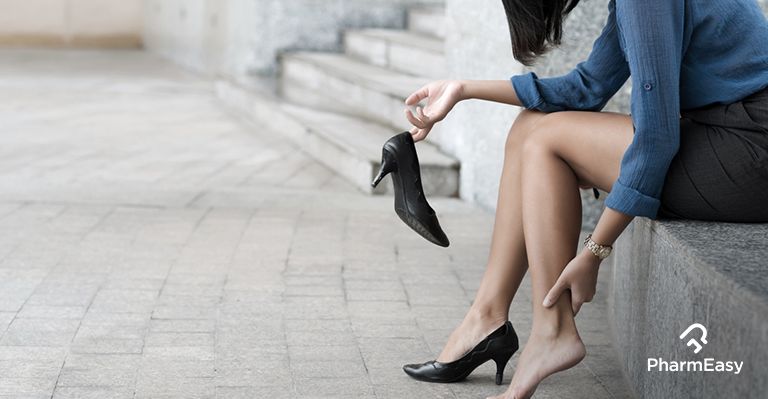

The feet bear the entire weight of our body and their joints and ligaments are prone to wear and tear. High heels can add pressure to the feet by altering the way of walking, shifting the weight forwards and causing strain on the ball of the feet and increasing risk of injuries. They can cause severe discomfort and pain in the heels, toes, arch and soul of the feet1. Moreover, it is found that continuous wearing can lead to deformities in the feet such as hallux valgus (deviation of the big toe towards other toes)2.

The ankle joint is greatly affected by high heels. High heels can cause shortening of calf muscles and stiffening of Achilles tendon (the tendon in the ankle that connects the calf muscle and heel bone) with regular usage3. This can affect natural movement and causes pain when regular footwear is worn. Constant pressure on the tendon can strain the tendon, causing inflammation and increasing the risk of injuries. Moreover, the continuous strain on the ankles, makes them more susceptible to arthritis4,5.
High heels can have a significant impact on the knees causing pain and discomfort along with changes in walking pattern. Walking with high heels can lead to excessive pressure and wearing of knee cartilage (the cushioning in our joints) and reduction in the inner joint space of knees. The change in knee alignment and increased strain on the knee joint with continuous use of heels can cause pain, stiffness, and increase the risk of knee osteoarthritis6.

High heels can cause constant strain on hip muscles leaving them in a contracted state causing pain and altered posture. Due to the changed walking patterns with heels, the range of motion at hip joint is reduced, causing a change in posture with forward shifting of pelvic bone. Constant use can lead to weakening of hip muscles causing discomfort and may affect balance7.

Heels can limit the natural motion of our feet, shifting the center of gravity forwards thereby causing postural changes for compensation that can lead to spinal discomfort. Wearing high heels may also compress the vertebrae, strain the back muscles, and lead to back pain8.
Discomfort caused by high heels tends to develop gradually, which is why many people overlook early warning signs. Mild pain or stiffness after wearing heels is often dismissed as normal especially when it subsides after rest. Women may at times bear the discomfort as a price for the aesthetic appeal they offer1. Over time however, repeated stress on the feet and joints can lead to persistent issues.
Another reason heel-related problems go unnoticed is that symptoms may not appear immediately while wearing the shoes. Pain, tightness, or numbness often become more noticeable after the heels are removed or when other footwear are worn, making it harder to link the discomfort directly to footwear. In addition, many people adapt their walking style subconsciously to stay balanced in heels, masking strain until it begins to interfere with daily activities.
Because these changes happen slowly, individuals may continue wearing heels despite ongoing stress on muscles, tendons, and joints, increasing the risk of long-term discomfort or injury.
Occasional discomfort after wearing high heels may be common, but persistent or worsening symptoms are not normal and should not be ignored. Continuing to wear heels despite ongoing pain can increase the risk of long-term foot and joint problems.
You should consider stopping heel use and seeking medical advice if you experience:
If these symptoms continue even after reducing heel use, it is advisable to consult an orthopaedic specialist or podiatrist. Early evaluation can help identify underlying issues such as tendon tightness, joint stress, or nerve involvement and prevent further complications.
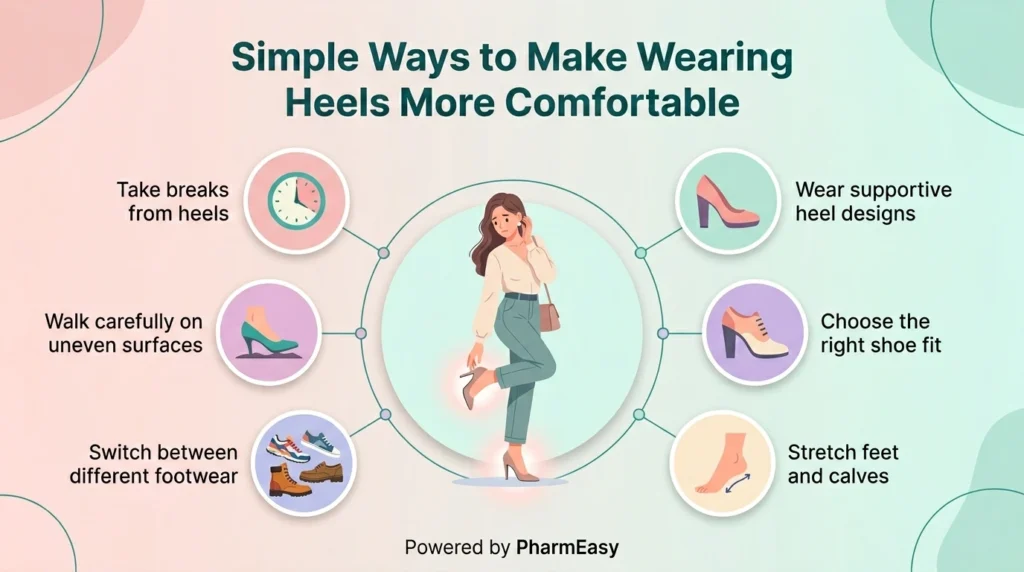
Wearing heels for extended periods places sustained pressure on the feet and joints. Taking breaks or switching to supportive footwear during the day allows muscles and tendons to relax and recover, reducing cumulative strain.
Heels with a wider base, cushioned insoles, and proper arch support offer better stability and distribute weight more evenly. Such designs can help reduce pressure on the forefoot and improve overall balance while walking. A heel height of about 3.5-4.5cm is generally considered appropriate to wear9.
Ill-fitting heels or narrow toe boxes can compress the toes and surrounding nerves. Selecting shoes that fit well and allow adequate toe movement can help minimise discomfort, numbness, and pressure-related pain.
Gentle stretching of the calves, ankles, and feet after wearing heels can relieve muscle tightness and improve flexibility. Regular stretching may also reduce stiffness when transitioning back to flat footwear.
Avoid wearing heels every day and alternate with comfortable shoes on consecutive days whenever possible. Rotating between heels and comfortable, supportive shoes helps distribute stress across different muscle groups and reduces overuse injuries.
Uneven or slippery surfaces can increase strain and affect balance while wearing heels. Choosing stable ground and slowing down while walking can help reduce the risk of falls and joint stress.
Also Read: Sprained Ankle: What Is It, Causes, Symptoms & More
While high heels can be a part of your wardrobe, wearing them daily may increase the risk of foot, joint, and back problems over time. Choosing supportive footwear for routine use and limiting heels to occasional wear can help reduce strain on the body and support long-term musculoskeletal health.
From a health perspective, a low heel height of about 2–4 cm (1–1.5 inches) is generally considered the safest. This height provides slight elevation without significantly altering posture or placing excessive stress on the feet, ankles, and spine. Extremely flat footwear and very high heels can both disrupt natural foot mechanics, so moderate elevation with good arch support is usually the most comfortable option for everyday wear.
Wearing heels does not permanently change body shape, but frequent use can influence posture and muscle balance over time. High heels push the pelvis forward, tighten the calf muscles, and increase the curve of the lower back. With prolonged and regular wear, these changes may affect walking patterns and muscle flexibility, although most effects are reversible when heel use is reduced.
High heels are often discouraged because they shift body weight forward, placing increased pressure on the forefoot and altering natural alignment. This can strain the ankles, knees, hips, and lower back. Long-term or daily use may increase the risk of foot pain, joint stress, tendon tightness, and posture-related discomfort, particularly in individuals with existing musculoskeletal issues.
After knee replacement surgery, wearing high heels is usually not recommended, especially in the early recovery phase. Heels can place extra stress on the knee joint and affect balance, increasing the risk of strain or injury. If heel use is considered later on, it should be limited to low, stable heels and only after clearance from an orthopaedic specialist or physiotherapist.
Pregnant women are generally advised to avoid wearing high heels. During pregnancy, changes in body weight, posture, and balance increase the risk of falls. Heels can further strain the lower back and feet, which are already under added stress. Comfortable, supportive footwear with a low heel and good grip is usually a safer choice throughout pregnancy.
Heels with a wider base, such as block heels or wedges, generally offer better stability than narrow stilettos. Shoes with cushioning, arch support, and ankle straps can also reduce strain. However, no heel is entirely risk-free if worn for long durations.
Yes, narrow or high heels can compress nerves in the forefoot due to increased pressure and restricted toe space. This may lead to symptoms such as tingling, numbness, or burning sensations, particularly after prolonged standing or walking.
Yes, discomfort due conditions such as flat feet, plantar fasciitis, or arthritis may worsen with continued heel use. Elevated heels can increase pressure on sensitive areas and aggravate pain, making supportive footwear a better option for individuals with known foot problems.
Occasional heel use is unlikely to cause lasting harm in individuals without existing foot or joint issues. Problems are more commonly associated with daily or prolonged wear. Allowing adequate recovery time between wearing heels helps reduce stress on muscles and joints.
Disclaimer: The information provided here is for educational/awareness purposes only and is not intended to be a substitute for medical treatment by a healthcare professional and should not be relied upon to diagnose or treat any medical condition. The reader should consult a registered medical practitioner to determine the appropriateness of the information and before consuming any medication. PharmEasy does not provide any guarantee or warranty (express or implied) regarding the accuracy, adequacy, completeness, legality, reliability or usefulness of the information; and disclaims any liability arising thereof.
Links and product recommendations in the information provided here are advertisements of third-party products available on the website. PharmEasy does not make any representation on the accuracy or suitability of such products/services. Advertisements do not influence the editorial decisions or content. The information in this blog is subject to change without notice. The authors and administrators reserve the right to modify, add, or remove content without notification. It is your responsibility to review this disclaimer regularly for any changes.
 1
1 
Comments

Leave your comment...
You may also like























Comments