

26+ orders placed in your location

100% NABL & ISO Certified Lab • 100% Accurate Reports
Anaemia Care Health Checkup
anameia care checkup, anameia checkup, anameia health checkup
- SummarySuffering from weakness, dullness, hair fall or pale skin? Anaemia could be the reason. It is a very common condition in India. This can be a result of a number of underlying causes and can affect the physical, mental and emotional health of the person. It can even affect the growth and development of the fetus and infant. In order to treat it well, a doctor will need to first identify the underlying cause of these symptoms and then suggest the required treatment. Anaemia Care Health Checkup includes necessary tests to help your doctor understand the root cause. Read more
- TestsIncludes 60 tests
- Reports Within27 HrsView Sample Report

 100% NABL & ISO Certified Labs
 - SampleBlood
 Urine
Urine
- FastingNot Required

PharmEasy Promises



Know More About The Package


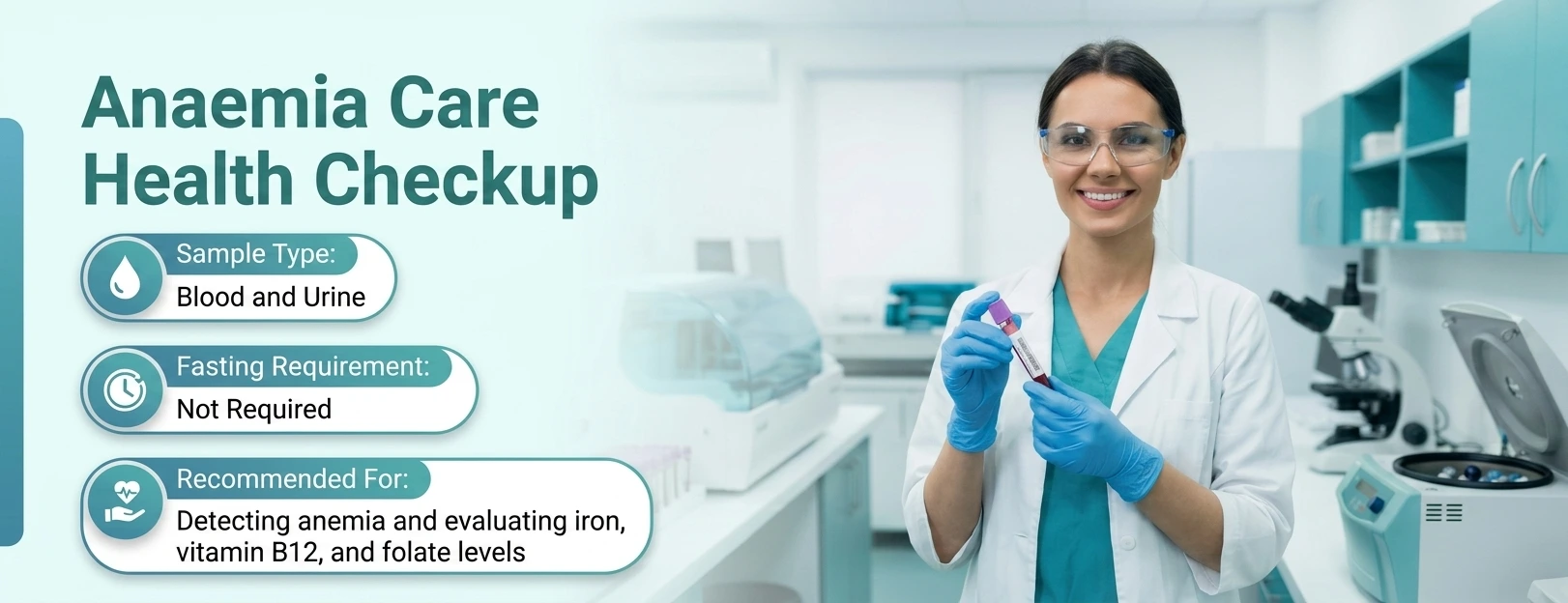
A quick info on Anaemia Care Health Checkup

Overview
Anaemia is a condition in which the number of red blood cells (RBC) or the level of haemoglobin is less than normal. Haemoglobin is essential to supply oxygen to different parts of the body, and without this, the cells will die. Anaemia is not a disease but a clinical condition, and it can occur due to a variety of causes. These include nutritional deficiencies such as iron, vitamin B-12, and folate deficiency, chronic conditions like kidney disease, and blood loss due to trauma or conditions like ulcers. It can also be caused by genetic disorders such as sickle cell disease and thalassemia, infections like malaria, which directly attack RBCs, and certain medications that suppress bone marrow function.
This checkup includes the complete blood count test (CBC) that helps detect anaemia along with its possible cause. It checks for several parameters in your body to determine how well your blood is carrying oxygen and helps assess overall health. Anaemia Care Health Checkup, also known as an anaemia profile, anaemia blood test, or anaemia test, can help identify whether there are any underlying problems like nutritional deficiencies, blood loss, or chronic diseases leading to anaemia and guide doctors in providing appropriate treatment.

When and Who Should Get Anaemia Care Health Checkup?
This test can be done as part of a routine checkup. A doctor may also recommend it if anaemia is suspected based on your symptoms, medical history, or physical examination.
Common Symptoms to Watch For
- Weakness
- Dizziness or light-headedness
- Shortness of breath
- Pale skin and tongue
- Headache
- Fast heartbeat
Who Should Consider This Test
- People with poor nutrition or low iron intake
- People with chronic diseases
- People with a family history of blood disorders
- Individuals with ongoing blood loss (such as from the stomach or intestines)
- People with symptoms like weakness
- People with signs like a pale tongue or brittle nails
.png?dim=48x48&q=75)
How Frequently Should You Take Anaemia Care Health Checkup?
The frequency of this test depends on your health condition and the doctor’s advice. It may be done during routine checkups or when low haemoglobin levels are suspected.
The following table explains when this test may be taken:
|
Health Situation |
When to Take the Test |
Recommended Frequency |
|---|---|---|
|
Routine health checkup |
General health screening |
Once a year as part of a complete health check-up or as advised by the doctor |
|
Symptoms of anaemia |
When symptoms appear |
As advised by the doctor |
|
Chronic illness (e.g., kidney disease) |
Ongoing evaluation |
Periodic monitoring as needed For e.g.: CKD Stage 3 - annually, CKD Stage 4-5 - 2 times/year, Advanced (On Dialysis) - every 3 months or more frequently |
|
Worsening condition or blood loss |
During clinical concern |
Immediate or repeated testing |
Note: This is for informational purposes only and should not replace medical advice. Please consult your doctor for proper diagnosis and treatment. Also, consult a doctor immediately, even if simple signs last longer; negligence of symptoms can worsen the condition over time.

What Conditions Can Anaemia Care Health Checkup Help Detect?
This test helps identify anaemia and understand its underlying cause. It also helps detect health conditions that affect RBC or haemoglobin levels.
- Iron Deficiency Anaemia: This is the most common type of anaemia. It occurs when the body does not have enough iron to produce haemoglobin.
- Vitamin Deficiency Anemia: A lack of vitamin B 12 or folate can affect red blood cell production and lead to anaemia.
- Anaemia due to Chronic Diseases: Long-term conditions such as kidney disease or infections can reduce red blood cell production and cause anaemia.
- Blood Loss Related Anemia: Loss of blood from internal or external sources can lead to a decrease in haemoglobin levels.
- Genetic Blood Disorders: Conditions such as thalassemia or sickle cell anaemia that can cause anaemia.
By determining the cause of anaemia, these tests help guide appropriate treatment such as nutritional supplementation or further medical intervention.
.png?dim=48x48&q=75)
Anaemia Care Health Checkup Test Preparation
What to Expect Before the Test
- No fasting is required for the Anaemia Care Health Checkup Test.
- Always inform your doctor about any supplements or medications you are taking before the test.
- Consult your physician for any special instructions before the test based on your specific medical history.
What to Expect During the Sample Collection
Providing your samples is a quick and routine process. Both a blood and a urine sample are needed for this test.
You can expect the following during sample collection:
Blood Sample:
- An elastic band is tied around your upper arm to improve access to your veins.
- A needle is inserted into the vein of the inner arm to collect the blood.
- A bandage is placed over the puncture site.
Urine Sample:
- You will be given a clean collection cup. You are required to collect a midstream urine sample in the same collection cup and handover to the phlebotomist, who will carefully label and store the sample.
What to Expect After the Test
- This blood and urine sample collection procedure is usually safe with minimal to no risks.
- Feeling dizzy for a few seconds is normal; just sit and relax for a few minutes to recover.
Note: If you notice anything unusual at the puncture site, such as persistent bleeding, rashes, or pain, consult your doctor.

What are the Parameters Included in the Anaemia Care Health Checkup Test?
This test includes several parameters that help assess RBC, haemoglobin levels, and possible causes of anaemia.
- Iron Profile (4 Tests) : The iron profile, also known as the iron deficiency test, helps measure the amount of iron in the blood and how it is stored in the body. It is useful for detecting iron deficiency or excess.
- Serum Iron
- Total Iron Binding Capacity (TIBC)
- Transferrin Saturation
- UIBC (Unsaturated iron binding capacity)
- Complete Blood Count (CBC) (24 Parameters): The CBC test measures different types of blood cells and helps assess overall health. It is commonly used to detect anaemia and other conditions.
- Absolute Eosinophil Count (AEC)
- Haemoglobin (Hb)
- Platelet Count
- Red Blood Cell Count (RBC)
- Mean Corpuscular Volume (MCV)
- Mean Corpuscular Haemoglobin (MCH)
- Mean Corpuscular Haemoglobin Concentration (MCHC)
- Total Leukocyte Count (TLC/WBC Count)
- Absolute Lymphocyte Count (ALC)
- Absolute Basophil Count (ABC)
- Packed Cell Volume (PCV)
- Neutrophils
- Lymphocytes
- Monocytes
- Eosinophils
- Basophils
- Absolute Neutrophil Count (ANC)
- Absolute Monocyte Count (AMC)
- Immature Granulocyte Percentage (IG%)
- Red Cell Distribution Width - SD (RDW-SD)
- Nucleated Red Blood Cells Percentage (NRBC%)
- Immature Granulocytes (IG)
- Nucleated Red Blood Cells (NRBC)
- Red Cell Distribution Width - CV (RDW-CV)
- Urine Routine Test (24 Parameters)
- Specific Gravity
- pH
- Nitrite
- Protein (Urine Protein)
- Glucose (Urine Glucose)
- Ketones
- Urobilinogen
- Bilirubin (Urine Bilirubin)
- Blood (Urine Blood)
- Epithelial Cells
- Casts
- Crystals
- Pus Cells
- Colour
- Appearance
- Bile Pigment
- Red Blood Cells (RBCs)
- Yeast Cells
- Bacteria
- Volume
- Bile Salt
- Parasites
- Mucus (MUCs)
- Leukocyte Esterase
- Erythrocyte Sedimentation Rate (ESR): This test helps detect inflammation in the body and may indicate infections or chronic diseases.
- Ferritin Test: Ferritin measures the stored iron in the body and helps assess iron deficiency.
- Vitamin B12 Test: This test checks vitamin B 12 levels, which are important for red blood cell production and nerve function.
- Folic Acid Test: Folic acid (Vitamin B 9) is essential for red blood cell formation. This test helps detect folate deficiency.
- Reticulocyte Count Test: This test measures young red blood cells and helps assess bone marrow function.
- G6PD Test: This test checks for G6PD deficiency, which can affect red blood cell survival.
- Genetic Screening Tests (2 Parameters)
- Beta-Thalassemia Screening
- Sickling Test (for detecting sickle cell anaemia)

Normal Range of Anaemia Care Health Checkup Test
Each test in this package has its own normal range, which will be mentioned in your detailed report. The table below shows the expected normal values for some key parameters of the Anaemia Care Health Checkup test.
|
Parameter |
Normal Range |
|---|---|
|
Haemoglobin (Hb) |
Male: 13–18 g/dL Female: 12–16 g/dL |
|
Red Blood Cell Count (RBC) |
Male: 4.6–6.2 million cells/mcL Female: 4.2–5.4 million cells/mcL |
|
Haematocrit (HCT) |
Male: 40–55% Female: 36–48% |
|
Mean Corpuscular Volume (MCV) |
80–100 fL |
|
Mean Corpuscular Haemoglobin (MCH) |
27–32 pg/cell |
|
Mean Corpuscular Haemoglobin Concentration (MCHC) |
32–36 g/dL |
|
White Blood Cell Count (WBC) |
4,500–11,000 cells/mcL |
|
Platelet Count |
150,000–400,000/dL |
|
Serum Iron |
Males: 50–150 mcg/dl females: 35–145 mcg/dL |
|
Total Iron Binding Capacity (TIBC) |
Males: 171–505 mcg/dl Females: 149–492 mcg/dL |
|
Transferrin Saturation |
Males: 20–50% Females: 15–45% |
|
Reticulocyte Count (%) |
0.5–2.5% |
|
Absolute Reticulocyte Count |
50–100 × 10⁹/L |
|
Vitamin B12 |
180–914 ng/L |
|
Folate (Vitamin B9) |
> 4.0 µg/L |
.png?dim=48x48&q=75)
Anaemia Care Health Checkup Result Interpretation
The following table shows what different test results in your report may possibly indicate.
|
Test Section |
If Values Are High |
If Values Are Low |
|---|---|---|
|
CBC (Complete Blood Count) |
Infection, inflammation, Dehydration, and bleeding disorders |
Anaemia, low haemoglobin, or reduced blood cell production |
|
Iron Profile |
Iron overload or excess iron storage due to rapid destruction of RBC or iron poisoning |
Iron deficiency anaemia |
|
Ferritin Test |
Inflammation or increased iron stores |
Low iron stores indicating iron deficiency |
|
Vitamin B12 Test |
May be due to supplementation |
Vitamin B12 deficiency possibly causing anaemia |
|
Folate Test |
May be due to supplementation |
Folate deficiency possibly causing anaemia |
|
Reticulocyte Count |
Increased RBC production (response to blood loss or destruction) |
Reduced bone marrow activity |
|
ESR (Erythrocyte Sedimentation Rate) |
Inflammation, infection, or chronic disease |
Usually not clinically significant |
|
G6PD Test |
Usually not clinically significant |
G6PD deficiency leading to haemolytic anaemia |
|
Beta-Thalassemia Screening |
Suggests presence of thalassemia trait/disorder |
Usually normal if negative |
|
Sickling Test |
Indicates sickle cell disease or trait |
Usually normal if negative |
|
Urine Routine Test |
Infection, kidney, or metabolic disorders |
Usually normal if negative |

Anaemia Care Health Checkup Risks and Limitations
Potential Risks and Complications:
Most tests in this health checkup involve blood sample collection, which is generally safe; however, you may experience mild pain or discomfort, or slight bleeding at the site of blood withdrawal, which usually resolves on its own within a few minutes.
Anaemia Care Health Checkup Test Limitations:
While these tests are useful, some limitations should be considered:
- Results may vary depending on the laboratory methods and reference ranges used.
- Some conditions may require additional confirmatory tests for accurate diagnosis.
- Certain parameters may be affected by underlying conditions or ongoing treatments.
- Sample handling, storage, and processing errors may affect test accuracy.

Related and Follow-up Tests
If abnormal results are found, additional tests may be recommended to confirm the diagnosis and identify the cause of anaemia.
Further evaluation may include tests like bone marrow examination to assess blood cell production in certain cases. Imaging or endoscopic procedures such as colonoscopy or upper gastrointestinal endoscopy may be advised to identify sources of internal bleeding.

Anaemia Care Health Checkup Sample Collection: Home vs. Diagnostic Lab
|
Feature |
Home Collection (PharmEasy) |
Traditional Diagnostic Lab |
|---|---|---|
|
Convenience |
High - sample taken from your home or office. |
Low - requires traveling and waiting in queues. |
|
Time Saving |
Maximum - no travel time. You pick the time slot. |
Minimum - depends on traffic and lab rush. |
|
Safety & Comfort |
Safe - avoids exposure to other sick patients. |
Moderate - exposure to crowded waiting areas. |
|
Process |
A professional phlebotomist visits you. |
You must visit the facility during their hours. |
|
Report Access |
Digital - sent directly to your app or email. |
Often requires a second visit for physical copies. |
Pro Tip: For the most stress-free experience, book your test on PharmEasy. Enjoy professional service and accurate results without stepping out of your house.
Was This Test Information Helpful?
Please rate your experience
 Yes Helpful
  Not Helpful
References
People Also Ask
How can I increase my haemoglobin from 7 to 10?
Which foods help increase haemoglobin?
What vegetables are high in iron?
Can stress cause anaemia?
Do people with anaemia feel tired or sleepy?
When should I see a doctor for anaemia?
Can anaemia be caused by genetic conditions?
Is exercise safe for people with anaemia?
What happens if anaemia is not treated?
 4.6 Stars| 7+ Lakhs Ratings & Reviews

Over 10 million happy users PharmEasy Labs
- Because the digital report is available on WhatsApp, there's no need to go back to the lab. Thanks, PharmEasy!
 Sachin sharma11 Jan ‘26
 - Thanks to the coupon discount, the blood test was done at a lower price.Komal04 Jan ‘26
- The lab technician was a good and knowledgeable professional.Rakesh Pandey06 Jan ‘26
- Due to bad weather, it's difficult to reach the lab. But home collection makes things easier.Arjun08 Jan ‘26
- Thanks to the Swasth AI feature, the report is easy to understand.Priya Mehta02 Jan ‘26
- The report is available on the same day. Wow!Vikas Patel05 Jan ‘26
Have any doubts? Ask us.
Ask us anything about the Anaemia Care Health Checkup to understand it better

We provide trusted, expert-curated health content to support better awareness,prevention, and care.
Backed by experienced doctors, medical experts, and strict editorial standards.