




Can Exercise Reduce The Risk Of Cancer?
By Dr. Himani Bisht +2 more

Medically reviewed by Dr. Himani Bisht
Last updated: Aug 28, 2026 Published on: May 24, 2022


Get,

to manage your symptom
Get your,

4 Cr+ families
benefitted

OTP sent to 9988776655



You’ve successfully subscribed to receive
doctor-approved tips on
Whatsapp

Get ready to feel your best.


Register to Avail the Offer
Send OTPBy continuing, you agree with our Privacy Policy and Terms and Conditions
Hi There,
Sign up on PharmEasy now!!


Trusted by 4 crore+ families

OTP sent to 9988776655
You have unlocked 25% off on medicines


Code: NU25

By Dr. Himani Bisht +2 more
Table of Contents
Cancer is a disease that not only makes a person suffer physically but also mentally. It affects the lives of both the patients and those closely associated with them. While there are several treatment options available with the onset of modern medicine, taking some precautionary measures and adopting certain healthy habits may help reduce the risk of developing some cancers. However, it should be noted that no lifestyle change can guarantee that a person will not develop cancer.
Cancer develops when abnormal cells begin dividing at an unusually fast rate, eventually damaging or destroying the normal, functioning tissue around them. These abnormal cells sometimes multiply into lumps called tumours1. Tumours aren’t always malignant (cancerous); many are benign (non-cancerous) and don’t spread. Cancer can affect almost any part of the body and, if left untreated, can spread to other parts over time.
Although our DNA is set at birth, it may mutate over a person’s lifetime. Most of these mutations are identified and corrected by the body’s own repair processes. However, if a mutation cannot be repaired by the body and the resulting abnormal cells multiply and spread, that uncontrolled spread is what is called cancer.
External factors known to cause cancer are called carcinogens. It isn’t always possible to pin down a single cause behind a person’s cancer, but research has identified several factors that are known to increase cancer risk2,3:
The genetic and viral risk factors on this list aren’t within a person’s control, but many of the others are. Reducing exposure to the modifiable factors and staying physically active are two of the more practical levers available for lowering personal risk.
Regular physical activity is one of the more consistently studied lifestyle factors linked to lower rates of certain cancers, largely through its effect on body weight, hormone levels, and inflammation4,5. Here’s a range of activities worth building into a routine.

Simple habits like sweeping the house manually, cycling to the local market instead of driving, or taking the stairs instead of the lift add up to meaningful activity without requiring a dedicated workout.

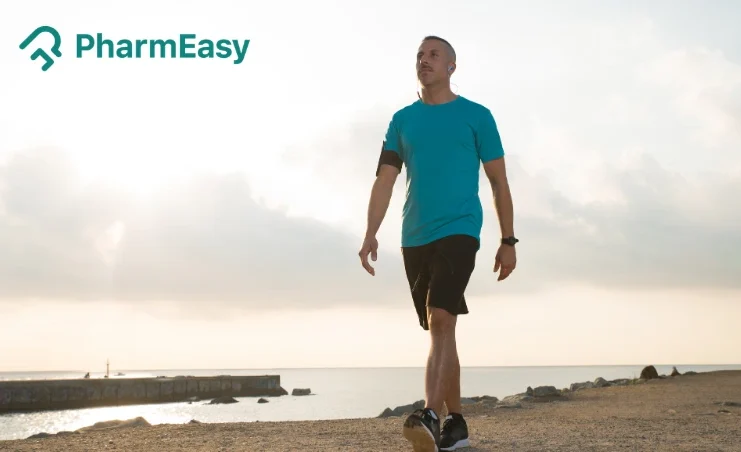
Walking briskly supports heart health and joint flexibility, and it doubles as an easy mental break from work6.

Swimming, cycling, and dancing all raise your heart rate while keeping you engaged and are effective ways to help manage body weight over time7.
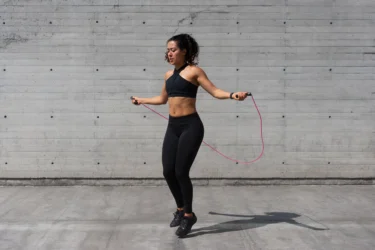
Skipping rope is an efficient way to fit in a solid dose of activity in a short amount of time, useful if time is the main obstacle to exercising regularly8.
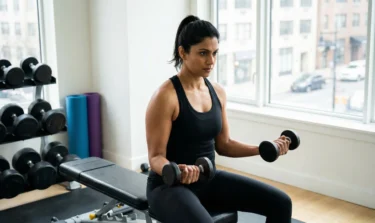
Strength training, whether with weights or resistance bands, doesn’t require expensive equipment to start9. Lifting filled one-litre water bottles is a reasonable starting point, and it’s worth working with a fitness professional before progressing to heavier weights.
Cancer takes a toll on both physical and mental health, for patients and the people around them. No lifestyle change, including exercise, can guarantee that someone won’t develop cancer. But staying physically active, alongside managing the modifiable risk factors covered above, is one of the more evidence-backed ways to work on lowering personal risk over time.
Also Read: 10 Foods to Include in Your Diet for Lowering Your Cancer Risk
No. Regular physical activity is associated with a lower risk of certain cancers in research studies, but it doesn’t eliminate the risk. Genetics, environmental exposures, and other factors outside a person’s control also play a role in the development of cancer; therefore, exercise is best considered as one part of an overall cancer risk-reduction approach rather than a guarantee of preventing cancer.
Health authorities generally recommend at least 150 to 300 minutes of moderate-intensity activity, or 75 to 150 minutes of vigorous activity, spread across the week1,3. That said, some activity is better than none, and benefits appear to start accumulating well before someone reaches that full range.
For many people, exercising during cancer treatment may be safe; however, it also depends on the individual’s diagnosis, treatment stage, and overall health. Light-to-moderate activity is often encouraged during treatment when a person feels able to do it, but the type, intensity, and timing should be discussed with the treating oncology team rather than deciding it independently.
Most research points to overall activity level mattering more than any single best type of exercise. Both aerobic activity and strength training have been linked to benefits, and a mix of the two, done consistently, tends to be more sustainable than focusing on one form alone.
No. Increasing activity at any age or stage of life is associated with health benefits compared with remaining sedentary. Starting later still counts, and consistency going forward matters more than past inactivity.
1. Cooper GM. The Development and Causes of Cancer. Accessed August 18, 2026. https://www.ncbi.nlm.nih.gov/books/NBK9963/
2. Cancer Causes and Risk Factors and the Elements of Cancer Control. National Academies Press (US); 2007. Accessed August 18, 2026. https://www.ncbi.nlm.nih.gov/books/NBK54025/
3. Cancer Risk Factors. CDC. Accessed August 18, 2026. https://www.cdc.gov/cancer/risk-factors/index.html
4. McTiernan A, Friedenreich CM, Katzmarzyk PT, et al. Physical Activity in Cancer Prevention and Survival: A Systematic Review. Med Sci Sports Exerc. 2019;51(6):1252-1261. doi:10.1249/MSS.0000000000001937. https://pmc.ncbi.nlm.nih.gov/articles/PMC6527123/
5. Feng Y, Feng X, Wan R, Luo Z, Qu L, Wang Q. Impact of exercise on cancer: mechanistic perspectives and new insights. Front Immunol. 2024;15:1474770. doi:10.3389/fimmu.2024.1474770. https://pmc.ncbi.nlm.nih.gov/articles/PMC11427289/
6. Stein MJ, Baurecht H, Bohmann P, et al. Usual walking Pace and risk of 28 cancers– results from the UK biobank. BMC Cancer. 2025;25:869. doi:10.1186/s12885-025-14258-x. https://www.researchgate.net/publication/391740187_Usual_walking_Pace_and_risk_of_28_cancers-_results_from_the_UK_biobank
7. Jia N, Zhou Y, Dong X, Ding M. The antitumor mechanisms of aerobic exercise: A review of recent preclinical studies. Cancer Med. 2021;10(18):6365-6373. doi:10.1002/cam4.4169. https://pmc.ncbi.nlm.nih.gov/articles/PMC8446393/
8. Tang Z, Ming Y, Wu M, et al. Effects of Caloric Restriction and Rope-Skipping Exercise on Cardiometabolic Health: A Pilot Randomized Controlled Trial in Young Adults. Nutrients. 2021;13(9):3222. doi:10.3390/nu13093222. https://pmc.ncbi.nlm.nih.gov/articles/PMC8467906/
9. Mazzilli KM, Matthews CE, Salerno EA, Moore SC. Weight Training and Risk of 10 Common Types of Cancer. Med Sci Sports Exerc. 2019;51(9):1845-1851. doi:10.1249/MSS.0000000000001987. https://pmc.ncbi.nlm.nih.gov/articles/PMC6697215/
Disclaimer: The information provided here is for educational/awareness purposes only and is not intended to be a substitute for medical treatment by a healthcare professional and should not be relied upon to diagnose or treat any medical condition. The reader should consult a registered medical practitioner to determine the appropriateness of the information and before consuming any medication. PharmEasy does not provide any guarantee or warranty (express or implied) regarding the accuracy, adequacy, completeness, legality, reliability or usefulness of the information; and disclaims any liability arising thereof.
Links and product recommendations in the information provided here are advertisements of third-party products available on the website. PharmEasy does not make any representation on the accuracy or suitability of such products/services. Advertisements do not influence the editorial decisions or content. The information in this blog is subject to change without notice. The authors and administrators reserve the right to modify, add, or remove content without notification. It is your responsibility to review this disclaimer regularly for any changes.


Comments

Leave your comment...
You may also like


















Comments