



Top Foods That May Help With Muscle Cramps
By Dr. Malavika Athavale +2 more

Medically reviewed by Dr. Malavika Athavale
Last updated: Oct 21, 2026 Published on: May 3, 2018


Get,

to manage your symptom
Get your,

4 Cr+ families
benefitted

OTP sent to 9988776655



You’ve successfully subscribed to receive
doctor-approved tips on
Whatsapp

Get ready to feel your best.


Register to Avail the Offer
Send OTPBy continuing, you agree with our Privacy Policy and Terms and Conditions
Hi There,
Sign up on PharmEasy now!!


Trusted by 4 crore+ families

OTP sent to 9988776655
You have unlocked 25% off on medicines


Code: NU25

By Dr. Malavika Athavale +2 more
Table of Contents
Only few things interrupt sleep or a workout as abruptly as a muscle cramp. A muscle cramp is a sudden, involuntary and often painful tightening of a muscle that can last from a few seconds to several minutes. While cramps are usually harmless and resolve on their own, they can be distressing, especially when they occur frequently1.
A balanced diet rich in fluids and key minerals supports normal muscle and nerve function, and may help reduce how often cramps occur in some people. Here we will discuss some evidence-based look food choices that may help with cramps. But first let’s see what causes them.
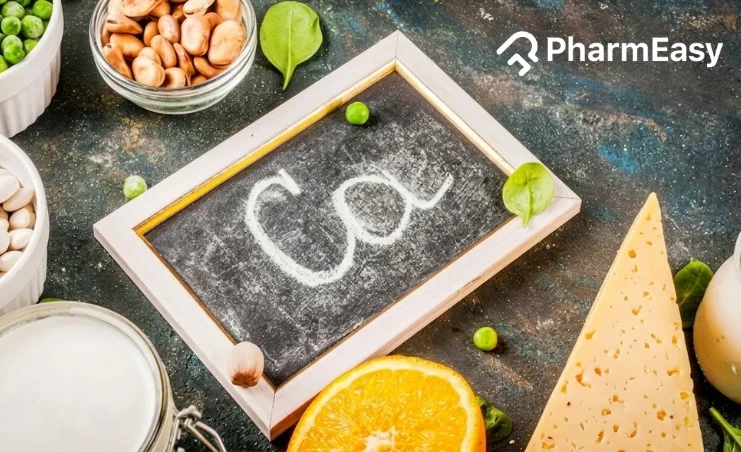
Although the exact cause of muscle cramps is not fully understood, factors commonly associated with them include dehydration, electrolyte imbalances (involving minerals such as potassium, magnesium, calcium and sodium), muscle fatigue, prolonged sitting or standing, nerve compression and reduced blood flow. Certain groups, such as older adults, pregnant women, athletes and people with conditions like diabetes, thyroid disorders or kidney disease, may experience cramps more often2.
Did you know?
Muscle contraction and relaxation depend on the coordinated movement of electrolytes (electrically charged minerals) across cell membranes3:
When any of these fall out of range, whether through heavy sweating, inadequate intake, illness or certain medicines such as diuretics, the risk of cramping may rise.
Owing to the presence of some essential nutrients needed for proper muscle function, the following food items may help avoid/ease muscle cramps:
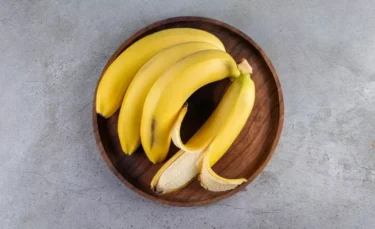
A medium banana provides roughly 422 mg of potassium along with some magnesium and carbohydrates, which is one reason athletes often reach for them during matches. Adding a banana to breakfast cereal or eating one before exercise is a simple way to support daily potassium intake (the recommended adequate intake for adults is about 2320 mg for women and 3016 mg for men daily)4,5.
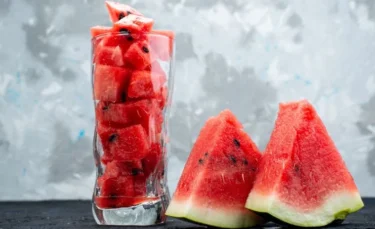
Watermelon is 92% per cent water and also supplies potassium, making it useful on two fronts: hydration and electrolyte intake. A couple of slices after outdoor activity in hot weather can help replace lost fluids. Muskmelon (cantaloupe) is similarly hydrating and potassium-rich6,7.
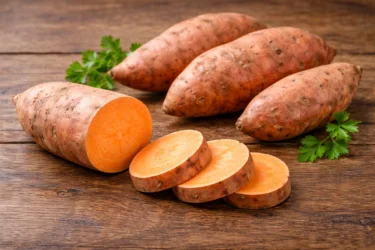
One large baked sweet potato with skin offers around 855 mg of potassium (roughly 25-30 per cent of an adult’s daily requirement) plus some magnesium and calcium. Enjoy them roasted, boiled, baked or mashed8,9.
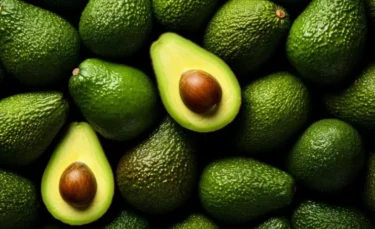
Avocados are among the most potassium-dense fruits, with a whole fruit providing roughly 975 mg, which is about twice that of a banana. They also contain magnesium. Try mashed avocado on toast or a sandwich in place of mayonnaise, or add slices to a salad. Because avocados are calorie-dense, moderation is sensible10.
About 975 milligram of potassium is present in one avocado that is twice as much as a sweet potato or a banana. Since it helps maintain your heart health and enables your muscles to function, potassium is believed to be essential. To cope with muscular cramps, add an avocado in mashed form to your breakfast sandwich instead of your go-to mayonnaise spread. You can even add a piece to your salad. Remember to consume in moderation as they are high in fat and calories24.
Dr. Siddharth Gupta, B.A.M.S, M.D (Ayu)
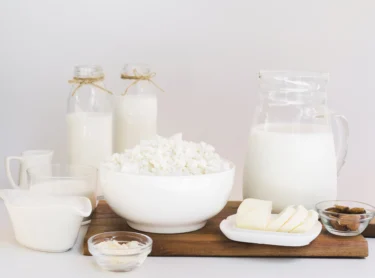
Calcium is central to muscle contraction, and dairy foods such as milk, curd (yogurt) and cheese are among its richest sources; 100 g of yogurt provides around 167 mg of calcium, plus fluids, sodium and potassium. Non-dairy options include ragi (finger millet), sesame seeds, almonds, leafy greens and small fish eaten with bones. Adults generally need about 1,000 mg of calcium daily11,12,13,14.
Also Read: 10 Foods for Strong & Healthy Bones
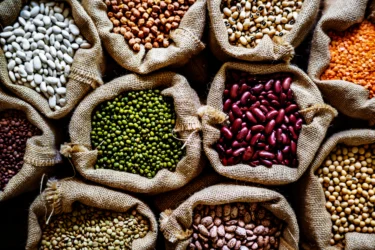
Dals, beans and chickpeas are good plant sources of magnesium. One cup of lentils provides roughly 90 mg of magnesium, while a cup of cooked black beans offers about 120 mg (adult requirements are around 310–420 mg per day). Legumes also supply fibre, which supports blood sugar management and heart health15,16.
Magnesium is abundant in legumes like beans and lentils. About 90 milligram of magnesium is present in one cup of lentils, whereas 120 milligram is present in one cup of cooked black beans. Additionally, they contain a lot of fibre, and studies have shown that fibre-rich meals may help manage blood sugar, reduce levels of ‘bad’ also known as LDL cholesterol, and reduce the occurrence as well as the intensity of period cramps25.
Dr. Rajeev Singh, BAMS
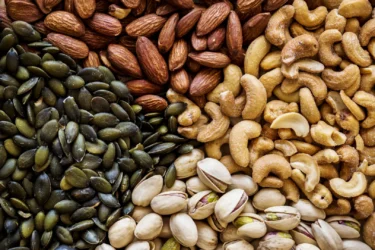
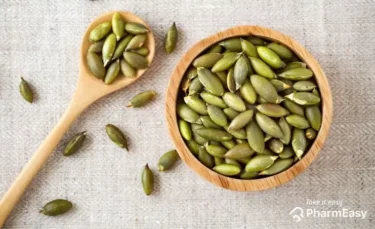
Almonds, cashews, pumpkin seeds and sunflower seeds are concentrated sources of magnesium; about 28 g (a small handful) of almonds provides roughly 77 mg. A handful as a snack, or seeds sprinkled over salads and curd, is an easy daily habit17,18.

Water remains the foundation: most adults should aim for adequate fluid intake through the day, and more during exercise, hot weather, fever, vomiting or diarrhea. Coconut water offers natural potassium, sodium and magnesium, making it a gentle rehydration option. Diluted lemon water with a pinch of salt, buttermilk (chaas), tomato juice and citrus juices are other fluid-and-electrolyte options. Urine that is pale yellow generally indicates good hydration19.

Dark chocolate (70 per cent cocoa or higher) supplies magnesium (roughly 252 mg per 100 g serving) along with antioxidant plant compounds called flavanols. A small square or two can contribute to magnesium intake, though it should not replace whole-food sources given its sugar and calorie content20.
Note: Nutrition alone cannot guarantee a cramp-free life, and research on diet and cramps is still evolving. It’s best to discuss with your doctor if you have persistent or frequent cramps as these may indicate the presence of some underlying health issues as well.
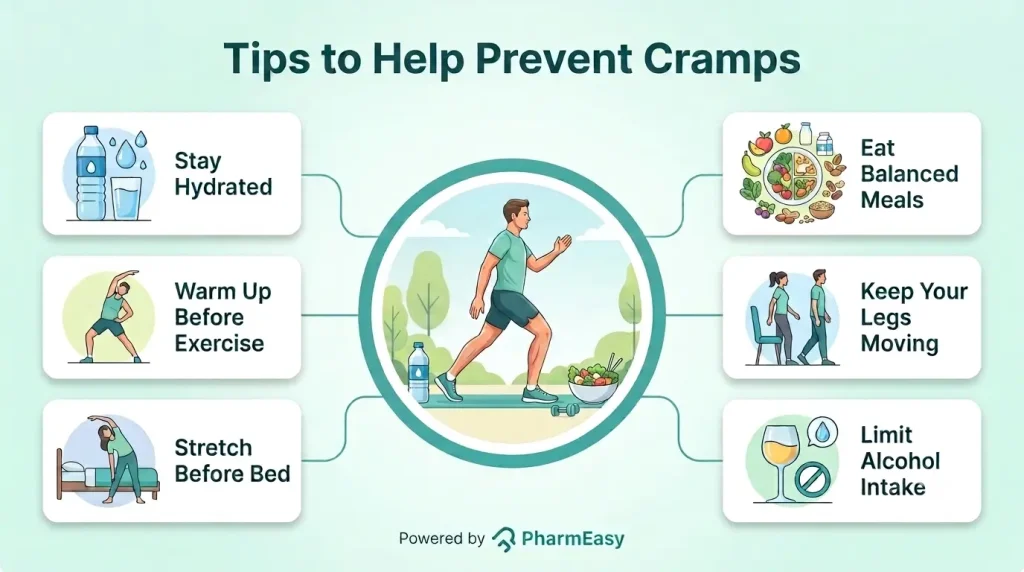
Occasional cramps are common and usually not a cause for concern. However, consult a doctor if cramps:
A doctor will check for the underlying causes, including electrolyte disturbances, circulation problems or medication effects, and advise whether any supplement is appropriate. Do not self-prescribe high-dose mineral supplements, as excess potassium or magnesium can be harmful, particularly for people with kidney disease1.
Also Read: Top High Protein Vegan Foods You Should Eat
Muscle cramps have many possible triggers, and diet is one piece of the puzzle. While no food can claim to cure cramps, a well-hydrated body and a diet that regularly includes potassium-, magnesium- and calcium-rich foods such as bananas, melons, sweet potatoes, avocados, dairy, legumes, nuts and seeds, along with adequate fluids, supports healthy muscle and nerve function and may help reduce the frequency of cramps. Pair good nutrition with regular stretching, sensible exercise habits and timely medical advice for persistent problems.
Also Read: Muscle Gain Diet: Best Foods, 7 Day Meal Plan & Nutrition Tips
Cramps are often linked with low levels of potassium, magnesium, calcium or sodium, as well as dehydration. However, many cramps occur without any deficiency, so persistent cramps should be evaluated by a doctor.
Bananas provide potassium and magnesium, which support normal muscle function, and are a convenient pre- or post-exercise snack. They contribute to prevention overtime rather than offering instant relief during a cramp.
Around 8 glasses (about 2–2.5 litres) a day suits most adults, with more needed during exercise, hot weather or illness. Pale yellow urine is a practical sign of adequate hydration.
Gently stretch the muscle (for a calf cramp, straighten the leg and pull your toes towards you), then massage it and apply a warm compress. Stretching the calves before bed may help reduce night cramps.
Not without medical advice. Evidence for supplements in cramp prevention is mixed, and excess minerals can be harmful, especially in kidney disease. Ask a doctor before starting any supplement.
See a doctor if cramps are frequent, severe, disturb sleep regularly, come with weakness or swelling, or started after a new medicine. These may point to an underlying condition needing evaluation.
1. Muscle Cramps. Accessed July 20, 2026. Available from: https://medlineplus.gov/musclecramps.html
2. How to prevent and treat muscle cramps. June 15, 2020. Accessed July 21, 2026. Available from: https://wexnermedical.osu.edu/our-stories/how-to-prevent-and-treat-muscle-cramps
3. Shrimanker I, Bhattarai S. Electrolytes. In: StatPearls. StatPearls Publishing; 2026. Accessed July 20, 2026. Available from: http://www.ncbi.nlm.nih.gov/books/NBK541123/
4. Bananas, raw – Nutrients – SR Legacy | USDA FoodData Central. Accessed July 20, 2026. Available from: https://fdc.nal.usda.gov/food-details/173944/nutrients
5. Potassium • The Nutrition Source. June 3, 2019. Accessed July 22, 2026. Available from: https://nutritionsource.hsph.harvard.edu/potassium/
6. Simon D. Watermelon Nutrition Facts and Benefits – Franklin County Center | N.C. Cooperative Extension. Franklin County Center. July 18, 2024. Accessed July 20, 2026. Available from: https://franklin.ces.ncsu.edu/news/watermelon-nutrition-facts-and-benefits/
7. Watermelon : Center for Agriculture, Food, and the Environment (CAFE) at UMass Amherst. Accessed July 22, 2026. Available from: https://www.umass.edu/agriculture-food-environment/nutrition/publications-resources/produce-spotlight/watermelon-0
8. Simon D. Nutritional Benefits of Sweetpotatoes – Franklin County Center | N.C. Cooperative Extension. Franklin County Center. May 8, 2025. Accessed July 20, 2026. Available from: https://franklin.ces.ncsu.edu/news/nutritional-benefits-of-sweetpotatoes/
9. Content – Health Encyclopedia – URochester Medicine. Accessed July 20, 2026. Available from: https://www.urmc.rochester.edu/encyclopedia/content?ContentTypeID=76&ContentID=11508-2
10. Avocados, raw, all commercial varieties – Nutrients – SR Legacy | USDA FoodData Central. Accessed July 20, 2026. Available from: https://fdc.nal.usda.gov/food-details/171705/nutrients
11. Anitha S, Givens DI, Botha R, et al. Calcium from Finger Millet—A Systematic Review and Meta-Analysis on Calcium Retention, Bone Resorption, and In Vitro Bioavailability. Sustainability. 2021;13(16):8677. doi:10.3390/su13168677 Available from: https://www.researchgate.net/publication/354353188_Calcium_from_Finger_Millet-A_Systematic_Review_and_Meta Analysis_on_Calcium_Retention_Bone_Resorption_and_In_Vitro_Bioavailability
12. Hendley J. Calcium-rich foods: How to boost your intake of this important mineral. Harvard Health. February 4, 2025. Accessed July 20, 2026. Available from: https://www.health.harvard.edu/diet-and-nutrition/calcium-rich-foods-how-to-boost-your-intake-of-this-important-mineral
13. Branch NSC and O. Calcium and Vitamin D: Important for Bone Health. National Institute of Arthritis and Musculoskeletal and Skin Diseases. May 5, 2023. Accessed July 20, 2026. Available from: https://www.niams.nih.gov/health-topics/calcium-and-vitamin-d-important-bone-health
14. Yogurt, plain, nonfat – Nutrients – Foundation | USDA FoodData Central. Accessed July 22, 2026. Available from: https://fdc.nal.usda.gov/food-details/2647437/nutrients
15. Beans, black, mature seeds, cooked, boiled, without salt – Nutrients – SR Legacy | USDA FoodData Central. Accessed July 20, 2026. Available from: https://fdc.nal.usda.gov/food-details/173735/nutrients
16. Lentils, raw – Nutrients – SR Legacy | USDA FoodData Central. Accessed July 20, 2026. Available from: https://fdc.nal.usda.gov/food-details/172420/nutrients
17. Seeds, pumpkin seeds (pepitas), raw – Nutrients – Foundation | USDA FoodData Central. Accessed July 20, 2026. Available from: https://fdc.nal.usda.gov/food-details/2515380/nutrients
18. Nuts, almonds, dry roasted, with salt added – Nutrients – Foundation | USDA FoodData Central. Accessed July 20, 2026. Available from: https://fdc.nal.usda.gov/food-details/323294/nutrients
19. Coconut Water -Properties, Uses, Nutritional Benefits in Health and Wealth and in Health and Disease: A Review. Accessed July 20, 2026. Available from: https://www.academia.edu/30536202/Coconut_Water_Properties_Uses_Nutritional_Benefits_in_Health_and_Wealth_and_in_Health_and_Disease_A_Review
20. Cinquanta L, Di Cesare C, Manoni R, Piano A, Roberti P, Salvatori G. Mineral essential elements for nutrition in different chocolate products. Int J Food Sci Nutr. 2016;67(7):773-778. doi:10.1080/09637486.2016.1199664 Available from: https://pubmed.ncbi.nlm.nih.gov/27346251/
21. How to get rid of muscle cramps in your legs. Harvard Health. April 3, 2021. Accessed July 21, 2026. Available from: https://www.health.harvard.edu/pain/how-to-get-rid-of-muscle-cramps-in-your-legs
22. When do you need to add electrolytes to your exercise? May 10, 2024. Accessed July 21, 2026. Available from: https://health.osu.edu/wellness/exercise-and-nutrition/hydration-and-electrolytes
23. I Have Leg Cramps At Night—Am I Normal? | University of Utah Health. December 20, 2018. Accessed July 21, 2026. Available from: https://healthcare.utah.edu/the-scope/health-library/all/2023/07/i-have-leg-cramps-night-am-i-normal
24. Bergh B. The avocado and human nutrition. I. Some human health aspects of the avocado. In: Proceedings of the Second World Avocado Congress; 1992 Apr 21–26; Orange, California, USA. Riverside (CA): University of California; 1992. p. 25-35. Available from: https://www.avocadosource.com/WAC2/WAC2_p025.pdf
25. Sankara Rao DS, Doesthale YG. Mineral composition of four Indian food legumes. J Food Sci. 1981;46(6):1962-1963. doi:10.1111/j.1365-2621.1981.tb04534.x. Available from: https://ift.onlinelibrary.wiley.com/doi/abs/10.1111/j.1365-2621.1981.tb04534.x
Disclaimer: The information provided here is for educational/awareness purposes only and is not intended to be a substitute for medical treatment by a healthcare professional and should not be relied upon to diagnose or treat any medical condition. The reader should consult a registered medical practitioner to determine the appropriateness of the information and before consuming any medication. PharmEasy does not provide any guarantee or warranty (express or implied) regarding the accuracy, adequacy, completeness, legality, reliability or usefulness of the information; and disclaims any liability arising thereof.
Links and product recommendations in the information provided here are advertisements of third-party products available on the website. PharmEasy does not make any representation on the accuracy or suitability of such products/services. Advertisements do not influence the editorial decisions or content. The information in this blog is subject to change without notice. The authors and administrators reserve the right to modify, add, or remove content without notification. It is your responsibility to review this disclaimer regularly for any changes.
 65
65  4
4Comments

Leave your comment...
You may also like






















Comments