
Introduction
Uric acid is a naturally occurring waste product produced when the body breaks down purines. Purines are naturally occurring substances found in the body’s cells and in many foods and drinks. While uric acid is typically filtered out of the body by the kidneys and excreted in urine, high levels of uric acid can lead to a variety of health problems. Most people are familiar with the term ’uric acid’ even though there are many facts about this substance that are not well known. In this article, we will explore some of the lesser-known facts about uric acid. It is important for individuals to be aware of their uric acid levels and to work with their healthcare provider to maintain a healthy lifestyle and steer clear of health problems related to uric acid.
Causes of High Uric Acid Levels
Abnormal levels of uric acid can be caused by a variety of factors, including diet, genetics, and certain medical conditions. Mentioned below are the two most common mechanisms, or causes of high uric acid levels: increased production of uric acid and decreased renal excretion of uric acid3.
Advertisement
Uric acid overproduction may be due to the following:
- A diet rich in purines, including red meat, organ meats (such as liver and kidney), and certain seafood like shellfish, sardines, and anchovies Inherited disorders of purine metabolism due to deficiency of enzymes responsible for metabolizing purine
- Diseases characterized by increased cell breakdown like:
- Psoriasis, characterized by dry itchy patches on skin
- Paget’s disease of bone in which both the breakdown and regrowth of bone tissue are increased
- Rhabdomyolysis is a condition involving rapid breakdown of skeletal muscle.
- Certain blood cancers (such as leukemia and lymphoma) or their treatment, which can cause a rapid breakdown of cells known as tumor lysis syndrome
- Hemolytic anemia, a condition in which red blood cells break down faster than normal
Decreased uric acid excretion is found in the following situations
- Acute or chronic kidney disease
- Down syndrome, a genetic disorder caused by an extra copy of chromosome 21, which may be associated with reduced uric acid clearance by the kidneys
- Hypothyroidism, a condition characterized by reduced production of thyroid hormone.
- Hyperparathyroidism, which is associated with the overproduction of parathyroid hormone
- Sarcoidosis, an inflammatory condition that may affect kidney function
- Hypovolemia, a condition in which the body has a reduced circulating blood volume.
- Certain medicines, such as thiazide and loop diuretics (water pills commonly used to treat high blood pressure), low-dose aspirin and other salicylates, ethambutol, pyrazinamide, and cyclosporine, which can reduce the kidneys’ ability to remove uric acid
The following are the risk factors that cause high uric acid levels:
In addition to the causes above, certain factors are known to increase the likelihood of developing high uric acid levels2:
- Obesity
- Hypertension
- Metabolic syndrome and type 2 diabetes
- Chronic kidney disease
- Regular alcohol consumption, particularly beer and spirits
- A diet high in purine-rich foods or sugary/fructose-containing drinks
- Family history of gout or hyperuricemia (genetic predisposition)
If you have high levels of uric acid, it’s important to talk to your doctor about ways to manage it and reduce the risks that will be discussed in the coming section.
Risks of High Uric Acid Levels
High levels of uric acid (hyperuricemia ) in your body can increase the risk of the following conditions:
- Gout: Deposition of monosodium urate crystals in the joints causes severe pain, tenderness, and redness (an acute gout attack). Long-standing gout has also been associated with an increased risk of cardiovascular disease, although the relationship is complex and influenced by other risk factors.
- Kidney stones (Renal calculi): High levels of uric acid may lead to the formation of uric acid kidney stones, which, if left untreated, can cause urinary obstruction, recurrent infections, or kidney damage.
- Metabolic syndrome: Hyperuricemia is associated with metabolic syndrome, which includes high blood pressure, high blood glucose, abnormal cholesterol levels, and excess body fat.
Diagnosis of High Uric Acid Levels
Diagnosing hyperuricemia and its related conditions usually involves a combination of the following:
- Blood test (serum uric acid test): This is the main test used to measure the amount of uric acid in the blood. However, a single high reading does not confirm a diagnosis of gout or any other condition on its own. Some people with high uric acid never develop symptoms, and levels can even be normal or low during an acute gout flare.
- Medical history and physical examination: Your doctor will ask about your symptoms, diet, alcohol use, medications, and family history, and will examine any swollen or painful joints for signs of gout, such as redness, warmth, and tenderness, as well as check for tophi (visible deposits of uric acid crystals under the skin).
- Joint fluid analysis (arthrocentesis): This is considered the gold standard for confirming gout. A small sample of fluid is withdrawn from an affected joint using a needle and examined under a microscope for needle-shaped uric acid (monosodium urate) crystals.
- Imaging tests: An ultrasound can sometimes detect a “double contour sign,” which indicates uric acid crystal deposits on the joint surface, while a dual-energy CT scan can identify uric acid deposits, including tophi, without the need for a joint aspiration. X-rays are more useful for detecting joint damage in long-standing gout than for early diagnosis.
- 24-hour urine uric acid test: In some cases, this test may be done to check how much uric acid the kidneys are excreting, which can help determine whether the underlying issue is increased production or decreased excretion, and can guide the choice of medication if treatment is needed.
- Kidney function tests: Blood tests such as creatinine and estimated glomerular filtration rate (eGFR) may be checked, since kidney function affects both the cause of high uric acid levels and the safety and dosing of certain medications.
Treatment Options for High Uric Acid Levels
A serum or blood uric acid level above 6.8mg/dL exceeds the physiological saturation point for urate. However, treatment is not based on uric acid levels alone. Your doctor will decide whether medication is needed based on your symptoms, underlying condition, and risk of complications.
The following are the different categories of medicines, known as uric acid-lowering therapy, which may be prescribed to you to decrease the levels of uric acid4:
Advertisement
- Xanthine oxidase inhibitors: They will decrease the formation of uric acid by inhibiting the xanthine oxidase enzyme, which causes purines to break down into uric acid.
- Uricosurics that increase uric acid removal in urine
- Uricases (such as pegloticase), are enzymes that convert uric acid into a more soluble form that is easily removed from the body. These are generally reserved for people with severe, treatment-refractory gout who have not responded to other medications, rather than being used as a first-line option.
Lifestyle modifications:
- Weight management: Obesity or high body weight increases the risk of hyperuricemia. If you’re obese or overweight, gradual weight loss may help lower uric acid levels and reduce the risk of gout.
- Proper hydration: Drinking a sufficient amount of water and other unsweetened beverages may help reduce the risk of uric acid kidney stone formation and support normal kidney function.
- Exercises: Low- to moderate-intensity exercise, such as yoga, cycling, and walking, may help lower uric acid levels over time. Very intense or strenuous exercise, on the other hand, can temporarily raise uric acid levels, so it’s best to increase activity levels gradually6.
Prevention of High Uric Acid Levels
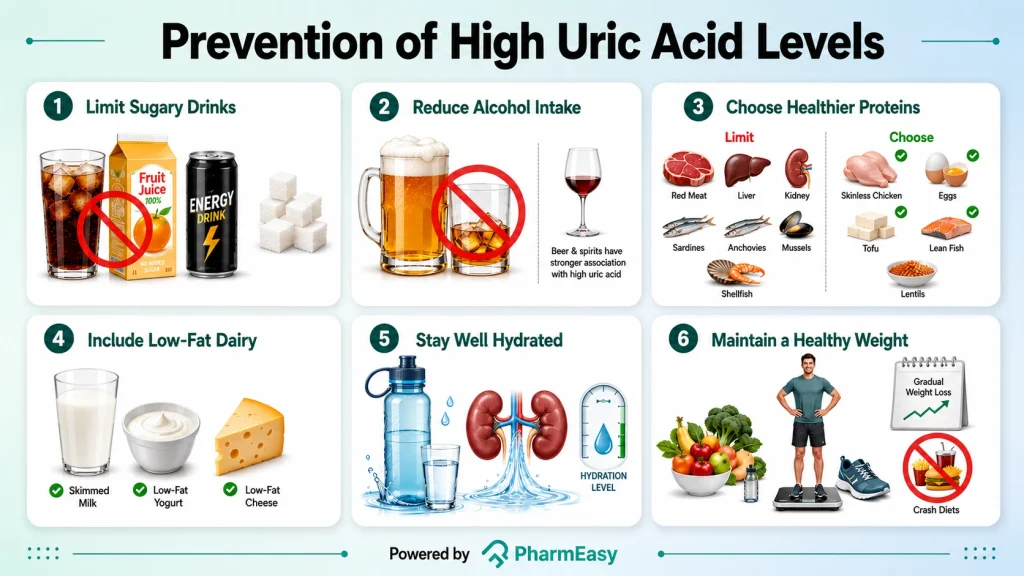
High uric acid levels in the body may be reduced by the following recommendations4:
- Reduce the intake of sugary or fructose-containing beverages, such as soda and fruit juices
- Limit or avoid alcohol consumption, especially beer and spirits, which are more strongly linked to raised uric acid levels than other alcoholic drinks.
- Limit red meat, organ meats (such as liver and kidney), and high-purine seafood (such as sardines, anchovies, mussels, and shellfish); other fish and lean protein can generally still be enjoyed in moderation as part of a balanced diet.
- Choose low-fat or skimmed dairy products, which have been linked to lower uric acid levels.
- Stay well hydrated by drinking plenty of water throughout the day
- Maintain a healthy body weight, aiming for gradual, sustained weight loss if you are overweight, rather than rapid or crash dieting
Also Read: Ketosis and Ketoacidosis: How Are They Different?
Conclusion
Uric acid is a waste product formed when the body breaks down purines, which are naturally occurring substances found in the body’s cells and many foods. Normally, uric acid is filtered out of the body by the kidneys and excreted in the urine, but sometimes, high levels of uric acid can increase the risk of conditions such as gout and kidney stones, and may be associated with cardiovascular disease among others. While there are several factors that can contribute to high uric acid levels, lifestyle changes, and when appropriate, medication can help manage uric acid levels and reduce the risk of complications. It is important for individuals to be aware of their uric acid levels and take steps to maintain a healthy lifestyle.
Frequently Asked Questions (FAQs)
What is the uric acid normal range?A serum uric acid level above 6.8 mg/dL exceeds the physiological saturation point for urate crystals. However, the normal reference range varies between laboratories, and treatment decisions are not based on uric acid levels alone.
What causes high uric acid levels in the body?The two most common etiologies or the causes of high uric acid levels: are overproduction of uric acid and decreased excretion of uric acid by the kidneys1.
Which are the uric acid foods to avoid?Limit organ meats, high-purine seafood, alcohol (especially beer and spirits), and sweetened beverages5.
How to reduce uric acid naturally?High uric acid levels may be helped by maintaining a healthy weight, staying well hydrated, and engaging in regular low to moderate-intensity exercises like yoga, cycling and, walking4.
What are the medicines for uric acid?The main categories of urate-lowering medicines include xanthine oxidase inhibitors, uricosurics, and uricases. Your doctor will decide whether medication is needed based on your symptoms and overall clinical condition.
References
- George C, Minter DA. Hyperuricemia. InStatPearls [Internet] 2022 Jul 18. StatPearls Publishing. Available at: https://www.ncbi.nlm.nih.gov/books/NBK459218/
- Li L, Zhang Y, Zeng C. Update on the epidemiology, genetics, and therapeutic options of Hyperuricemia. American Journal of Translational Research. 2020; 12(7):3167. Available at: https://www.ncbi.nlm.nih.gov/pmc/articles/PMC7407685/
- De Oliveira EP, Burini RC. High plasma uric acid concentration: causes and consequences. Diabetology & metabolic syndrome. 2012 Dec; 4(1):1-7. Available at: https://www.ncbi.nlm.nih.gov/pmc/articles/PMC3359272/
- Sattui SE, Gaffo AL. Treatment of Hyperuricemia in gout: current therapeutic options, latest developments and clinical implications. Therapeutic advances in musculoskeletal disease. 2016 Aug; 8(4):145-59. Available at: https://www.ncbi.nlm.nih.gov/pmc/articles/PMC4959626/
- Líška D. Non-pharmacological treatment of gout. Vnitrni Lekarstvi. 2021 Jan 1; 67(E-2):25-8. Available at: https://europepmc.org/article/med/34074101
- Hou Y, Ma R, Gao S, Kaudimba KK, Yan H, Liu T, Wang R. The effect of low and moderate exercise on Hyperuricemia: protocol for a randomized controlled study. Frontiers in Endocrinology. 2021:1113. Available at: https://www.frontiersin.org/articles/10.3389/fendo.2021.716802/full
Disclaimer: The information provided here is for educational/awareness purposes only and is not intended to be a substitute for medical treatment by a healthcare professional and should not be relied upon to diagnose or treat any medical condition. The reader should consult a registered medical practitioner to determine the appropriateness of the information and before consuming any medication. PharmEasy does not provide any guarantee or warranty (express or implied) regarding the accuracy, adequacy, completeness, legality, reliability or usefulness of the information; and disclaims any liability arising thereof.
Links and product recommendations in the information provided here are advertisements of third-party products available on the website. PharmEasy does not make any representation on the accuracy or suitability of such products/services. Advertisements do not influence the editorial decisions or content. The information in this blog is subject to change without notice. The authors and administrators reserve the right to modify, add, or remove content without notification. It is your responsibility to review this disclaimer regularly for any changes.
 12
12 






































Comments