




10 Health Benefits of Giloy – The Ultimate Immunity Booster
By Dr. Raghuveer +2 more

Medically reviewed by Dr. Avinav Gupta
Last updated: Oct 16, 2026 Published on: Apr 28, 2022


Get,

to manage your symptom
Get your,

4 Cr+ families
benefitted

OTP sent to 9988776655



You’ve successfully subscribed to receive
doctor-approved tips on
Whatsapp

Get ready to feel your best.


Register to Avail the Offer
Send OTPBy continuing, you agree with our Privacy Policy and Terms and Conditions
Hi There,
Sign up on PharmEasy now!!


Trusted by 4 crore+ families

OTP sent to 9988776655
You have unlocked 25% off on medicines


Code: NU25
Comments
Leave your comment here

By Dr. Raghuveer +2 more
Table of Contents
There’s a growing trend nowadays towards using natural products such as herbs for managing health issues, although this practice is not new. Especially in India, the traditional medicine systems, such as Ayurveda, Unani, and Siddha ,which mainly use herbs to manage diseases, have been followed since ages1. Giloy is one such medicinal herb that is highly valued in Ayurveda. and is said to have several potential health benefits. It aids in treating different types of fevers and other health related problems. It is believed to be one of the ‘immortality’ plants and called as amrita or amritavalli in Sanskrit2. Let’s have a detailed look at this wonder herb in this guide.
Giloy scientifically is the Tinospora Cordifolia plant, belonging to the family Menispermaceae. Commonly known as Guduchi, Gurcha, and heart-leaved moonseed, this plant is cultivated in tropical and subtropical region and is known for its rich nutritional value. The stem, root and leaves of this plant are used in ayurvedic medicines to manage several health conditions. Fresh plant is more commonly used than dried plant, because of its high effectiveness3. Although it tastes bitter, according to ayurveda, it aids in removing Vata and Kapha dosha from the body1. In India, it is one of the traditional medicinal herbs which is said to have various health benefits.
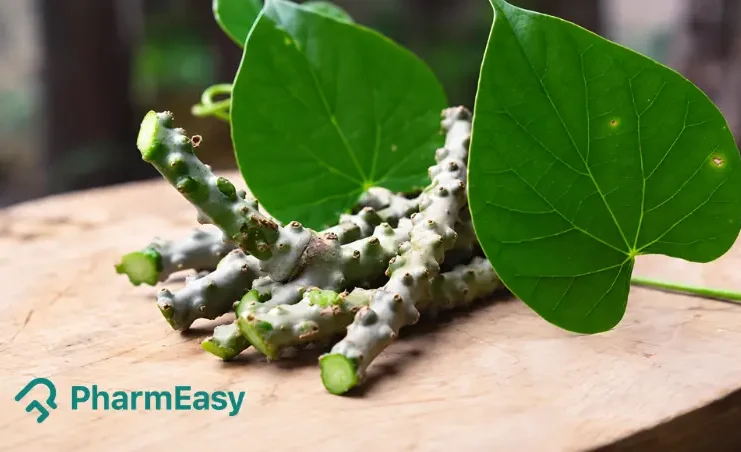
Giloy contains several essential nutrients such as copper, iron, manganese, zinc, calcium, and phosphorous. It also has alkaloids, steroids, glycosides, sesquiterpenoid, essential oils, fatty acids, and aliphatic compounds3. The main nutritional content of giloy is:
There are about 292.54 calories per 100g of giloy3.
Owing to its rich nutrient value, Giloy may have the following properties- anti-inflammatory, antioxidant, antimicrobial, antispasmodic and immuno-boosting3,4.
Giloy is used in Ayurveda for managing several health conditions. These include:

Over the years, I have observed that Giloy may have promising anti-HIV effects. It has been found to decrease the recurrent resistance of the HIV virus, which can improve the effectiveness of HIV therapy. Additionally, it has been shown to stimulate certain immune cells, such as B lymphocytes, macrophages, and polymorphonuclear leucocytes, and enhance the percentage of hemoglobin, suggesting its potential application in managing the disease10.
Dr. Rajeev Singh, BAMS
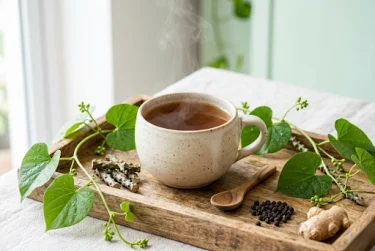
Initial research showed that giloy may improve immunity and help fight viral infections like SARS-COVID-19 infection6. Though there is no evidence that Giloy can cure coronavirus infection but it can raise your immunity to fight against it. You can take Giloy kadha or Giloy juice two times per day or you can also combine giloy with ashwagandha which further aids in avoiding infection risk5,6.

In Ayurveda, Giloy is known as a ‘Madhunashini’ which means ‘destroyer of sugar’. It may aid in the insulin secretion and utilisation, which ultimately leads to improved blood sugar levels. Initial research has shown that regular consumption of Giloy juice can help lower blood glucose levels in individuals with type -2 diabetes7. Giloy may also be useful for avoiding the risk of diabetes complications like ulcers, and kidney problems5.

This herb can activate the immune system of our body, thereby improving immunity and increasing the vitality in an individual. It helps activate immune cells, modulates inflammatory pathways and boosts body’s defense mechanism, thereby improving overall health2,8.
In my experience, I have observed that the extract of Giloy leaves may have hepatoprotective effect. This effect is believed to be due to its ability to neutralize harmful free radicals and inhibit lipid peroxidation, which can damage liver cells. The combined action of Giloy’s constituents and micronutrients work synergistically to protect the liver and promote its normal functioning.
Dr. Siddharth Gupta, B.A.M.S, M.D (Ayu)
Giloy may aid in improving digestion and it may also reduces digestion-related problems like diarrhea, colitis, vomiting, hyperacidity, abdominal pain, loss of appetite, and excessive thirst. It also helps in detoxifying body and enhancing liver function2.

Giloy may help ease mental stress and anxiety by maintaining normal physiological functions. It also aids in soothing your body and promotes sleep. Giloy also has the ability to improve your memory and cognitive functions by crossing the blood brain barrier2.

Giloy contains anti-inflammatory and antioxidant properties, which may aid in reducing arthritis by reducing the inflammation and oxidative stress in your body. Some studies conducted on anti-arthritic property of giloy show that it mainly reduces the inflammation and bone damage due to the ethanoic content present in it3.

Giloy is potentially effective in improving eyesight when applied topically. All you need to do is boil Giloy powder or Giloy leaves in water, once it cools down apply it over the eyes2.

Giloy has been used as a medicine to treat bronchitis and chronic cough. Giloy can help ease the inflammation and irritation in the respiratory tract to help you breathe more freely and therefore it is used for managing asthma by ayurveda2.

Since giloy is high in antioxidants, it can avoid oxidative damage to the skin and that may slow down aging in skin. It may also improve blood circulation, which in turn bestows a natural glow to your skin9. It also known for its antimicrobial and anti-inflammatory property and used as a medicine to deal with skin infections, eczema and psoriasis3.
Even though initial studies are conducted to understand the medicinal properties and health benefits of giloy, further large-scale human research is needed to support it more scientifically in managing diseases. Yet, it seems to be a promising age-old ayurvedic option for several health conditions.
I have observed that Giloy may have potential anti-cancer activity. It has been found to show promising effects in reducing the metastatic potential of B16-F10 melanoma cells, which are associated with its spread. Giloy may work by increasing the levels of certain pro-inflammatory cytokines and anti-angiogenic agents, which can help inhibit the growth and development of blood vessels that support tumor growth10.
Dr. Smita Barode, B.A.M.S, M.S.
Also Read: What Is Hantavirus? Symptoms, Causes, & Effective Prevention
As per Ayurveda, Giloy can be consumed in either a powdered form, in the form of kadha (decoction) or even as juice. You can take 2-3 teaspoons of giloy juice with equal ratio of water in empty stomach for good results6. Nowadays it is also available in capsule and readymade powder. You may take ½ teaspoon of Giloy powder in 1 glass of lukewarm water twice a day. Giloy can also be applied topically as a paste for skin problems8.
Remember, the right dose and formulation vary based on condition being treated and even from one individual to another.
In traditional Indian wellness practices, Giloy is sometimes included in seasonal routines, particularly during the monsoon, a time when seasonal infections tend to be more common. However , it is important to understand that its , traditional use is based on longstanding practice and should not be considered a proven cure or a guaranteed way to prevent illness.
Some traditionally followed combinations include:
It is important to remember that these herbal preparations are supportive measures only. The foundations of good immunity remain simple, everyday habits, such as:
If you choose to use Giloy or other herbal products, use them under the guidance of a qualified healthcare practitioner, particularly if you are pregnant, breastfeeding, have liver disease, autoimmune disorders, or take prescription medicines, as herbal products may not be suitable for everyone and can interact with certain medications
Giloy is available in several forms, and the appropriate amount can differ depending on the form used. The following are general ranges commonly described in traditional practice and product guidance. These are indicative only and should not replace personalised advice4.
It is important to understand that the right dose varies considerably based on a person’s age, overall health, the condition being addressed, and the specific formulation, as the strength of extracts can differ between products5.
Taking more than the recommended amount does not improve benefits and may instead lead to side effects, such as digestive discomfort or, in some cases, an excessive lowering of blood sugar (discussed later).
For these reasons, it is best to begin with the lowest suggested amount and to use Giloy under the guidance of a registered Ayurvedic practitioner or doctor, particularly if you have any health conditions or take regular medication. Medical supervision helps ensure the dose and duration are appropriate for you.
Also Read: Brinjal (Baingan): Uses, Benefits, Side Effects and More!
While Giloy has a long history of traditional use, concerns have been raised about its potential to cause liver injury in some individuals, particularly following reports published from India in 2021. Several patients with suspected Giloy-associated liver injury developed acute hepatitis, and some experienced severe illness requiring liver transplantation or resulting in death. Although these reports do not prove that Giloy will harm everyone who uses it, they highlight that serious liver injury can occur in rare cases
The exact reason why some people develop liver injury is not fully understood. Many reported cases involved prolonged unsupervised use or the use of herbal preparations of varying quality, although a direct causal role for these factors has not been established. Some tested products also contained contaminants such as heavy metals or other compounds, which may have contributed in certain cases.
A balanced view is important here. Giloy is not being declared unsafe, but the reports highlight why responsible use matters. To stay on the safer side:
When in doubt, consult a qualified practitioner before starting or continuing Giloy.
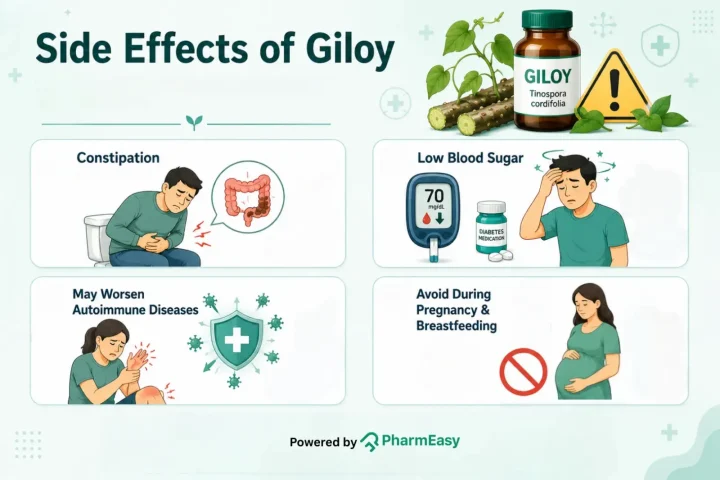
While generally safe, side effects may be observed in some individuals:
Remember moderation in consumption is key. Discuss with an ayurvedic practitioner about the right dose for you. Also, as giloy might interact with some drugs, it’s best to discuss it with a medical doctor before including it your routine diet especially if you have any medical conditions/are on any medications.
Giloy may interact with certain prescription medicines, which is why it should be used cautiously if you are already on treatment for a health condition. Understanding these interactions in simple terms can help you use it more safely11.
Because these interactions can have real consequences, it is strongly advised to consult your doctor before combining Giloy with any prescription medicine. Your doctor can help you decide whether it is suitable and how to use it safely alongside your existing treatment.
Giloy is not suitable for everyone. The following groups should avoid it or use it only under medical supervision, for the reasons explained below12.
If you fall into any of these groups, it is safest to speak to a doctor or qualified Ayurvedic practitioner before considering Giloy.
Also Read: 8 Preventive Measures for Dengue That are Simple & Effective
Giloy is an ancient medicinal herb used to manage several health problems in Ayurveda and Unani system. It is well known for its immune boosting ability and for treating various type of fevers. Although it can be used as medicine for short or long term with very minimal side effects, its best to know the right dose and duration from an ayurvedic doctor. Moreover, it’s advisable to consult your healthcare provider before starting any new herbs including Giloy to avoid unnecessary complications, especially if you are on any medications.
Also Read: Lavender: Uses, Benefits, Side Effects, Precautions & More!
Giloy can be taken daily in moderation, but for people with any health condition, a doctor must be consulted. The duration and frequency of Giloy consumption need to be supervised to avoid further health complications.
You can buy Giloy tablets or juice, online from healthcare and products sites. It is also available in most medical stores and you must only buy the good quality ones.
You can drink Giloy juice every morning but avoid taking it at night. You can have Giloy tablets or capsules anytime during the day. For best results, drink Giloy juice on an empty stomach in the morning.
Yes, Giloy is a beneficial herb, its steam, leaves as well as root can be used to avoid excessive bleeding during menstruation or after abortion or delivery. Although more research is needed here.
Yes, Giloy is believed to possess immunomodulatory properties, which means it may help enhance the body’s immune response. Regular consumption of Giloy is thought to bolster the immune system and protect against infections.
Disclaimer: The information provided here is for educational/awareness purposes only and is not intended to be a substitute for medical treatment by a healthcare professional and should not be relied upon to diagnose or treat any medical condition. The reader should consult a registered medical practitioner to determine the appropriateness of the information and before consuming any medication. PharmEasy does not provide any guarantee or warranty (express or implied) regarding the accuracy, adequacy, completeness, legality, reliability or usefulness of the information; and disclaims any liability arising thereof.
Links and product recommendations in the information provided here are advertisements of third-party products available on the website. PharmEasy does not make any representation on the accuracy or suitability of such products/services. Advertisements do not influence the editorial decisions or content. The information in this blog is subject to change without notice. The authors and administrators reserve the right to modify, add, or remove content without notification. It is your responsibility to review this disclaimer regularly for any changes.
 132
132  3
3Comments

Leave your comment...

View all comments(12)
You may also like





















Good
Thank you, glad you liked it.
[…] 1: Rich in Immune-Boosting Nutrients: […]
Hi. me and my two other friends been using Giloy for while and we all conclude after Giloy uses tummy are getting big, we thought it’s because Giloy tabulate. so we stop taking that, and it’s work so we are not sure but cant ignore it either. Could it be the reason?
It’s good for health. I like this medicine
Thank you for your feedback, glad you liked it.
Aap isi tarah gharelu upchar harbal ke dawara dete rahe
Thank u
You are most welcome. Glad you found it helpful.
You are most welcome. Hope you found it useful.
Is daily consumption of Giloy harmful?
Does giloy helps in improving cancer cells
Good and very beneficial knowledge to every one. I have grown up this plant but it’s uses not known.