




Sunflower Oil: Uses, Benefits, Side Effects By Dr. Rajeev Singh
By Dr Rajeev Singh +2 more

Medically reviewed by Dr Rajeev Singh
Last updated: Aug 25, 2026 Published on: Nov 26, 2022


Get,

to manage your symptom
Get your,

4 Cr+ families
benefitted

OTP sent to 9988776655



You’ve successfully subscribed to receive
doctor-approved tips on
Whatsapp

Get ready to feel your best.


Register to Avail the Offer
Send OTPBy continuing, you agree with our Privacy Policy and Terms and Conditions
Hi There,
Sign up on PharmEasy now!!


Trusted by 4 crore+ families

OTP sent to 9988776655
You have unlocked 25% off on medicines


Code: NU25

By Dr Rajeev Singh +2 more
Table of Contents
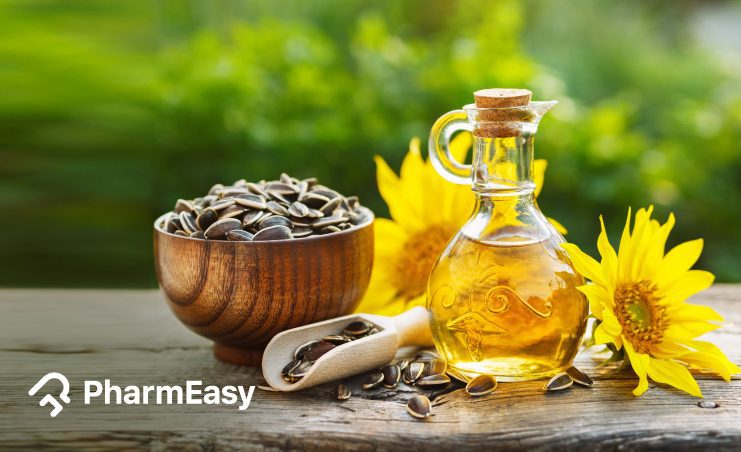
The importance of plants and their parts never be denied and one of the natural gifts given to us by nature is sunflower oil. Sunflower oil is the fourth largest source of vegetable oil globally after rapeseed, palm, and soybean. The scientific name of the sunflower is Helianthus annus which is a major agricultural crop cultivated globally for its seeds and oil. It is believed to be derived from North America. The health benefits of sunflower oil and seed are due to the presence of antioxidants, proteins, minerals, phytonutrients, healthy lipid profile1. We use sunflower oil for various food preparation, but many of us still do not know the potential uses of sunflower oil. So read ahead to learn more about sunflower oil and how it is good for your health.
Sunflower oil may have the following nutrients:
Nutrients present in 100g of sunflower oil2.
Sunflower oil may contain the following properties:
Sunflower oil contains several nutrients that may have potential benefits for the body and some of the potentials are as follows:

Sunflower oil may contain antioxidants that may act against diabetes by preventing the destruction of pancreatic β-cell. Several studies have shown that regular intake of sunflower oil may reduce the sugar level in Type-2 diabetes. Therefore, sunflower oil might be helpful against diabetes. However, more studies are needed to confirm its antidiabetic activity1. Diabetes is a serious condition and is accurately diagnosed and treated by a doctor. Do not self-medicate.

Sunflower oil has anti-inflammatory properties that might potentially prevent chronic inflammatory diseases such as rheumatoid arthritis, osteoarthritis, and bronchial asthma. The sunflower seeds contain zinc that may boost immunity and fight against diseases. Sunflower oil may also help in the wound healing process, as it may help to form collagen fibre in oral wounds1. Therefore, sunflower oil might help boost immunity. However, more studies are needed to confirm its activity.
Due to its higher energy content and other benefits, sunflower oil is one of the most commonly consumed dietary oils in India. It is also a good source of vitamins E and K along with lipids and oleic acids. Due to its high lipid content, it might provide an energy boost when consumed7.
Dr. Rajeev Singh, BAMS

Sunflower oil may contain high levels of vitamin E, phytosterols, and linoleic acid which may benefit brain-related conditions. It also contains choline that might have the potential to lower anxiety, stress, and depression, and may enhance memory. However, more research is needed to check its benefits for brain-related conditions1. If you have any brain-related problems consult your doctor and do not self-medicate.

Several studies have shown that a lack of fatty acids may affect the skin and gradually lose its appearance. Sunflower contains omega-6 fatty acids that might aid in improving skin condition and delay ageing. However, more evidence is needed to confirm sunflower oil’s effectiveness on the skin3. If you have any skin related problems consult your doctor and do not self medicate.

Sunflower is a rich source of phytochemicals such as lignan and phenolic acids that may fight against cancer. Studies show that the presence of phytosterols such as β-sitosterol, phenolic compounds, and other bioactive compounds might inhibit several types of cancer cells. However, more studies and research are needed to confirm that sunflower oil has the potential to fight against cancer1. Cancer is a serious condition, and it should be diagnosed and treated by a doctor. Do not self-medicate.

Sunflower oil contains MUFA and PUFA, which may be excellent for heart and heart-related diseases3. The presence of lignan and phenolic acids may help in preventing heart diseases1. However, there is a need for more information to check its usefulness for heart diseases. If you have any heart-related problems consult your doctor and do not self-medicate.
Though there are studies that show the benefits of sunflower oil in various conditions, these are insufficient and there is a need for further studies to establish the true extent of the benefits of sunflower oil on human health.
Antioxidants are quite essential for reducing oxidative stress in our body. Increased oxidative stress due to free radicals can lead to various health problems like infectious diseases, diabetes, cancer development, arthritis, respiratory diseases, etc. Sunflower oil is said to possess antioxidant properties due to the presence of phenolic compounds and might be beneficial in reducing various health conditions6.
Dr. Siddharth Gupta, B.A.M.S, M.D (Ayu)
You can use sunflower oil to prepare your favourite food items such as dal, gravies, soups, and baking. However, it is important to consult your doctor before replacing your regular oil with sunflower oil.
You must consult a qualified doctor before taking sunflower oil in large quantities or any other herbal supplements. Do not discontinue or replace an ongoing treatment of modern medicine with an ayurvedic/herbal preparation without consulting a qualified doctor.
Allergy: There are chances that a few individuals might be allergic to sunflower oil. Highly refined sunflower oil may not cause side effects but, less refined or unrefined sunflower oil may cause allergic reactions5.
Also Read: Rice Bran Oil: Uses, Benefits, Side Effects By Dr. Smita Barode
Also Read: Groundnut Oil: Uses, Benefits, Side Effects By Dr. Smita Barode
Sunflower oil might react with medicines and alter their activity. However, there is not much information on the interaction of sunflower oil with medicines. Therefore, more studies are needed to check if it affects any medication. If you are taking certain medications, please consult your doctor before consuming sunflower oil.
Also Read: Turnip: Uses, Benefits, Side Effects By Dr. Rajeev Singh
Sunflower oil may be helpful against heart-related diseases, cancer, obesity, diabetes, chronic inflammation, and arthritis. However, more research is needed to confirm that sunflower oil benefits human health1. You must consult your doctor for the mentioned conditions. Do not self-medicate.
Some studies have reported that sunflower oil might be good for the skin, enhance its appearance and lower the ageing process. However, it is important that you consult your doctor before consuming or applying sunflower oil for skin benefits3.
Sunflower oil contains MUFA, PUFA, lignan, and phenolic acids which are good for the heart and may prevent heart-related conditions1,3. However, more studies on humans are needed to confirm that sunflower oil is good for the heart. Do not self-medicate.
Some people might be allergic to sunflower seeds and oil. For this reason, a person must consume highly refined sunflower oil. Please consult your doctor if you are allergic to sunflower and want to consume sunflower oil5.
There is no sufficient information on the consumption of sunflower oil during pregnancy. Therefore, a pregnant woman should consult an expert on the consumption of sunflower oil during her pregnancy.
Disclaimer: The information provided here is for educational/awareness purposes only and is not intended to be a substitute for medical treatment by a healthcare professional and should not be relied upon to diagnose or treat any medical condition. The reader should consult a registered medical practitioner to determine the appropriateness of the information and before consuming any medication. PharmEasy does not provide any guarantee or warranty (express or implied) regarding the accuracy, adequacy, completeness, legality, reliability or usefulness of the information; and disclaims any liability arising thereof.
Links and product recommendations in the information provided here are advertisements of third-party products available on the website. PharmEasy does not make any representation on the accuracy or suitability of such products/services. Advertisements do not influence the editorial decisions or content. The information in this blog is subject to change without notice. The authors and administrators reserve the right to modify, add, or remove content without notification. It is your responsibility to review this disclaimer regularly for any changes.
 5
5  1
1Comments

Leave your comment...
You may also like




















Comments