
Introduction
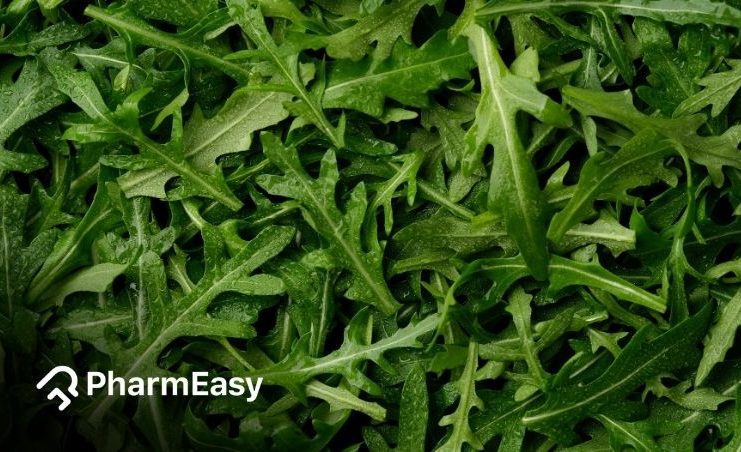
Arugula, also referred to as rocket, rucola, white pepper, roquette, or taramira, is a cruciferous vegetable that originated in the Mediterranean region. It is loved for its peppery flavour and proposed health benefits1, and has gained more popularity in recent years.
Scientifically known as Eruca vesicaria, arugula belongs to the Brassicaceae veggie family, which also includes kale, cabbage, and broccoli1. Arugula is a unique leafy green vegetable with small tender leaves that are mildly bitter, with a clear hint of pepper. Its delicate and crisp texture adds a special touch to dishes.
Arugula has been eaten for thousands of years and was an important part of early Roman diets. It was widely distributed across Italy, Greece, India, and North Africa1. Today, people from all over the world savour arugula for both its taste and nutritional value.
Advertisement
Did you know?
- Arugula is a rich source of vitamin K, with 100g of raw Arugula providing 109% of its daily recommended intake2.
- Arugula is rich in antioxidants, which can help protect against chronic diseases2.
- Arugula is a natural source of nitrates, which may help lower blood pressure and improve exercise capacity2.
Nutritional Profile of Arugula
Arugula may support good health because of its rich nutritional content. In this section, we’ll examine the various macronutrients, vitamins, and minerals found in arugula and their health benefits.
1. Macronutrients
Here are the various macronutrients found in arugula:
- Carbohydrates: Arugula is low in carbohydrates (3.65 g per 100 g)2. It’s good for individuals following a low-carbohydrate diet or keeping an eye on blood sugar levels3. It also has fibre2, which may help with good digestion and heart health.
- Proteins: Arugula does contain a small amount of protein (2.58 g per 100 g)2. However, leafy greens aren’t usually a main source of protein in a balanced diet. To meet daily protein needs, consider adding other protein-rich foods like beans, lean meat, or dairy products to meals that include arugula4.
- Fats: Arugula contains very little fat2, which makes it a healthy low-calorie choice for salads, sandwiches, and wraps. However, to help soak up certain nutrients like vitamins A and K, it could be a good idea to use a dressing with olive oil or to add other good fats like avocado to your arugula dishes5.
2. Vitamins and Minerals
Arugula contains a lot of vitamins and minerals that may give arugula its many health-boosting qualities.
- Vitamin A: Arugula is known to be rich in vitamin A, which may help keep eyes healthy, support a robust immune system, and promote overall healthy growth and reproduction of cells6,7.
- Vitamin C: Arugula has a good amount of vitamin C6. This powerful antioxidant may aid the immune system by working on harmful free radicals. Vitamin C also helps make collagen, which supports skin and connective tissue8.
- Vitamin K: Arugula is rich in vitamin K6. This vitamin is vital for blood clotting and healthy bones9. By eating arugula, you may be able to meet your daily vitamin K needs.
As far as I know, arugula is a significant source of vitamin K, providing 20 percent of the daily recommended dietary need. Vitamin K is vital for normal blood clotting, improving calcium absorption, and reducing calcium loss through urine. So, never think twice before including arugula in your diet, as it supports and maintains bone strength23.
Dr. Siddharth Gupta, B.A.M.S, M.D (Ayu)
3. Folate
Arugula also contains a healthy amount of folate (vitamin B9)2,6. which may help in DNA synthesis, improving blood flow and reducing cardiovascular risks6. Folate is especially needed in periods of rapid growth like pregnancy, childhood, and teen years10.
Advertisement
4. Calcium
Calcium is crucial for building and keeping bones strong. Arugula provides a plant-based source of calcium that may help back up bone structure and function6.
5. Potassium
This vital mineral found in arugula6 may help to maintain a healthy balance in body fluids, nerve function, and muscle contraction. Potassium-rich foods like arugula may lower blood pressure and help heart health11.
6. Iron
Iron is critical for making haemoglobin, which carries oxygen from the lungs to cells throughout the body. Arugula has non-heme iron, which isn’t generally absorbed as well as heme iron from animal sources; however, if you pair arugula with fruits or vegetables rich in vitamin C, iron absorption may be enhanced2,8.
100 g of Raw Arugula Contains2:
- Water: 91.71 grams
- Calories: 25 kcal
- Protein: 2.58 grams
- Total Lipid (Fat): 0.66 grams
- Carbohydrates: 3.65 grams
- Dietary Fibre: 1.6 grams
- Calcium: 160 mg
- Iron: 1.46 mg
- Magnesium: 47 mg
- Phosphorus: 52 mg
- Potassium: 369 mg
- Sodium: 27 mg
- Zinc: 0.47 mg
- Copper: 0.08 mg
- Manganese: 0.32 mg
- Vitamin C: 15 mg
- Folate (B9): 97 µg
- Vitamin A: 2370 IU
- Vitamin K: 109 µg
Potential Health Benefits of Arugula
Arugula’s high nutrient content may contribute to a wide range of health benefits. It may help improve everything from bone strength to brain health. In this section, we will review some benefits of adding arugula to your diet.
1. May Help in Reducing Osteoporosis
This proposed benefit is due to the following:
- The Link Between Vitamin K and Bone Health: Arugula has high vitamin K content, which is vital for healthy bones. Vitamin K helps improve bone density by helping to make proteins needed for bone structure and function. Adequate vitamin K intake has been linked to a lower risk of osteoporosis and fractures in the ageing population9.
- The Role of Calcium in Strong Bones: Arugula also contains calcium, which is necessary for strong, healthy bones, along with potassium and magnesium6. Eating calcium-rich foods like arugula may help your body retain bone density and may help reduce the risk of osteoporosis and bone fractures.
2. May Help in Managing Diabetes
- Low Glycaemic Index: Arugula has a low glycaemic index, which means it’s less likely to cause spikes in blood sugar compared to high-glycaemic foods. A diet rich in low-glycaemic foods may help individuals with diabetes manage their blood sugar levels better and help reduce the chance of complications12,13.
- Fibre and Blood Sugar Management: Arugula is also known to be rich in fibre2. Fibre slows down how quickly the glucose enters the bloodstream, which in turn, helps keep blood sugar levels steady throughout the day. Eating fibre-rich foods like arugula may offer added benefits for people managing diabetes13.
3. May Help in Promoting Heart Health
- Reducing Blood Pressure: Being a good source of potassium, arugula may play a key role in managing blood pressure levels. Potassium helps manage the negative effects of sodium and helps support healthy nerve and muscle function. Including potassium-rich foods like arugula in your diet may help lower your risk of heart disease14.
- Managing Cholesterol: The fibre in arugula also may aid heart health. It is said to bind with cholesterol in the gastrointestinal tract and remove it from the body. This helps reduce total and LDL cholesterol levels and lessens the risk of heart disease2,13.
4. May Help Strengthen the Immune System
- Vitamin C and Strong Immunity: Arugula is a top source of vitamin C, which is critical for a strong immune system. Vitamin C helps create the white blood cells that help fight infections and diseases. Eating vitamin C-rich foods like arugula may help make the immune system stronger6,8.
- Antioxidant Support: Being rich in antioxidants such as vitamins C and A, arugula helps protect your body from free radical damage and oxidative stress7,8. This protection may lead to a stronger immune system, better equipped to fight off infections, inflammation, and disease.
5. May Help Support Cognitive Health
- Protecting the Brain: Arugula’s high folate, nitrate, and antioxidant content may boost brain health and cognitive function. One study published in the Neurology journal found that eating leafy green vegetables every day may slow age-related cognitive decline15.
- Lowering Inflammation: Arugula’s powerful antioxidants also aid the body in fighting inflammation1. Chronic inflammation can contribute to illnesses and cognitive decline. Including arugula in your regular diet may offer protection against age-related cognitive decline and conditions like Alzheimer’s16.
6. May Help Improve Vision
- Vitamin A and Eye Health: Arugula is rich in vitamin A2,6, which may contribute to healthy vision and overall eye health. Vitamin A also may aid the immune system and keep the kidneys, lungs, and heart working well7,14.
- Antioxidant Effects on Vision: As a good source of lutein, arugula may help protect your eyes and keep your vision sharp. It blocks harmful UV light and may reduce age-related macular degeneration, which is a common cause of blindness and vision issues16.
Evidence of all the above-mentioned potential health benefits of arugula is continually being collected.
7. May Help in Lowering Cancer Risk
This potential health benefit is due to:
- The Presence of Antioxidants in Arugula: Arugula is rich in antioxidants, vitamin C, and carotenoids like lutein and zeaxanthin6,16. These antioxidants help to protect your body from free radical damage. Free radicals are the unstable molecules that can lead to cell damage and may cause chronic diseases like cancer7,8.
- The Role of Cruciferous Vegetables in Reducing the Occurrence of Cancer: Cruciferous vegetables, including arugula contain glucosinolates that break down into components like sulforaphane. Research shows that sulforaphane may be able to arrest the growth of cancer cells and lessen the formation of malignant tumours. By consuming arugula and other cruciferous veggies often, you may lower your risk of developing different kinds of cancer. However, more research is required to confirm the claim17.
Studies show that arugula provides vitamin C, which may reduce the risk of heart disease and cancer, boost the immune system, and act as an antioxidant against harmful free radicals. A one-cup serving of arugula offers 4 percent of the daily recommended vitamin C dietary intake23.
Dr. Rajeev Singh, BAMS
Comparing Arugula to Different Leafy Greens
So how does arugula measure up to other popular leafy greens like spinach, kale, or romaine lettuce? Let’s compare the differences and similarities in their nutritional make-up.
1. Arugula vs. Spinach
Both arugula and spinach are nutrient-packed greens with vitamins and minerals. Spinach has more iron, vitamin C, vitamin K, and magnesium compared to arugula2,18. whereas arugula is high in nitrates and low in oxalates with a distinct peppery taste and a slightly lower calorie count1,2.
2. Arugula vs. Kale
Kale is viewed by many as the most nutrient-dense leafy green out there, loaded with vitamins A, C, and K; fibre; iron; and calcium. Arugula has plenty of nutrients but is not as dense as kale2,19. However, arugula’s peppery flavour makes it more versatile taste-wise.
3. Arugula vs. Romaine Lettuce
Compared to romaine lettuce, arugula has a richer peppery taste and has higher vitamin C and K content2,20. Romaine lettuce is milder and crisper.
Adding More Arugula to Your Diet
With such a unique taste and many potential health benefits, you can use arugula in many meals. Here are some options and tips to include more arugula in your diet.
Recipes and Meal Ideas
- Salads: The distinct taste of arugula makes it a popular choice for salads1. Mix it with other greens, veggies, fruits, nuts, seeds, and protein sources. This will create a flavourful salad that satisfies.
- Smoothies: Throw a handful of arugula into your favourite green smoothie recipe. This can add an extra dose of nutrients and flavour.
- Soups: Use arugula in a soup as a healthy and tasty ingredient. You could also use it to garnish your favourite soup. This will add texture and more complex flavours.
- Wraps and Sandwiches: Mix things up by using arugula instead of lettuce in wraps and sandwiches6. Its distinct taste can lift the flavours of your meal to a whole new level.
- Pasta and Grain Bowls: Stir arugula into pasta sauces, mix it with warm grains, or sprinkle it over a hot dish just before serving. This adds colour, taste, and nutrition. Arugula pesto can be another option6.
Also Read: Health Benefits of Parijat Leaves and Flowers
Tips for Selecting and Storing Arugula
- Picking Fresh, Good Quality Arugula: When choosing arugula, look for leaves that are fresh and green. They shouldn’t be wilting or turning yellow. Fresh arugula should be crisp to the touch and have a strong, peppery taste6.
- The Right Way to Store It: Keep arugula in a plastic bag in the fridge6. Make sure it’s dry to stop it from spoiling. It’s best eaten within a week of buying for freshness and full flavour.
Risks and Precautions
As a general rule, arugula is safe and nutritious for most people; however, always discuss with your healthcare professional before adding it to your diet. Here are a few precautions worth noting before you start using arugula in your diet.
- Identifying Allergies: Allergies to arugula aren’t common. But they have been noted, especially in people with pollen allergies21. If you think you’re allergic to arugula, talk to your healthcare provider. They can give you guidance and arrange any necessary tests.
- Potential Side Effects: Although arugula is known to be low in oxalates22, if you have had kidney stones or follow a low-oxalate diet, be careful when consuming huge amounts of arugula. Also, if you’re taking blood-thinning medications, keep an eye on your vitamin K intake. This is because vitamin K can hinder the effect of the medication9.
- Those on Certain Medicines: If you are taking blood-thinning medicine like warfarin (Coumadin), try to keep your daily vitamin K intake steady9. Talk to your healthcare provider before making major changes to how much arugula you consume.
Also Read: 8 Health Benefits Of Eating Celery
Conclusion
Not only is arugula a tasty and versatile leafy green, but it also brings an array of potential benefits for our health. Bursting with crucial nutrients, including vitamins A, C, and K, it may help lower your risk of various chronic diseases. Plus, it may support the strength of your bones and help manage diabetes. Incorporating arugula into your regular diet is an excellent way to enjoy its unique taste and benefit from its array of proposed health perks.
Frequently Asked Questions (FAQs)
Can I eat arugula every day?Yes, you can enjoy arugula as part of a varied, balanced daily diet. Arugula is low in calories but nutrient-rich. This makes it a healthy choice for daily meals. Only consult with your healthcare provider if you are on blood thinners or have previously had kidney stones.
How is arugula different from spinach?While arugula and spinach are both leafy greens, arugula has a very clear peppery taste. Spinach has a softer flavour and has more iron than arugula.
Is arugula a superfood?Seeing as arugula is rich in nutrients and packed with potential health-promoting compounds, it may be considered a superfood.
Can eating arugula cause side effects?Arugula could lead to an allergic reaction in a small number of people. Plus, it could interact with certain medications like blood thinners. If you have concerns or experience negative effects after eating arugula, talk to your healthcare provider.
Can you consume arugula raw? Or should it be cooked?You can enjoy arugula both raw and cooked. Eaten raw in salads or as a topping, it retains its nutrients and offers a crisp texture and distinct flavour, and when it is cooked, the flavour becomes milder and the texture softens slightly.
References
- Bell L, Wagstaff C. Rocket science: a Review of Phytochemical & health-related Research in Eruca & Diplotaxis Species. Food Chemistry: X [Internet]. 2018 [cited 2019 Sep 14];1:100002. Available from: https://pmc.ncbi.nlm.nih.gov/articles/PMC6690419/
- Arugula, Raw [Internet]. US Department of Agriculture; 2019. Available from: https://fdc.nal.usda.gov/food-details/169387/nutrients
- Hetta MH, Owis AI, Haddad PS, Eid HM. The Fatty acid-rich Fraction of Eruca Sativa (rocket salad) Leaf Extract Exerts Antidiabetic Effects in Cultured Skeletal muscle, Adipocytes and Liver Cells. Pharmaceutical Biology [Internet]. 2017 Jan 1;55(1):810–8. Available from: https://pmc.ncbi.nlm.nih.gov/articles/PMC6130626/
- Protein [Internet]. Better Health Channel. Available from: https://www.betterhealth.vic.gov.au/health/healthyliving/protein
- Fat: the Facts [Internet]. NHS. 2023. Available from: https://www.nhs.uk/live-well/eat-well/food-types/different-fats-nutrition/
- January Veggie of the Month: Arugula [Internet]. State of South Dakota – Department of Health; Available from: https://healthysd.gov/category/nutrition/january-veggie-of-the-month-arugula
- Vitamin A and Carotenoids [Internet]. National Institutes of Health; Available from: https://ods.od.nih.gov/factsheets/VitaminA-HealthProfessional/
- National Institutes of Health, Office of Dietary Supplements. Vitamin C: fact sheet for health professionals [Internet]. Bethesda (MD): National Institutes of Health; Available from: https://ods.od.nih.gov/factsheets/VitaminC-HealthProfessional/
- Office of Dietary Supplements – Vitamin K [Internet]. Nih.gov. 2017. Available from: https://ods.od.nih.gov/factsheets/VitaminK-Consumer/
- Folic Acid in Diet [Internet]. MedlinePlus. 2016. Available from: https://medlineplus.gov/ency/article/002408.htm
- Office of Dietary Supplements – Potassium [Internet]. National Institutes of Health. 2022. Available from: https://ods.od.nih.gov/factsheets/Potassium-HealthProfessional/
- Cruciferous Vegetables and Cancer Prevention [Internet]. National Cancer Institute. Available from: https://www.cancer.gov/about-cancer/causes-prevention/risk/diet/cruciferous-vegetables-fact-sheet
- Dietary Fiber [Internet]. Better Health Channel. 2023. Available from: https://www.betterhealth.vic.gov.au/health/healthyliving/dietary-fibre
- Shubha K, Mukherjee A, Koley T, Tamta M. Arugula (Eruca Vesicaria subsp. Sativa (Miller) Thell.): a Healthy Leafy Vegetable an Analytical Study on status, Prospects and Challenges of Farmers’ Producer Companies View Project Simulating Production Potential of Rice and Wheat under Changing Climate over Bihar View Project. 2019; Available from: https://www.researchgate.net/publication/337592972_Arugula_Eruca_vesicaria_subsp_sativa_Miller_Thell_A_healthy_leafy_vegetable
- Leafy Greens Linked with Slower age-related Cognitive Decline [Internet]. National Institute on Aging. 2018. Available from: https://www.nia.nih.gov/news/leafy-greens-linked-slower-age-related-cognitive-decline
- Buscemi S, Corleo D, Di Pace F, Petroni M, Satriano A, Marchesini G. The Effect of Lutein on Eye and Extra-Eye Health. Nutrients [Internet]. 2018;10(9):1321. Available from: https://pmc.ncbi.nlm.nih.gov/articles/PMC6164534/
- Connolly EL, Sim M, Travica N, Marx W, Beasy G, Lynch GS, et al. Glucosinolates from Cruciferous Vegetables and Their Potential Role in Chronic Disease: Investigating the Preclinical and Clinical Evidence. Frontiers in Pharmacology [Internet]. 2021;12. Available from: https://pmc.ncbi.nlm.nih.gov/articles/PMC8575925/
- Spinach, Raw [Internet]. US. 2019. Available from: https://fdc.nal.usda.gov/food-details/168462/nutrients
- Kale, Raw [Internet]. US Department of Agriculture. 2019. Available from: https://fdc.nal.usda.gov/food-details/323505/nutrients
- Lettuce, Cos or romaine, Raw [Internet]. US Department of Agriculture. 2019. Available from: https://fdc.nal.usda.gov/food-details/169247/nutrients
- Arugula Allergy [Internet]. American Academy of Allergy, Asthma, and Immunology. 2024. Available from: https://www.aaaai.org/allergist-resources/ask-the-expert/answers/2024/arugula
- Salgado N, Silva MA, Figueira ME, Costa HS, Albuquerque TG. Oxalate in Foods: Extraction Conditions, Analytical Methods, Occurrence, and Health Implications. Foods [Internet]. 2023 Aug 25;12(17):3201–1. Available from: https://pmc.ncbi.nlm.nih.gov/articles/PMC10486698/
- LettuceInfo.org. Arugula FAQ: benefits and nutrition facts [Internet]. Salinas (CA): LettuceInfo.org; [cited 2026 Aug 5]. Available from: https://lettuceinfo.org/arugula-faq/
Disclaimer: The information provided here is for educational/awareness purposes only and is not intended to be a substitute for medical treatment by a healthcare professional and should not be relied upon to diagnose or treat any medical condition. The reader should consult a registered medical practitioner to determine the appropriateness of the information and before consuming any medication. PharmEasy does not provide any guarantee or warranty (express or implied) regarding the accuracy, adequacy, completeness, legality, reliability or usefulness of the information; and disclaims any liability arising thereof.
Links and product recommendations in the information provided here are advertisements of third-party products available on the website. PharmEasy does not make any representation on the accuracy or suitability of such products/services. Advertisements do not influence the editorial decisions or content. The information in this blog is subject to change without notice. The authors and administrators reserve the right to modify, add, or remove content without notification. It is your responsibility to review this disclaimer regularly for any changes.
 2
2 









































Comments