
Introduction
Have you or a loved one experienced unusual tiredness or weakness during pregnancy? Do you wonder if this is normal or could it be anything more, like anaemia?
Pregnancy brings many changes to the body, and anaemia is one of the common concerns that can arise1. WHO has estimated that 37% of pregnant women worldwide are anaemic2. Anaemia in pregnancy, if not managed properly, can have major consequences for both mother and the baby.
Hence, understanding the causes and signs of anaemia in pregnancy can help in seeking timely medical advice.
Advertisement
This blog explores anaemia in pregnancy, including its causes, symptoms, diagnosis, risks, prevention, and treatment.
What Is Anaemia During Pregnancy?
Anaemia in pregnancy is a condition in which the blood has insufficient haemoglobin or healthy red blood cells (RBCs) to provide adequate oxygen to the mother and the developing foetus.
During pregnancy, the body has increased physiological demands to support the health of the mother and the developing foetus. The blood expands to meet these demands, but the red blood cells usually don’t increase as fast, which can lead to physiologic anaemia. Moreover, increases demands during pregnancy can lead nutritional deficiencies leading to anaemia3.
As per FIGO (International Federation of Gynaecology and Obstetrics), a haemoglobin level of less than 11g/dl in any trimester is considered as anaemia in pregnancy4.
Types of Anaemia in Pregnancy
There are different reasons for anaemia in pregnant women. Most common types include:
Physiologic/Dilutional Anaemia
Physiologic anaemia is a normal change that can occur during pregnancy. It happens because the plasma (liquid part of blood) increases by about 50% in pregnancy while the red blood cell volume increases only by 25%, making the blood more diluted. This causes a natural fall in haemoglobin concentration. This is usually more noticeable during the second trimester and may reach its lowest level in the late second to early third trimester3.
Advertisement
Pathological Anaemia
Pathological anaemia occurs when anaemia is caused by an underlying deficiency, disease, blood loss, or inherited condition2,3. These include:
- Iron deficiency anaemia: It is the most common form of anaemia in pregnancy. Pregnancy requires additional iron for increased formation of red blood cells and development of the placenta and foetus. Deficiency of iron reduces the body’s ability to produce enough haemoglobin, leading to anaemia4.
- Folate deficiency anaemia: Folate (vitamin B9) is required for healthy red blood cell production and DNA synthesis. When folate is deficient, red blood cell precursors cannot divide normally, resulting in abnormally large red blood cells and megaloblastic anaemia. The increased demand for folate during pregnancy can increase the risk of folate deficiency anaemia4,5.
- Vitamin B12 deficiency anaemia: Vitamin B12 is also essential for the formation of healthy red blood cells and synthesis of DNA. Deficiency of B12 leads to megaloblastic anaemia. This type of anaemia can develop due to insufficient intake of B12 or problems with its absorption4,5.
- Anaemia caused by genetic disorders of the blood: Sickle cell disease and thalassaemia are inherited disorders that affect haemoglobin and red blood cells. In sickle cell disease, abnormal haemoglobin causes red blood cells to become rigid and sickle-shaped, while in thalassaemia, genetic changes reduce the production of normal haemoglobin. Both conditions can lead to anaemia and differ from iron deficiency anaemia because they are hereditary disorders6.
- Anaemia caused by bleeding or illness: Bleeding, infections, chronic inflammation, kidney diseases and other diseases may lead to anaemia in pregnant women. In some regions of the world, infections like malaria and parasites are significant causes of anaemia4,7.
- Autoimmune haemolytic anaemia: This type of anaemia occurs when antibodies produced by the immune system mistakenly attack and destroy red blood cells. This type of anaemia may be acquired during pregnancy6.
Causes of Anaemia During Pregnancy
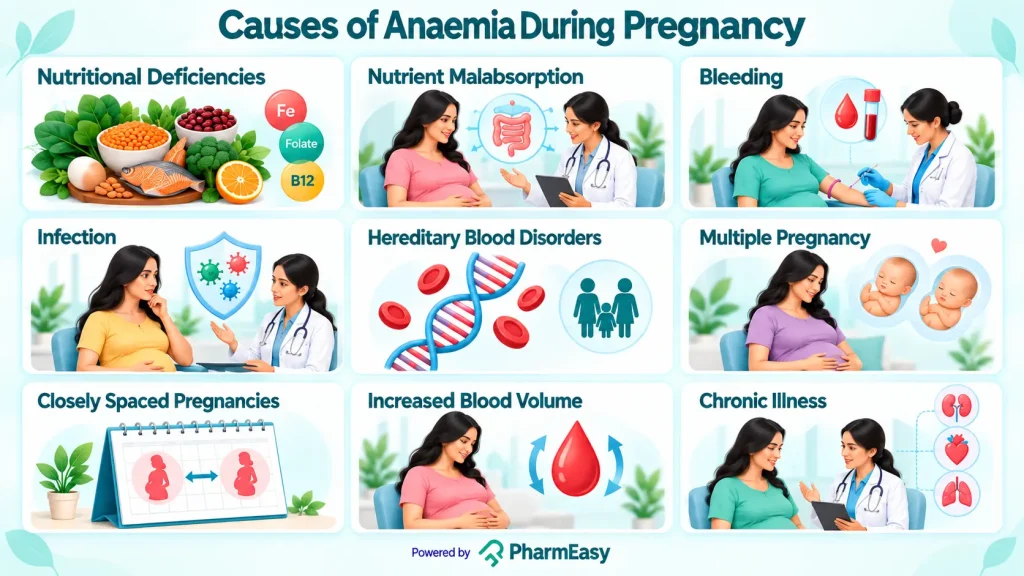
There are various possible causes of anaemia in pregnant women. Iron deficiency is the leading cause, but there are other possible nutritional deficiencies, infections, bleeding, and inherited blood disorders that may result in anaemia.
- Nutritional deficiencies: Increased requirements for iron, folate and vitamin B12 during pregnancy, along with inadequate intake or absorption, can contribute to anaemia4.
- Nutrient malabsorption: Problems with nutrient absorption may arise due to chronic inflammatory conditions or blood less that affects nutrient absorption from the gut8.
- Bleeding: Blood loss in pregnant women or during delivery may reduce the red blood cells, causing anaemia4.
- Infection: Some of the infections like malaria, tuberculosis, HIV, and parasitic infections may affect red blood cell counts and cause anaemia4.
- Hereditary blood disorders: Genetic disorders such as thalassemia and sickle cell anaemia that are linked with abnormalities in haemoglobin or red blood cells, if present, can lead to anaemia in pregnancy4.
- Multiple pregnancy: Carrying twins or more increases the body’s nutritional requirements and may increase the risk of anaemia9.
- Closely spaced pregnancies: Pregnancy soon after a previous pregnancy may increase the risk of anaemia, as the body may not have had sufficient time to restore its nutrient stores10.
- Enlargement of blood volume: As mentioned, pregnancy results in the production of more blood, where plasma increases more rapidly compared to red blood cells. As a result, there is dilution of haemoglobin, causing physiologic3.
- Chronic illness: Underlying illnesses, such as kidney disease if present, may lead to reduced production of red blood cells causing anemia2.
Symptoms of Anaemia in Pregnancy
Anaemia can cause different symptoms, and they may sometimes be confused with normal pregnancy changes. Common symptoms include8
- Feeling unusually tired or weak
- Dizziness or light-headedness
- Headaches
- Pale skin
- Shortness of breath
- Fast or noticeable heartbeat (palpitations)
- Difficulty concentrating
- Cold hands and feet
Some of these symptoms, such as tiredness and breathlessness, can also occur in a normal pregnancy. A blood test is therefore needed to confirm anaemia.
How Does Anaemia Affect Pregnancy and the Baby?
Anaemia during pregnancy can affect both the mother and baby, particularly when it is severe or untreated. It has been associated with adverse maternal outcomes and increased risks of preterm birth, low birth weight, and other neonatal complications11,12.
Complications In The Mother
- Fatigue and weakness: Anaemia can cause extreme tiredness, weakness and reduced physical capacity in pregnant women.
- High blood pressure: The increased pressure on heart and blood vessels to meet the oxygen demands may lead to elevated blood pressure in some pregnant women.
- Postpartum haemorrhage: Maternal anaemia has been associated with an increased risk of postpartum haemorrhage (bleeding after delivery).
- Maternal mortality: Severe maternal anaemia has been associated with an increased risk of maternal mortality.
Complications In The Baby
- Preterm birth: Maternal anaemia can trigger pregnancy complications like placental abruption, which increase the chances of preterm birth. Maternal anaemia has been associated with an increased risk of birth before 37 weeks.
- Low birth weight/ Growth restriction: Maternal anaemia has been associated with an increased risk of low birth weight or small-for-gestational-age birth. A lack of essential nutrients due to poor oxygen supply can affect the foetal growth and development.
- Adverse neonatal outcomes: Maternal anaemia has been associated with adverse delivery outcomes, including perinatal mortality and stillbirth.
- Iron deficiency and its effects: In some cases, the baby may have a higher chance of developing anaemia or iron deficiency during infancy. Iron deficiency anaemia at this stage may increase the risk of developmental difficulties involving social-emotional, cognitive and adaptive functions.
Who Is More at Risk of Anaemia During Pregnancy?
Certain women are at a higher risk of developing anaemia during pregnancy due to increased nutritional requirements, low iron stores, blood loss, medical conditions or infections1,13.
- Poor intake of iron, folate and vitamin B12 or poor dietary diversity.
- Low iron stores before pregnancy, including a history of heavy menstrual bleeding or previous anaemia.
- Multiple or previous pregnancies, which can increase nutritional demands.
- Having severe morning sickness (frequent vomiting), leading to nutrient loss.
- Being under 20 years of age during pregnancy as the demands of iron are already higher.
- Short intervals between pregnancies, which may not allow adequate recovery of nutrient stores.
- Conditions causing poor nutrient absorption, such as gastrointestinal disorders.
- Chronic diseases and infections, including malaria and intestinal parasitic infections.
- Inherited blood disorders, such as thalassemia and sickle-cell disease.
- Blood loss, including heavy menstrual bleeding or blood loss associated with previous pregnancies.
Diagnosis of Anaemia in Pregnancy
Anaemia in pregnancy is diagnosed by assessing haemoglobin levels and other blood parameters. The specific tests used for the diagnosis of anaemia are discussed below.
- Complete blood count (CBC/FBC): This is the main blood test used to diagnose anaemia. It measures haemoglobin, haematocrit and red blood cells. It also includes MCV, which helps identify the type of anaemia. Hb levels less than 11g/dl are considered anaemia4.
- Haemoglobinopathy screening: This is a blood test that checks for inherited blood disorders such as sickle cell disease and thalassaemia14.
- Iron tests: If anaemia is detected, tests such as ferritin and other iron studies may be used to check whether iron deficiency is the cause.
- Peripheral blood smear: A blood smear may be examined under a microscope to check the size, shape and appearance of red blood cells. This can help doctors identify the possible type and cause of anaemia4.
- Vitamin tests: Vitamin B12 and folate may be checked when a nutritional deficiency is suspected as a cause of anaemia15.
- Further tests: Depending on the results and medical history, doctors may carry out additional tests to look for blood loss or other underlying conditions15.
You can check the Anaemia Care Health Checkup . This package includes a CBC, iron profile, ferritin, vitamin B12, folate and other tests that can help investigate anaemia.
If you’re pregnant, you can book the Antenatal Check-up (ANC) .This package also includes CBC/hemogram and other tests used during pregnancy.
Treatment of Anaemia During Pregnancy
Treatment of anaemia during pregnancy depends on its cause and severity. Some management options may include:
1. Oral Iron Supplements
Oral iron is usually the first-line treatment for iron deficiency anaemia during pregnancy. Supplements should provide around 120 to 160 mg of elemental iron per day, depending on severity and the treatment plan16. They help restore iron levels and increase haemoglobin13.
2. Intravenous (IV) Iron
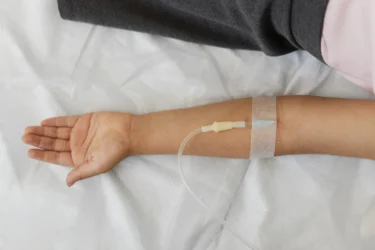
IV iron may be considered when oral iron is not tolerated, does not provide an adequate response, or when iron deficiency needs to be corrected more quickly. The decision depends on factors such as the severity of anaemia, response to oral iron, tolerance, and stage of pregnancy. IV iron may be particularly considered later in pregnancy when there is limited time to correct iron deficiency before delivery13.
3.Folic Acid and Vitamin B12
If anaemia is caused by folate or vitamin B12 deficiency, vitamin supplements should be initiated as prescribed by the gynaecologist4.
4. Blood Transfusion
Blood transfusion is generally reserved for severe anaemia, significant or ongoing blood loss, or symptoms and clinical instability requiring rapid correction. The decision depends on the woman’s haemoglobin level, symptoms, overall clinical condition, and presence of bleeding13.
5. Monitoring
Haemoglobin should be monitored to assess the response to treatment. A rise in haemoglobin is generally expected within 2 to 4 weeks of starting treatment17. If there is little or no improvement, adherence, the iron dose, ongoing blood loss, and other possible causes of anaemia should be reassessed.
How Can Anaemia Be Prevented During Pregnancy?
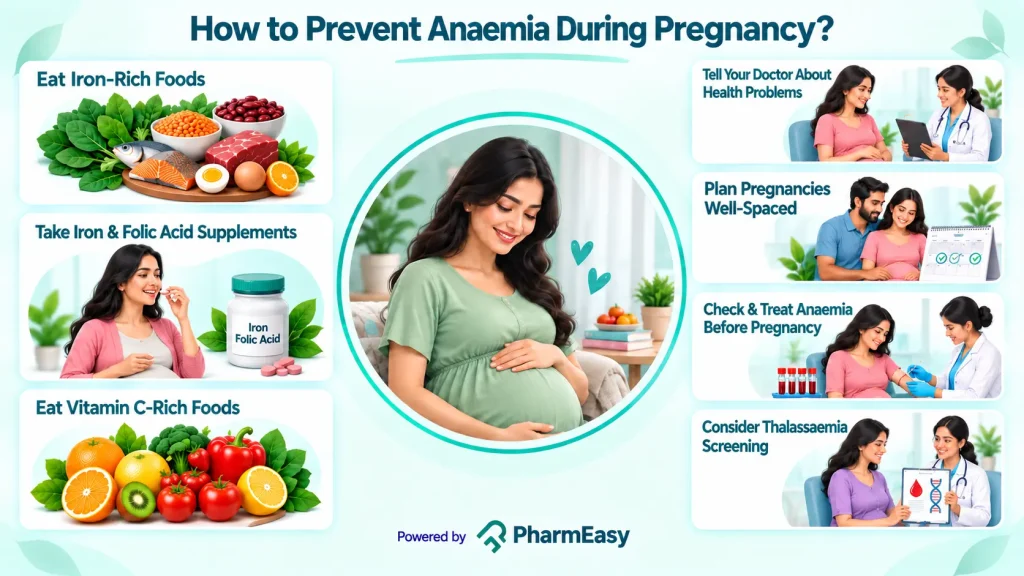
Anaemia is a common health problem during pregnancy. There are several simple ways to help prevent it. Let us have a look at them1,13,18.
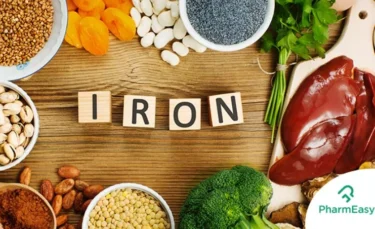
- Eat iron rich foods: Eat meat, fish, eggs, beans, lentils, green leafy vegetables and fortified cereals.
- Take iron and folic acid supplements: Take iron and folic acid daily during pregnancy, as recommended by a doctor, and don’t miss your doses.
- Eat foods rich in vitamin C: Fruits like oranges, tomatoes, and peppers are beneficial in the absorption of iron in the body.
- Tell your doctor about your existing health problems: Ensure to inform your doctor about any blood problems. Also don’t forget to discuss any gut conditions or history of surgeries as these can impair the ability to absorb nutrients and put you at risk of anaemia.
- Plan pregnancies well-spaced: Try to maintain sufficient gap between subsequent pregnancies as short intervals between pregnancies may not allow adequate recovery of nutrient stores.
- Check and treat anaemia before pregnancy: Anaemia and iron deficiency should be identified and corrected before conception where possible.
- Consider thalassaemia screening: Women planning pregnancy may be offered screening for thalassaemia and other inherited blood disorders.
Also Read: High Alkaline Phosphatase (ALP) in Pregnancy: Causes, Symptoms, Diagnosis and Treatment
When to Consult a Doctor?
Pregnant women should seek medical advice if symptoms of anaemia are noted or if they belong to a high-risk group. Immediate attention may be needed if you experience2,13:
- Chest pain
- Severe dizziness
- Extreme tiredness
- Severe breathlessness
- Very fast or irregular heartbeat
- Pale skin (especially under fingernails)
- Trouble concentrating
- Bruising easily
- Sudden worsening of symptoms
Additionally, women with sickle cell disease, thalassaemia, previous severe anaemia, or conditions causing poor nutrient absorption require closer medical monitoring during pregnancy.
Also Read: Anaemia: Causes, Symptoms, Types, Diagnosis & More!
Conclusion
Anaemia during pregnancy is common but can often be prevented and treated. A healthy diet, iron and folic acid supplementation (as advised by the doctor and regular antenatal care can help protect both mother and the baby. Recognising the symptoms and seeking help early is important for a healthy pregnancy.
Frequently Asked Questions (FAQs)
How serious is anaemia during pregnancy? Anaemia is common during pregnancy, but its seriousness depends on its cause and severity. Moderate and severe anaemia are associated with a higher risk of complications for the mother and baby, including preterm birth, low birth weight and, in severe cases, stillbirth and neonatal death11.
Which foods are good for anaemia in pregnancy? Foods containing iron can help support healthy red blood cell production. Good sources include meat, spinach, beans, nuts, lentils and iron-fortified foods. A varied, balanced diet is important during pregnancy13,18.
Can I treat anaemia during pregnancy with food alone? Food is an important part of preventing iron deficiency, but food alone may not be enough to treat anaemia, particularly when anaemia is caused by significant iron deficiency. Your doctor may recommend supplements/management depending on your blood-test results and the cause of the anaemia.
What is considered severe anaemia in pregnancy? According to WHO-based classifications, severe anaemia during pregnancy is generally defined as a haemoglobin level below 7 g/dL (70 g/L)4. The severity should be assessed by a healthcare professional using blood-test results and the woman’s clinical condition.
Is anaemia normal during pregnancy? A fall in haemoglobin can occur during pregnancy because blood volume increases, but anaemia should not simply be assumed to be a normal part of pregnancy3. Anaemia should be assessed to identify its cause and determine whether treatment is needed.
Are iron supplements safe during pregnancy? Iron supplements can be safely used during pregnancy when recommended by a doctor. However, they should only be taken as directed by your doctor13.
What happens if anaemia during pregnancy is left untreated?Untreated or severe anaemia can increase the risk of complications for both mother and baby. These may include preterm birth, low birth weight, postpartum haemorrhage, and other adverse pregnancy outcomes1. Severe anaemia has also been associated with increased risks of stillbirth and neonatal death19.
References
- Anemia and Pregnancy. American Society of Haematology. Accessed 13 September 2026.https://www.hematology.org/education/patients/anemia/pregnancy
- World Health Organisation. Anaemia. Who.int. 12 November 2019. Accessed 13 September 2026. https://www.who.int/health-topics/anaemia
- Vricella LK. Emerging understanding and measurement of plasma volume expansion in pregnancy. Am J Clin Nutr. 2017;106(Suppl 6):1620S-1625S. doi:10.3945/ajcn.117.155903 https://pubmed.ncbi.nlm.nih.gov/29070547/
- Ubom AE, Begum F, Ramasauskaite D, et al. FIGO good practice recommendations on anemia in pregnancy, to reduce the incidence and impact of postpartum hemorrhage (PPH). Int J Gynaecol Obstet. 2025;171(3):993-1007. doi:10.1002/ijgo.70529 https://pubmed.ncbi.nlm.nih.gov/41031541/
- Achebe MM, Gafter-Gvili A. How I treat anemia in pregnancy: iron, cobalamin, and folate. Blood. 2017;129(8):940-949. doi:10.1182/blood-2016-08-672246 https://pubmed.ncbi.nlm.nih.gov/28034892/
- Stanley AY, Wallace JB, Hernandez AM, Spell JL. Anemia in Pregnancy: Screening and Clinical Management Strategies. MCN Am J Matern Child Nurs. 2022;47(1):25-32. doi:10.1097/NMC.0000000000000787 https://pubmed.ncbi.nlm.nih.gov/34860784/
- Ouédraogo S, Koura GK, Bodeau-Livinec F, Accrombessi MM, Massougbodji A, Cot M. Maternal anemia in pregnancy: assessing the effect of routine preventive measures in a malaria-endemic area. Am J Trop Med Hyg. 2013;88(2):292-300. doi:10.4269/ajtmh.12-0195 https://pubmed.ncbi.nlm.nih.gov/23296448/
- Hamza AS, Kehl S, Bittenbring J, et al. Recommendations of the AGG (Obstetrics Working Group, Section for Maternal Diseases) for the Management of Anemia in Pregnancy – Part 1 (Iron Deficiency Anemia). Geburtshilfe Frauenheilkd. 2025;85(12):1276-1287. Published 2025 Aug 12. doi:10.1055/a-2628-7308 https://pubmed.ncbi.nlm.nih.gov/41347059/
- Ru Y, Pressman EK, Cooper EM, et al. Iron deficiency and anemia are prevalent in women with multiple gestations. Am J Clin Nutr. 2016;104(4):1052-1060. doi:10.3945/ajcn.115.126284 https://pubmed.ncbi.nlm.nih.gov/27581469/
- Vandenbroucke L, Lavoué V, Voltzenlogel MC, et al. Facteurs de risques et conséquences périnatales des grossesses rapprochées : étude cas-témoin rétrospective Risk factors and perinatal consequences of short interpregnancy interval: a retrospective case-control study. J Gynecol Obstet Biol Reprod (Paris). 2013;42(2):166-173. doi:10.1016/j.jgyn.2012.09.010 https://www.researchgate.net/publication/257185198_Facteurs_de_risques_et_consequences_perinatales_des_grossesses_rapprochees_etude_cas-temoin_retrospective
- Wang R, Xu S, Hao X, et al. Anemia during pregnancy and adverse pregnancy outcomes: a systematic review and meta-analysis of cohort studies. Front Glob Womens Health. 2025;6:1502585. Published 2025 Jan 31. doi:10.3389/fgwh.2025.1502585 https://pmc.ncbi.nlm.nih.gov/articles/PMC11825799/
- Abu-Ouf NM, Jan MM. The impact of maternal iron deficiency and iron deficiency anemia on child’s health. Saudi Med J. 2015 Feb;36(2):146-9. doi: 10.15537/smj.2015.2.10289. https://pubmed.ncbi.nlm.nih.gov/25719576/
- Iron deficiency anaemia in pregnancy. Ekhuft.nhs.uk. 2021. Accessed 18 September 2026. https://leaflets.ekhuft.nhs.uk/iron-deficiency-anaemia-in-pregnancy/html/
- Galanello R. Screening And Diagnosis For Haemoglobin Disorders. Thalassaemia International Federation. Available from: https://www.ncbi.nlm.nih.gov/books/NBK190467/
- Anemia: MedlinePlus Medical Encyclopedia. Medlineplus.gov. 2022. Accessed 18 September 2026. https://medlineplus.gov/ency/article/000560.htm
- Sharma N, Sharma JB, Kishore J, Gupta M, Deoghare M. Management of iron deficiency anaemia in pregnancy. Indian Obstet Gynaecol. 2025;15(1):27-32. https://pmc.ncbi.nlm.nih.gov/articles/PMC5885006/
- Tandon R, Jain A, Malhotra P. Management of Iron Deficiency Anemia in Pregnancy in India. Indian J Hematol Blood Transfus. 2018;34(2):204-215. doi:10.1007/s12288-018-0949-6 https://pubmed.ncbi.nlm.nih.gov/29622861/
- NHS website. Iron deficiency anaemia. nhs.uk. October 2017. Accessed 18 September 2026. https://www.nhs.uk/conditions/iron-deficiency-anaemia/
- Edelson PK, Cao D, James KE, et al. Maternal anemia is associated with adverse maternal and neonatal outcomes in Mbarara, Uganda. J Matern Fetal Neonatal Med. 2023;36(1):2190834. doi:10.1080/14767058.2023.2190834 https://pubmed.ncbi.nlm.nih.gov/37312571/
Disclaimer: The information provided here is for educational/awareness purposes only and is not intended to be a substitute for medical treatment by a healthcare professional and should not be relied upon to diagnose or treat any medical condition. The reader should consult a registered medical practitioner to determine the appropriateness of the information and before consuming any medication. PharmEasy does not provide any guarantee or warranty (express or implied) regarding the accuracy, adequacy, completeness, legality, reliability or usefulness of the information; and disclaims any liability arising thereof.
Links and product recommendations in the information provided here are advertisements of third-party products available on the website. PharmEasy does not make any representation on the accuracy or suitability of such products/services. Advertisements do not influence the editorial decisions or content. The information in this blog is subject to change without notice. The authors and administrators reserve the right to modify, add, or remove content without notification. It is your responsibility to review this disclaimer regularly for any changes.









































Comments