Same Medicine, Smarter Choice

Understanding customer awareness, trust, and adoption of branded substitutes through customer data & survey-led insights.

By: Published On: Feb 19, 2026

86%
Users Reported Visible Savings
Adoption Nearly Doubled: 22% → 40%
60%
Savings on Medicine Costs
Report Overview

How Indians Can Save Up To 60% On Their Medicine Costs

Rising healthcare costs are becoming a real strain on Indian households. For most families, medicines make up the largest share of out-of-pocket medical spending, especially for chronic conditions that require long-term treatment.

What many people don’t realise is that they often end up paying almost twice as much for the same treatment, simply because of the brand name on the strip.

This is where branded substitutes, also known as branded generics, come in.

They are manufactured and marketed by well-known brands, contain the same active ingredients, meet the same quality and safety standards, and provide the same clinical benefits as the other branded medicines with the same composition, but at a significantly lower cost. Choosing them is not about compromise. It’s about making a smarter, more informed decision.

This report brings together insights from real users, doctors, and PharmEasy data to break common myths around branded substitutes, highlight the real and visible savings they offer, and show how they are reshaping medicine-buying behaviour in India.

What PharmEasy User and Survey Data Reveal

The shift toward branded substitutes is not theoretical. It’s already happening at scale.

Key findings from PharmEasy data show:

  • Savings of up to 60% reported by users who switched to branded substitutes, significantly reducing their overall medicine spend.
  • Adoption nearly doubled, rising from 22% in 2024 to 40% in 2025.
  • Our data shows that medicines for diabetes, blood pressure, and antibiotics are the categories with the highest rate of substitution.

Key findings from the user survey:

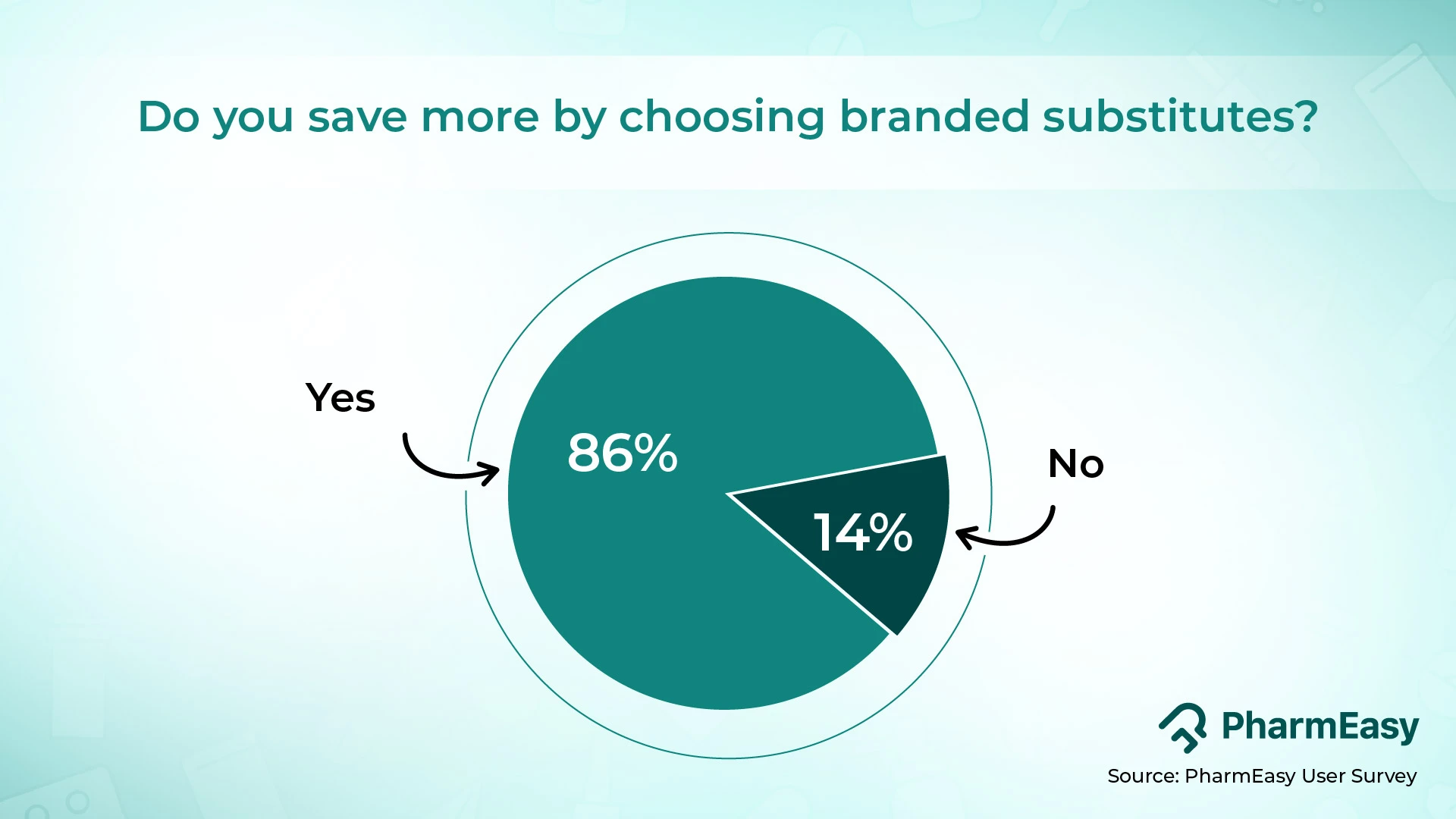
  • 86% of users confirmed visible savings on their medicine bills after switching.
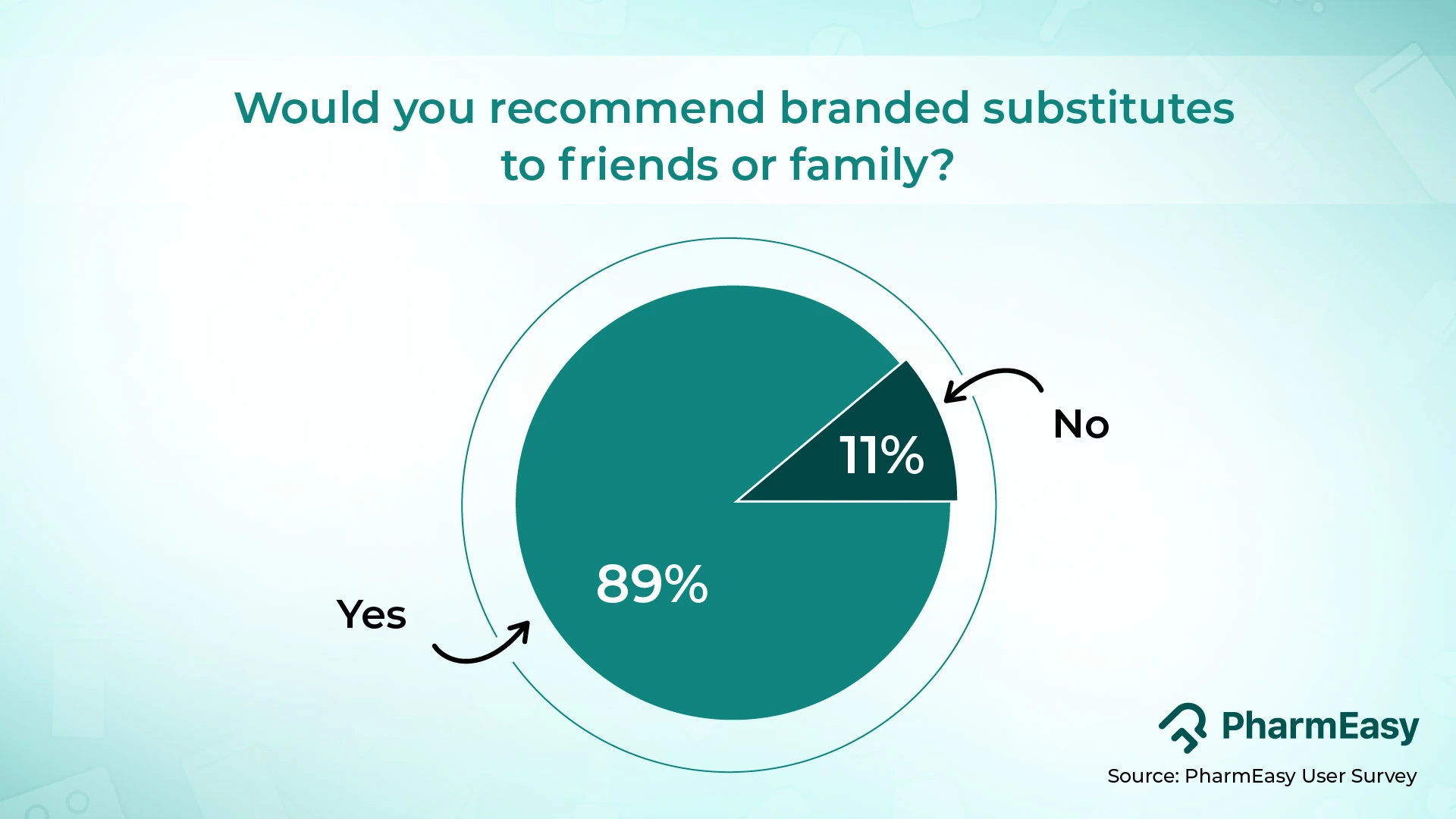
  • Nearly 9 in 10 users (89%) said they would recommend branded substitutes to friends and family.
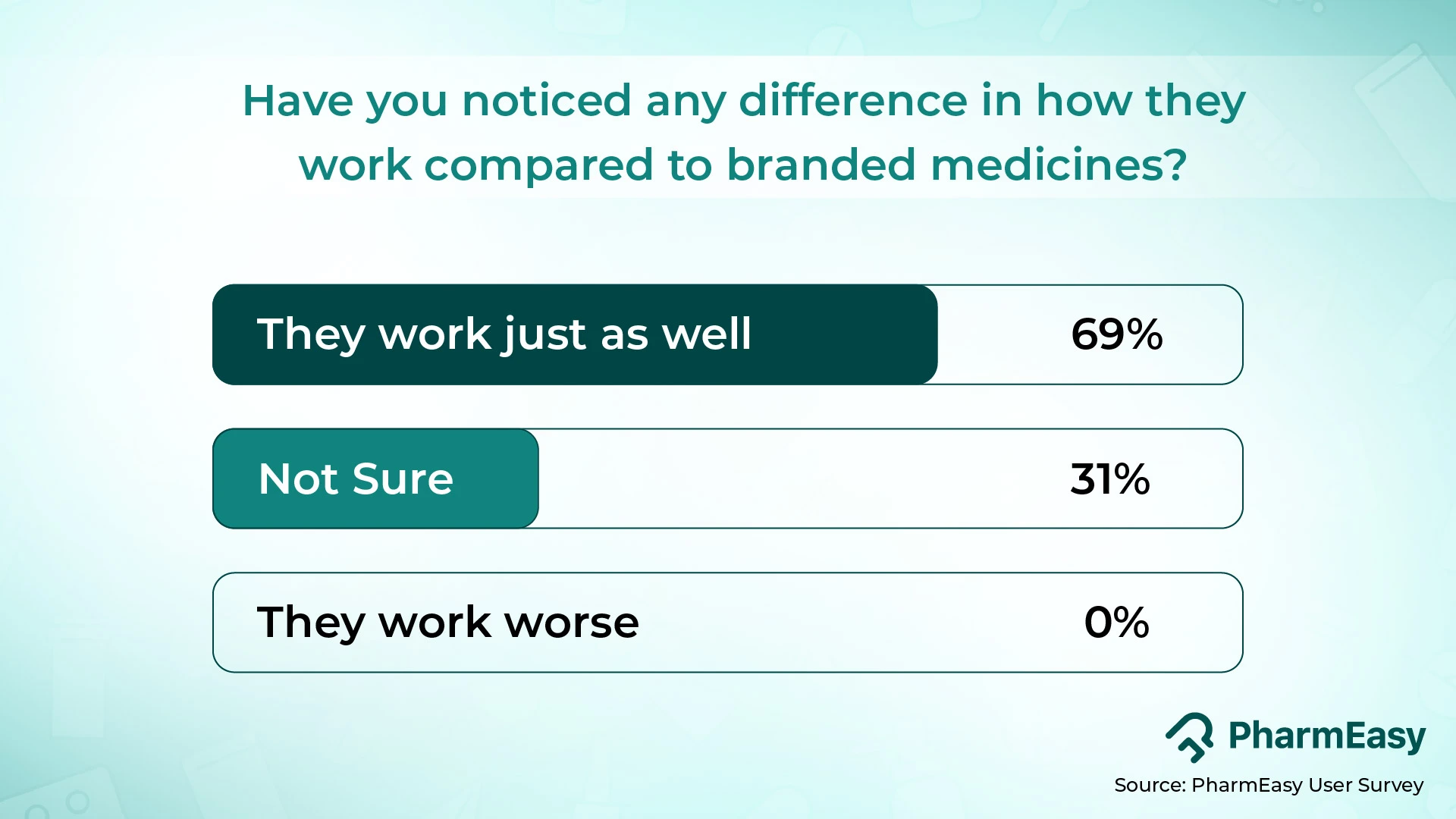
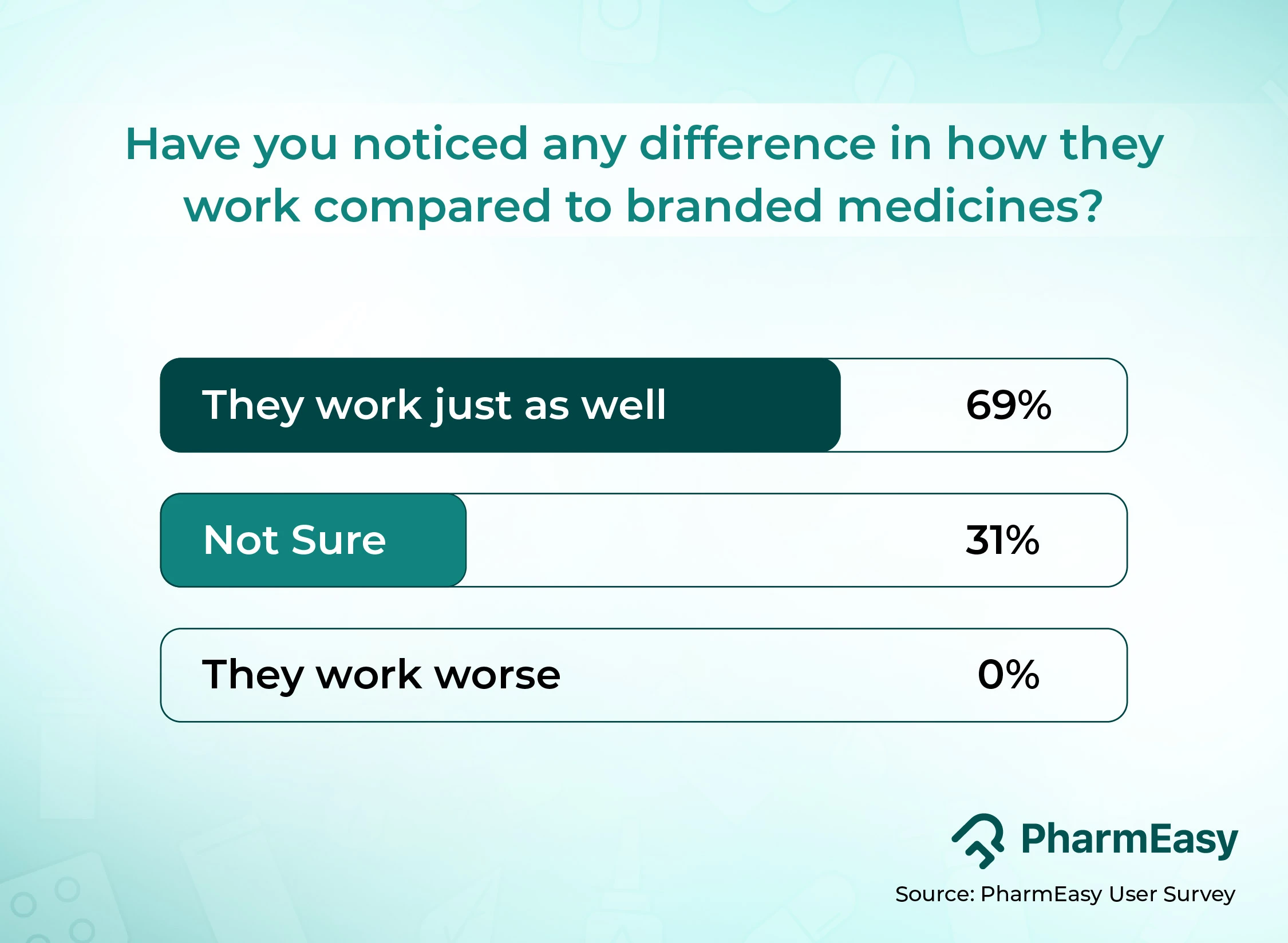
  • Zero users reported branded substitutes to be less effective than branded medicines.
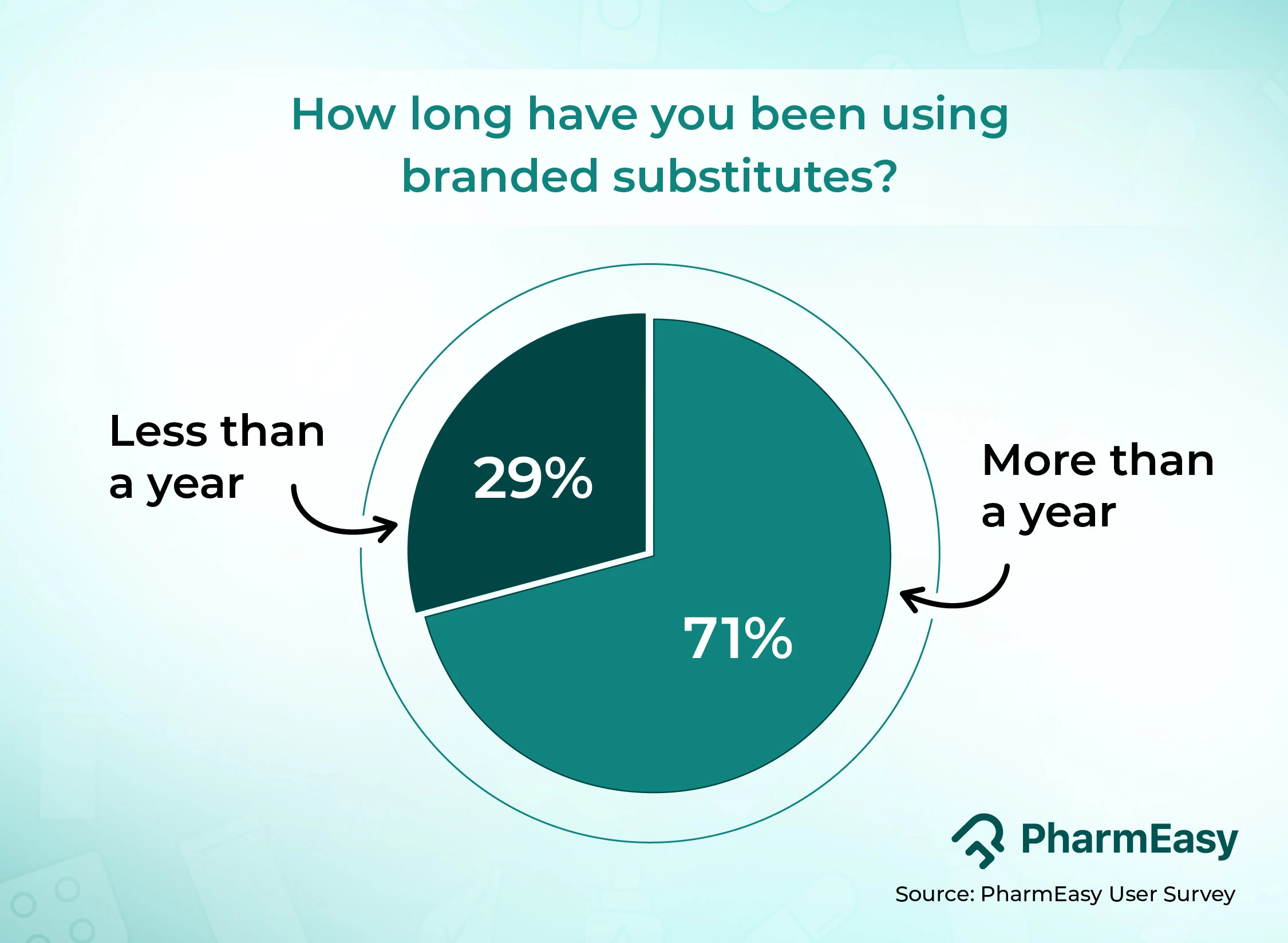
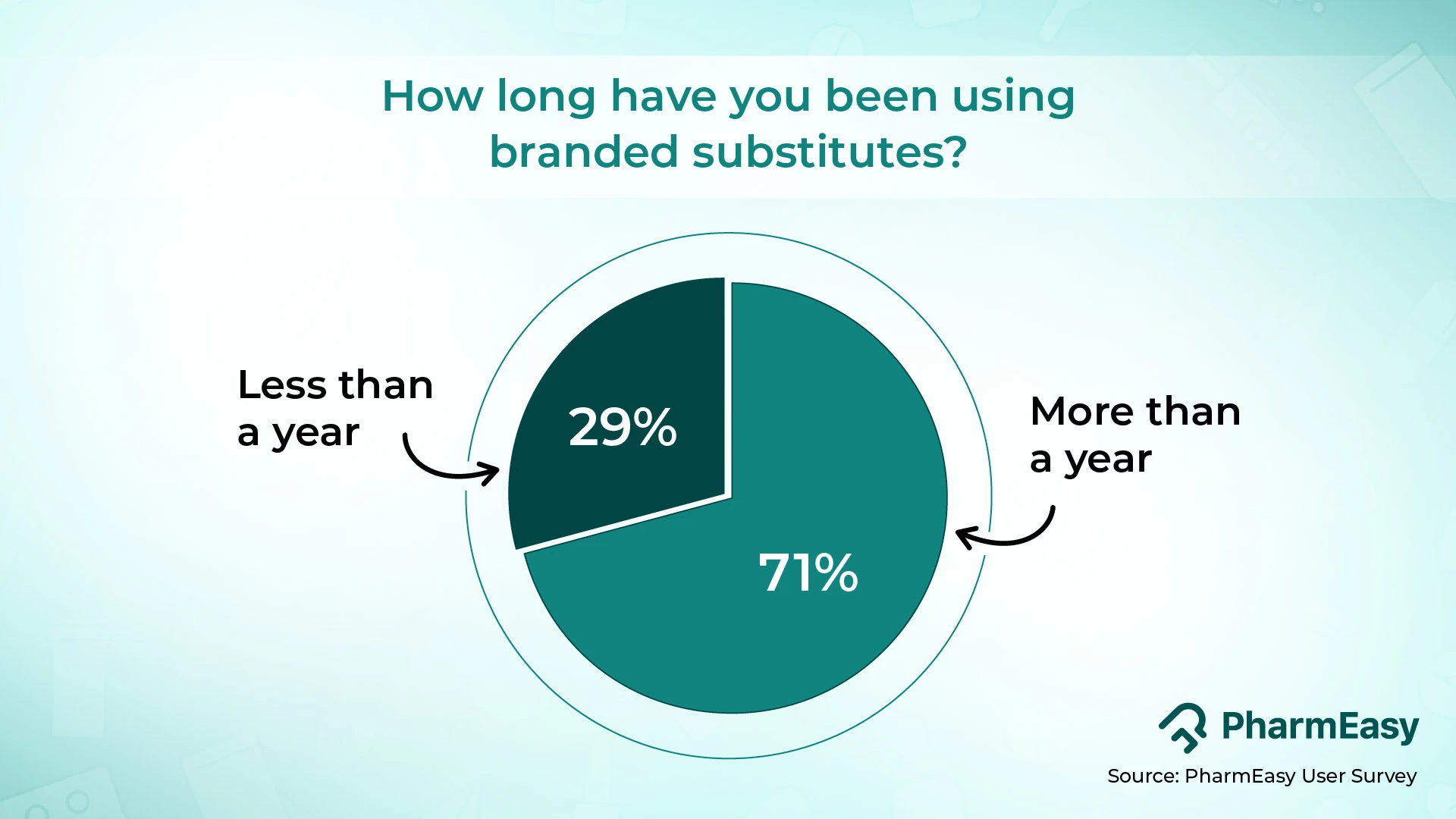
  • 71% of users have been using branded substitutes for over a year, showing sustained adoption rather than short-term trials.

Lower prices also lead to something more important than savings: better treatment continuity. When medicines are affordable, people are less likely to skip doses or delay refills, which is critical for chronic and long-term conditions.
Price Difference Explained

Same Medicine, Different Price
So, Why Does The Cost Change?

To understand the price gap, it is important to know how medicines are developed and sold.

Innovator Brand Medicines

When a pharmaceutical company develops a new medicine, it invests years of research, laboratory testing, clinical trials, and regulatory approvals. During this time, the company holds a patent, which gives it exclusive rights to sell that medicine. These development and marketing costs are reflected in the price.

What Happens After the Patent Expires

Once the patent ends, other companies are legally allowed to manufacture the same medicine using the same formula. These medicines are called generics.

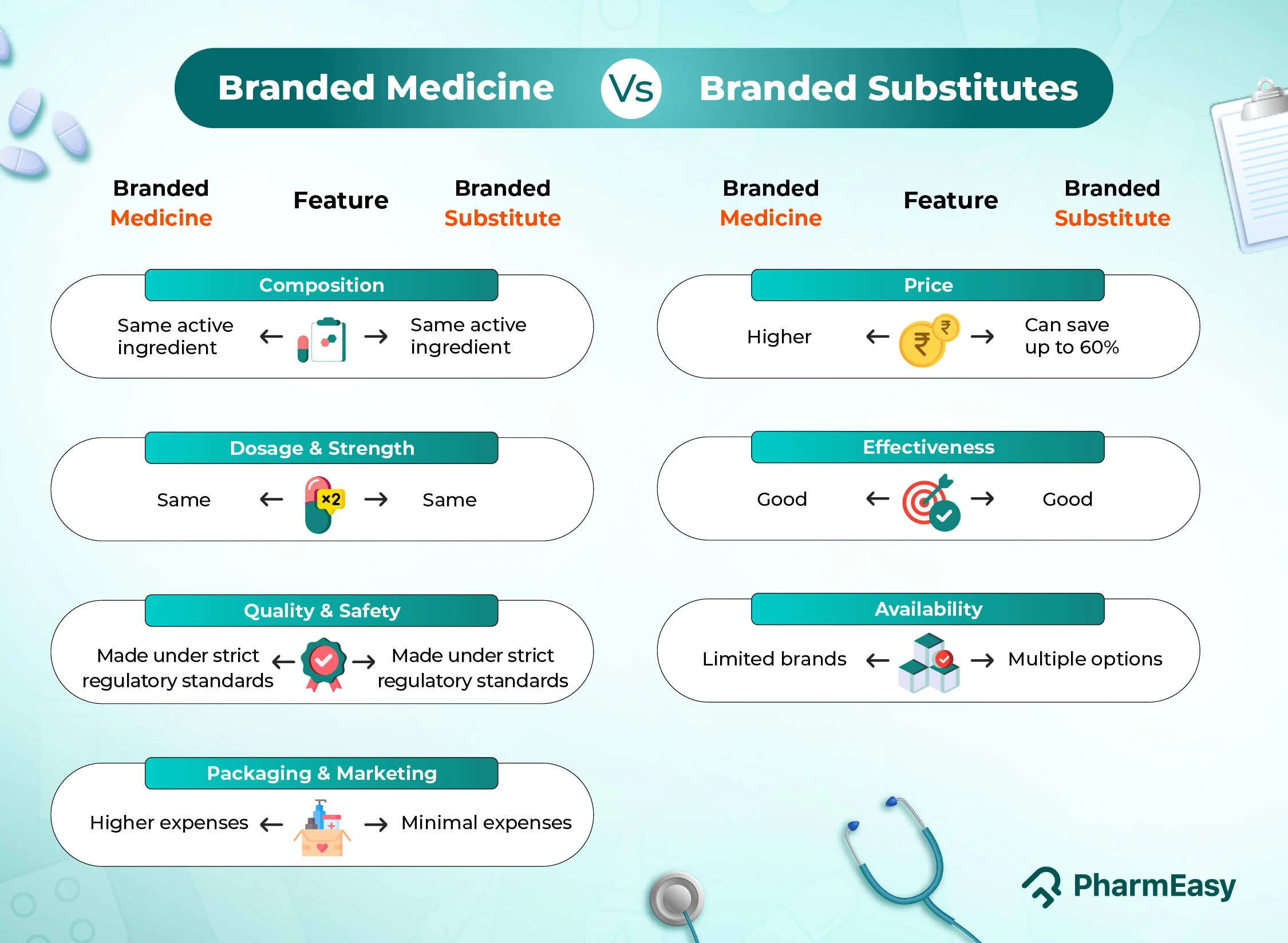
branded medicine vs branded substitute
fig-1

In India, generics broadly fall into two categories:

  • 1. Unbranded Generics (Generic Generics)
  • Sold under the chemical name, usually in simple packaging. These are typically available at government hospitals, Jan Aushadhi Kendras, and similar outlets. They are the lowest-cost option and meet the same regulatory standards.

  • 2. Branded Generics (Branded Substitutes)
  • These contain the same active ingredients and work the same way, but are sold under a company’s brand name. Because manufacturers do not have to repeat expensive clinical trials, and because multiple brands compete in the market, prices are significantly lower.

In short, the difference lies in innovation, branding, and cost structure, not in effectiveness or safety.

branded medicine vs branded substitute
fig-1
  • 2. Branded Generics (Branded Substitutes)
  • These contain the same active ingredients and work the same way, but are sold under a company’s brand name. Because manufacturers do not have to repeat expensive clinical trials, and because multiple brands compete in the market, prices are significantly lower.

In short, the difference lies in innovation, branding, and cost structure, not in effectiveness or safety.

Expert Perspective

Doctor Insights on Branded Substitutes

Learn more about Branded Substitutes by Dr. Ritu Budania, MBBS MD, Pharmacology

video-1

Truth About Branded Substitutes by Dr. Sudarshan Lamture, MD (Medicine), Physician & Diabetologist

video-2

Truth About Branded Substitutes by Dr. Sudarshan Lamture, MD (Medicine), Physician & Diabetologist

video-2
User Behaviour Insights

What Users’ Behaviour Tells Us

Majority Of The Users Have Been Ordering Branded Substitutes For Over A Year

how long have you been using branded substitute
(fig-2)

Nearly 3 out of 4 users are long-term users, showing sustained adoption rather than trial-only behaviour.

  • A large majority have been using Branded Substitutes for more than a year.
  • Indicates sustained usage, not just trial behaviour.
  • “Less than a year” users still form a meaningful minority, showing continued onboarding of new users.
how long have you been using branded substitute

(fig-2)

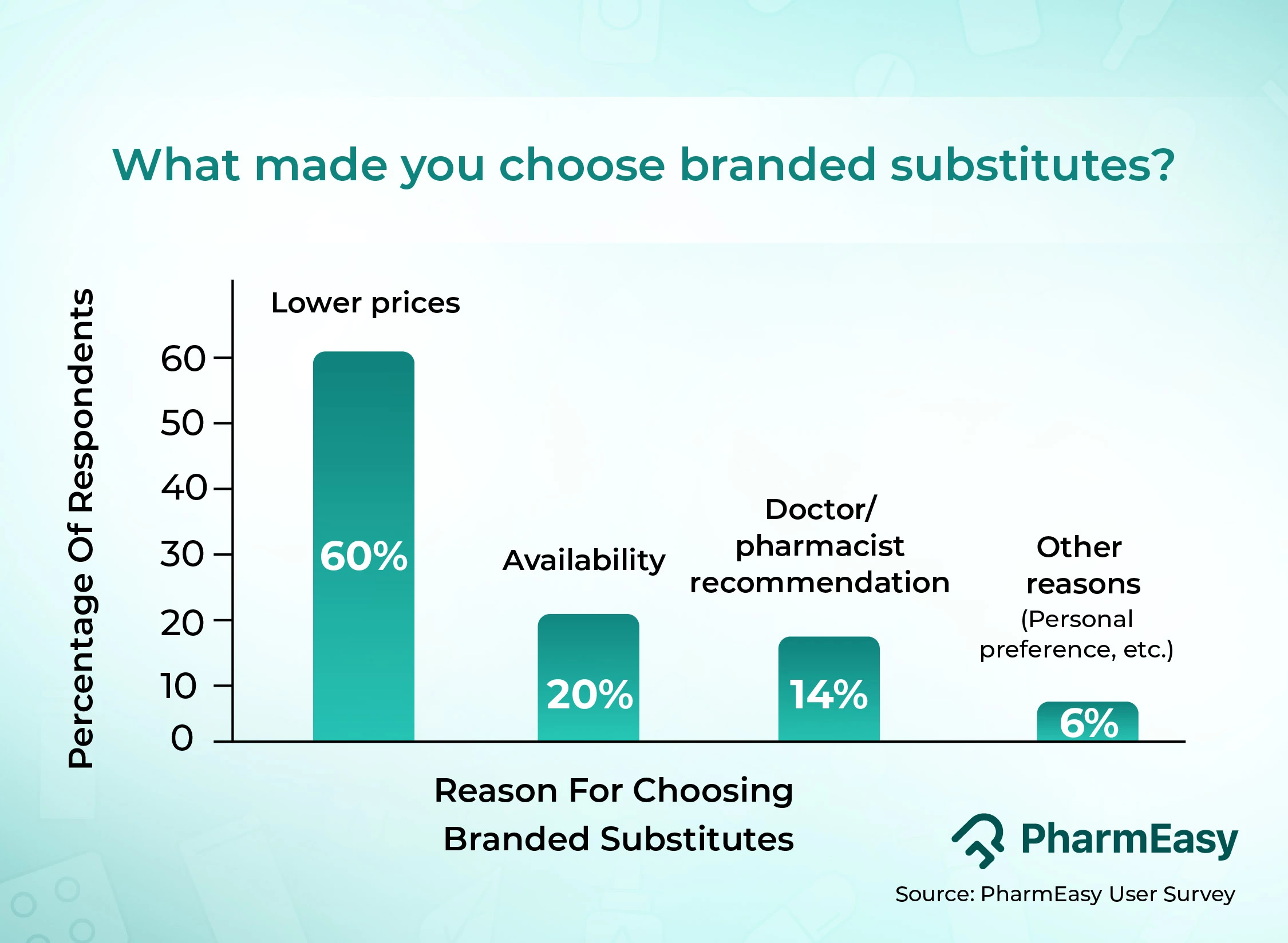
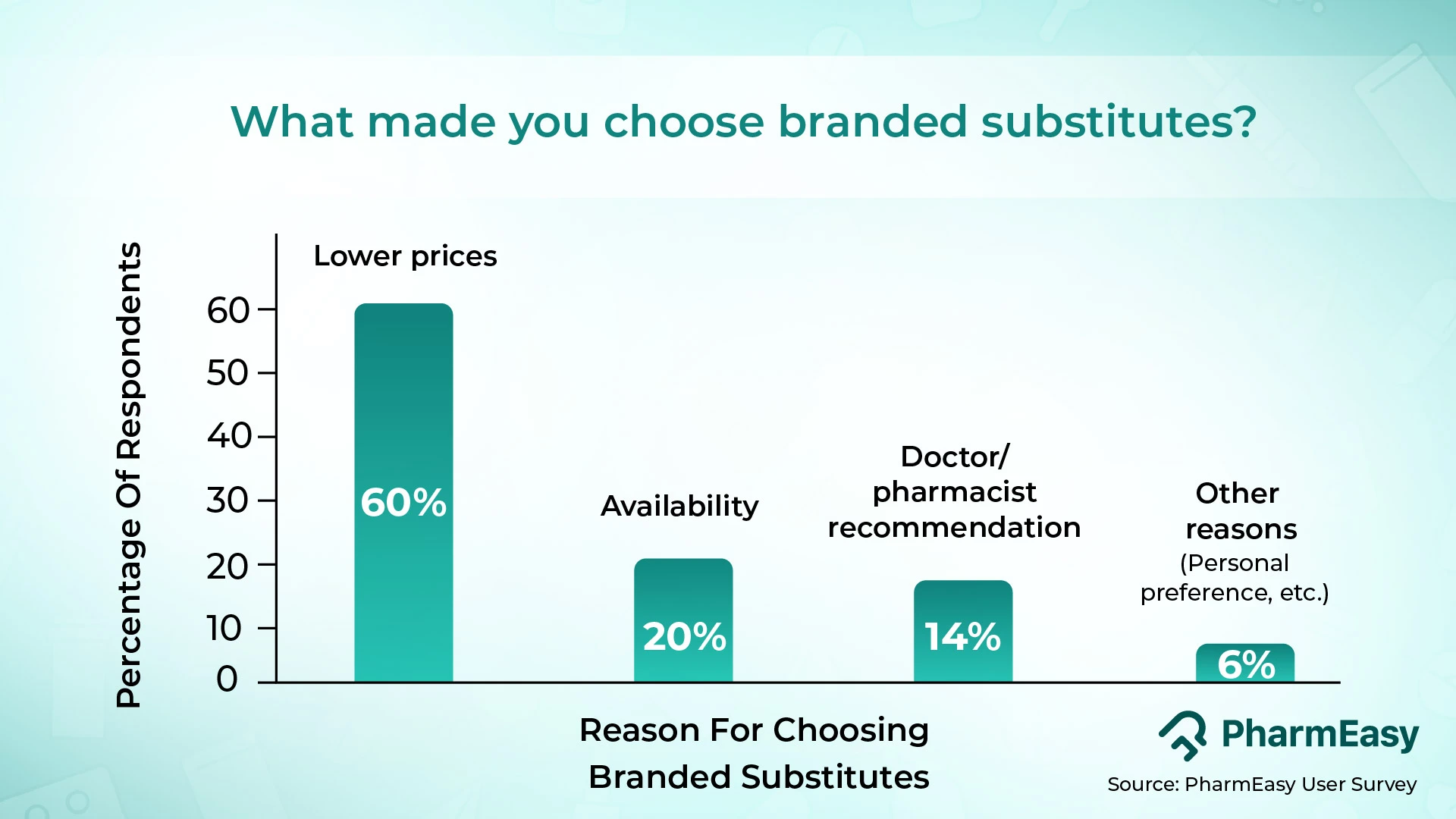
what made you choose branded substitute

(fig-3)

Cost Is the Doorway, Trust Keeps People In

what made you choose branded substitute
(fig-3)

What does this mean?

  • Lower prices: Dominant reason across age groups and locations.
  • Availability: Especially when branded medicines were not available.
  • Doctor/pharmacist recommendation: A smaller proportion, but trust is a significant factor.
  • A few “other” reasons (platform offers, smart pay, etc).

Not A Single User Reported Branded Substitute To Be Less Effective

Not a single user reported Branded Substitute to be less effective
(fig-4)

What does this mean?

  • Most users report that branded substitutes work just as well as branded medicines. This directly addresses the biggest question around the effectiveness of branded substitutes.
  • “Not sure” reflects a lack of confidence, not a negative experience.
  • No user reported the quality or effect of the medicine to be less than that of the brand-name medicine.

Not a single user reported Branded Substitute to be less effective

(fig-4)

do you save more by choosing branded substitute

(fig-5)

86% Users Said They Save More On Their Medicine Bills With Branded Substitutes

do you save more by choosing branded substitute
(fig-5)

What does this mean?

Savings are clearly visible and validated by the users who have been purchasing branded substitutes from PharmEasy. The minority saying “No” is likely due to edge cases or a lack of clear comparison.

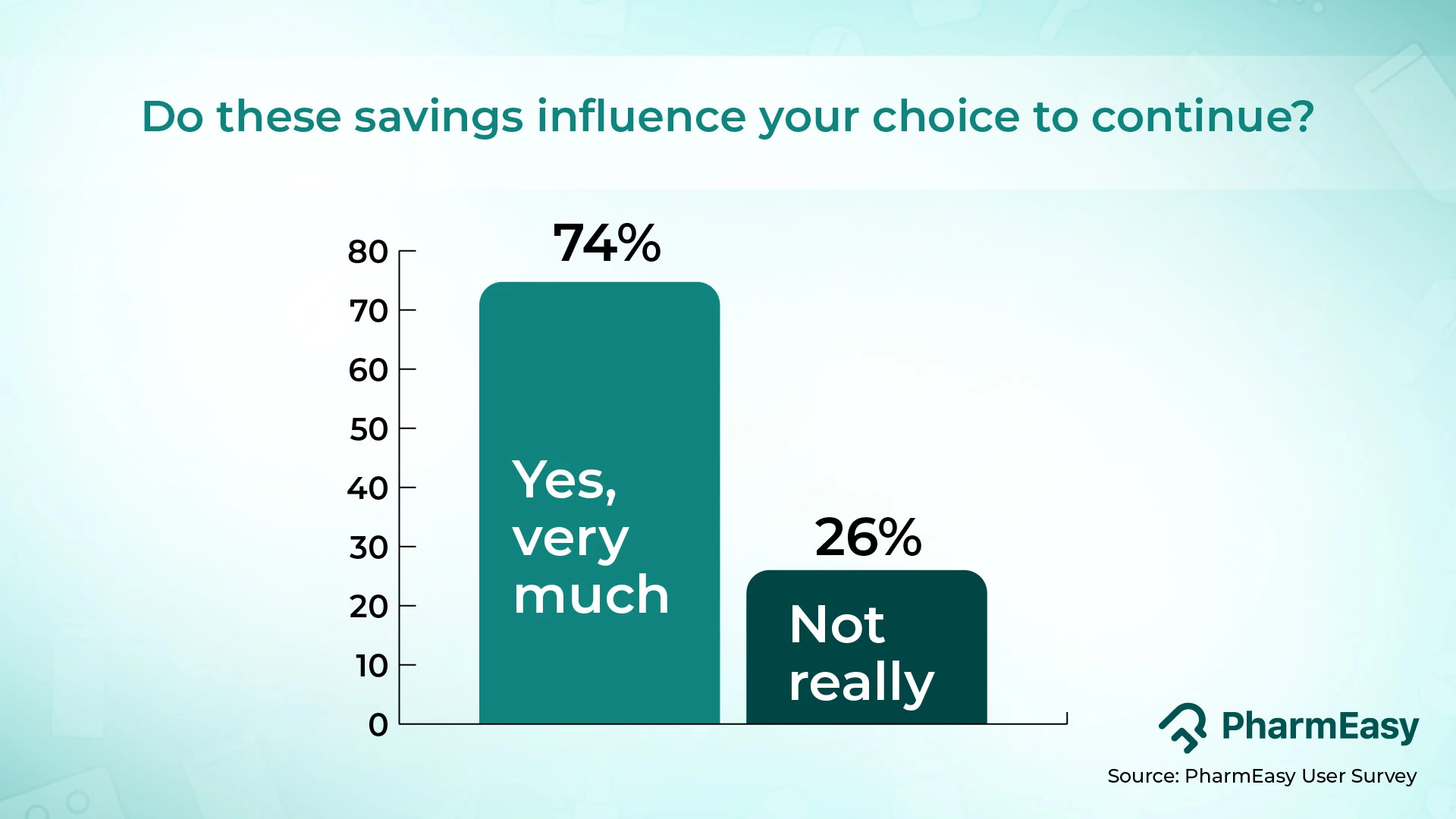
Affordability Directly Supports Long-Term Adherence

Affordability directly supports long-term adherence
(fig-6)

What does this mean?

Savings are the primary reason why most users want to continue using branded substitutes, but about one-quarter now stay for reasons beyond price (habit, trust, convenience).

Affordability directly supports long-term adherence

(fig-6)

The majority of the users trust branded substitutes

(fig-7)

The Majority Of The Users Trust Branded Substitutes

The majority of the users trust branded substitutes
(fig-7)

What does this mean?

89% users expressed confidence in recommending branded substitutes to their friends and family after using these medicines. This speaks volumes about the trust, effectiveness, and affordability of branded substitutes.

Customer Perspective

Stories From Customers Like You

Insights from Younger Users

video-3

Insights from Older Users

video-4

Insights from Older Users

video-4
Platform Insights

From Adoption to Impact: What the Data Shows

Adoption Trends from PharmEasy Data

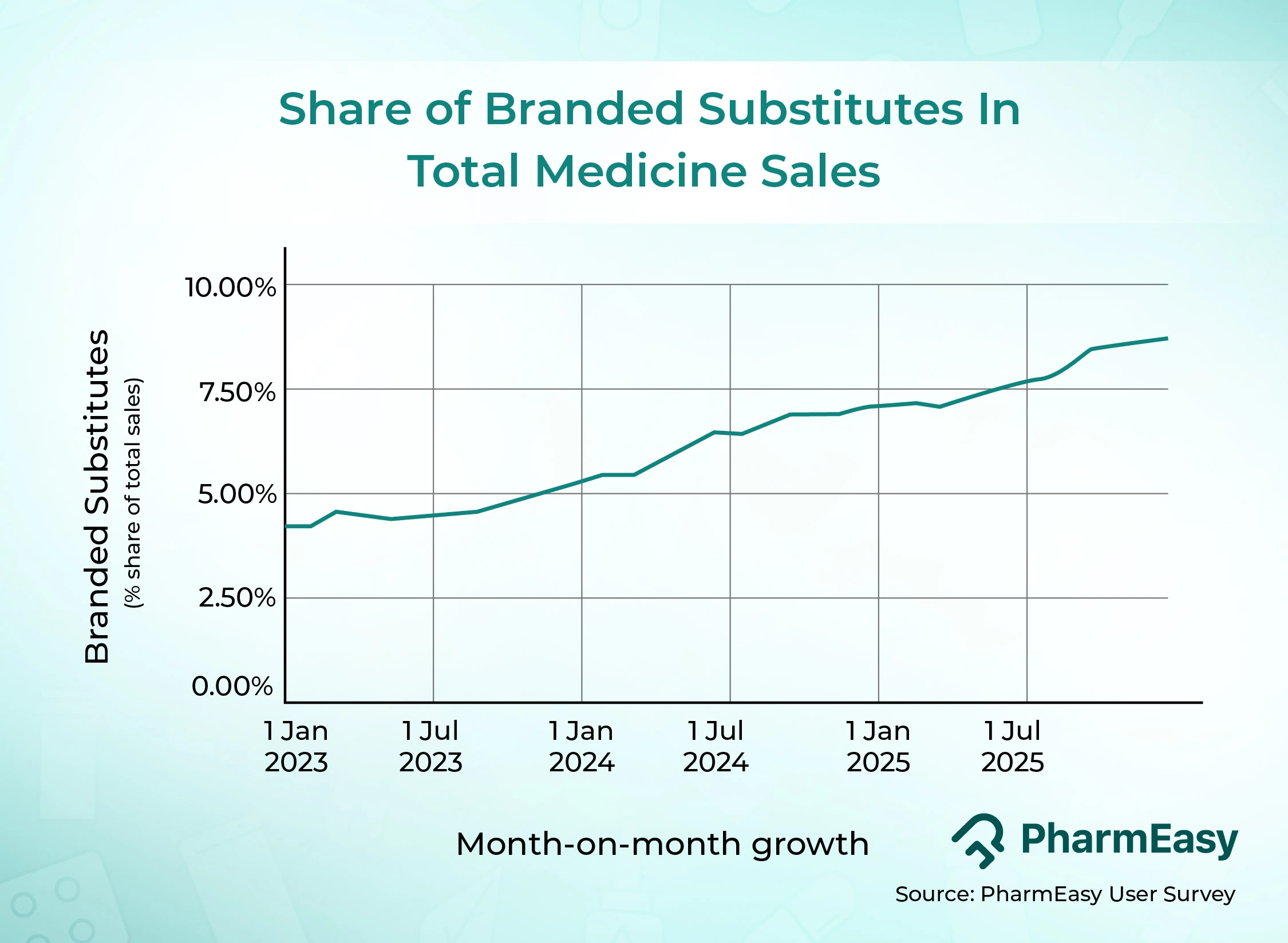
share of branded substitutes in total medicine sales
fig-8
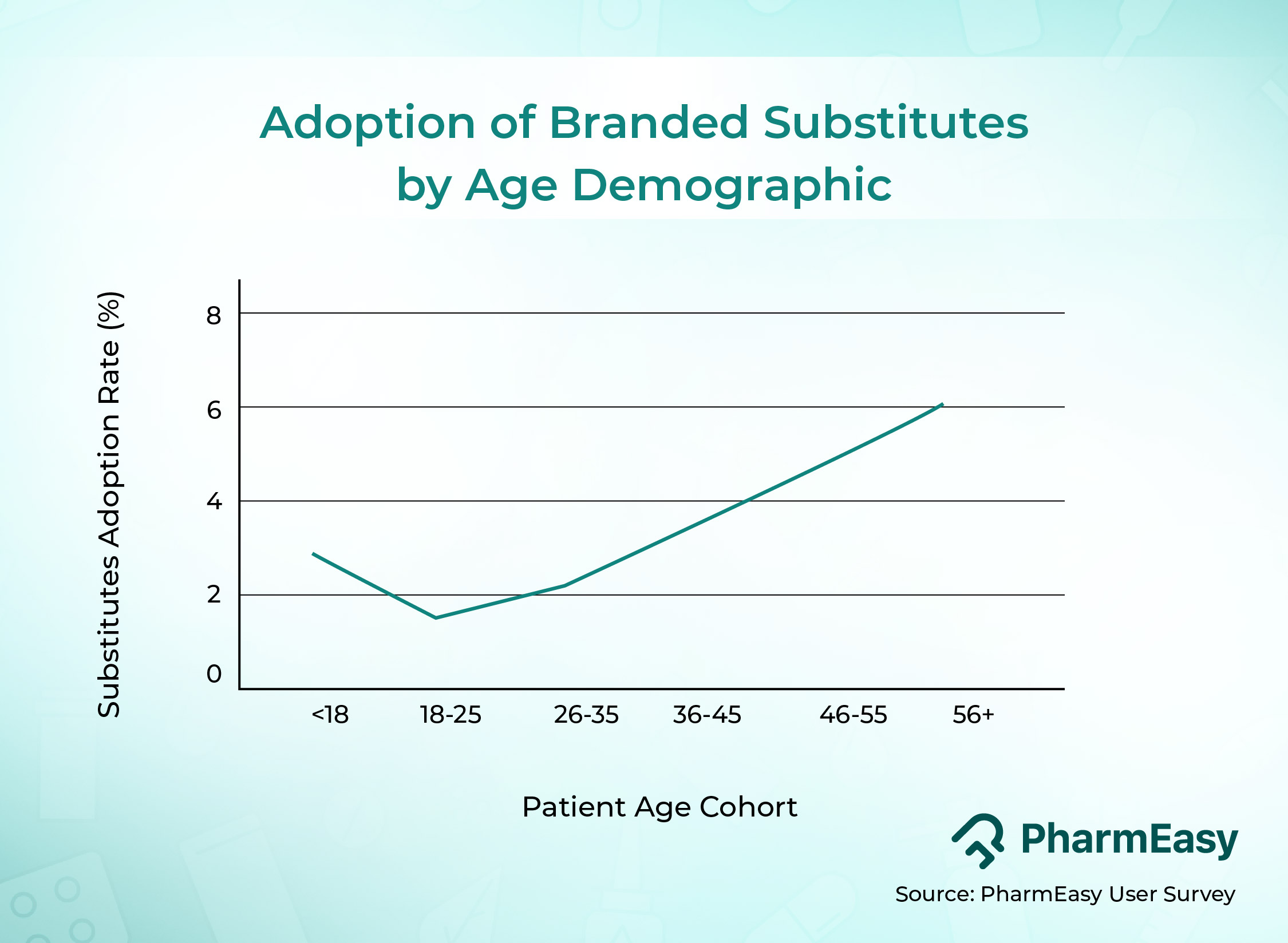
adoption of branded substitutes by age demographics
fig-9
  • Branded substitute adoption increased from 22% in 2024 to 40% in 2025
  • Uptake is higher among older users, reflecting thoughtful cost-saving for long-term treatments
  • Among users who switched after April 2025, 31.9% have already made repeat purchases, showing that substitution is not a one-time decision
  • 27.45% of all PharmEasy users have now switched to branded substitutes, marking a clear shift away from strict brand loyalty

What This Means for India’s Healthcare System

  • Lower out-of-pocket spending without compromising care
  • Better adherence to chronic and long-term treatments
  • Stronger impact when doctors, pharmacists, and platforms work together to educate patients

Branded substitutes are not an alternative. They are a practical solution to rising healthcare costs.

Age-wise distribution of HBa1c test results in India
fig-8
age wise distribution of FBS test results in India
fig-9
FAQS

Frequently Asked Questions

1. Are branded substitutes as effective as branded medicines?

Yes. Branded substitutes contain the same active ingredients and meet the same quality and safety standards. In our survey, not a single user reported them to be less effective.

2. Do people really save money with branded substitutes?

Yes. 89% of users reported savings between 50-60%, making long-term treatment more affordable.

3. Why are people hesitant to switch?

The hesitation is mostly about perception, not performance. Familiar brand names feel safer. Once users try branded substitutes, trust builds quickly.

4. How can I order branded substitutes on PharmEasy?

  1. Search for your prescribed medicine on the app
  2. Look for the “Branded Substitutes” icon to discover suitable alternatives
  3. Compare the composition and check how much you can save
  4. Talk to your doctor, choose the branded substitute, and place your order
CONCLUSION

Same Medicine, Smarter Decisions

This report shows a clear shift in how Indian consumers think about medicines. More people are questioning price, understanding quality, and making informed choices.

What often starts as a cost-driven decision turns into long-term adoption built on trust, convenience, and real-world results. With chronic diseases on the rise and medicine expenses climbing, branded substitutes offer a realistic way to reduce financial burden while maintaining quality care.

The opportunity ahead lies in better education, open conversations between doctors and patients, and continued trust-building. Affordable healthcare should be the norm, not the exception.