Diabetes: The Silent Killer Sweeping Across India
Using PharmEasy’s real-world diagnostic and medicine data to estimate the scale, distribution, and impact of diabetes across India.
What 4 Million+ PharmEasy Lab Tests Reveal
According to the ICMR INDIAB-17 study,1 more than 100 million people in India are estimated to have diabetes, and another 136 million are living with prediabetes. Globally, around 830 million people live with diabetes, according to the World Health Organization.2 Many people remain unaware of their risk, and India is far ahead of the global average when it comes to diabetes prevalence.
India’s Diabetes Prevalence
11.4% (ICMR INDIAB-17 study)
Global Diabetes Prevalence
10.1% (WHO)
The “Silent” Killer
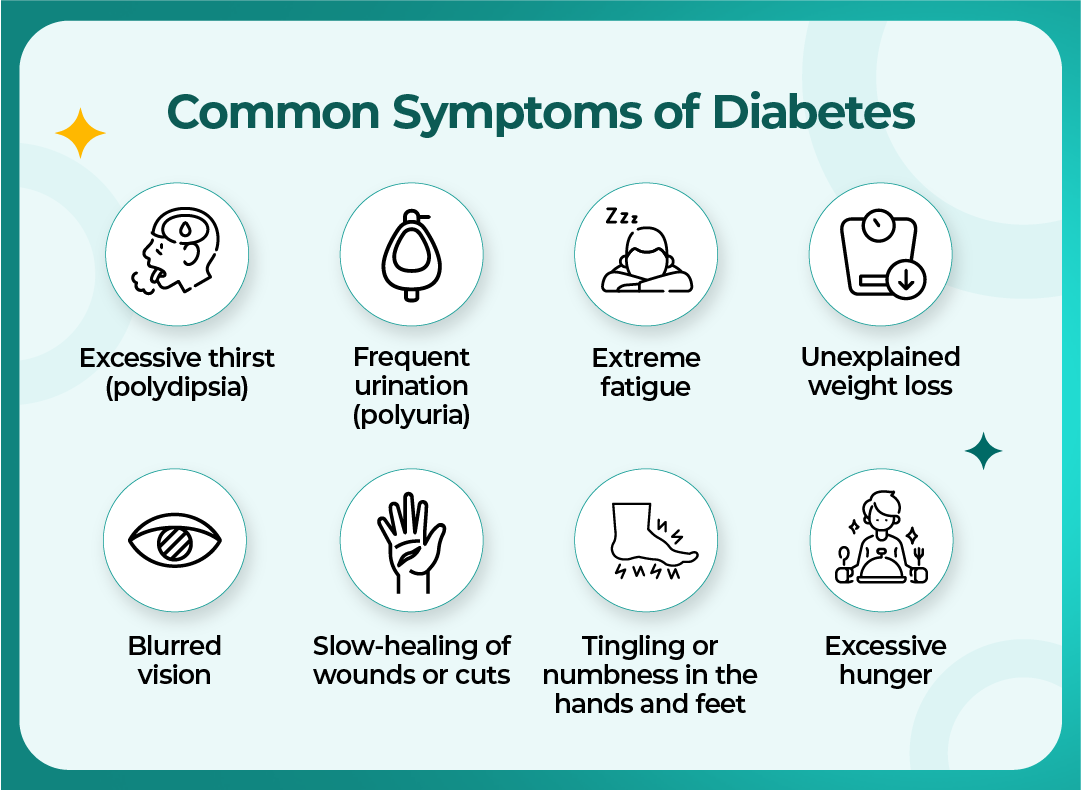
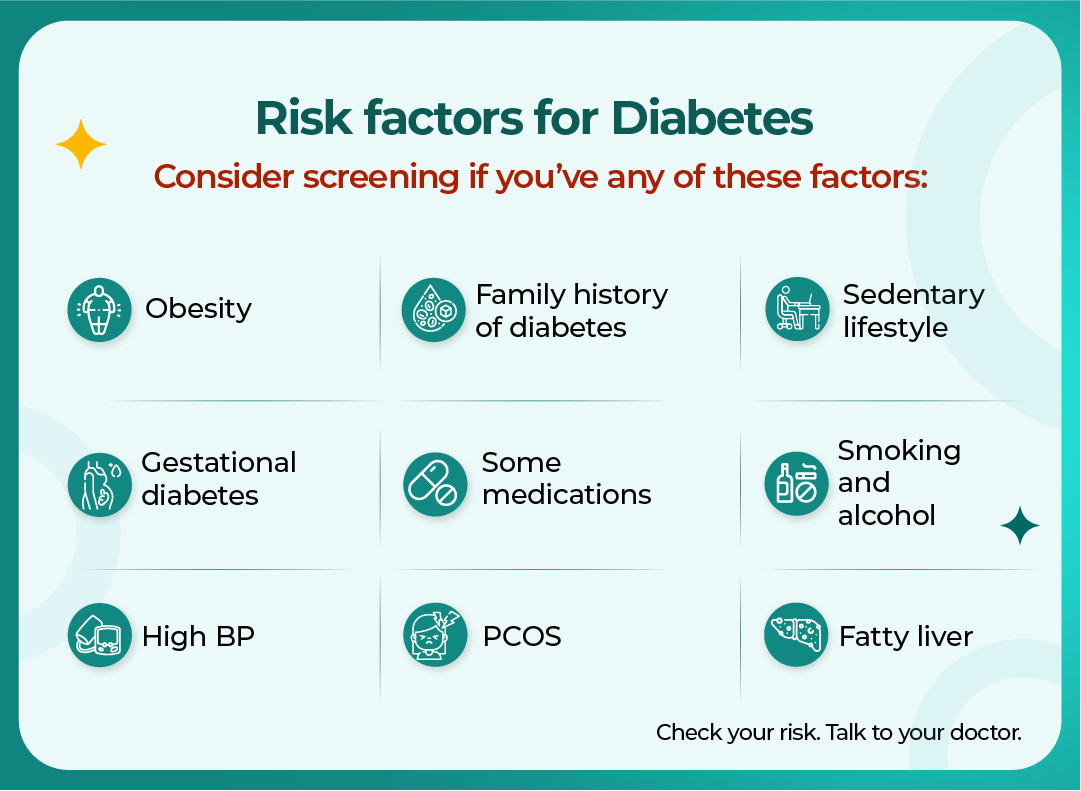
Diabetes is often referred to as a "silent killer" because it can progress quietly, often without clear or early symptoms. It can strike anyone, regardless of age, gender, lifestyle choices, or geographic location.
Today, the only thing more concerning than having diabetes is not knowing you have it. A study shows that over 50% of people with diabetes in India are undiagnosed or unaware of their condition. This silent progression often delays diagnosis until complications like heart disease, kidney damage, or vision loss develop. Early detection through a simple blood test is still the best way to identify risks and take timely action.
PharmEasy’s Report Overview
This report brings together data-driven insights from PharmEasy Labs’ diagnostic results.
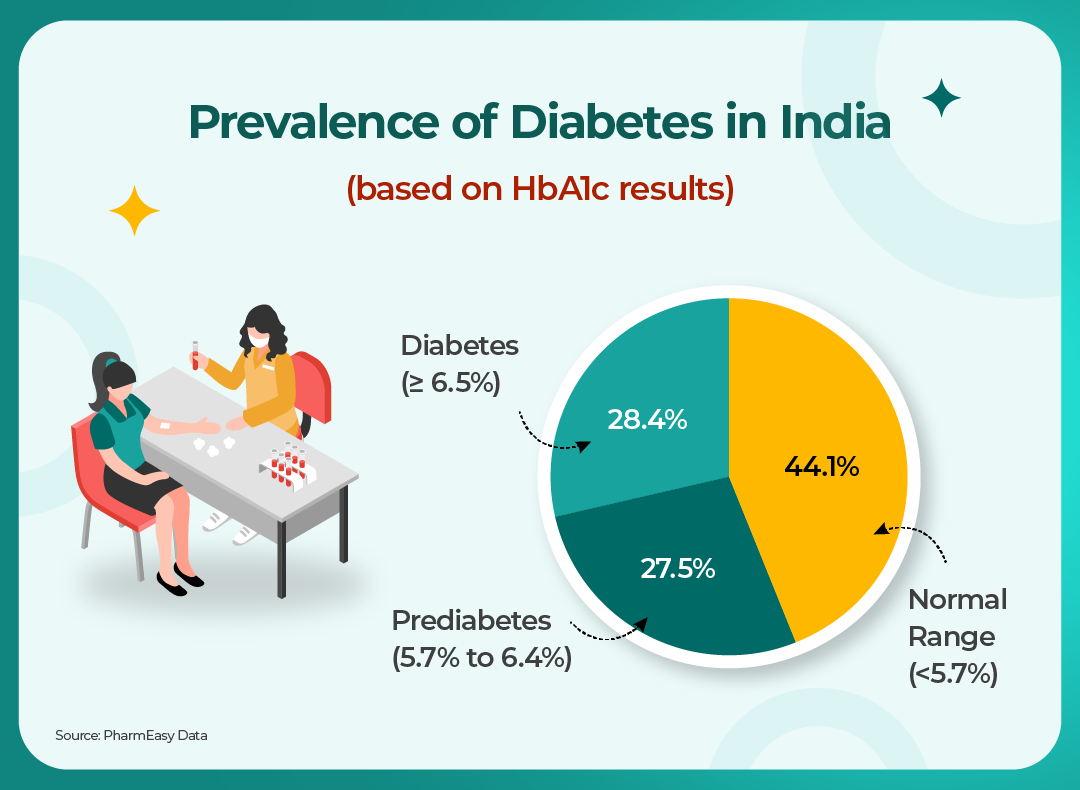
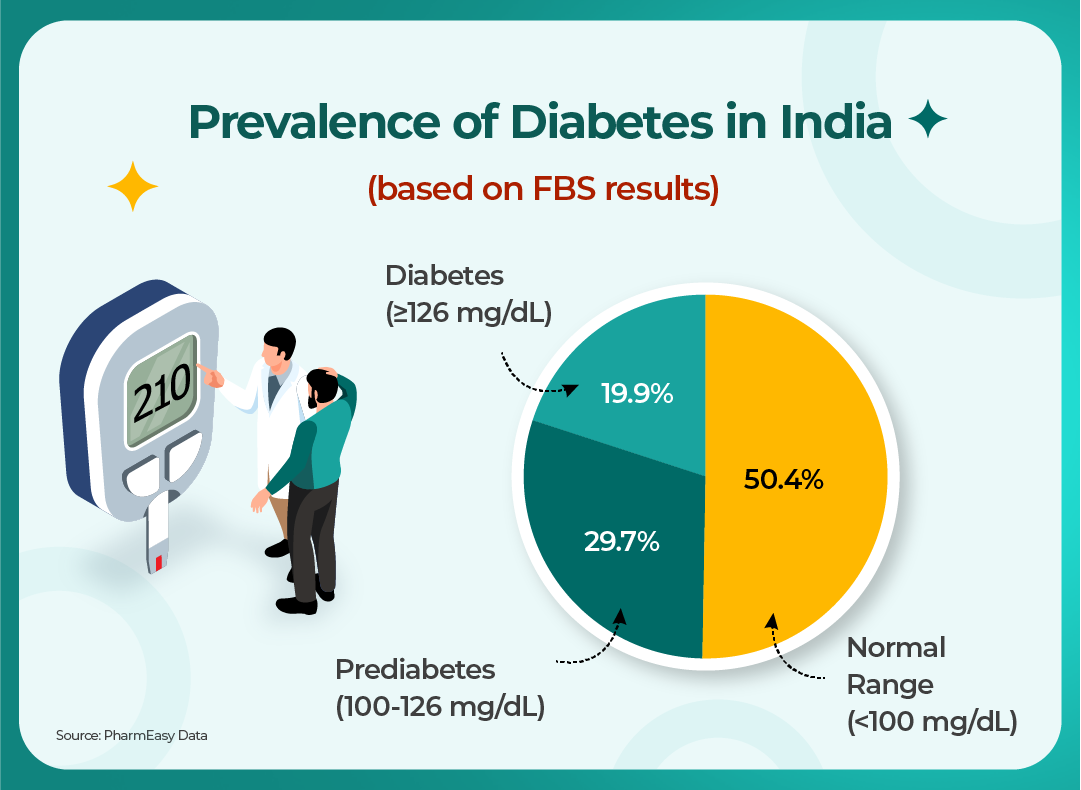
- 1 in 2 people tested show high blood sugar levels.
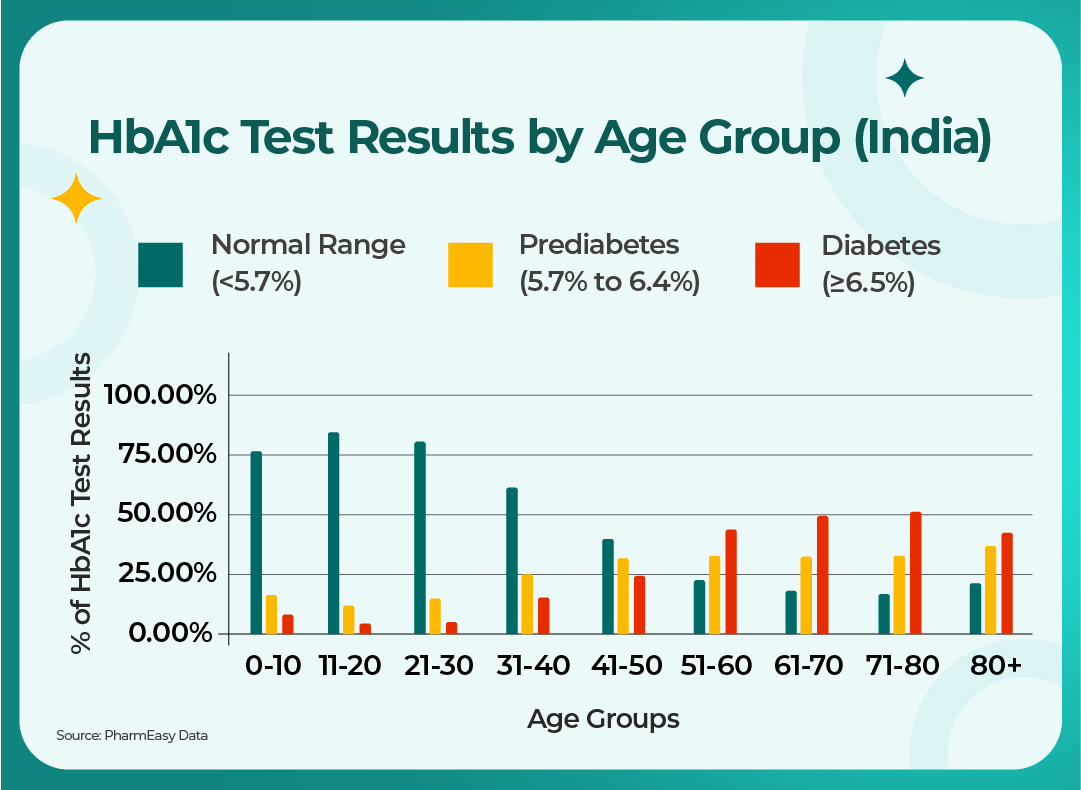
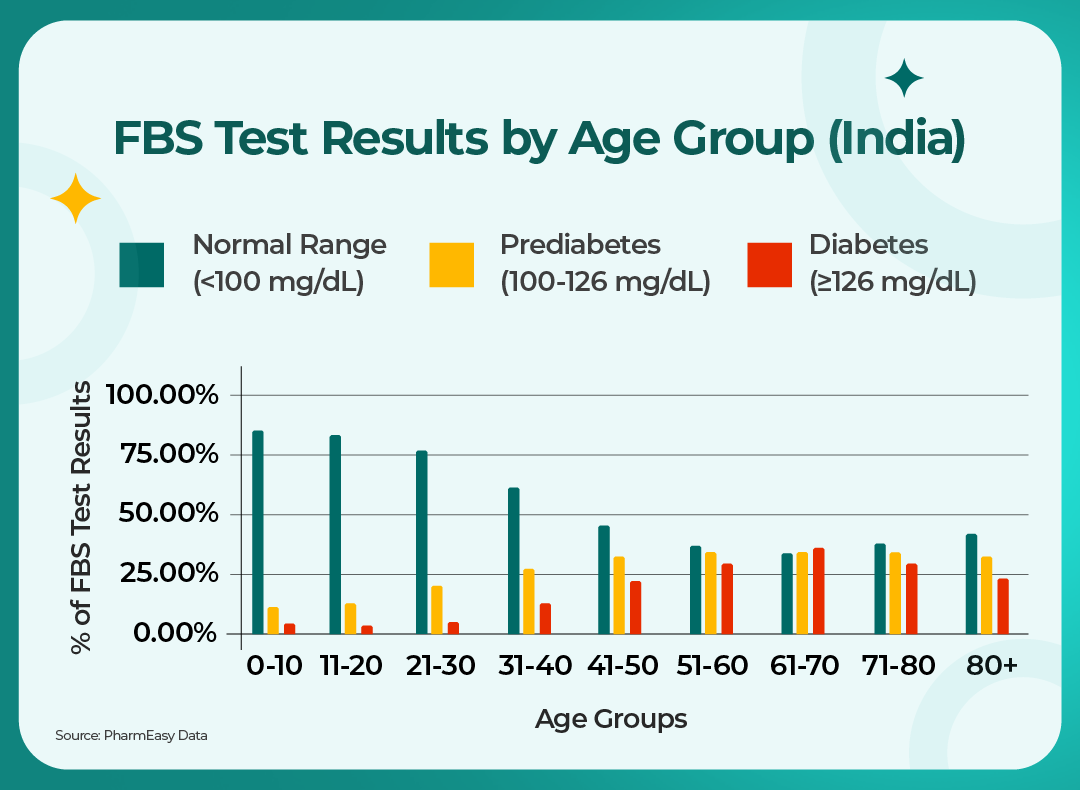
- The data shows a significant number of people with high blood sugar across all age groups. There is a sharp rise in the number of high blood glucose reports from 30 years of age.
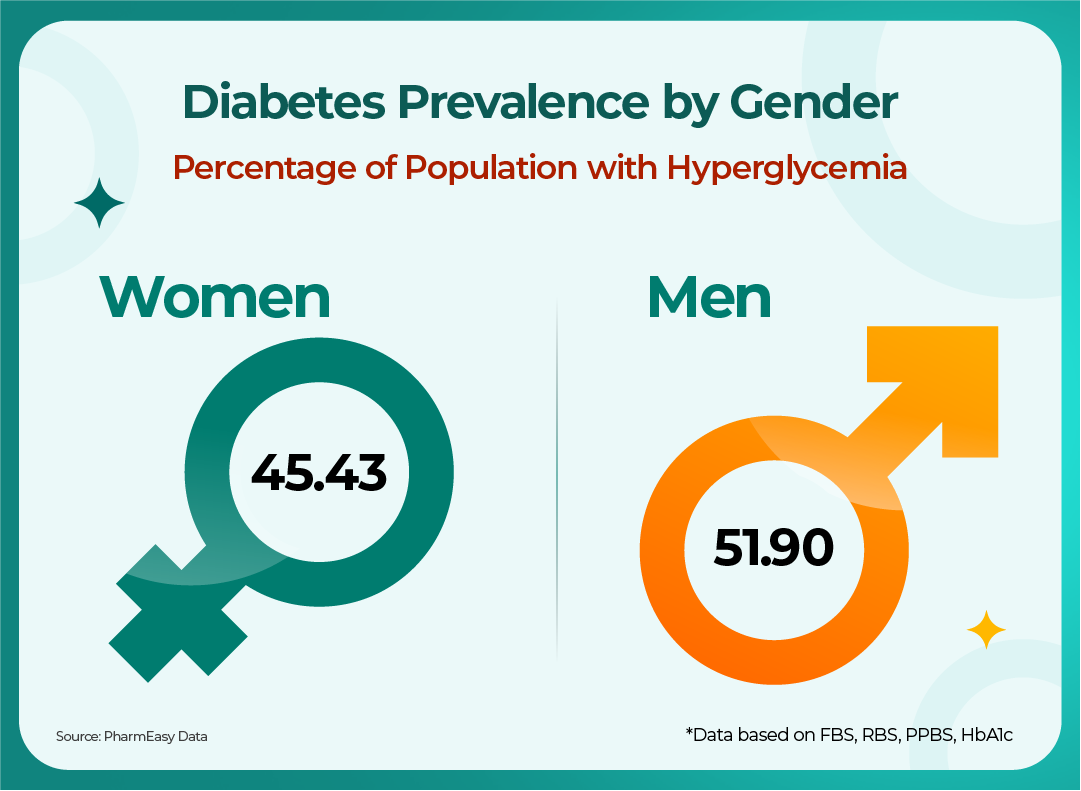
- 51.9% of men and 45.43% of women who tested had high blood sugar.
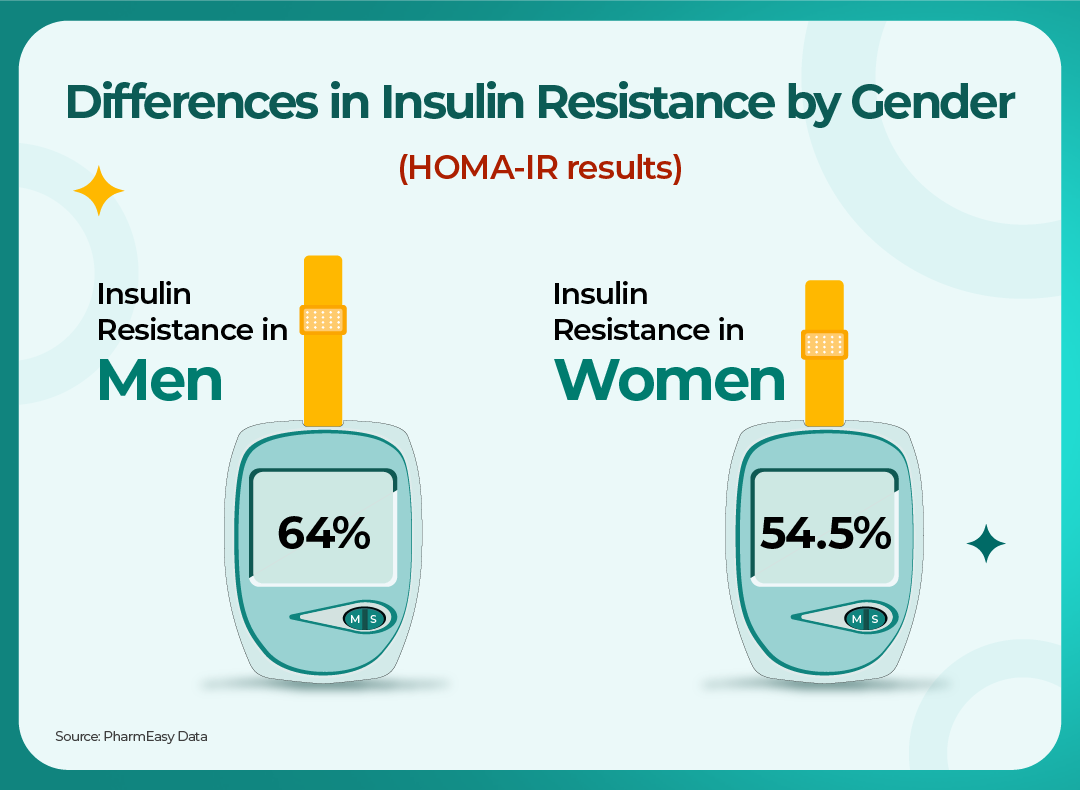
- HOMA-IR results indicate that 58% of tested users have insulin resistance, an early marker of metabolic risk.
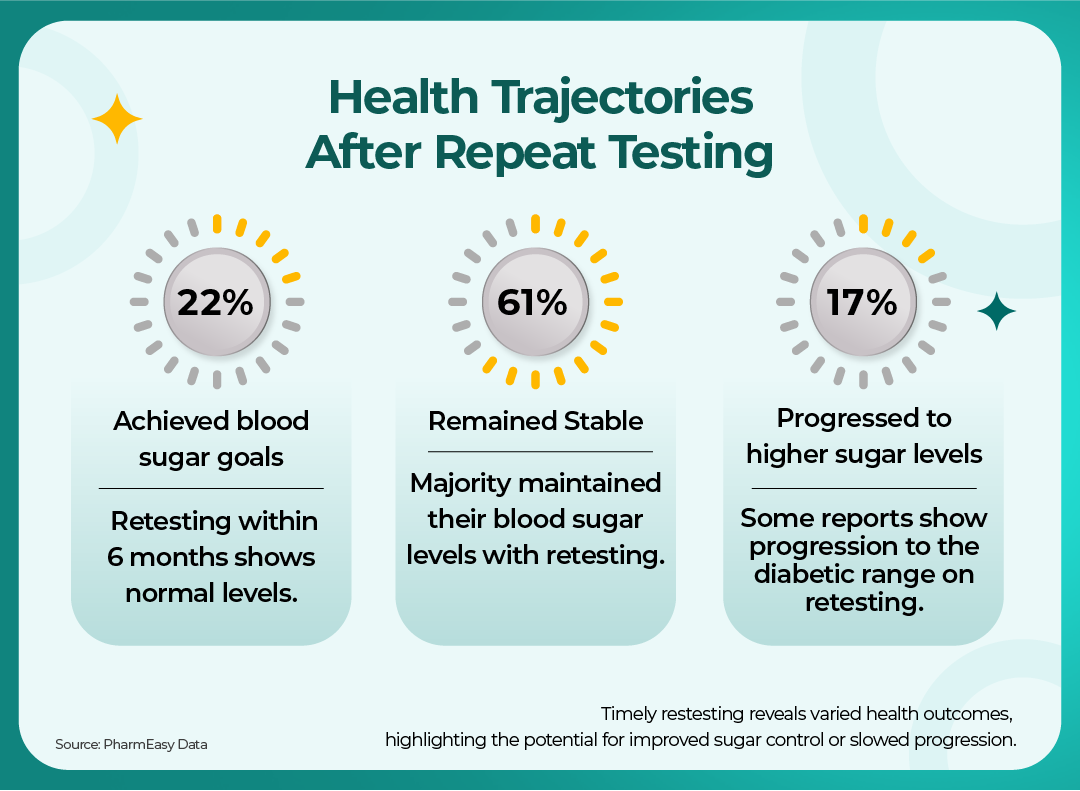
- Among users who retested within six months, 22% showed improvement, returning to normal sugar levels. This highlights the crucial role of regular monitoring in managing diabetes effectively.
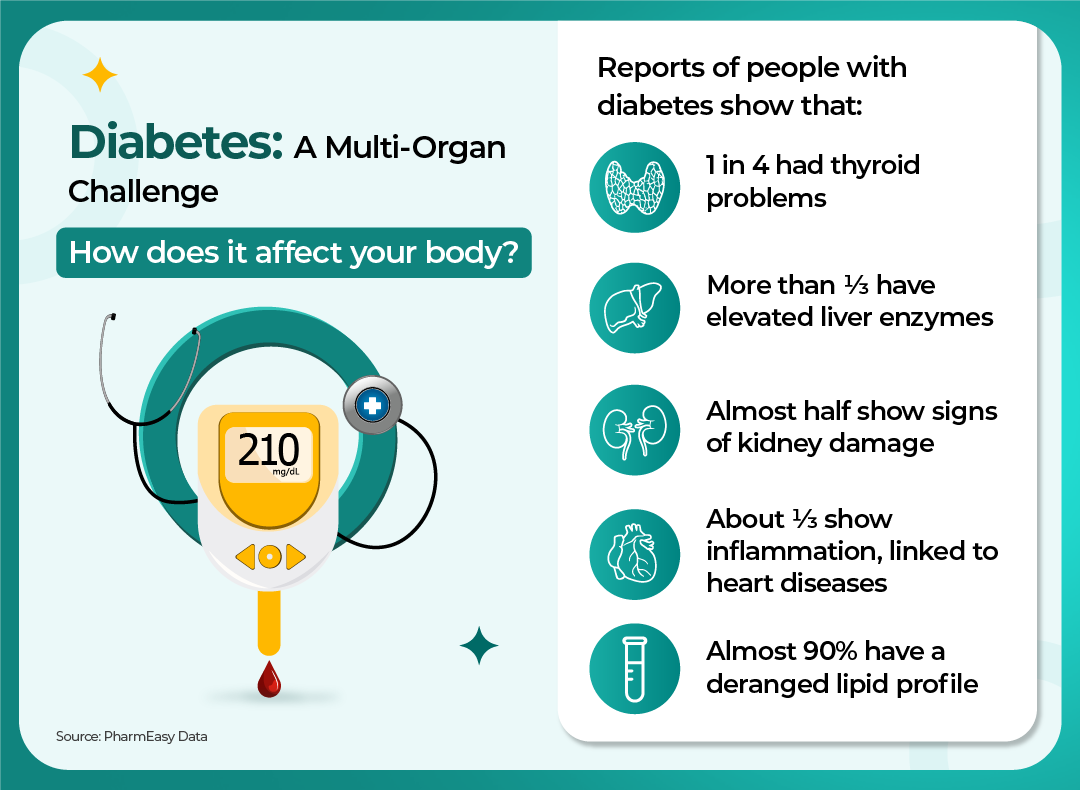
- More than 90% of reports with high blood sugar also showed abnormality in one or the other parameters for liver, lipid, heart or thyroid issues. This highlights the need for regular testing, not just for blood sugar levels but also for overall body parameters.
These findings highlight the importance of preventive testing, regular monitoring, and timely intervention to help manage and halt the progression of prediabetes and diabetes.