Last updated: Sep 28, 2026Published on: Sep 24, 2026
Table of Contents
Introduction
Any unusual patch, ulcer, or lump on the tongue may seem harmless, especially when it first appears. However, if the lesion does not heal or persists for a long time, it is important to get it checked as persistent changes in the tongue may sometimes be a sign of tongue cancer1. In this blog, we will discuss what tongue cancer is and its types. We will also discuss its common symptoms, diagnostic methods, and treatment options to manage the condition.
What Is Tongue Cancer?
Tongue cancer is a type of oral cancer, where the cells of the tongue grow in an uncontrolled manner. This can lead to symptoms like the appearance of a spot, lump, or patch on the tongue, pain while swallowing, and sore throat1.
Advertisement
Did You Know?
Tongue cancer (squamous cell type) is the most common and aggressive type of oral cavity cancer, which is increasingly being reported among younger patients2.
When compared with international age-adjusted tongue cancer rates, Indian population-based cancer registries occupied all the top five positions for men and three of the top five positions for women3.
In men, Ahmedabad Urban registry had the highest age-adjusted rate of 12.2 cases per 100,000. In women, Ahmedabad Urban, Kamrup Urban and East Khasi Hills registries reported the highest age-adjusted rate of 3.2 cases per 100,0003.
In United States of America, the rate of new tongue cancer cases is approximately 3.7 per 100,000 men and women per year, while the death rate is approximately 0.7 per 100,000 men and women per year4.
Types of Tongue Cancer
Tongue cancer is classified as an oropharyngeal cancer. The most commontype of oropharyngeal cancer andtype of tongue cancer is squamous cell carcinoma (SCC), which arises from the thin, flat cells lining the surface of the tongue. Other types, including subtypes of SCC include1,5,6.
Spindle Cell Squamous Cell Carcinoma: This subtype of SCC usually affects the tongue, lower lip, and alveolar ridge (the ridge of bones that contains the sockets for the teeth).
Basaloid Squamous Cell Carcinoma: This is a subtype of SCC that mostly affects the tongue and floor of mouth.
Adenosquamous Cell Carcinoma: This is a rare subtype of SCC.
Lymphoepithelial Carcinoma: This is a cancer of the nasopharynx that commonly affects the tongue.
Verrucous carcinoma: This is a slow-growing cancer and tongue is one of the most frequently affected organ in this type.
Symptoms of Tongue Cancer
Localised pain is the most commonly reported symptom of tongue cancer. Other common symptoms include7:
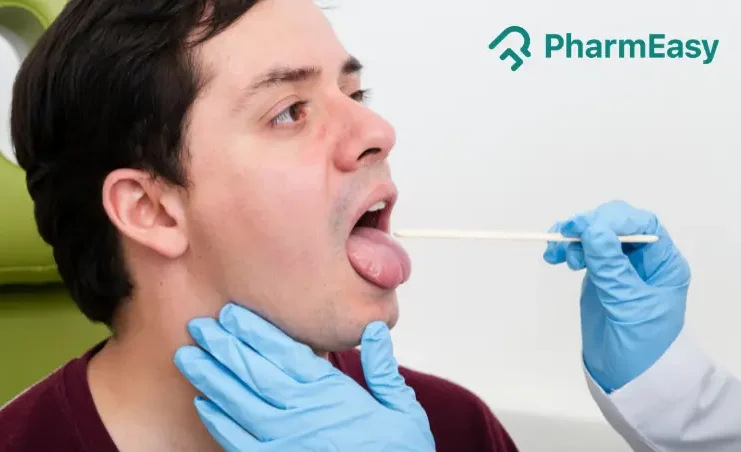
If you notice a persistent ulcer, lump, red or white patch, pain, bleeding, numbness, or difficulty in moving the tongue or swallowing, consult a doctor. The doctor will ask about your symptoms, medical history, and health habits, and examine your mouth, tongue, throat, and neck for any abnormal changes. If the doctor suspects cancer, you may be referred to a specialist for further tests. The diagnostic process includes7,9,10:
Physical examination: Checks for abnormal changes in the tongue, mouth, and swollen lymph nodes in the neck.
Biopsy: A small sample of tissue from the suspicious area is removed and examined under a microscope to check for the presence of cancer cells.
Imaging tests: Tests like X-ray, ultrasound, CT scan, or MRI may be used to assess the tumour and check whether it has spread to nearby tissues or lymph nodes.
Lymph-node testing: If nearby lymph nodes appear enlarged or suspicious, a biopsy may be done for testing.
Additional tests: If cancer is confirmed, tests such as a PET scan or blood tests may be performed to determine how far the cancer has spread and help the specialist team plan treatment.
Stages of Tongue Cancer
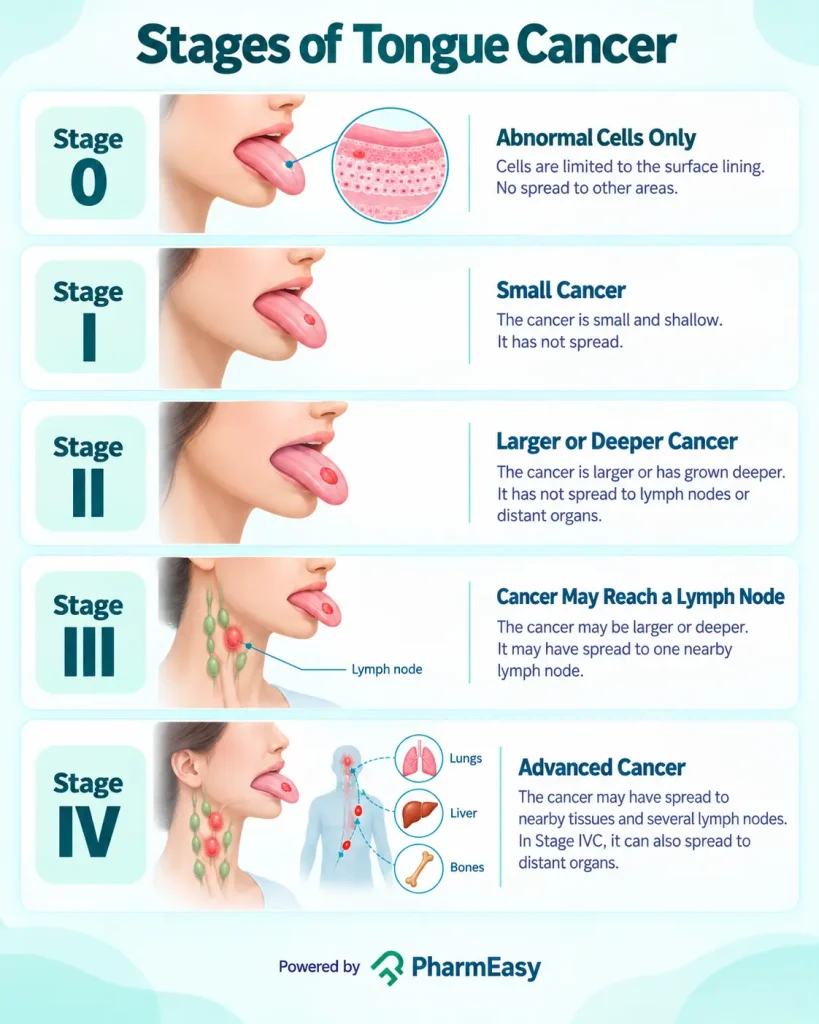
The tongue cancer stages describe how large the cancer is, whether it has spread to nearby lymph nodes, and whether it has spread to other parts of the body. Doctors commonly use the TNM staging system to assess these features and then assign an overall stage.
T – Primary tumour: Describes the size of the main tumour in the tongue and how deeply it has grown into nearby tissues.
N – Regional lymph nodes: Describes whether the cancer has spread from the tongue to the nearby lymph nodes, usually those in the neck.
M – Distant metastasis: Describes whether the cancer has spread from the tongue to the distant parts of the body, such as the lungs.
The stage of tongue cancer describes the size and extent of the cancer and whether it has spread to nearby lymph nodes or other parts of the body11.
Stage 0: Abnormal cells are limited to the top layer of the lining and have not spread to nearby lymph nodes or other organs.
Stage I: The cancer is 2 cm or smaller has spread to a depth 5 mm or less. It has not spread to the nearby lymph nodes or organs.
Stage II: The cancer has not spread to the nearby lymph nodes or organs. It is 2 cm or smaller and goes deeper than 5 mm OR the cancer is 2-4 cm in size and has reached a depth of 10 mm or less.
Stage III: The cancer has not spread to other organs in the body. It is 2-4 cm in size and has reached a depth of more than 10 mm OR it is more than 4 cm in size and has reached a depth of 10 mm or less and it has not spread to lymph nodes. This also includes the stage where the cancer may be any size and depth and has spread to one lymph node on the same side of the neck (measuring 3 cm or less); however, it has not spread outside the lymph node.
Stage IV: This is divided into Stages IVA, IVB, and IVC.
Stage IVA: The cancer may have grown into nearby structures, such as the bones of the face or jaw, deep muscles of the tongue, maxillary sinus, or skin of the face. With respect to lymph nodes, it may have spread to one nearby lymph node (of less than 3 cm) on the same side as the cancer but has not spread outside the node OR it has spread to more than one lymph node (less than 6 cm across) but not outside the lymph nodes OR it may have spread to one or more lymph nodes on the opposite side of the neck or on both sides of the neck (nodes are less than 6 cm), but not outside the lymph nodes.
Stage IVB: The cancer may have spread into nearby structures, such as the bones, jaw or face, deeper muscles, or facial skin. It has not spread to distant organs. The cancer may have grown into the base of skull or nearby bones, spread around the carotid artery. Lymph node spread may involve the following: one lymph node (less than 6 cm), one lymph node of more than 3 cm with spread outside the lymph node, lymph nodes on one or both sides of the neck with spread outside the nodes, or lymph node on opposite side of the neck as the primary cancer (less than 3 cm) with growth outside the node.
Stage IVC: The cancer has spread into nearby structures and tissue, lymph nodes, and has also spread to other organs, such as the lungs, bones, or liver, regardless of the tumour size or nearby lymph-node involvement.
Treatment of Tongue Cancer
If tongue cancer is diagnosed, the treatment plan is decided based on the location, size, stage of the tumour, whether it has spread, and the person’s overall health. A team of specialists, such as an ENT doctor, radiation oncologist, medical oncologist, and reconstructive surgeon, may be involved in planning tongue cancer treatment, which includes7,10,12,13:
1. Surgery
The tumour and, when necessary, part of the tongue and nearby lymph nodes are removed. Reconstructive surgery may be performed after extensive surgery to help restore appearance, speech, or swallowing.
2. Radiation therapy
Uses high-energy radiation to destroy cancer cells or stop them from growing. It may be used alone or together with other treatments.
3. Chemotherapy
Uses anti-cancer medicines to destroy or slow the growth of cancer cells. It may be combined with radiation therapy and used after surgery.
4. Immunotherapy
Uses medicines like tyrosine kinase inhibitors alone or with chemotherapy agents to aid the immune system in fighting cancer cells.
5. Targeted therapy
This treatment focuses on blocking the protein that helps the cancer cells multiply.
Possible Complications of Tongue Cancer
People with tongue cancer may experience complications as the cancer progresses. These may include7,14,15:
Pain
Ulcer in the mouth
Neck swelling
Difficulty or pain with swallowing
Loss of control of the tongue
Difficulty speaking
Aspiration.
Weight loss
Metastasis to nearby or distant organs.
Advanced tongue cancer may be associated with a higher risk of death and poorer survival outcomes.
Treatments such as surgery, chemotherapy or radiation may also lead to complications such as16:
Mouth sores and inflammation: Chemotherapy and radiation therapy may cause painful sores or inflammation inside the mouth.
Mouth infections: Treatment may increase the risk of bacterial, fungal, or viral infections.
Dry mouth: Radiation therapy may reduce saliva production, causing dryness and discomfort.
Taste changes: Cancer treatment may alter the way food tastes.
Bleeding: Some treatments may increase the risk of bleeding in the mouth.
Dental problems: Treatment-related changes in the mouth may increase the risk of tooth decay and gum disease.
Malnutrition and dehydration: Mouth problems and difficulty eating or drinking may lead to inadequate nutrition and fluid intake.
Tissue and bone damage: Radiation therapy may damage tissues and bones in the treated area.
Mouth and jaw stiffness: Treatment may affect the movement of the mouth and jaw.
The risk of tongue and oral cancer can be reduced by addressing certain known risk factors and adopting healthier lifestyle practices. Tongue cancer cannot always be prevented, but the risk may be reduced by addressing known risk factors and adopting healthier habits17:
Avoid Tobacco: Do not smoke or use smokeless tobacco products.
Limit Alcohol: Reducing or avoiding alcohol can help lower the risk of oral cancers. This includes avoiding the use of mouthwash with high alcohol content.
HPV Vaccination: The vaccine is essential in preventing infections.
Protect Against UV Rays: by using sunscreen and sun-protective clothing.
Healthy Diet: Follow a healthy diet rich in fruits, vegetables and essential nutrients to support immunity.
Practice Good Oral Hygiene: by brushing and flossing your teeth regularly to keep them healthy and reduce the risk of infection.
Get Regular Dental Checkups: which can help early identification of lesions in the mouth/on the tongue.
You should consult a doctor if you notice any persistent or unusual changes in your tongue or mouth, particularly if they do not improve within a few weeks.
A mouth or tongue ulcer that does not heal within 2–3 weeks.
A lump, thickened area, or unusual swelling on the tongue or in the mouth.
Red or white patches on the tongue or mouth.
Persistent tongue or mouth pain without an obvious cause.
Difficulty moving the tongue, swallowing, chewing, or speaking.
Conclusion
Tongue cancer can affect the tongue and nearby areas of the mouth and throat. Knowing what the possible symptoms are and getting them checked early can help in timely diagnosis and treatment. Lifestyle changes such as avoiding tobacco, limiting alcohol, maintaining good oral hygiene, and overall following a healthy lifestyle may help lower the risk of tongue cancer. If you notice any unusual changes in your tongue or mouth that do not go away, speak to your doctor or dentist.
Frequently Asked Questions (FAQs)
Can a tongue ulcer be a sign of cancer?
Yes. A persistent ulcer on the tongue or in the mouth that does not heal, particularly if it lasts for more than 3 weeks, can be a sign of oral cancer18. However, ulcers may have non-cancerous causes as well, so it is essential to have it checked by a doctor.
Does tongue cancer cause pain?
Tongue cancer may cause persistent pain or tenderness, although some cancers may not cause pain, particularly in the early stages18.
Is tongue cancer curable?
Tongue cancer may be manageable with appropriate treatment, especially when diagnosed early, but the chances of successful treatment depend on factors such as the cancer’s location, stage, tumour characteristics, and whether it has spread. Early detection and timely treatment can improve the chances of successful management10.
What are the first signs of cancer of the tongue?
Early signs of tongue cancer may include a non-healing sore or ulcer, a lump or thickened area, a red or white patch, persistent pain, or difficulty in swallowing18. Persistent changes should be assessed by a doctor.
Does smoking increase the risk of tongue cancer?
Yes. Smoking is an important risk factor for oral cancers, including cancers of the tongue. Avoiding smoking can help reduce the risk17.
Should I be worried if I have a red or white patch on my tongue?
Red or white patches on the tongue may have several causes and do not automatically mean cancer. However, if the patch persists, it should be examined by a doctor18.
Sakr Y, Hamdy O, Eldeghedi M, Abdelaziz R, Med Sidi El Moctar E, Alharazin M, Awny S. Shifting Epidemiology Trends in Tongue Cancer: A Retrospective Cohort Study. Cancers (Basel). 2023 Dec 1;15(23):5680. doi: 10.3390/cancers15235680. Available from: https://pmc.ncbi.nlm.nih.gov/articles/PMC10705286/
National Cancer Institute. SEER cancer stat facts: tongue cancer [Internet]. Bethesda (MD): National Cancer Institute; [cited 2026 Aug 26]. Available from: https://seer.cancer.gov/statfacts/html/tongue.html
Matsuo K, Akiba J, Kusukawa J, Yano H. Squamous cell carcinoma of the tongue: subtypes and morphological features affecting prognosis. Am J Physiol Cell Physiol. 2022 Dec 1;323(6):C1611-C1623. https://pubmed.ncbi.nlm.nih.gov/36252129/
Muller S, Tilakaratne WM. Update from the 5th Edition of the World Health Organization Classification of Head and Neck Tumors: Tumours of the Oral Cavity and Mobile Tongue. Head Neck Pathol. 2022 Mar;16(1):54-62. Available from: https://pmc.ncbi.nlm.nih.gov/articles/PMC9018914/
Shukla NK, Deo SVS, Garg PK, Manjunath NML, Bhaskar S, Sreenivas V. Operable Oral Tongue Squamous Cell Cancer: 15 Years Experience at a Tertiary Care Center in North India. Indian J Surg Oncol. 2018 Mar;9(1):15-23. Available from: https://pmc.ncbi.nlm.nih.gov/articles/PMC5856685/
Disclaimer: The information provided here is for educational/awareness purposes only and is not intended to be a substitute for medical treatment by a healthcare professional and should not be relied upon to diagnose or treat any medical condition. The reader should consult a registered medical practitioner to determine the appropriateness of the information and before consuming any medication. PharmEasy does not provide any guarantee or warranty (express or implied) regarding the accuracy, adequacy, completeness, legality, reliability or usefulness of the information; and disclaims any liability arising thereof.
Links and product recommendations in the informationprovided here are advertisements of third-party products available on the website. PharmEasy does not make any representation on the accuracy or suitability of such products/services. Advertisements do not influence the editorial decisions or content. The information in this blog is subject to change without notice. The authors and administrators reserve the right to modify, add, or remove content without notification. It is your responsibility to review this disclaimer regularly for any changes.














































Comments