




Folate Deficiency: Meaning, Causes, Symptoms, Treatment & Prevention
By Dr. Vishesh Bharucha +2 more

Medically reviewed by Dr. Vishesh Bharucha
Last updated: Oct 16, 2026 Published on: May 8, 2026


Get,

to manage your symptom
Get your,

4 Cr+ families
benefitted

OTP sent to 9988776655



You’ve successfully subscribed to receive
doctor-approved tips on
Whatsapp

Get ready to feel your best.


Register to Avail the Offer
Send OTPBy continuing, you agree with our Privacy Policy and Terms and Conditions
Hi There,
Sign up on PharmEasy now!!


Trusted by 4 crore+ families

OTP sent to 9988776655
You have unlocked 25% off on medicines


Code: NU25

By Dr. Vishesh Bharucha +2 more
Table of Contents
Vitamins are essential substances that our body needs to stay healthy and function properly. They play a key role in a variety of functions, including, helping in energy production, immunity, growth, and tissue repair. One such important vitamin is folate (vitamin B9). Folate plays a key role in the formation of red blood cells and in the making of DNA, which is the genetic material present in all our cells1.
When the body does not receive enough folate, it develops folate deficiency. This is a more prevalent dietary condition that can affect people of any age, including children, adults, pregnant women, and older people. Because folate is essential for healthy blood and cell formation, its deficiency can lead to a variety of health problems if not handled properly2.

Understanding the causes, symptoms, treatment, and prevention of folate deficiencies is critical because it aids in the early detection and effective management of this condition, resulting in improved health and well-being. In this article, we will discuss on all these topics.
As mentioned earlier, folate deficiency is a condition that develops when the body does not have enough folate to meet its daily needs. It means your body is lacking an important vitamin that is necessary for making new cells and healthy red blood cells.
When folate levels are inadequate, the body struggles to make adequate normal red blood cells. Instead, the bone marrow produces large, immature, and abnormal cells that don’t work properly. This can result in folate-deficiency anaemia, a condition in which the blood fails to transport enough oxygen to the body’s tissues. As a result, a person may experience weakness, fatigue, and a lack of energy. Low folate levels can also slow down the body’s ability to make DNA properly.
Folate deficiency can develop gradually over time, often due to a poor diet, specific health conditions, or increased nutritional requirements, such as during pregnancy or rapid growth. If not detected and treated early, it can have a negative impact on overall health and daily functioning2.
Folate is an essential vitamin that the body needs to function properly. It plays a key role in several important processes such as:
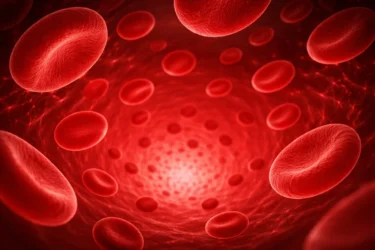
Folate helps the body produce healthy red blood cells in the bone marrow, which carry oxygen from the lungs to all parts of the body, helping organs and tissues function properly. Inadequate folate levels lead to abnormal red blood cell formation and cause folate deficiency anaemia.

Folate is essential for formation and repairing of DNA, the genetic material found in every cell of the body. It is especially important during periods of rapid cell production and growth. It works through one-carbon metabolism, a simple process that helps the body build and repair DNA properly.

Folate plays a key role in methylation reactions that help in gene regulation and amino acid production aiding the formation of new cells. This is particularly important during pregnancy, childhood, adolescence, and recovery from illness or injury when the body is growing or healing quickly2.

Folate is crucial during early pregnancy as it helps prevent neural tube defects (such as spina bifida) in the developing baby. Adequate intake before and during early pregnancy supports proper brain and spinal cord development in baby3.

Folate plays an important role in brain function as it helps in making and managing chemicals that control mood, thinking, and memory. It also supports key body processes that keep brain cells healthy. Studies show that low folate levels can cause mood changes (depression), memory issues, and are at higher risk of age-related mental decline4.

Folate helps regulate homocysteine levels in the blood. High homocysteine is a risk factor for cardiovascular diseases, so adequate folate intake can support heart health5.

Folate contributes to normal growth, development of tissues and organs, and overall good health, making it essential for people of all ages2.
Note: Folate supplements should not be taken without proper medical guidance as they may mask signs of vitamin B12 deficiency with nerve damage continuing to progress.
Folate deficiency can affect multiple systems in the body, leading to a range of symptoms involving the blood, brain, digestive system, and mouth. The following are some common folate deficiency symptoms.
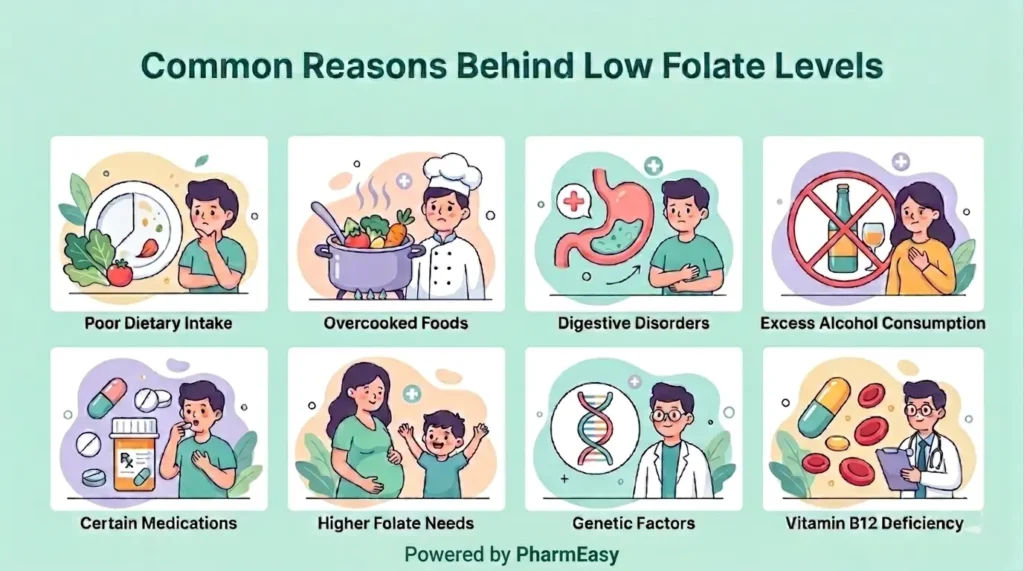
Folate deficiency can be caused by a variety of reasons. The following are the most common folate deficiency causes.
Some people are more likely to develop folate deficiency than others. People who are at a higher risk of developing folate deficiency includes the following:
Note: Many of these risk factors can also predispose to vitamin B12 deficiency, so B12 levels should be checked before treating with folate alone.
Folate is extremely important during pregnancy as it supports the baby’s quick growth and development. It is critical in the formation of the baby’s brain, spinal cord, and other tissues, particularly in the first few weeks of pregnancy when many vital structures are growing.
One of folate’s most significant functions is to help avoid neural tube defects, which are conditions that affect the development of the baby’s brain and spine. Consuming adequate folate before and during early pregnancy promotes healthy development and lowers the chance of these issues.
Folate also helps the mother’s body produce extra red blood cells needed during pregnancy and supports overall health and energy levels. Because of these important roles, pregnant women are usually advised to ensure adequate folate intake through a healthy diet and recommended supplements3.
All women planning for pregnancy are usually advised to take about 400 mcg of folic acid daily to maintain adequate folate levels in the body and support a healthy pregnancy3. Women at higher risk (for example, those who had a previous baby with a birth defect or take certain medicines) may need a higher dose (around 4-5 mg per day), but only if a doctor recommends it2.
Note: Anaemia in pregnancy can have multiple causes, and iron deficiency is more common; therefore, both iron and folate levels should be properly assessed and managed. Folate should not be taken on its own without checking for vitamin B12 deficiency, as it can hide blood problems while nerve damage may still continue. All supplementations should be taken under the guidance of a doctor.
Folate deficiency can cause several complications, such as:
To identify folate deficiency, your doctor might evaluate a combination of symptoms, medical history, and laboratory test results rather than relying on a single sign.
Note: Symptoms such as tingling, numbness, or nerve damage (neuropathy) are more commonly seen in vitamin B12 deficiency.
The treatment of folate deficiency mainly focuses on replacing the missing folate and treating the underlying cause. You doctor might prescribe any of the following as a folate deficiency treatment, based on your cause or condition.
Note: Always check for vitamin B12 deficiency before starting folic acid, as folate may improve anaemia but can allow nerve damage to continue or worsen. This should only be done under your doctor’s guidance.
Also Read: Food Intolerance: What is It, Symptoms, Causes, Treatment & More
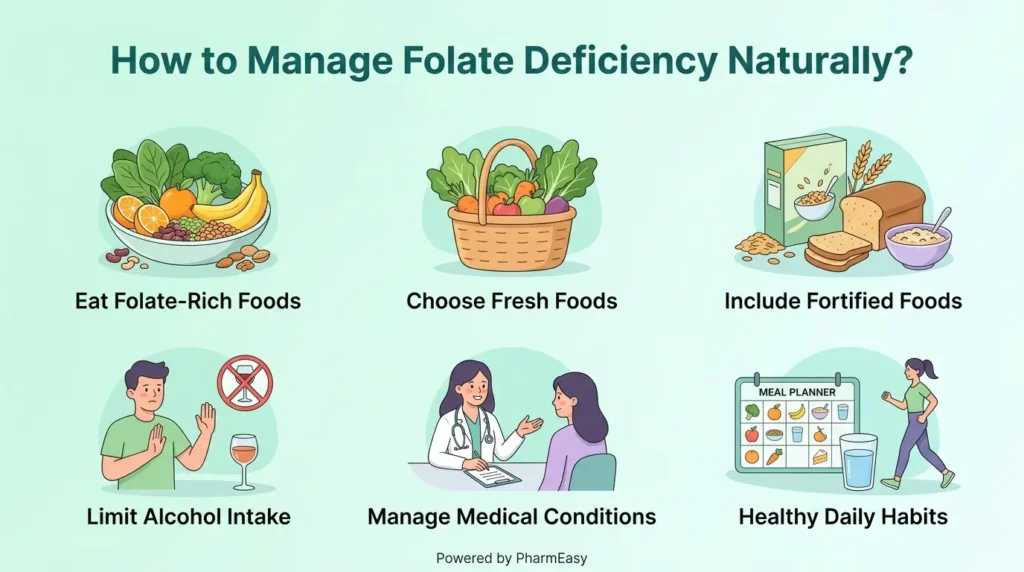
Folate deficiency can often be improved with simple lifestyle and diet changes. Here are some practical tips:
Note: These tips can help boost folate levels, but they are not a substitute for medical treatment. If you experience signs of folate deficiency or have been diagnosed with it, see a doctor for a complete diagnosis and treatment plan. In some circumstances, folic acid supplements or treatment may be required. Also, ruling out vitamin B12 deficiency before starting folate supplementation is important, as it may mask anaemia, retaining nerve damage.
Also Read: Anaemia: Causes, Symptoms, Types, Diagnosis & More!
Consider seeing a doctor if you have persistent tiredness or weakness even after rest, pale skin or shortness of breath, mouth ulcers or a sore tongue, memory problems or confusion, numbness or tingling in the hands and feet, unexplained weight loss, or long-lasting diarrhoea, which could indicate nutrient absorption problems.
It is especially important to seek medical guidance while pregnant or planning pregnancy, as folate is required for the baby’s development. You should also see a doctor if you eat poorly, drink excessively, have digestive difficulties or chronic conditions that affect vitamin absorption, or are taking long-term drugs that may interfere with folate levels2.
Also Read: 7 Things You Need to Avoid in Anaemia!
Folate deficiency means a condition that occurs when the body does not have enough folate to meet its needs. It is a common, yet avoidable condition that can negatively affect overall health if left untreated. Since folate is essential for blood formation, DNA synthesis, repair and cell growth, maintaining adequate levels through a balanced diet and healthy lifestyle is important. It is especially important if you are pregnant or planning pregnancy. Early detection of any deficiency and proper treatment can help avoid complications and support good health in people of all ages.
Also Read: Symptoms of B12 Deficiency in Females: Causes, Diagnosis & Prevention
Low folate can sometimes be serious if left untreated, as it can lead to anaemia, fatigue, and other health problems. In severe cases, it may cause complications like nerve issues or problems during pregnancy2.
Recovery from folate deficiency usually begins within a few days of starting folate treatment, with blood levels improving over a few weeks. Full recovery, including correction of anaemia and symptoms, might take about 4-8 weeks depending on severity and underlying cause2.
You can raise folate levels by eating folate-rich foods like leafy greens, fruits, beans, and fortified cereals. Doctors may also recommend folic acid supplements for a quicker and more effective increase2.
Leafy green vegetables like spinach, mustard greens, lettuce etc. are among the highest natural sources of folate. Other rich foods include lentils, beans, oranges, nuts and fortified cereals6.
No, folate (vitamin B9) and vitamin B12 are different vitamins. Both help in red blood cell formation and DNA synthesis, but they have different sources and roles in the body1.
1. Vitamins. 2025. doi: https://medlineplus.gov/ency/article/002399.htm
2. Baddam S, Khan KM, Jialal I. Folic Acid Deficiency. 2025. doi: https://www.ncbi.nlm.nih.gov/books/NBK535377/
3. About Folic Acid. 2025. doi: https://www.cdc.gov/folic-acid/about/index.html
4. Reynolds EH. Folic acid, ageing, depression, and dementia. BMJ. 2002;324(7352):1512.1-1515. doi:10.1136/bmj.324.7352.1512 https://pmc.ncbi.nlm.nih.gov/articles/PMC1123448/
5. Li Y, Huang T, Zheng Y, Muka T, Troup J, Hu FB. Folic Acid Supplementation and the Risk of Cardiovascular Diseases: A Meta‐Analysis of Randomized Controlled Trials. JAHA. 2016;5(8):e003768. doi:10.1161/JAHA.116.003768 https://pubmed.ncbi.nlm.nih.gov/27528407/
6. Folate Fact Sheet for Consumers. 2018. doi: https://ods.od.nih.gov/pdf/factsheets/folate-consumer.pdf
7. Folic Acid. 2023. doi: https://www.bda.uk.com/resource/folic-acid.html
8. Araújo JR, Martel F, Borges N, Araújo JM, Keating E. Folates and aging: Role in mild cognitive impairment, dementia and depression. Ageing Research Reviews. 2015;22:9-19. doi:10.1016/j.arr.2015.04.005 https://pubmed.ncbi.nlm.nih.gov/25939915/
9. Hariz A, Bhattacharya PT. Megaloblastic Anemia(Archived). 2023. doi: https://www.ncbi.nlm.nih.gov/books/NBK537254/
10. Chiravuri S, Jesus OD. Pancytopenia. 2023. doi: https://www.ncbi.nlm.nih.gov/books/NBK563146/
11. Complications. 2023. doi: https://www.nhs.uk/conditions/vitamin-b12-or-folate-deficiency-anaemia/complications/
Disclaimer: The information provided here is for educational/awareness purposes only and is not intended to be a substitute for medical treatment by a healthcare professional and should not be relied upon to diagnose or treat any medical condition. The reader should consult a registered medical practitioner to determine the appropriateness of the information and before consuming any medication. PharmEasy does not provide any guarantee or warranty (express or implied) regarding the accuracy, adequacy, completeness, legality, reliability or usefulness of the information; and disclaims any liability arising thereof.
Links and product recommendations in the information provided here are advertisements of third-party products available on the website. PharmEasy does not make any representation on the accuracy or suitability of such products/services. Advertisements do not influence the editorial decisions or content. The information in this blog is subject to change without notice. The authors and administrators reserve the right to modify, add, or remove content without notification. It is your responsibility to review this disclaimer regularly for any changes.


Comments

Leave your comment...
You may also like

























Comments