Last updated: Sep 16, 2026Published on: Dec 20, 2023
Table of Contents
Introduction
Your appearance can influence both how others see you and how you feel about yourself. A double chin can chip away at your self-image no matter how old you are or what you weigh. In this article, we will look into what causes double chin and how to manage it. We will also answer some frequently asked questions regarding the topic.
Did you know?
Aging is a major cause of double chin, with the skin losing elasticity over time24.
Genetics can play a significant role in the development of a double chin23.
Maintaining a healthy lifestyle, including regular exercise and a balanced diet, can help avoid or reduce the appearance of a double chin25.
Excess weight and obesity are significant risk factors for developing a double chin22.
Advertisement
Causes of Double Chin
Your double chin may look different based on its cause. Genetics or lifestyle can cause fat build-up under the jaw, leading to a double chin.
1. Weight gain or Distribution
Weight gain may lead to fat cells showing up in different places, including the neck and chin areas. Not everyone who puts on weight gets a double chin. But if your body stores fat in this area, you may notice a double chin.
2. Genetics
Image Source: Freepik.com
Your genes can impact the tightness of your skin, the amount of collagen it makes, and where fat is stored in your body. All these factors may be responsible for a double chin. If your family tree has individuals with loose skin or fat storage under the chin, you will likely have one too. We can’t change our genes. But knowing how they work may help guide us to the right management option.
3. Age
Image Source: Freepik.com
As we get older, our skin tends to lose its firmness due to falling collagen levels. This can cause sagging skin and weakened facial muscles, leading to a double chin. Also, as we age, fat may move to the chin area, making it more noticeable. While ageing can’t be stopped, the right lifestyle choices may reduce its impact on our skin health.
4. Posture
Image Source: Freepik.com
Poor posture, such as frequently bending over or looking down at electronic devices, may weaken chin and neck muscles and make a double chin appear more noticeable. Maintaining good posture may help improve the appearance of the neck and jawline1,2.
Double Chin Reduction
Although you cannot always avoid a double chin, maintaining a healthy weight and good posture may help reduce its occurrence. The following dietary and lifestyle changes may help reduce your risk of a double chin and also improve your overall health.
Advertisement
1. Maintaining a Healthy Lifestyle
Balancing your food intake and activities can keep you healthy and make it less likely for you to get a double chin. The two things that will help you achieve this balance are:
Proper diet: Eating healthy foods that include a lot of different fruits, veggies, whole grains, lean proteins, and good fats may help keep the weight off and stop fat from building up. That includes the fat build-up in your double chin3,4.
Regular physical activity/exercise: Regular physical activities such as aerobic workouts and weightlifting may also help promote health and weight control, and may help reduce the flab under your chin. Aim for at least 150 minutes of medium-intensity aerobic workouts or 75 minutes of high-intensity aerobic workouts per week. Also, add strength-building moves at least two days each week5.
2. Good Posture
Good posture not only helps maintain the muscle tone in the neck and chin area, it can also help improve back pain and support better breathing. Here are some tips on maintaining a good posture6:
Neck and shoulder exercises: Specific workouts that target your neck and shoulder muscles can help improve your posture, which may help you achieve a sharper chin and neckline. These include neck stretches, shoulder rolls, and chin tucks.
Ergonomics at work and home: An ergonomic setup at your home and office may help promote better posture. Make sure your computer screen is at eye level, buy an ergonomic chair, and take breaks to stand or move around during the day.
Jaw exercise tools are little objects that you bite down on with your mouth to work the muscles in your face and neck. In my experience, they may help to improve double chin22.
Improving your posture and losing weight may help you overcome a double chin. Also, special workouts that focus on chin and neck muscles may help tone up the area and improve the appearance of your double chin. Here are a few exercises that may help improve the tone of your chin and neck muscles7,8:
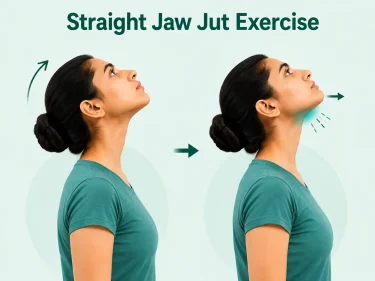
1. Straight Jaw Jut
Tilt your head back and look at the sky.
Push your lower jaw ahead until you feel a stretch under the chin.
Hold for 10 seconds, then relax your jaw, and let your head return to its normal place.
Repeat 10 times.
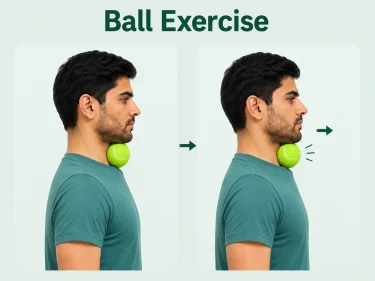
2. Ball Exercise
Put a 9 to10 inch ball below your chin.
Push your chin into the ball.
Perform 3 sets of 8-10 repetitions each.
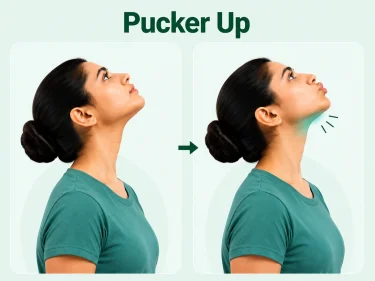
3. Pucker Up
Tilt your head back and look up.
Purse your lips as if you’re giving the sky a kiss. This should stretch the area beneath your chin.
Hold this position for 10 seconds, then bring your head back in place.
Perform 3 sets of 8-10 repetitions each.
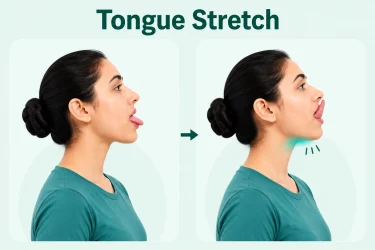
4. Tongue Stretch
Look straight and stick out your tongue as far as you can.
Lift your tongue towards your nose. Hold it in this position for 10 seconds.
Relax your tongue and bring it back to the starting position.
Perform 3 sets of 8-10 repetitions each.
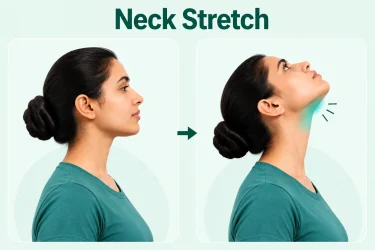
5. Neck Stretch
Tilt your head back and look up.
Press your tongue against the roof of your mouth. Hold this position for 5-10 seconds.
Relax the tongue and repeat 10 times.
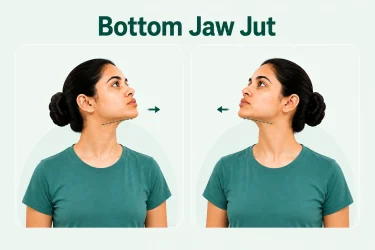
6. Bottom Jaw Jut
Tilt your head back and look up.
Turn your face to the right. Slide your bottom jaw forward.
Hold for 5-10 seconds. Then, let go.
Repeat the same on the left side.
Repeat 10 times.
Non-Surgical Double Chin Management Options
There are many non-surgical methods of managing a double chin. While they’re not as extreme as surgery, these methods may need many sessions or regular maintenance for the best results.
1. Lipolysis
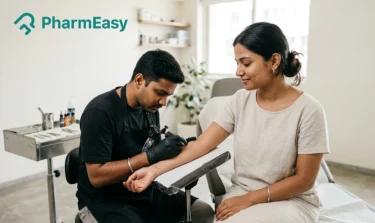
Lipolysis, or liposculpture, uses suction or laser heat to melt away fat cells and shape up the skin in the target area. A trained technician performs it under local anesthesia. It may help reduce small pockets of fat in the chin and neck area. The procedure doesn’t address loose skin but may help reduce double chin in suitable candidates.
Method and Effectiveness: Lipolysis involves making small incisions through which a thin tube or laser fibre is inserted. The device emits energy, breaking down and liquifying fat cells. These are then either taken out or absorbed by the body. Depending on whether you have chosen the laser or suction method and certain other factors, you may start to see results in a few weeks after treatment. Most patients notice major changes within 2-4 months.
Risks and side effects: Bruising, swelling, and pain are common after lipolysis. Women who are pregnant or nursing should avoid this procedure. As with any medical treatments, it may have risks such as infection, scarring, and uneven results. Discussing your procedure with a professional in the field is necessary as they can identify your eligibility for the procedure and can explain to you potential complications and what to expect during recovery9.
2. Mesotherapy
Mesotherapy is a less harsh option and involves injecting a fat-busting compound into the double chin. The deoxycholic acid used in mesotherapy is FDA-approved and can break down and destroy fat cells in the targeted area.
Method and Effectiveness: A trained healthcare provider gives injections of deoxycholic acid in the affected area in each mesotherapy session. Most individuals need a few sessions, spaced out over at least one month, to reach their goals. The number of shots and sessions will change based on the amount of fat.
Risks and side effects: Common complications with mesotherapy may include redness, swelling, bruising, and pain at the injection site. There may be other, rare but burdensome, side effects like nerve damage or skin death. A seasoned healthcare provider is usually needed for mesotherapy to reduce the risk of problems10,11.
3. CoolSculpting
CoolSculpting is a fat reduction method that doesn’t require surgery. It uses cooling technology to target and destroy unwelcome fat cells. This method is gaining popularity as an option that doesn’t involve surgery to take care of the stubborn pockets of fat across the body, including a double chin.
Method and Effectiveness: During a CoolSculpting session, a device is put on the skin that cools the fat cells below the skin. The cooling disrupts the cell structure, causing them to break down and get flushed out of the body. Most patients notice a change within 3-4 months of therapy. Often, they need more than one session for the results they want.
Risks and side effects: Common side effects of CoolSculpting are temporary numbness, redness, swelling, and bruising at the CoolSculpting site. There can be some rare problems like paradoxical adipose hyperplasia, where the fat cells grow bigger instead of breaking apart. When opting for such procedures, always seek professional guidance about their possible risks and side effects12,13.
In order to improve the shape of the neck and chin, many neck-lift managements try to tighten the neck muscles (platysmaplasty) or remove superfluous skin (cervicoplasty). To my knowledge, this operation is frequently combined by doctors with a regular face-lift, which may result in a tight feeling in the neck for a few months21.
Surgery has proven to be an enduring answer for those looking to manage their double chin. Surgical options such as liposuction and neck lifts not only address the excess fat but also deal with sagging skin problems for a complete cosmetic upgrade. However, surgical options require a trained surgeon, have their own set of risks, and require a recovery period.
1. Liposuction
Liposuction, a common surgical process, involves removing fat from below the skin to shape a new contour in the target area. When dealing with a double chin, the surgeon will try to remove the extra fat while shaping the chin and neck area, which should result in a more refined jaw.
Method and Effectiveness: Carried out under local numbing, liposuction involves making thin cuts in the target area. A thin tube called a cannula is then put in through these cuts. The cannula is used to remove and suction out the fat cells. This method gives lasting results for suitable candidates. However, liposuction doesn’t take care of skin sagging. So, it may not be the best choice for those with significant skin sagging.
Risks and recovery period: As with all surgeries, liposuction has potential risks. These include infection, bleeding, scarring, and uneven results or contour issues might need more corrections. You can expect some swelling, bruising, and discomfort in the healing period, which usually lasts 1-2 weeks. Having a discussion with a qualified surgeon can help decide if you’re the right fit for this procedure, what to expect during healing, and potential problems14,15.
To my knowledge, through face lift surgery, physicians can eliminate double chins by removing fat and loose sagging skin around the chin and neck. A local anaesthetic may be used, but most people are asleep under general anaesthesia21.
A neck lift, or platysmaplasty, is a surgical process in which the extra skin is removed and the muscles in the neck and chin area are tightened. This leads to a more defined and youthful look.
Method and Effectiveness: Carried out under general anesthesia, the neck lift involves making incisions around the ears and/or below the chin. The surgeon removes the extra skin, tightens neck muscles, and moves or spreads out the fat for a smoother and better shape. A neck lift is especially effective for those with sagging skin and can give a major beauty boost.
Risks and recovery period: The neck lift surgery comes with potential risks including infection, bleeding, scarring, and nerve damage. The healing period may last for about 2-4 weeks. In this phase, there may be some swelling, bruising, and discomfort. A thorough discussion with a skilled surgeon can help you decide if a neck lift is right for your needs16.
Additional Factors Contributing to Double Chins in Non-Overweight Individuals
While gaining weight is a common reason for double chins, thin people can also develop double chins due to other factors like bone structure, facial muscles, and collagen production.
Bone structure: The unique bone structure of every person’s face can shape the look of the chin and neck. Certain facial bone structures might make a person prone to a sharper or softer chin and jawline, regardless of their weight.
Facial muscles: The strength and firmness of facial muscles can shape the chin and neck area. Weak muscles may lead to a double chin, even in thin people17.
Collagen production: Collagen is a key protein that keeps the skin firm and stretchy. Lower collagen output, due to ageing or genetic factors, can lead to sagging skin and that can result in a double chin18.
The Importance of Consultation With a Professional
Before choosing a management plan for a double chin, it’s essential to consult with a specialist. They can offer vital information on how well-fitting and safe your chosen options are.
Assessing the best option: A professional will check out your situation considering things such as your skin health, weight, and personal traits. It will help them assess the best option for you.
Setting realistic expectations: A healthcare provider can help you set the correct expectations regarding the results and limits of the option selected. This ensures that you have a good grasp of likely outcomes.
Ensuring safety and effectiveness: By seeking a professional’s advice, you can ensure that your chosen option will be safe and suitable for you.
Several factors contribute to the development of double chin. These range from genetics and age to posture and weight gain. While some of these factors cannot be changed, others may be managed through lifestyle changes or treatment options. Choosing a healthy lifestyle and good posture can reduce the chance of a double chin. If you already have one, there is a wide range of options for managing it, which include special workouts, non-surgical methods like lipolysis and mesotherapy, and surgical procedures such as liposuction and neck lifts. However, it is important to consult a specialist who can assess your condition in detail and make sure that your chosen path is safe and sound.
Frequently Asked Questions (FAQ)
Can a double chin go away?
A double chin may go away on its own if it’s due to putting on weight and you lose the extra weight. But if a double chin occurs due to genetic factors or saggy skin, certain procedures may be required for an appreciable result.
How can I lose my double chin fast?
There’s no quick fix for a double chin unless you opt for surgery. Losing weight and doing targeted workouts may work for some. But you must be patient and follow a healthy lifestyle.
Does chewing gum help double chin?
Chewing gum may help tighten your tongue and cheek muscles. But there’s no proof that it can improve a double chin19.
Why do I have a double chin if I’m skinny?
Thin people may have double chin due to factors other than weight. These can include genetics, facial bone structure, collagen output, and weak or small face muscles.
What foods cause double chin?
Overeating foods heavy in calories and low in nutrients like sugary snacks, fried food, and processed items can result in weight gain. This is a common cause of double chin. Focus on a balanced meal with plenty of fruit, veggies, whole grains, and lean proteins to keep a healthy overall appearance20.
References
Verma KK, Koch R, Gidwani K, Walterscheid B, Friedmann DP, Parekh P, Tarbox M. Facial Contouring Through Jaw Exercises: A Report of Two Cases Examining Efficacy and Consumer Expectations. Cureus. 2024 Nov 27;16(11):e74635. https://pmc.ncbi.nlm.nih.gov/articles/PMC11681191/
Park SY, Kim SB, Wan J, Felice F, Yi KH. Lipolytic agents for submental fat reduction: Review. Skin Res Technol. 2024 Feb;30(2):e13601. doi: 10.1111/srt.13601. PMID: 38297988; PMCID: PMC10831194. https://pubmed.ncbi.nlm.nih.gov/38297988/
Shome D, Khare S, Kapoor R. The Use of Deoxycholic Acid for the Clinical Reduction of Excess Submental Fat in Indian Patients. J Drugs Dermatol. 2019 Mar 1;18(3):266-272. PMID: 30909331. https://pubmed.ncbi.nlm.nih.gov/30909331/
Few J, Saltz R, Beaty M, Kelly M, Movassaghi K, Marcus KA, Sieber D, Burns AJ, Sangha S. Cryolipolysis: Clinical Best Practices and Other Nonclinical Considerations. Aesthet Surg J Open Forum. 2020 Mar 17;2(2):ojaa010. https://pubmed.ncbi.nlm.nih.gov/33791637/
Marwah S, Handa A. Ultrasound-Assisted Chin Liposuction under Local Anesthesia: An Effective Tool for Facial Slimming in Indian Population. Indian J Plast Surg. 2024 Aug 27;57(6):510-514. doi: 10.1055/s-0044-1790199. PMID: 39734373; PMCID: PMC11679186. https://pubmed.ncbi.nlm.nih.gov/39734373/
Diniz DA, Gonçalves KK, Silva CC, Araújo ES, Carneiro SC, Lago CA, Vasconcelos BC. Complications associated with submental liposuction: a scoping review. Med Oral Patol Oral Cir Bucal. 2022 May 1;27(3):e257-e264. doi: 10.4317/medoral.25122. PMID: 35420070; PMCID: PMC9054168. https://pubmed.ncbi.nlm.nih.gov/35420070/
Swift A, Liew S, Weinkle S, Garcia JK, Silberberg MB. The Facial Aging Process From the “Inside Out”. Aesthet Surg J. 2021 Sep 14;41(10):1107-1119. doi: 10.1093/asj/sjaa339. PMID: 33325497; PMCID: PMC8438644. https://pmc.ncbi.nlm.nih.gov/articles/PMC8438644/
Zappia E, Bonan P, Coli F, Del Re C, Cassalia F, Tolone M, Bennardo L, Nisticò SP, Cannarozzo G. An innovative microwave technology for the treatment of submental skin laxity. Lasers Med Sci. 2025 Jan 22;40(1):28. doi: 10.1007/s10103-024-04270-1. PMID: 39841282; PMCID: PMC11754354. https://pubmed.ncbi.nlm.nih.gov/39841282/
Inoue M, Ono T, Kameo Y, Sasaki F, Ono T, Adachi T, Nakashima T. Forceful mastication activates osteocytes and builds a stout jawbone. Sci Rep. 2019 Mar 20;9(1):4404. doi: 10.1038/s41598-019-40463-3. PMID: 30890758; PMCID: PMC6424982. https://pubmed.ncbi.nlm.nih.gov/30890758/
American Academy of Dermatology. Double chin [Internet]. Rosemont (IL): American Academy of Dermatology Association; [cited 2026 Jul 15]. Available from: https://www.aad.org/public/diseases/a-z/double-chin
Disclaimer: The information provided here is for educational/awareness purposes only and is not intended to be a substitute for medical treatment by a healthcare professional and should not be relied upon to diagnose or treat any medical condition. The reader should consult a registered medical practitioner to determine the appropriateness of the information and before consuming any medication. PharmEasy does not provide any guarantee or warranty (express or implied) regarding the accuracy, adequacy, completeness, legality, reliability or usefulness of the information; and disclaims any liability arising thereof.
Links and product recommendations in the informationprovided here are advertisements of third-party products available on the website. PharmEasy does not make any representation on the accuracy or suitability of such products/services. Advertisements do not influence the editorial decisions or content. The information in this blog is subject to change without notice. The authors and administrators reserve the right to modify, add, or remove content without notification. It is your responsibility to review this disclaimer regularly for any changes.


















 1
1 























Comments