




Walking Pneumonia: What Is It, Causes, Symptoms, Diagnosis & Treatment
By Dr. Vishesh Bharucha +2 more

Last updated: Sep 9, 2026 Published on: Jul 22, 2025


Get,

to manage your symptom
Get your,

4 Cr+ families
benefitted

OTP sent to 9988776655



You’ve successfully subscribed to receive
doctor-approved tips on
Whatsapp

Get ready to feel your best.


Register to Avail the Offer
Send OTPBy continuing, you agree with our Privacy Policy and Terms and Conditions
Hi There,
Sign up on PharmEasy now!!


Trusted by 4 crore+ families

OTP sent to 9988776655
You have unlocked 25% off on medicines


Code: NU25

By Dr. Vishesh Bharucha +2 more
Table of Contents
Are you wondering what is walking pneumonia? Walking pneumonia or atypical pneumonia is an infection of the lower respiratory tract1. This condition is generally a milder form of pneumonia where the patient may be well enough to walk around, that’s why it’s called “walking pneumonia2”.
This type of pneumonia is usually acquired outside of hospital or healthcare settings and caused by pathogens that are not commonly associated with pneumonia and not easily detectable by common staining and culture methods1. The most common organisms associated with walking pneumonia include the bacteria Mycoplasma pneumoniae, Chlamydia pneumoniae, or Legionella pneumoniae3.
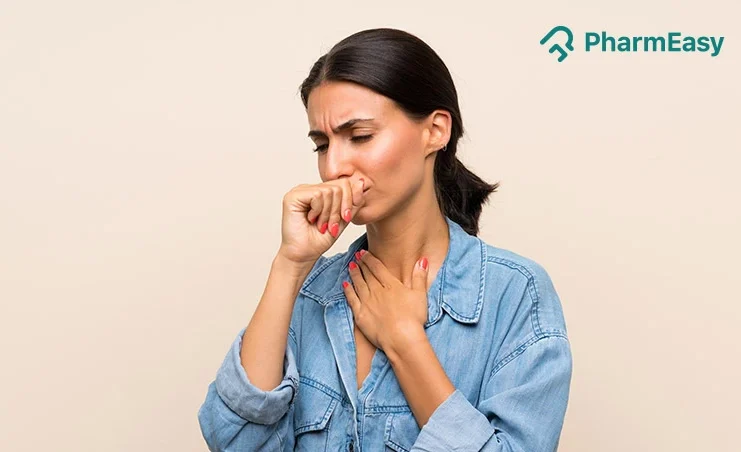
Bacterial atypical pneumonia comprises around 15% of the total pneumonia cases acquired outside of hospital and healthcare settings4. Although, usually these infections are not very severe, the mortality of walking pneumonia among the elderly is 8.0%, while in younger, healthy individuals, the mortality is 0.5-2.0%5.
Walking Pneumonia, scientifically referred to as atypical pneumonia, is a milder form of lung infection, often caused by Mycoplasma pneumoniae, that generally does not require hospitalisation.
As this pneumonia usually has a mild course , most affected individuals can still continue their routine without any interruption to your daily activities and hence, this condition is commonly referred to as walking pneumonia2.
However, it is important to note that the severity of pneumonia can range from mild to life-threatening depending on factors such as age, the type of organism causing the infection, and when the walking pneumonia treatment is started1.
You may be wondering what causes walking pneumonia. Actually, walking or atypical pneumonia is caused by an invasion of bacteria (most commonly), and viruses or fungi (less commonly), that leads to inflammation of your air sacs or alveoli in your lungs1.
Walking pneumonia is typically acquired from the community (outside a hospital setting), most often by inhalation of respiratory secretions that contain the causative organism.
Based on what causes walking pneumonia, the different types of atypical pneumonia include:
An important difference between viral and atypical pneumonia is that viral pneumonia settles after a week but atypical takes more time and needs to be treated using antibiotics like macrolides, doxycycline, and fluroquinolones.
Dr. Kathak Shah, MBBS, DDV, Fellowship in Lasers & Aesthetics, Fellowship in Dermatosurgery
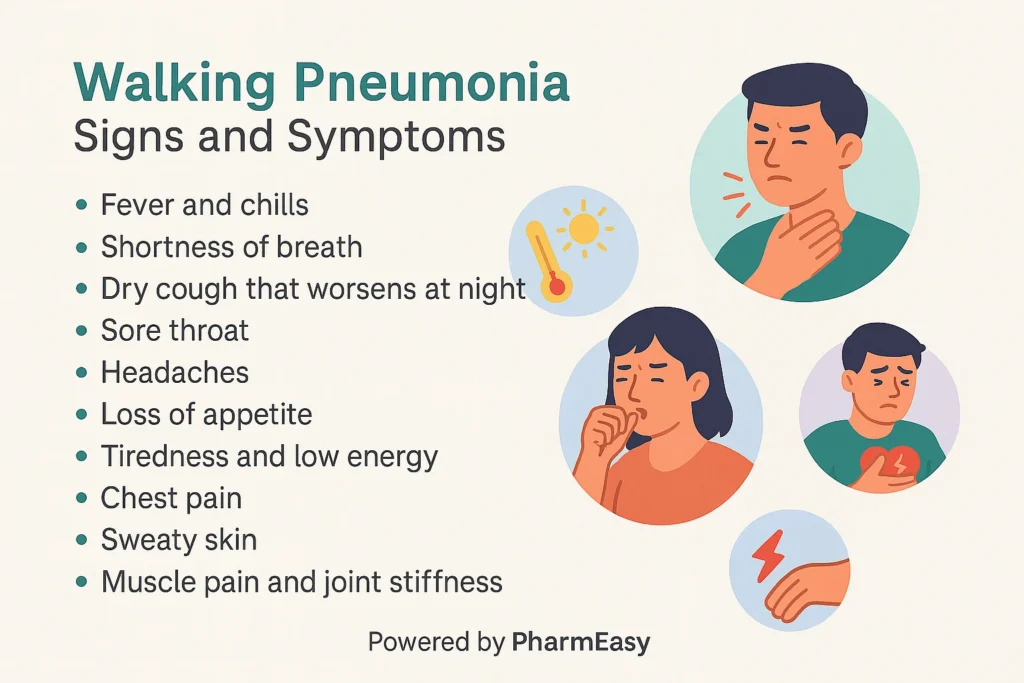
Though walking pneumonia is a mild infection, it does not always mean that you may be asymptomatic or fully functional. The walking pneumonia symptoms are generally mild and mainly include1,7:
Less common signs of walking pneumonia that may be noticed in the different types of walking pneumonia include7:
General risk factors include7,14
You may pose an increased risk of developing specific types of atypical pneumonia if you are:
Yes, it is contagious and walking pneumonia symptoms can spread from person to person. However, infections caused by Legionella pneumonia and Coxiella burnetii (Q fever) are not spread from person-to-person1.
The most common type of walking pneumonia caused by Mycoplasma pneumonia is highly contagious and spreads through infected droplets of affected individuals especially when they cough and sneeze. The disease spreads when you inhale these infected droplets15.
Hence, close proximity with an infected individual over an extended period of time causes the spread of infection. The symptoms are generally noticed two to three weeks post exposure to the causative agent (Mycoplasma pneumonia). However, it is important to note that you may be contagious before any symptoms appear and generally, once infected, the contagious period is around 10 days and may be longer, if not treated15.
As per my experience, I suggest that if there’s long standing dry cough in almost every family member spreading from one to another without any allergies triggering it, along with other symptoms like headaches and low grade fever, you should think of atypical pneumonia and consult your doctor immediately.
Dr. Kathak Shah, MBBS, DDV, Fellowship in Lasers & Aesthetics, Fellowship in Dermatosurgery
Your doctor will be able to diagnose walking pneumonia with certain examinations and laboratory tests such as7:
Based on these tests, your doctor will be able to accurately diagnose your condition and will suggest the appropriate walking pneumonia treatment.
After a careful assessment of your condition, your doctor will be able to suggest the best walking pneumonia treatment suitable for you.
Delayed treatment in individuals suffering from Legionella or weakened immune systems can worsen treatment outcomes. While delayed treatment may not always lead to severe disease in cases of Mycoplasma infections, early treatment is key for good recovery and prognosis1,11.
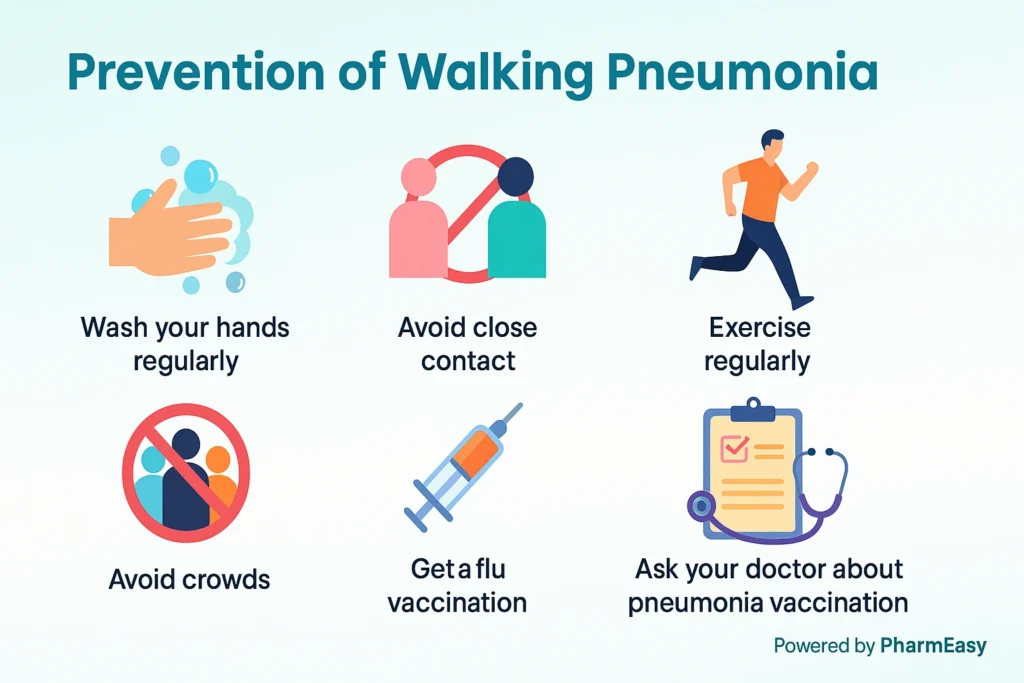
To reduce your risk of infection, you can follow these steps2,7:
By following these simple methods, you can avoid catching pneumonia especially if you are at high risk and protect your overall health2.
Also Read: Is Bronchitis Contagious? Causes, Transmission, Symptoms & Treatment
While individuals with walking pneumonia may be able to carry on with routine activities, certain self-care and hygiene measures can aid in a faster recovery. These include2,7,17:
Remember, if you are walking around with pneumonia, it’s your responsibility to prevent its spread to others. Avoid any unnecessary contact with other individuals. Avoid going to public places and always cover your mouth while sneezing and coughing or wear a protective mask. Wash your hands with soap and water regularly. Following these simple measures can have a huge public health impact.
Also Read: Bacterial Pneumonia: What Is It, Causes, Symptoms & Treatment
You should consult your doctor if you develop signs of walking pneumonia such as fever, shortness of breath, or cough. Your doctor will thoroughly assess your condition and will advise you on the best method to manage your condition.
You should also consult your doctor if you have been diagnosed with pneumonia and if your walking pneumonia symptoms get worse after an initial improvement7.
Also Read: Is Pneumonia Contagious? Causes, Transmission, Symptoms & Treatment
Walking pneumonia, or atypical pneumonia, is generally a mild respiratory infection commonly caused by atypical bacteria such as Mycoplasma pneumoniae, Chlamydia pneumoniae, and Legionella pneumoniae. While walking pneumonia symptoms are not very severe, it still requires proper medical care. With timely diagnosis, appropriate walking pneumonia treatment, and good hygiene, you can recover smoothly and avoid complications. Tips like handwashing, vaccinations, and avoiding smoking play a key role in reducing your risk and promoting your overall health.
Also Read: What Is Hantavirus? Symptoms, Causes, & Effective Prevention
Although not very common, walking pneumonia can recur after treatment. The chances of recurrence are increased if the infection is not completely removed with antibiotics or if you face any antibiotic resistance1.
If not diagnosed and treated properly, complications may arise and may include brain and nervous system infections (such as meningitis, encephalitis), severe lung damage, haemolytic anaemia (a condition in which the body destroys its own red blood cells) and respiratory failure7.
Walking pneumonia may not be detected on a routine physical exam alone and your doctor may require a chest X-ray or other laboratory tests to confirm the diagnosis7.
Exercise may be beneficial in pneumonia. A study18 has shown lower mortality rate in elderly individuals having pneumonia who walk daily compared to individuals who did not walk or exercise in any other form. However, you doctor will guide you best if exercising or walking is suitable for you if you have pneumonia.
Disclaimer: The information provided here is for educational/awareness purposes only and is not intended to be a substitute for medical treatment by a healthcare professional and should not be relied upon to diagnose or treat any medical condition. The reader should consult a registered medical practitioner to determine the appropriateness of the information and before consuming any medication. PharmEasy does not provide any guarantee or warranty (express or implied) regarding the accuracy, adequacy, completeness, legality, reliability or usefulness of the information; and disclaims any liability arising thereof.
Links and product recommendations in the information provided here are advertisements of third-party products available on the website. PharmEasy does not make any representation on the accuracy or suitability of such products/services. Advertisements do not influence the editorial decisions or content. The information in this blog is subject to change without notice. The authors and administrators reserve the right to modify, add, or remove content without notification. It is your responsibility to review this disclaimer regularly for any changes.


Comments

Leave your comment...
You may also like
























Comments