




High Prolactin Levels (Hyperprolactinemia): Causes, Symptoms, Diagnosis, and Treatment
By Dr. Nisha Dahiya +2 more

Medically reviewed by Dr. Nisha Dahiya
Last updated: Sep 1, 2026 Published on: Jul 6, 2026


Get,

to manage your symptom
Get your,

4 Cr+ families
benefitted

OTP sent to 9988776655



You’ve successfully subscribed to receive
doctor-approved tips on
Whatsapp

Get ready to feel your best.


Register to Avail the Offer
Send OTPBy continuing, you agree with our Privacy Policy and Terms and Conditions
Hi There,
Sign up on PharmEasy now!!


Trusted by 4 crore+ families

OTP sent to 9988776655
You have unlocked 25% off on medicines


Code: NU25

By Dr. Nisha Dahiya +2 more
Table of Contents
Have you ever experienced irregular periods, unusual breast discharge, reduced interest in sex, or fertility problems? These might be the symptoms of high prolactin levels in your body, which is called hyperprolactinemia1. Many people are not aware of this condition until they start developing these symptoms. Although this seems frightening, high prolactin levels can easily be managed with proper diagnosis and treatment. Understanding the causes and symptoms can help you seek medical advice at the right time. This article discusses key information about hyperprolactinaemia, including its causes, symptoms, diagnosis, and management.

Prolactin is a hormone produced by the pituitary gland, a small gland at the base of the brain. This hormone plays an important role in the normal functioning of the body in both males and females. However, its main function is to support breast development during pregnancy and help with milk production after childbirth. It is also involved in reproductive health and menstrual cycle regulation1.
The following table shows normal prolactin levels in males and in females:
| Category | Normal Prolactin levels |
| Male (Adult) | 3–20 µg/mL |
| Non-pregnant female | 5–25 µg/mL |
| Pregnant female | 100–500 µg/mL |
Normal prolactin levels may differ between laboratories as different methods may be used to perform the test. Prolactin levels in males and females are also different. In females, the values may be high during pregnancy, which is quite natural. However, high prolactin levels in non-pregnant females may be considered hyperprolactinemia, which needs medical attention.
Not all people with high prolactin levels may have symptoms1. Therefore, it is important to have your results interpreted by a qualified doctor to understand your condition and get proper care and treatment if needed2.
High prolactin levels can occur due to normal body changes, certain medical conditions, or the use of some medications. The causes of high prolactin levels include:
These are conditions where prolactin levels increase naturally:
Medical conditions that can increase prolactin levels include:
Some medicines may cause high prolactin levels as a side effect, as follows:
High prolactin levels symptoms can vary between males and females.
The symptoms that indicate high prolactin levels in males include:
The symptoms that indicate high prolactin levels in females include:
High prolactin symptoms common in both men and women include:
Note: Everyone with high prolactin levels may not experience the same symptoms. These signs may also be linked to other medical conditions, so medical advice and proper testing are important for an accurate diagnosis.
Doctors usually diagnose high prolactin levels through a combination of medical history, physical examination, and laboratory tests.
You may be asked about your symptoms, menstrual history, pregnancy, stress, existing medical conditions, and the use of medications that can increase prolactin levels.
A physical examination will be conducted to look for symptoms such as breast discharge and vision problems, and changes or abnormalities in hair growth.
Your doctor might suggest several blood tests to determine the presence (or suspected cause) of hyperprolactinemia. The most common and preliminary test suggested is the prolactin blood test.
Note: During the diagnosis of hyperprolactinemia, your doctor might sometimes check for macroprolactin, a harmless inactive form of prolactin. It can falsely increase prolactin levels in blood tests even though it usually does not cause symptoms. Therefore, interpreting your results by a qualified doctor is important to avoid a wrong diagnosis.
The treatment of a high prolactin level depends on its causes and severity of the symptoms. In some cases, treatment may not be needed if prolactin levels are only mildly elevated and there are no symptoms. Some common treatment methods include:

Your doctor might prescribe dopamine agonist medicines, such as cabergoline and bromocriptine, to lower prolactin levels and shrink pituitary tumours if present. These medicines help restore normal hormone levels and improve symptoms4.
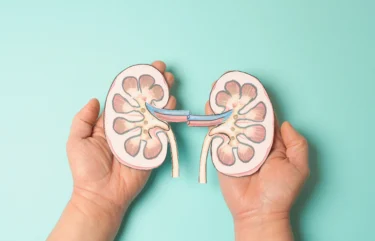
If high prolactin is caused by a medical condition, treating that condition may help bring prolactin levels back to normal. This includes treating conditions like hypothyroidism with thyroid hormone medicines or managing kidney or liver disease to help improve hormone balance7.

Your doctor might recommend surgery if you have a large pituitary tumour that is causing vision problems or if there is poor response to or side effects of medication. The procedure is usually done to remove the tumour from the pituitary gland4,7.
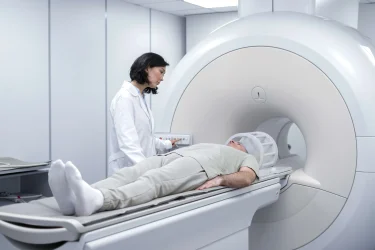
Rarely, your doctor might recommend radiation therapy if medicines and surgery are not effective or suitable for you4,7.

Your doctor might adjust the dose or give you an alternate medicine if high prolactin is caused by any medicine. However, you should not stop any prescribed medicines without your doctor’s advice.

Your doctor might also suggest some lifestyle changes along with the treatment to help support overall hormonal balance and reduce temporary increases in prolactin levels. They may advise you to manage stress, get adequate sleep and avoid excessive physical exertion1,4.
Note: The given information is for general awareness only and is not a substitute for medical advice or treatment. High prolactin treatment can vary depending on the cause and individual health condition. Always consult a doctor before starting, stopping, or changing any medication or treatment.
Also Read: High GGT Levels: Normal Range, Causes, Symptoms, Risks & Treatment
You should consult a doctor if you have symptoms like recurrent irregular periods, breast discharge without pregnancy, infertility, headaches, or reduced sexual desire (especially if you are diagnosed with hyperprolactinemia). Early diagnosis may help identify the specific cause and avoid complications. Medical advice is especially important if symptoms persist or worsen over time1,4.
Also Read: Best Estrogen Rich Foods to Support Estrogen Levels Naturally
High prolactin levels, commonly known as hyperprolactinemia, might affect males and females differently. While the symptoms may appear worrying, it may be successfully treated once the underlying cause is determined. An accurate diagnosis, regular monitoring, and timely treatment can help restore hormonal balance and enhance overall health. If you are experiencing any symptoms associated with hyperprolactinemia, consider speaking with a qualified doctor for getting tested early.
When prolactin levels are high, it can affect the normal balance of reproductive hormones in the body. This may lead to symptoms such as irregular periods, breast milk discharge (even if you are not pregnant), infertility, low sex drive, erectile dysfunction, headaches, or vision problems depending on the cause and severity1,4.
The treatment for high prolactin levels depends on its cause. Doctors may prescribe medicines such as cabergoline or bromocriptine to lower prolactin levels and treat pituitary tumours if needed. In some cases, treating conditions like hypothyroidism or changing certain medications may help normalise prolactin levels. Rarely, surgery or radiation therapy may be needed if medicines are not effective4,7.
There is no specific fruit proven to directly reduce prolactin levels. However, some studies say that chasteberry (Vitex agnus-castus) may be a helpful and safe herbal treatment for people with mild high prolactin levels. However, this needs more high-quality studies to confirm its effectiveness8.
Yes, high prolactin levels can often cause weight gain as it affects the body’s appetite-control system. Hyperprolactinemia can induce hunger and contribute to more food intake, which can lead to weight gain and, in some cases, obesity9.
Yes, a woman with high prolactin may still get pregnant, but elevated prolactin levels may sometimes affect ovulation and make conception more difficult. With proper treatment and hormone control, many women are able to restore fertility and have a healthy pregnancy4,10.
Prolactin levels may be reduced temporarily with lifestyle changes such as managing stress, getting adequate sleep, eating a balanced diet, and avoiding excessive physical strain. However, if it is associated with any medical condition, then the particular condition should be addressed if necessary1,4.
1. Prolactin Levels. 2024. Available from: https://medlineplus.gov/lab-tests/prolactin-levels/
2. Prolactin blood test. 2024. Available from: https://medlineplus.gov/ency/article/003718.htm
3. Abdulateef DS. Correlation of serum prolactin with sleep duration, wake-up hour, and phases of the menstrual cycle in healthy adult subjects. Sleep and Biological Rhythms. 2023;21(3):319. doi:10.1007/s41105-023-00448-2 Available from: https://pubmed.ncbi.nlm.nih.gov/38469081/
4. Kaur J, Bhusal K. Hyperprolactinemia. 2025. Available from: https://www.ncbi.nlm.nih.gov/sites/books/NBK537331/
5. Huang W, Molitch ME. Prolactin and Other Pituitary Disorders in Kidney Disease. Seminars in Nephrology. 2021;41(2):156-167. doi:10.1016/j.semnephrol.2021.03.010 Available from: https://pubmed.ncbi.nlm.nih.gov/34140094/
6. Thyroid function tests. 2025. Available from: https://www.healthdirect.gov.au/thyroid-function-tests
7. Hyperprolactinemia. 2022. Available from: https://www.endocrine.org/patient-engagement/endocrine-library/hyperprolactinemia
8. Puglia LT, Lowry J, Tamagno G. Vitex agnus castus effects on hyperprolactinaemia. Front Endocrinol. 2023;14:1269781. doi:10.3389/fendo.2023.1269781 Available from: https://pubmed.ncbi.nlm.nih.gov/38075075/
9. Pirchio R, Graziadio C, Colao A, Pivonello R, Auriemma RS. Metabolic effects of prolactin. Front Endocrinol. 2022;13:1015520. doi:10.3389/fendo.2022.1015520 Available from: https://pubmed.ncbi.nlm.nih.gov/36237192/
10. Kaiser UB. Hyperprolactinemia and infertility: new insights. J Clin Invest. 2012;122(10):3467-3468. doi:10.1172/JCI64455 Available from: https://pmc.ncbi.nlm.nih.gov/articles/PMC3461927/
Disclaimer: The information provided here is for educational/awareness purposes only and is not intended to be a substitute for medical treatment by a healthcare professional and should not be relied upon to diagnose or treat any medical condition. The reader should consult a registered medical practitioner to determine the appropriateness of the information and before consuming any medication. PharmEasy does not provide any guarantee or warranty (express or implied) regarding the accuracy, adequacy, completeness, legality, reliability or usefulness of the information; and disclaims any liability arising thereof.
Links and product recommendations in the information provided here are advertisements of third-party products available on the website. PharmEasy does not make any representation on the accuracy or suitability of such products/services. Advertisements do not influence the editorial decisions or content. The information in this blog is subject to change without notice. The authors and administrators reserve the right to modify, add, or remove content without notification. It is your responsibility to review this disclaimer regularly for any changes.


Comments

Leave your comment...
You may also like

























Comments