




Lemongrass Tea: Benefits, Side Effects, How to Make It & More
By Dr. Malavika Athavale +2 more

Medically reviewed by Dr. Malavika Athavale
Last updated: Aug 18, 2026 Published on: Jun 17, 2026


Get,

to manage your symptom
Get your,

4 Cr+ families
benefitted

OTP sent to 9988776655



You’ve successfully subscribed to receive
doctor-approved tips on
Whatsapp

Get ready to feel your best.


Register to Avail the Offer
Send OTPBy continuing, you agree with our Privacy Policy and Terms and Conditions
Hi There,
Sign up on PharmEasy now!!


Trusted by 4 crore+ families

OTP sent to 9988776655
You have unlocked 25% off on medicines


Code: NU25

By Dr. Malavika Athavale +2 more
Table of Contents
The growing demand for caffeine-free drinks has increased the popularity of herbal teas globally. Herbal teas are widely used around the world for relaxation, hydration, and overall health. Lemongrass tea is one such tea known for its refreshing citrus flavour and traditional therapeutic properties1. This tea, made from lemongrass leaves or stalks, contains no caffeine and may benefit overall health2. This blog discusses the potential benefits of lemongrass tea, its possible adverse effects, how to make it, and other relevant information.
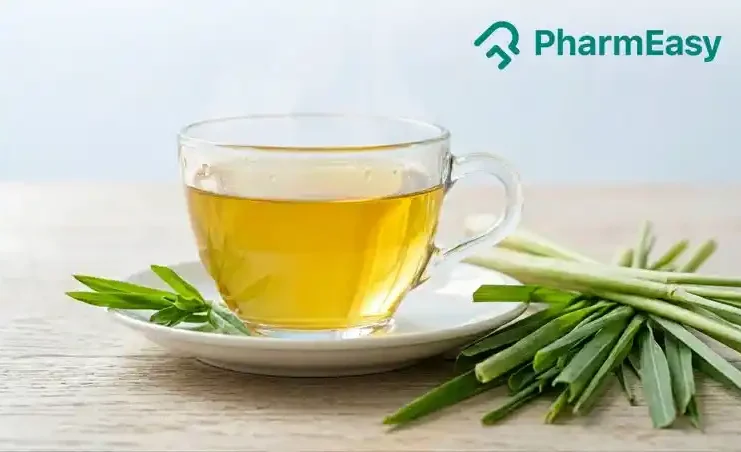
Lemongrass tea is an herbal infusion made from lemongrass (Cymbopogon), which is a herb1. It is made by boiling or steeping lemongrass (a fragrant grass with a lemon-like fragrance or aroma) in hot water. It has a light, refreshing taste with a mild citrus flavour and does not contain caffeine. People often drink it as a calming and soothing beverage, and it is commonly used as a traditional home approach for promoting digestion and general wellness2.
Lemongrass tea has almost negligible calories, carbohydrates, fats and protein. However, it is a rich source of vitamin C, certain minerals and antioxidant compounds that may contribute to its health benefits4.
The following are some important nutrients present in lemon grass tea:
Another important component abundant in lemongrass is Citral. It is an aromatic compound which is known to have antimicrobial and several other properties6.
Note: Lemongrass tea is a natural drink that contains some important elements. The nutrient content in it may vary depending on the preparation method, dilution and quantity of lemongrass used.
Lemongrass tea has several natural properties that may support overall health and well-being. Here are a few among them:
Lemongrass has many beneficial properties. Therefore, its tea can also be beneficial to the health in several ways. The following are some potential lemongrass tea benefits:

It may help soothe the digestive system and promote healthy digestion. Some people drink it after meals to help ease bloating, gas, and stomach discomfort2.

Its soothing aroma and warmth may help to soothe the mind. Drinking it is believed to reduce daily stress and anxiety2,7.

It contains natural plant compounds with antioxidant properties that may help support the body’s natural defence system and overall well-being1,2.
It is known to have a mild diuretic effect7, where drinking its tea might increase urine production and help the body get rid of excess waste products.

It is low in calories and is caffeine free2,4, where it can be used as a refreshing alternative to sugary drinks during the weight management journey.

It may help protect skin cells from oxidative stress, which can contribute to overall skin health due to the presence of its antioxidants2.
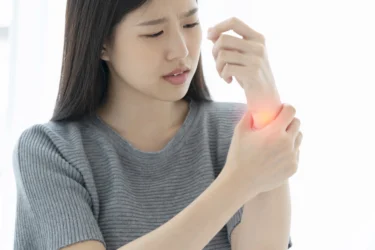
It is shown to have anti-inflammatory property due to the presence of natural antioxidant compounds such as quercetin. These may help ease symptoms like pain and muscle discomfort in conditions like arthitis1,2.

It might help increase the menstrual flow and reduce menstrual cramps and related discomfort6.

It is known to relax muscles and calm the nerves involved in sleep. It may also have a mild sedative effect that helps promote better sleep6.

Some studies7,8 suggest that lemongrass may support heart health by helping maintain healthy cholesterol levels and normal blood pressure. These benefits may be related to its potential to lower bad cholesterol levels and improve blood flow by helping blood vessels relax and widen.
Note: The benefits of lemongrass tea may vary from person to person. Most of the benefits mentioned above are based on animal studies and more research is needed to confirm these in humans. Therefore, it shouldn’t replace a proper medical treatment and advice.
The lemongrass tea should be prepared carefully to get its maximum benefits. Here is how to make lemongrass tea:
Here are a few tips which you can consider while preparing/consuming lemongrass tea:
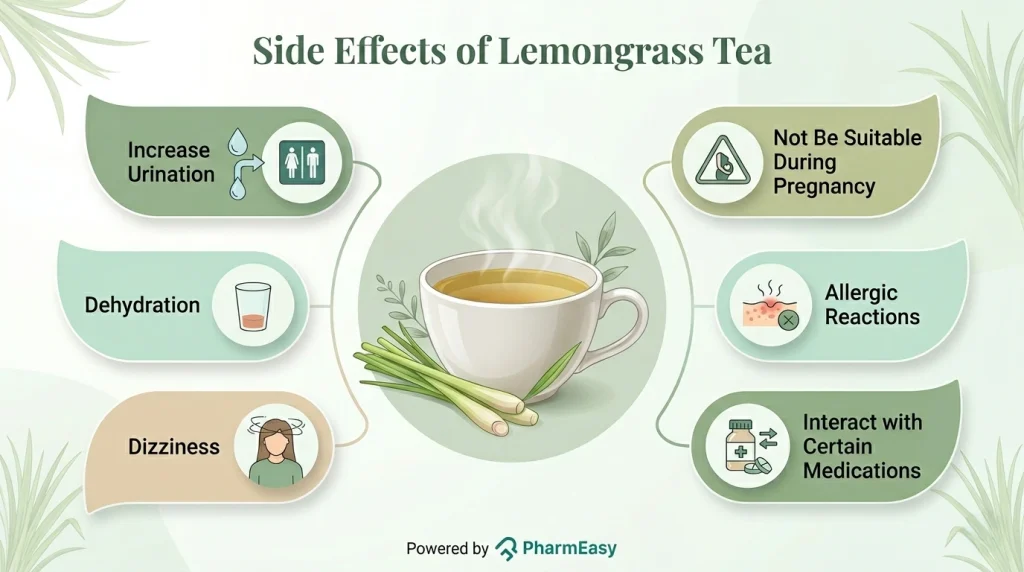
Lemongrass tea is generally considered safe for most people when consumed in moderation. However, some individuals may experience certain side effects, especially when consumed in large amounts. The following are some common lemongrass tea side effects:
Note: Lemongrass tea should be consumed in moderation. Individuals with existing health conditions or those on medication should only drink it after consulting a doctor to avoid possible interactions or side effects. If you experience any unusual symptoms after drinking it, stop use and consult your doctor.
Also Read: Oolong Tea: Uses, Benefits, Side Effects By Dr. Rajeev Singh
Lemongrass tea is generally safe for most people, but certain precautions should be followed to avoid unwanted effects.
Note: This information is intended for general understanding and should not be regarded as medical or dietary advice. Kindly consult a healthcare professional before adding it in your diet and daily habits, especially if you have any health conditions or you are taking any medications.
Lemongrass tea is a refreshing, caffeine-free herbal drink with a variety of possible health advantages, including aiding digestion and helping improve overall wellness. However, like with any herbal therapy, it should be taken in moderation and with an understanding of potential adverse effects and precautions. When used correctly, lemongrass tea may be a simple and calming addition to a healthy lifestyle.
People with low blood pressure, allergies, or who are using blood pressure or blood sugar medications should avoid or consume lemongrass tea only after checking with a doctor. Pregnant and breastfeeding women should use it with caution and follow medical guidance4,8.
Lemongrass tea is usually consumed as a hot beverage because it is prepared by steeping lemongrass in hot water. It can, however, be cooled and served as a flavourful cold beverage.
Lemongrass tea is not a direct fat-burning drink, but it may support weight management by improving digestion and acting as a low-calorie alternative to sugary beverages1,6. There is limited scientific evidence to confirm that it specifically reduces belly fat.
Lemongrass tea in generally not recommended during pregnancy due to the presence of its high citral content, which can cause several complications in mother and baby10. Pregnant women should also consult a doctor before consuming it.
Lemongrass tea is generally considered mildly acidic. It can slightly affect the body’s natural balance of acids, bases, and minerals (like salts and electrolytes) because of the different natural compounds it contains12.
Lemongrass tea may aid with blood sugar control as it might slow carbohydrate metabolism11. However, further studies are needed to confirm this. Individuals with diabetes should only drink it after checking with a doctor, as it may interact with diabetes drugs.
Yes, most people can consume lemongrass tea on an empty stomach because it is moderate and readily tolerated. However, in some people, it may produce mild acidity or stomach pain, so start with a modest amount and observe how your body responds.
Kids may drink lemongrass tea in very small amounts occasionally, but it should not be given regularly without medical advice. Parents should always consult a doctor first before introducing the lemongrass tea, especially in younger children.
To make lemongrass tea, crush or slice fresh lemongrass stalks (or use dried ones) and boil them in water for 5-10 minutes. Then drain and drink straight, or with honey/lemon for extra flavour.
1. Don SM, Rambli M, Nore BF. Antioxidant content following fermentation of lemongrass for herbal beverage development. J Food Sci Technol. 2024;61(12):1-14. doi:10.1007/s13197-024-06005-0 https://pubmed.ncbi.nlm.nih.gov/39431189/
2. Murugan T, Kandasamy K, Shanmugam S, Kuber S, Syed R. Evaluating nutritional values for lemongrass (Cymbopogon citratus) herb tea formulation used in tea bags. Innovations Agric. Published online 2023:01-05. doi:10.25081/ia.2023-090 https://www.researchgate.net/publication/377092602_Evaluating_nutritional_values_for_lemongrass_Cymbopogon_citratus_herb_tea_formulation_used_in_tea_bags
3. LEMON GRASS. doi:10.25081/ia.2023-090. https://nhb.gov.in/model-project-reports/Horticulture%20Crops/Lemongrass/Lemongrass1.htm
4. U.S. Department of Agriculture, Agricultural Research Service. Organic lemongrass green tea [Internet]. FoodData Central; [cited 2026 Jun 17]. Available from: https://fdc.nal.usda.gov/food-details/1909574/nutrients
5. Ranade SS, Thiagarajan P. Lemon Grass. 2015;2(35):162-167. https://www.researchgate.net/profile/Shruti-Ranade/publication/290390651_Lemon_grass/links/57a6ba6708aefe6167b6ef54/Lemon-grass.pdf
6. Mohammed D. Toungos. Lemon Grass (Cymbopogon, L spreng ) Valuable Grass But Underutilized In Northern Nigeria. Published online 2019. https://www.researchgate.net/publication/334164105_Lemon_Grass_Cymbopogon_L_spreng_Valuable_Grass_But_Underutilized_In_Northern_Nigeria
7. Silva H, Bárbara R. Exploring the Anti-Hypertensive Potential of Lemongrass—A Comprehensive Review. Biology. 2022;11(10):1382. doi:10.3390/biology11101382 https://pubmed.ncbi.nlm.nih.gov/36290288/
8. Villalobos MC, Nicolas MG, Trinidad TP. Cholesterol-lowering Effect of Protein Hydrolysates from Lemongrass (Cymbopogon citratus Stapf.). Curr Res Nutr Food Sci. 2023;11(3):1177-1186. doi:10.12944/CRNFSJ.11.3.22 https://www.researchgate.net/publication/377069540_Cholesterol-lowering_Effect_of_Protein_Hydrolysates_from_Lemongrass_Cymbopogon_citratus_Stapf
9. British Heart Foundation. Low blood pressure [Internet]. London: British Heart Foundation; 2027 [cited 2026 Jun 17]. Available from: https://www.bhf.org.uk/informationsupport/risk-factors/high-blood-pressure/low-blood-pressure
10. Dosoky NS, Setzer WN. Maternal Reproductive Toxicity of Some Essential Oils and Their Constituents. IJMS. 2021;22(5):2380. doi:10.3390/ijms22052380 https://pubmed.ncbi.nlm.nih.gov/33673548/
11. Naz A, Khan M, Kibria S. Unlocking the Insightful Antidiabetic Effects of Lemongrass (Cymbopogon citratus): A Comprehensive Review. PHYTONutrients. Published online August 19, 2024:90-104. doi:10.62368/pn.v3i.29 https://www.researchgate.net/publication/383259155_Unlocking_the_Insightful_Antidiabetic_Effects_of_Lemongrass_Cymbopogon_citratus_A_Comprehensive_Review
12. Ekpenyong CE. Lemongrass tea consumption and changes in Acid-Base Balance and Electrolyte homeostasis. Arch Food Nutr Sci. 2018;2(1):041-051. doi:10.29328/journal.afns.1001016 https://www.researchgate.net/publication/330755298_Lemongrass_tea_consumption_and_changes_in_Acid-Base_Balance_and_Electrolyte_homeostasis
Disclaimer: The information provided here is for educational/awareness purposes only and is not intended to be a substitute for medical treatment by a healthcare professional and should not be relied upon to diagnose or treat any medical condition. The reader should consult a registered medical practitioner to determine the appropriateness of the information and before consuming any medication. PharmEasy does not provide any guarantee or warranty (express or implied) regarding the accuracy, adequacy, completeness, legality, reliability or usefulness of the information; and disclaims any liability arising thereof.
Links and product recommendations in the information provided here are advertisements of third-party products available on the website. PharmEasy does not make any representation on the accuracy or suitability of such products/services. Advertisements do not influence the editorial decisions or content. The information in this blog is subject to change without notice. The authors and administrators reserve the right to modify, add, or remove content without notification. It is your responsibility to review this disclaimer regularly for any changes.
 1
1 
Comments

Leave your comment...
You may also like



















Comments