




Stomach Infections in the Rainy Season and How to Prevent It
By Dr. Avinav Gupta +2 more

Medically reviewed by Dr. Avinav Gupta
Last updated: Sep 15, 2026 Published on: Jul 20, 2026


Get,

to manage your symptom
Get your,

4 Cr+ families
benefitted

OTP sent to 9988776655



You’ve successfully subscribed to receive
doctor-approved tips on
Whatsapp

Get ready to feel your best.


Register to Avail the Offer
Send OTPBy continuing, you agree with our Privacy Policy and Terms and Conditions
Hi There,
Sign up on PharmEasy now!!


Trusted by 4 crore+ families

OTP sent to 9988776655
You have unlocked 25% off on medicines


Code: NU25

By Dr. Avinav Gupta +2 more
Table of Contents
The rainy season is always a soothing season for many people, as it brings cool weather and comfort. However, it is also a time where people start getting digestive problems and stomach infections1. A simple upset stomach can quickly disrupt your daily routine, making it important to pay extra attention to digestive health during monsoon. In this blog, we will explore the common stomach infections that occur during the rainy season, their causes, and ways to manage them.

The rainy season can increase the chances of stomach problems. Extra moisture and humidity in the air create the favourable condition for germs to grow. Heavy rains can also contaminate food and water with these harmful microbes2,3. In addition, foods spoil faster in damp weather if they are not stored properly. Eating contaminated food or drinking unsafe water can affect the digestive system by causing stomach infections and illnesses such as food poisoning, diarrhoea, dysentery, and cholera3.
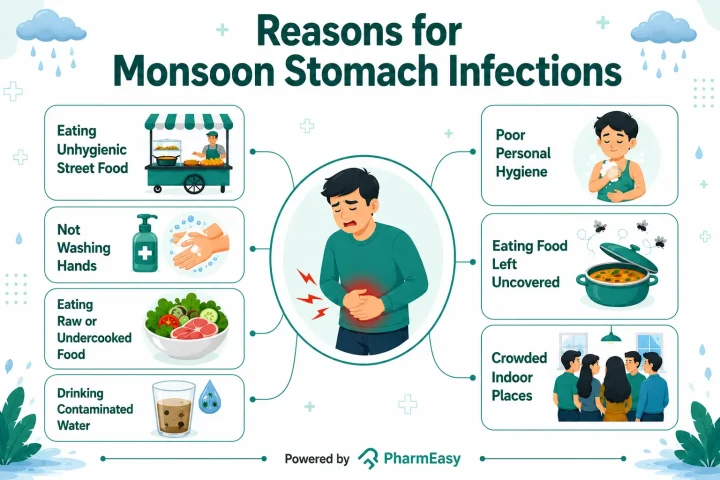
Several factors during the rainy season can increase your chances of developing a stomach infection. Here are the most common ones:
Some of the most common stomach infections seen during this season include:
Gastroenteritis is one of the most common stomach infections during the rainy season. It is usually caused by viruses such as Norovirus and Rotavirus which spread through contaminated food and water or contact with infected stool, vomit, contaminated surfaces, or infected individuals4. The condition can cause inflammation of the stomach and intestinal linings. Symptoms include watery diarrhoea, vomiting, stomach cramps, nausea, and fever (sometimes)5.
Food poisoning caused by bacteria like E.coli, Salmonella, Campylobacter is common in monsoon, which is caused by consuming food or water contaminated with thesemicrobes3,6. The humid weather during monsoon allows bacteria to multiply quickly in improperly stored food3. Symptoms include nausea, vomiting, diarrhoea, stomach cramps, fever and weakness (in some cases)6.
Typhoid fever is caused by the bacterium Salmonella typhi. It spreads through contaminated food and water. It usually causes prolonged fever, abdominal pain, headache, weakness, and other symptoms. It can be life-threatening if left untreated7. Typhoid becomes more common during the monsoon because heavy rainfall and flooding can contaminate food and water sources.
Cholera, an infection caused by bacterium Vibrio Cholerae is common during monsoon due to contamination of water sources from rainfalls and floods8. The common symptoms include watery diarrhoea (which occurs all of a sudden), nausea or vomiting, dehydration. If left untreated, it can cause severe complications such as severe dehydration, electrolyte imbalance, kidney injury, shock, and may become life-threatening.
Viral infection, typically hepatitis A and E, can occur during monsoon when people come in contact with the contaminated water or food. It is actually an infection which mainly affects the liver, and causes symptoms such as nausea, stomach pain, loss of appetite, jaundice, malaise and fever. Most people recover completely with supportive care, but severe complications can occur in some cases, particularly in pregnant women and people with underlying liver disease.
Certain foods can increase the risk of getting a stomach infection during monsoon. Those include:
It is very important to choose your food carefully during the monsoon to reduce the risk of stomach problems and infections. Here are a few foods that may support digestive health:
Along with the right food choices, it is very important to keep yourself hydrated. Drink plenty of water (boiled/filtered), choose natural electrolyte-rich drinks like coconut water or make yourself warm soups to get the essential nutrients and fibre.
Certain groups of people are more likely to develop stomach infections, especially during the rainy season. These include:
You can lower your risk of stomach infections during the rainy season by following these simple precautions:
Seek immediate medical attention if you experience:
Stomach infections are common during the monsoon, but many of them can be avoided with simple precautions. Eating fresh, hygienic food, drinking safe water, and maintaining good hand hygiene can help you greatly in protecting your digestive health during the rainy season. If your symptoms are severe, persistent, or accompanied by signs of dehydration, do not delay seeking medical advice.
Maintain good gut health during the monsoon by eating freshly cooked, hygienic food, drinking safe water, and including gut-friendly foods such as yoghurt, and other fibre-rich foods in your diet3,11,12,14. Also, avoid street food and practise good hand hygiene to reduce the risk of stomach infections3.
Yes, weather, especially the rainy season, can affect your digestive health. Increased humidity and water contamination during monsoon can promote the growth of harmful microbes, increasing the risk of stomach infections and digestive problems3.
During the monsoon, choose fresh, seasonal fruits such as bananas, apples, pears, pomegranates, and papayas. These fruits are generally easy to digest and can support gut health and immunity. Ensure to wash them properly or peel before eating12.
During the monsoon, it is best to eat fresh, well-cooked vegetables such as bottle gourd, ridge gourd, pumpkin, carrots, beans, etc. Cooking vegetables properly helps reduce the risk of foodborne infections3.
Disclaimer: The information provided here is for educational/awareness purposes only and is not intended to be a substitute for medical treatment by a healthcare professional and should not be relied upon to diagnose or treat any medical condition. The reader should consult a registered medical practitioner to determine the appropriateness of the information and before consuming any medication. PharmEasy does not provide any guarantee or warranty (express or implied) regarding the accuracy, adequacy, completeness, legality, reliability or usefulness of the information; and disclaims any liability arising thereof.
Links and product recommendations in the information provided here are advertisements of third-party products available on the website. PharmEasy does not make any representation on the accuracy or suitability of such products/services. Advertisements do not influence the editorial decisions or content. The information in this blog is subject to change without notice. The authors and administrators reserve the right to modify, add, or remove content without notification. It is your responsibility to review this disclaimer regularly for any changes.


Comments

Leave your comment...
You may also like
























Comments