




Why Do Headaches Happen? Common Causes, Symptoms and Treatments
By Dr. Vishesh Bharucha +2 more

Medically reviewed by Dr. Vishesh Bharucha
Last updated: Oct 16, 2026 Published on: Jul 10, 2026


Get,

to manage your symptom
Get your,

4 Cr+ families
benefitted

OTP sent to 9988776655



You’ve successfully subscribed to receive
doctor-approved tips on
Whatsapp

Get ready to feel your best.


Register to Avail the Offer
Send OTPBy continuing, you agree with our Privacy Policy and Terms and Conditions
Hi There,
Sign up on PharmEasy now!!


Trusted by 4 crore+ families

OTP sent to 9988776655
You have unlocked 25% off on medicines


Code: NU25

By Dr. Vishesh Bharucha +2 more
Table of Contents
A headache is a common problem that makes it difficult to study, work, or enjoy any activities you do. Although headaches may not be severe in most cases, sometimes they may be a cause for concern. However, knowing their cause can help you get the right treatment you need1. In this blog, we’ll cover the common causes and symptoms of headaches, the available treatment options, and simple ways to help manage them.
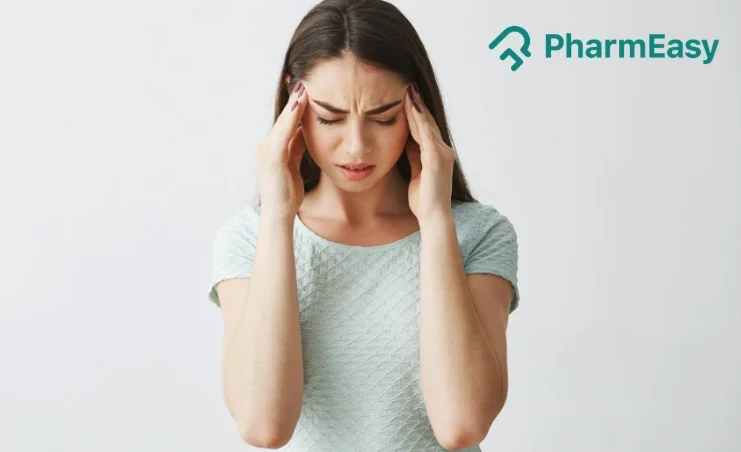
A headache is a pain or discomfort arising from pain-sensitive structures in the head, such as the blood vessels, nerves, and the tissues covering the brain (meninges)2. This pain occurs because of changes in the way the brain, nerves, and blood vessels process pain signals. It can occur in different parts of the head, scalp, or face. It may feel dull, sharp, throbbing, or like a tight band wrapped around the head. Headaches can last from a few minutes to several hours or, in some cases, even days, depending on the underlying cause. While most headaches are not serious and improve with simple treatment, some may be a sign of an underlying health condition that requires medical attention1.
Did You Know?
Headaches are broadly classified into primary headaches and secondary headaches, depending on whether the headache itself is the main condition or is caused by another medical problem.
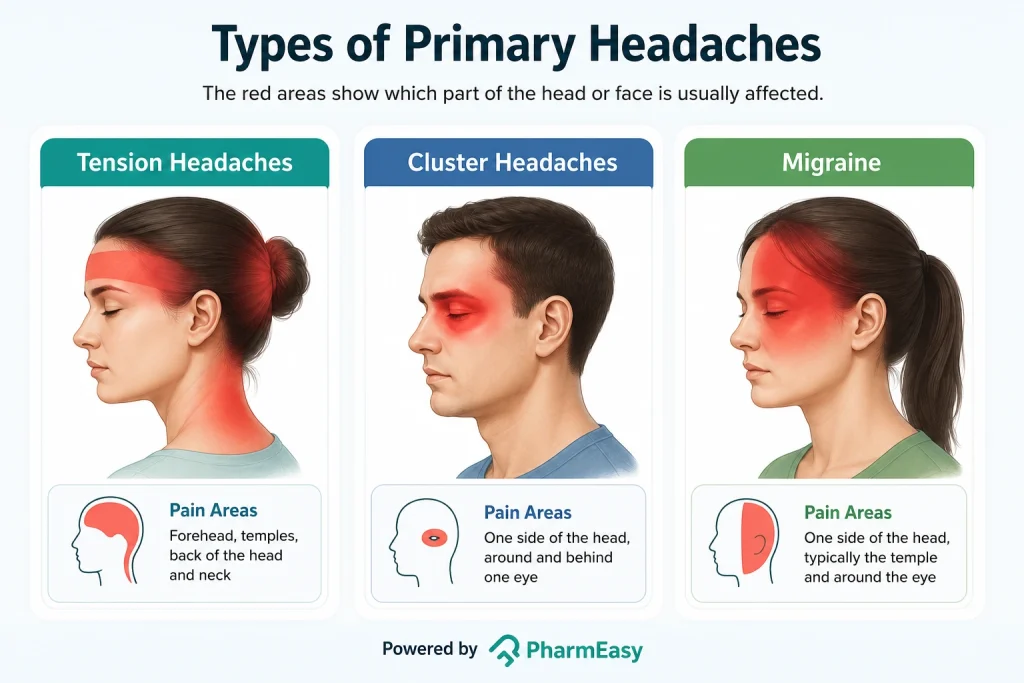
Headaches that occur because of changes in the pain-sensitive structures of the head or the way the brain processes pain are called primary headaches. They may not be caused by an underlying health condition. The different types of headaches (primary) include:
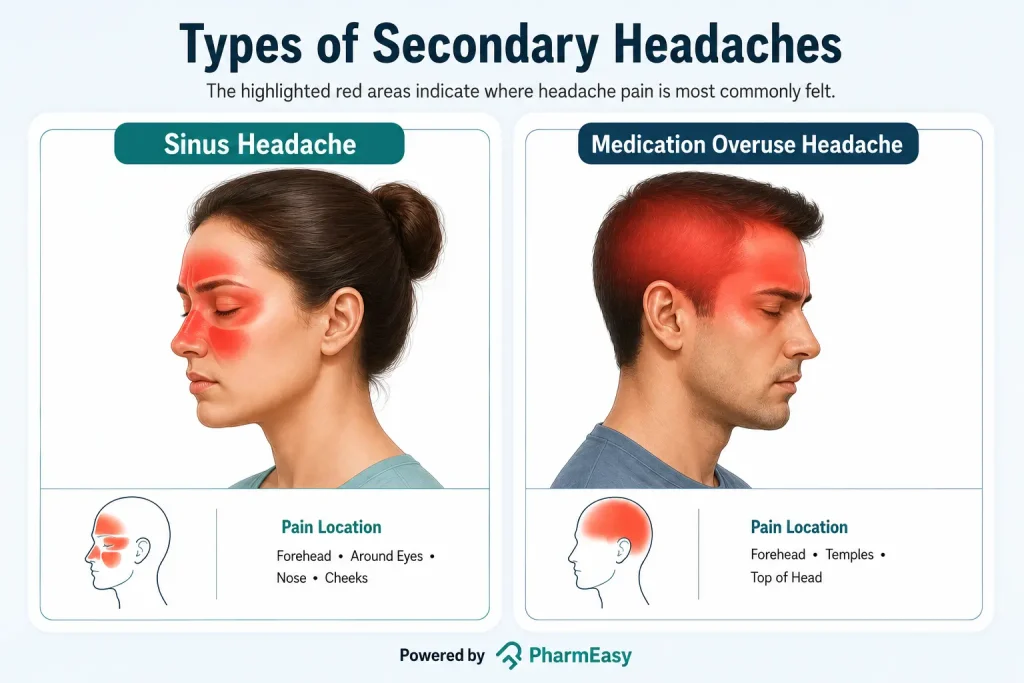
This is a type which indicates an underlying health condition, such as high blood pressure (BP), infection, or head injury. It can last from a few minutes to several days, weeks, or even months, depending on the underlying cause8. It happens when the condition affects the pain-sensitive tissues or nerves in the head. It is less common, but needs prompt medical evaluation and treatment for the underlying cause rather than the headache itself1. Examples include:
Other types of secondary headaches include post-traumatic headache (related to head injury or trauma), headaches related to an arterial ischemic event (caused by reduced blood flow to the brain due to a stroke), headaches related to arthritis, hypertension headache (caused by extremely high BP), and reversible cerebral vasoconstriction syndrome (caused by temporary narrowing of the blood vessels in the brain)8.
Headache symptoms can vary based on the type. While some symptoms are specific to certain types of headaches, there are a few common signs and symptoms that many people with headaches may experience. These include:
The causes of headaches vary depending on the type. Some of the most common headache causes include the following.
In addition to understanding the causes of headaches, knowing the risk factors is very important to reduce the risk or manage the condition. Factors that may increase the risk of a person having headaches include:
Note: These are common risk factors for many types of headaches. Having one or more of these risk factors does not guarantee you’ll get headaches.
The following are the approaches a doctor might take to identify the type of headache:
Headache treatment is determined by its type, severity, frequency, and underlying reason. While some headaches can be treated with simple lifestyle adjustments, others may necessitate prescription medications or therapy for the underlying medical issue. The treatment approaches that are commonly recommended include:
Depending on the type of headache, the doctor may recommend pain-relieving medicines, such as paracetamol or ibuprofen16, triptans or beta-blocker medicines (for migraine), antidepressants or barbiturates (for tension headaches; barbiturates are not routinely recommended due to a risk of medication overuse headache), verapamil (for cluster headaches)1. Although some of these medicines are available as over-the-counter medicines, taking them too often or without a doctor’s advice is not advisable12.
Headaches caused by an underlying medical condition (secondary headaches), such as sinus infections, high BP, or brain tumours, require treatment of the underlying cause. This may include antibiotics, nasal corticosteroid sprays or anti-histamines (for sinus infection)10, BP medications (for high BP), surgery (for tumours), etc.8, depending on the cause.
Exercises, stretching, and posture correction to help with tension headaches or headaches caused by muscle strain4.
Surgeries, chemotherapy, etc., in cases where the headaches do not respond to medicines, for example, a tumour that is causing a headaches5.
Note: Headache treatment differs from person to person based on the type, severity, frequency, and underlying cause. Do not self-medicate or take pain relievers on a regular basis without consulting a doctor, since this can worsen headaches.
People often wonder how to reduce headaches naturally. The best approach is to prevent headaches rather than treating them after they occur. Here are some simple ways to help reduce the risk of getting a headache:
Identifying and avoiding personal headache triggers, such as certain foods, alcohol, smoking, dehydration, bright lights, lack of sleep, improper posture, etc., can help reduce headache episodes.

Deep breathing, meditation, yoga, regular exercise and other relaxation methods can help reduce stress-related headaches1.

Undergoing regular health check-ups, especially in people with conditions such as high BP or allergies, can help identify and manage factors that may contribute to headaches.
Note: These recommendations may help reduce the frequency or severity of headaches, but they do not guarantee perfect prevention. If headaches are severe, frequent, sudden, or persistent despite these precautions, see a doctor for a correct diagnosis and treatment.
Also Read: Home Remedies For Headache By Dr. Siddharth Gupta
Consult a doctor if:
Headaches are common and, in most cases, do not indicate a major health problem. They might be caused by common conditions like stress, dehydration, lack of sleep, or illness, but they can also be symptoms of an underlying medical disease. Consult a doctor immediately for an accurate diagnosis and treatment if headaches are severe, frequent, or accompanied by strange symptoms. Understanding the various types, symptoms, and triggers might help in managing headaches more successfully.
Morning headaches can be caused by poor sleep, dehydration (mainly from alcohol consumption), stress, teeth grinding, sleep apnoea (interrupted breathing during sleep), and excessive medication use. In such cases, it is important to see a doctor to determine the underlying reason and get the right treatment17.
Headaches that worsen while bending down are commonly caused by sinus congestion or a sinus infection, as bending increases pressure in the inflamed sinuses6. However, it is important to consult a doctor for a proper diagnosis and treatment, as headaches when bending down can also be caused by other underlying conditions17.
Yes, skipped meals, especially breakfast, can result in headaches. Going too long without eating can cause blood sugar levels to drop, causing a headache, particularly in people who are prone to migraines6,17.
Yes. Dehydration may cause headaches by lowering the amount of fluid in the body,1,6 which disrupts proper brain function. Drinking plenty of water throughout the day can help avoid dehydration-related headaches. Dehydration may also occur from excessive drinking of alcohol, thereby contributing to headache17.
Yes. Lack of sleep can cause headaches by altering how your brain responds to pain. Maintaining a regular sleep schedule and getting enough rest can help lower the risk of headaches.
Headaches can happen for many reasons, including stress, lack of sleep, dehydration, skipping meals, eye strain, infections, or underlying medical conditions. Identifying the cause can help in choosing the right treatment1.
Taking a painkiller for a headache too often can actually cause more frequent headaches (medication overuse headaches). You should consult a doctor if you have recurring headaches to identify the cause rather than taking an over-the-counter medication1,12.
The best way to treat a headache depends on its cause. Resting, staying hydrated, eating a light meal if it is skipped, and taking pain-relieving medicines, if advised by a doctor or avoiding them in case of medication-overdose headaches, etc., can help relieve most common headaches1,12.
1. Headache. 2026. Available from: https://www.ninds.nih.gov/health-information/disorders/headache
2. Robertson CE, Benarroch EE. The anatomy of head pain. Handb Clin Neurol. 2023;198:41-60. doi: 10.1016/B978-0-12-823356-6.00001-9. PMID: 38043970. Available from: https://pubmed.ncbi.nlm.nih.gov/38043970/
3. Migraine and other headache disorders. 2025. Available from: https://www.who.int/news-room/fact-sheets/detail/headache-disorders
4. Nihir Shah, Asuncion RMD, Hameed S. Muscle Contraction Tension Headache. 2024. Available from: https://www.ncbi.nlm.nih.gov/books/NBK562274/
5. The Complete Headache Chart. Available from: https://headaches.org/resources/the-complete-headache-chart/
6. Headaches. 2025. Available from: https://www.healthdirect.gov.au/headaches
7. Joppeková Ľ, Pinto MJ, Da Costa MD, et al. What does a migraine aura look like?—A systematic review. J Headache Pain. 2025;26(1):149. doi:10.1186/s10194-025-02080-6 Available from: https://pubmed.ncbi.nlm.nih.gov/40597581/
8. Wijeratne T, Wijeratne C, Korajkic N, Bird S, Sales C, Riederer F. Secondary headaches – red and green flags and their significance for diagnostics. eNeurologicalSci. 2023 Jun 30;32:100473. doi: 10.1016/j.ensci.2023.100473. PMID: 37456555; PMCID: PMC10339125. Available from: https://pubmed.ncbi.nlm.nih.gov/37456555/
9. Jones NS. Sinus headaches: avoiding over- and mis-diagnosis. Expert Review of Neurotherapeutics. 2009;9(4):439-444. doi:10.1586/ern.09.8 Available from: https://pubmed.ncbi.nlm.nih.gov/19344297/
10. Sinusitis. 2024. Available from: https://medlineplus.gov/ency/article/000647.htm
11. How to Know if You Have Migraine or Sinus Headache. 2023. Available from: https://americanmigrainefoundation.org/resource-library/sinus-headache/
12. Medication Overuse Headache. 2022. Available from: https://headaches.org/resources/medication-overuse-headache/
13. Aggarwal M, Puri V, Puri S. Serotonin and CGRP in migraine. Ann Neurosci. 2012 Apr;19(2):88-94. doi: 10.5214/ans.0972.7531.12190210. PMID: 25205974; PMCID: PMC4117050. Available from: https://pubmed.ncbi.nlm.nih.gov/25205974/
14. Sinus Infection Basics. 2024. Available from: https://www.cdc.gov/sinus-infection/about/index.html
15. Kim KT. Lumbar puncture: considerations, procedure, and complications. encephalitis. 2022;2(4):93-97. doi:10.47936/encephalitis.2022.00045 Available from: https://pubmed.ncbi.nlm.nih.gov/37469996/
16. Medicines for headaches. 2025. Available from: https://www.healthdirect.gov.au/medicines-for-headaches
17. Hong Y, Kang MK, Kim MS, Mo H, Cox RC, Im HJ. Morning Headaches: An In-depth Review of Causes, Associated Disorders, and Management Strategies. Headache and Pain Research. 2025;26(1):66-79. doi:10.62087/hpr.2024.0023 Available from: https://www.researchgate.net/publication/405443332_Comments_on_Morning_Headaches_An_In-Depth_Review_of_Causes_Associated_Disorders_and_Management_Strategies
Disclaimer: The information provided here is for educational/awareness purposes only and is not intended to be a substitute for medical treatment by a healthcare professional and should not be relied upon to diagnose or treat any medical condition. The reader should consult a registered medical practitioner to determine the appropriateness of the information and before consuming any medication. PharmEasy does not provide any guarantee or warranty (express or implied) regarding the accuracy, adequacy, completeness, legality, reliability or usefulness of the information; and disclaims any liability arising thereof.
Links and product recommendations in the information provided here are advertisements of third-party products available on the website. PharmEasy does not make any representation on the accuracy or suitability of such products/services. Advertisements do not influence the editorial decisions or content. The information in this blog is subject to change without notice. The authors and administrators reserve the right to modify, add, or remove content without notification. It is your responsibility to review this disclaimer regularly for any changes.


Comments

Leave your comment...
You may also like























Comments