




Stomach Cramps: Meaning, Symptoms, Causes & Home Remedies
By Dr. Vishesh Bharucha +2 more

Medically reviewed by Dr. Vishesh Bharucha
Last updated: Aug 21, 2026 Published on: Jul 20, 2026


Get,

to manage your symptom
Get your,

4 Cr+ families
benefitted

OTP sent to 9988776655



You’ve successfully subscribed to receive
doctor-approved tips on
Whatsapp

Get ready to feel your best.


Register to Avail the Offer
Send OTPBy continuing, you agree with our Privacy Policy and Terms and Conditions
Hi There,
Sign up on PharmEasy now!!


Trusted by 4 crore+ families

OTP sent to 9988776655
You have unlocked 25% off on medicines


Code: NU25

By Dr. Vishesh Bharucha +2 more
Table of Contents
Sudden abdominal pain or discomfort can bring an entire day to a standstill. Whether it is a mild, brief ache or a severe, long-lasting episode, stomach cramps are a common issue with many different causes1. This article explores why stomach cramps occur and offers practical strategies to help you manage the discomfort.

While “stomach cramps” and “abdominal cramps” are often used interchangeably, they are technically different. Abdominal pain refers broadly to any discomfort between the chest and the groin, whereas a true stomach cramp is localised specifically to the stomach organ itself.1 Here, “stomach cramps” is meant to mean the broader terminology that is more relevant in the context of self-care. These cramps may be caused by sudden tightening or spasms of muscles in or around the stomach area, often coming and going and causing discomfort2. The pain may feel like a dull ache, sharp pain, burning, stabbing, or twisting sensation3.
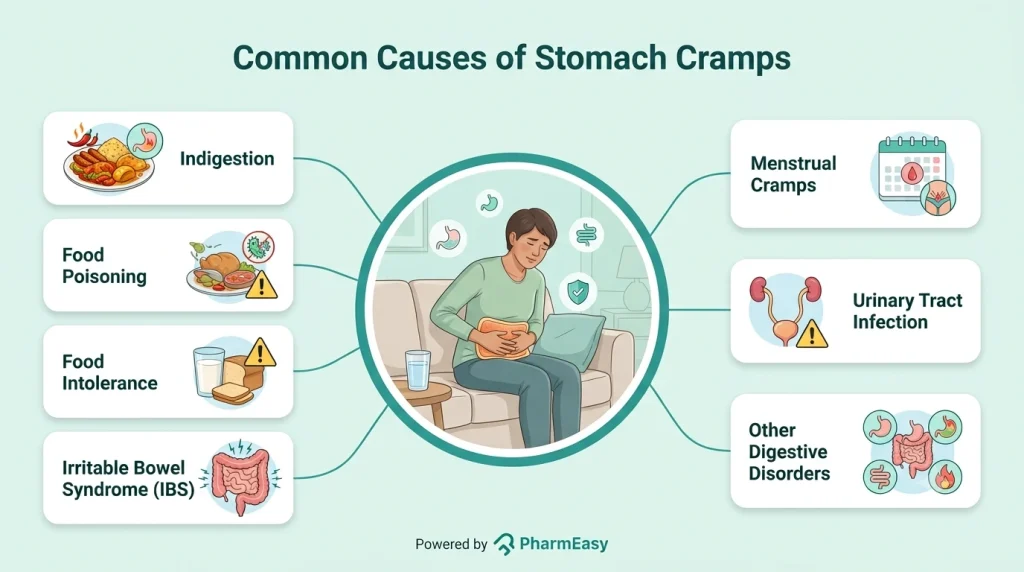
Here are the most common reasons for stomach cramps:
Note: The causes listed above are some of the most common reasons for stomach and abdominal cramps. Less common causes include conditions such as appendicitis, gallstones, kidney stones, pancreatitis, endometriosis, etc. If your stomach cramps are severe, persistent or keep coming back, it is important to consult a doctor for proper evaluation.
Depending on the cause, stomach cramps may occur along with other symptoms, such as:
Mild stomach cramps can often be managed with simple self-care, as long as symptoms are not severe, persistent, recurrent, or accompanied by warning signs. Here are some simple ways to help relieve stomach cramps:
If you know what triggers your stomach cramps, avoiding that trigger may help prevent future episodes. For example, people with lactose intolerance may benefit from limiting or avoiding milk and other dairy products. Eating balanced meals, drinking plenty of water, eating smaller and more frequent meals when needed, and avoiding foods that trigger gas or bloating may also help reduce symptoms. Do not take medicines for stomach cramps without consulting a doctor, especially if the cause of the pain is unknown3,4.
There are several home remedies for stomach cramps. Some of the commonly used remedies include:

According to some studies, ginger has some soothing properties that may reduce abdominal cramps, bloating, indigestion, etc. Therefore, drinking its tea might be beneficial for you in managing such symptoms8. It can be made by boiling 1-2 teaspoons of freshly grated ginger in a cup of water for 5-10 minutes.
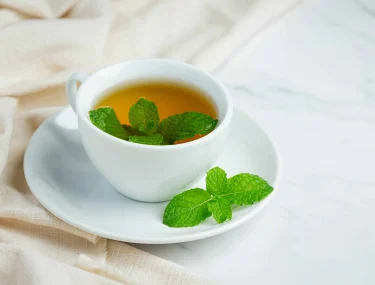
Peppermint may help ease abdominal discomfort, indigestion, gas, diarrhoea, or IBS-related symptoms in some people, although more research is needed and it may not suit everyone9,10. To make peppermint tea, steep 1–2 teaspoons of dried peppermint leaves or a few fresh leaves in a cup of warm water for 5–10 minutes.
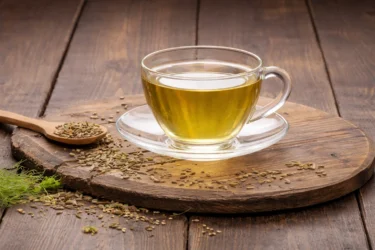
Fennel may help relax digestive tract muscles and reduce stomach or abdominal discomfort, bloating, and related symptoms in some people, although more research is needed to confirm its effects11. Fennel tea can be made by brewing about 2.5 g of fennel in 150 ml of boiling water for around 15 minutes.

Eat smaller meals throughout the day instead of larger ones. This may put less strain on your digestive system and help reduce bloating and indigestion12.
Note: The home-care approaches mentioned above may help relieve mild or temporary stomach discomfort. However, herbal teas and other home remedies cannot treat an underlying health condition and should not replace medical treatment. Seek medical attention if stomach cramps are severe, persistent, recurrent, unusual, or accompanied by warning symptoms.
Consult a doctor promptly if stomach cramps become severe, get worse, last for a long time, keep coming back, or occur with any warning symptoms such as:
Also, be cautious when you get persistent stomach pain/cramps and you:
Seek immediate medical care for severe stomach pain or cramps, especially if they occur with fever, vomiting, a hard or rigid abdomen, dizziness, fainting, blurred vision, or low blood pressure symptoms1,4.
Delaying care may delay the diagnosis and treatment of serious conditions that may require urgent treatment or emergency surgery, such as appendicitis, bowel blockage, a hole in the intestine, ectopic pregnancy, or reduced blood flow to the intestines4.
Also Read: Causes Behind Recurring Stomach Pain
Understanding the meaning of stomach cramps can help you recognise when the discomfort is temporary and when it may be a sign of an underlying health condition. Most mild cases can be managed with rest, hydration, and simple home-care measures. However, if your stomach cramps are severe, persistent, or accompanied by unusual symptoms, it is important to seek medical attention for proper diagnosis and treatment.
Yes, stomach cramps can be a sign of food poisoning. They often occur along with other symptoms such as nausea, vomiting, diarrhoea, fever, and an upset stomach after eating contaminated food or drinking contaminated water13.
Yes, stomach cramps/pain can occur even without diarrhoea for conditions such as bowel obstruction (intestinal blockage), kidney stones, indigestion, and gallbladder stones5,14.
Yes, certain foods can trigger stomach cramps in some people. Spicy, fatty, or gas-producing foods, as well as foods that a person is intolerant or allergic to (such as milk products), may lead to stomach discomfort and cramps4.
Mild stomach cramps may last for a few hours to a few days and may settle with self-care14. However, consult a doctor if the pain lasts longer, becomes severe, keeps recurring, or does not improve within 1–2 days4.
Yes, children can experience stomach cramps. The most common causes include indigestion, constipation, gas trouble, and stomach infections. However, they can also get cramps if they have appendicitis, gallstones, a hernia, UTIs, etc15.
Yes, stress can cause stomach cramps. Stress and anxiety can affect the communication between the brain and the digestive system, leading to symptoms such as abdominal pain, cramping, and bloating. In addition, it can also cause pain in other parts of the body, such as the head, back, or chest16.
1. Stomach ache and abdominal pain. Available from: https://www.nidirect.gov.uk/conditions/stomach-ache-and-abdominal-pain
2. Stomach cramps. Available from: https://www.ncbi.nlm.nih.gov/medgen/576243
3. Abdominal pain. 2024. Available from: https://www.healthdirect.gov.au/abdominal-pain
4. Abdominal pain. 2026. Available from: https://medlineplus.gov/ency/article/003120.htm
5. Indigestion. 2025. Available from: https://medlineplus.gov/ency/article/003260.htm
6. Period pain. 2024. Available from: https://medlineplus.gov/periodpain.html
7. Urinary tract infection basics. 2024. Available from: https://www.cdc.gov/uti/about/index.html
8. Nikkhah Bodagh M, Maleki I, Hekmatdoost A. Ginger in gastrointestinal disorders: A systematic review of clinical trials. Food Science & Nutrition. 2019;7(1):96-108. doi:10.1002/fsn3.807 Available from: https://pubmed.ncbi.nlm.nih.gov/30680163/
9. Chavan YD, Rathod SK, Shaikh Habiburrahman, Deo S D. The medicinal benefits of peppermint (Mentha piperital). International Journal of Progressive Research in Engineering Management and Science (IJPREMS). 2023;3(12):288-292. Available from: https://www.ijprems.com/uploadedfiles/paper/issue_12_december_2023/32382/final/fin_ijprems1703604574.pdf
10. Herbal remedies for dyspepsia: peppermint seems effective. Prescrire Int. 2008 Jun;17(95):121-3. PMID: 18630390. Available from: https://pubmed.ncbi.nlm.nih.gov/18630390/
11. Annahazi A, Kuch B, Ridzal L, Mansouri N, Hosni I, Schemann M. Fennel Tea Has a Region‐Specific Effect on the Motility of the Stomach. Neurogastroenterology Motil. 2025;37(12):e70201. doi:10.1111/nmo.70201 Available from: https://pubmed.ncbi.nlm.nih.gov/41214408/
12. Eating, diet, & nutrition for gas in the digestive tract. 2021. Available from: Available from: https://www.niddk.nih.gov/health-information/digestive-diseases/gas-digestive-tract/eating-diet-nutrition
13. Food poisoning symptoms. 2025. Available from: https://www.cdc.gov/food-safety/signs-symptoms/index.html
14. Underlying causes of abdominal pain. 2024. Available from: https://www.healthdirect.gov.au/what-causes-abdominal-pain
15. Abdominal pain – children under age 12. 2025. Available from: https://medlineplus.gov/ency/article/007504.htm
16. Alfvén G, Andersson E. Stress and recurrent abdominal pain. Acta Paediatrica. 2023;112(11):2312-2316. doi:10.1111/apa.16946 Available from: https://pubmed.ncbi.nlm.nih.gov/37565357/
Disclaimer: The information provided here is for educational/awareness purposes only and is not intended to be a substitute for medical treatment by a healthcare professional and should not be relied upon to diagnose or treat any medical condition. The reader should consult a registered medical practitioner to determine the appropriateness of the information and before consuming any medication. PharmEasy does not provide any guarantee or warranty (express or implied) regarding the accuracy, adequacy, completeness, legality, reliability or usefulness of the information; and disclaims any liability arising thereof.
Links and product recommendations in the information provided here are advertisements of third-party products available on the website. PharmEasy does not make any representation on the accuracy or suitability of such products/services. Advertisements do not influence the editorial decisions or content. The information in this blog is subject to change without notice. The authors and administrators reserve the right to modify, add, or remove content without notification. It is your responsibility to review this disclaimer regularly for any changes.


Comments

Leave your comment...
You may also like
























Comments